




The single desire that dominated my search for delight was simply to love and to be loved. –Augustine (Confessions, ii:4)
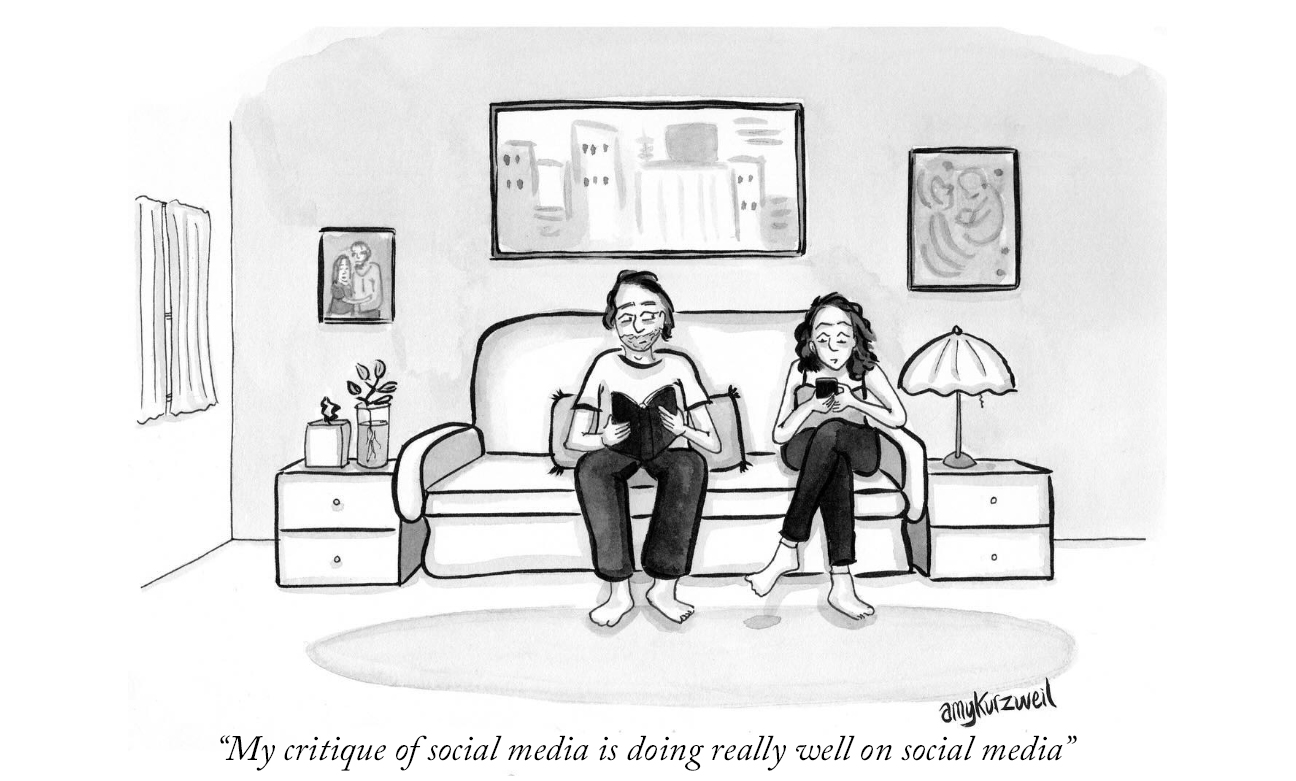
Chances are, you have done something in the last few hours that happens more than 160 billion times a day. I know I have, multiple times. And I’ve wondered, a bit obsessively some days, if others have done it for me.
I’m talking about the “like” feature on social media. Sometimes the image is a thumbs up, sometimes a heart, sometimes a warm little hug emoji. Never the spelled-out word itself, as far as I know. Whatever the little symbol, we want it, hoping for the sweet boost of dopamine it might give, if only for a moment.
And a confession: When I post something online — Facebook, X, my blog (just recently turning into a Substack) — I set to wondering who’s noticed it. Even liked it.
Why not? A spike in views means validation, right? It suggests attention, even impact. Whatever insight I thought important to put out there, whatever post I clicked to repost, whatever topic I hop on — to have it appreciated and passed along — well, yeah. It’s like a little, quiet clap. I guess I matter, after all. Even if the emotional strokes come Wi-Fi enabled and with push notifications and distracting pinging sounds.
But what if my curiosity becomes fixation? I’m afraid sometimes it does. Do I really need to veer from this paragraph and check to see if this morning’s tweet got traction? When does my “author’s urgency” about extending my reach (platform, publishers politely call it) become my secret little obsession? Do I really need to check my viewer stats so often — refreshing the dashboard for this moment’s validation?
By the account given in Like: The Button that Changed the World, a book written from the heart of techie Silicon Valley, the story behind this ever-present and often addictive feature has changed more than our online experiences. The authors Martin Reeves and Bob Goodson trace how the icon has affected our sense of self, shaped our perception of our worth, changed us. The innovation has become not only ubiquitous but addictive — a force behind what we click every day.
Our times help explain why this quirky symbol shapes our self-image. I mean especially our culture’s loneliness and isolation, which a click or two promises to help mend. “The Anti-Social Century,” an Atlantic article whose title in itself conveys loads of meaning, listed examples of our drifting apart, our loosened ties that used to bind. Maybe you’ve noticed: we eat out less, take out more, DoorDash dinner for convenience — consuming our meals solo or in less public spaces (from which I recently learned, we get the word pub). Heard of the book Bowling Alone? Americas still knock down pins, but enrollment in bowling leagues has dwindled. The social glue is thinner, less sticky, and we feel it. With fewer close ties to friends, family, and meaningful communities — like churches — we’re left more unmoored, more vulnerable. Anxiety creeps in. We wonder, Do they like me? Will someone “thumbs up,” or better yet, “heart” my latest post in the ever-scrolling socialverse? A friend suggests the icons have morphed through a kind of grade inflation like we’ve seen in schools: What we really want is more than “like” but “love.”
When probing the intricacies of all the social change, it’s hard to say which causes what. You could argue that our hanging out virtually so much has itself made us more isolated. Does the loneliness drive us online, or does our retreat online compound our loneliness? Maybe it’s both/and. Does looking to online connections make real-world ones less meaningful? Not always. Still, we ask, Do our online connections really satisfy? Can they? Clearly we need more to base a life on than a heart emoji.
To be clear: There’s no shame in turning to the internet to find connections and experience contact. Experiencing kindness ranks as one of our most normal and natural wants. Who doesn’t want to feel seen, enlisted in something meaningful that honors our existence and affirms our take on things? I do. I put stuff out there and feel better when it seems to find a place in others’ feeds. It might even help another soul. The conversations found there can be a social and psychological lubricant, too. I learn about what far-flung friends and old acquaintances are up to. Lots of us connected with a long-lost relative or friend by our search-engine sleuthing.
But there’s also something more compulsive about our experience. And what if the very places we seek comfort and clarity become sources of harm or heartbreak? What if someone we care about — whether a love interest or even just someone we liked — suddenly vanishes, leaving us blocked, ignored, or undone? We long for affirmation, for a sense of worth, but the likes and applause we crave can feel fleeting and hollow. We come to need ever more strokes to our egos.
So we keep straining for connection, wondering how to navigate the temptations and forces that seem, centrifugally, to spin us apart. We can end up feeling alone all kinds of ways — by choice or neglect or a run of flat luck. We feel like we trek across what wise writer Kate Gaston called “a barren tundra of social isolation.”
For we often struggle, don’t we, with our standing with others, what some call status anxiety, feeling like we’ve somehow missed being granted a certificate of belonging? Or not just status anxiety, but self-worth anxiety. Perhaps this is what really drives us to hunt for a like button. A bully at school whose humiliations — all these years later — still leave us seething or ashamed. (One woman, still stinging, wrote of reconnecting through social media, years later, with some of her “mean girl” peers. And the healing she found.) A spouse who asks for separation, as happened when a husband of a woman I know sat her down, divorce papers in hand, claiming “You haven’t been enough.” What a blow! Or we face other absences. Maggie Smith, in the wake of a marital split, spending that dreaded holiday morning without her children, wrote, “It was my second Christmas since my marriage ended but my first Christmas morning without my kids — the first time they weren’t here overnight on Christmas Eve. … [Going for a run in the neighborhood], I did my best to outrun my sadness.”[1]
Or maybe a friend leaves messages unanswered, leaving us confused: “Was it something I said?” Or a church makes us feel unwelcome. Maybe you visited a worship service and felt, as the clumps of old friends closed ranks in conversation, invisible. Or there might be the cascading micro-rejections when strangers are randomly rude — maybe because of how you look or where you came from or for your just being who you are.
While any social phenomenon (and what is social media if not that?) seems to promise us a world of connectivity and support, the limits rear their faces time and again. The problem with the search for “likes” is their fickle feel, the fleeting quality. You can’t just bask. No, you can’t let up, or your audience will move on. Your validation will have an expiration date (like, say, moments later).
Our hunger for emoji applause hides some more primal quest. Our needs go deeper. For maybe my restless lookout for a moment of fame can help me, perhaps more than I realize, if I let it point me towards what I really need. Then the cute cartoonish button is not just a pop-culture icon, a pop-up temptation, but also a portal into profounder longings.
For I am coming to believe that our jonesing for “likes” has deeper, even spiritual roots. In keeping morning prayer times, I’m beginning to hear a voice greater than my own, greater than the vast chorus online — one that reminds me I’m more deeply loved than I realized. I’m less alone than I feared. There’s a reason, after all, that the verse says God so loved the world — not merely liked it.
The Christian claim of good news resounds with conviction that God becomes profoundly present in Christ in the world, but also in our little social worlds. Here is the holy ghost in the machine. Here we find an interest in us not somehow hovering, not delivered from afar, but communicated more vividly. For what we learn by looking at the incarnate Christ transcends the software-mediated: That picture is ultimately about what we most long to know, the validation we most care about: what Reynolds Price calls the “the sentence that [hu]mankind craves from stories — The Maker of all things loves and wants me.”[2] Am I valued? Perhaps no question nags at us more. Maybe no question matters as much. And Christ’s coming helps here. Especially when we wonder, Will someone trustworthy not just notice me, but also hear the sighs of my heart — and come close by? Am I the beloved?
If the glory of God is a person fully alive, as the ancient sage Irenaeus put it, so also, surely, is a person fully loved. That means I want something less like impressing a crowd and a life more like flourishing alongside others. I try to remember how I won’t likely find that inner soul work boosted by ballooning numbers of clicks. It’s less about something virtual and viral and more about a Real Someone meeting me right where I live. What we need has to do with sitting for a moment to let the affection of God wash over us. We may have to bore down, pay attention more keenly, but then we wait for a signal answer to the lacks that drive us online; and then, in saner, clearer moments, help us jump offline.
Timothy Jones is the author of several books on prayer and the spiritual life. He has written for Inkwell, Christianity Today, The Rabbit Room, and The Christian Century and is ordained in the Episcopal Church. His forthcoming Fully Beloved: Meeting God in our Heartaches and Hopes, will release with Nelson Books this spring. Tim lives near Nashville, and while he loves the musical vibe there, the music he makes for himself and friends is decidedly unslick.
[1] Maggie Smith, You Could Make This Place Beautiful, (One Signal/Atria, 2023), 177.
[2] Reynolds Price, “The Gospel According to Saint John,” in Alfred Corn, ed., Incarnation (Viking Penguin, 1990).







I would give you a big emoji for this, Tim! So well said, thoughtful and TRUE!
Thanks, Warren! I appreciate your kind comments, as always.
Excellent assessment of our times! I feel this on a lot of levels myself. I made some strong online connections via Zoom during the pandemic, relationships which continue today and have included trips to and from the UK and Ireland. Yet at the same time, local relationships have not necessary resumed since the pandemic times.