It’s the night before your reading is due and there isn’t a single crease in your copy of The Catcher in the Rye — it could be placed right back on the Barnes and Noble shelf, and nobody would be the wiser. But the reading is due and so you read. But not the book — dear god, not the book: the SparkNotes. Just enough that you could scramble some words together to perhaps pass a test or writing assignment on the required pages. We all remember this feeling, and if you don’t, well, there was a four letter word for people like you.
Required reading was brutal. Sure, there’s likely a silver lining about learning to spread out your interests and open up to what you’re not automatically drawn to. But nobody wants to do that. Especially anyone under the age of 18. However, there were some teachers who found ways to make the task quite compelling. I can recall one of my favorite experiences of reading in high school. My teacher allowed us to do a book report on any book we desired from the school library. Immediately, I was intrigued. The excitement began as I ran to the library and handled spines like a negligent chiropractor. Eventually I found Fallen Angels by Walter Dean Myers, a Vietnam War novel that still sits on my shelf today (no, I didn’t steal the library book but bought a copy later on in life because of how impactful it was for me). To this day the book is in my top-10 reads, and the characters hang out somewhere in the recesses of my mind, easily retrievable if I call their name.
The freedom to choose your own book was an excellent strategy my teacher implemented, but I had always loved reading. This, of course, started much earlier on in my life. It all started with a butterfly in the sky — and if that triggered you to burst out into song, then you’re well aware of Reading Rainbow. Reading Rainbow was a hit show on public broadcast television, hosted by the infamous LeVar Burton, where reading wasn’t required but was made fun. Butterfly in the Sky is a new Netflix documentary which tells the story of the creation, philosophy, and mission of the monumental show.
In this fascinating documentary, the creators discuss how the show was “not about liking reading but loving reading.” One of the co-creators, Twila C. Liggett, was previously a school teacher who left when testing became rampant and militant. She notes that she “wanted to bring joy to reading, not duress” and argued that children don’t learn by persistent testing of their abilities to read words on a page. This was also in the ’80s, with the boom of Saturday morning cartoons that quickly began to take over the attention of the children of America — most certainly more than books were. That’s when the creators decided to meet the children where they were: “If children are watching television, let’s go to television; you have to go where the children are.”
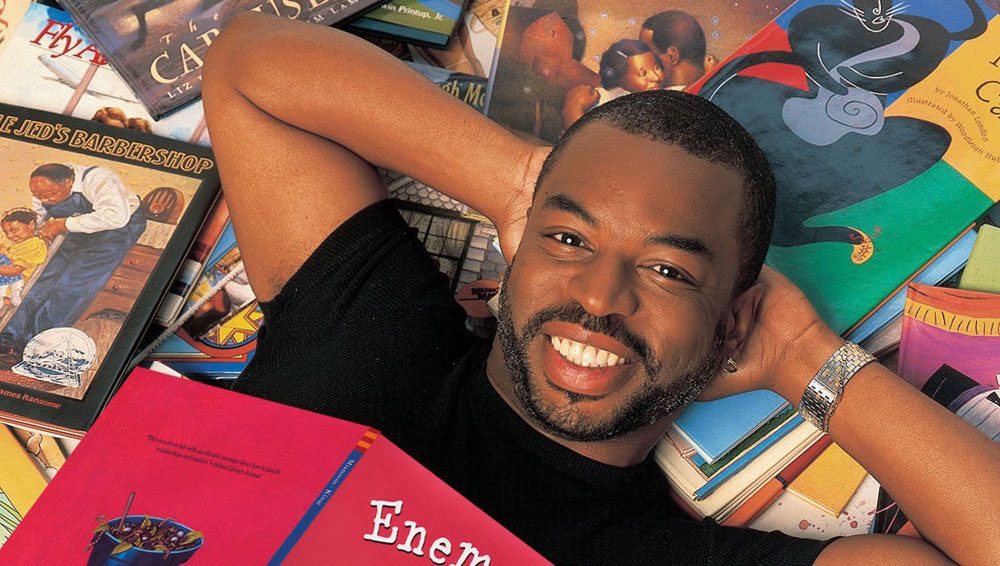
The only thing missing was a host. LeVar Burton was previously studying to be a priest before he went into the acting world. When he was pitched the role of Reading Rainbow after his hit success on Roots, he knew it was perfect for him. He commented on the idea of going from major actor to hosting a children’s program: “I grew up with the idea that one’s life should involve service.” And serve he did for 23 years. The show went on to become the most watched PBS program in classrooms, and, as stated in the documentary, sales of children’s books went up 800 percent. It is difficult to deny the success of preaching the joy of reading directly to children’s hearts; it surely goes further than any required reading ever will.
Unfortunately, according to the Pew Research Center, children reading for fun has dropped back down. It’s easy to point to the tablets, phones, and social media as the red-handed culprit, but R. Joseph Rodriguez, a teaching fellow at the National Book Foundation, thinks it’s something similar to what the creators of Reading Rainbow thought: “The joy of books has been killed. Suppressed, tested, and killed.” He goes on to state how crucial it is for students to have the freedom to pick books themselves. Perhaps we’ve lost the essence of what Reading Rainbow was attempting to teach on how we can affect change in people. It is a philosophy we can all take note from, including the church who finds themselves on the decline not only in attendance but in cultural impact.
Simeon Zahl has an extremely helpful essay on theories of change where he uses an analogy of having the proper drill for the specific task at hand to describe how theories of change work, or sometimes don’t. “If your current approach to ministry isn’t working, then chances are, you’re using the wrong tools. You’re wielding some faulty theological assumptions.”
While riffing on Augustine’s approach to change, Zahl finds the implication that “the heart of Christian ministry is the facilitation of an emotional encounter with the God revealed in Jesus … The intransigence of the human heart is the fundamental problem of Christian ministry. The Spirit of God traffics in emotion and desire.”
Emotional infiltration of the heart is the reason Fallen Angels sits on my shelf today and holds such a strong place in my memory. Pixar characters sneak in through the cardiac back door, leaving children joyous and their parents watery-eyed. C. S. Lewis sends the unsafe but good lion to knead his reader’s hearts. The Old Testament is full of messages of God’s provision and salvation wrapped up in holidays and joyful celebrations — the Israelite calendar was packed with them. Jesus crafted his message with parables littered with daily life objects and subjects to press into the hearts of people. Paul spoke of the “Unknown God” because he knew the heart of the Greeks. And Augustine, well aware of the heart’s power, wrote, “A hearer must be delighted so that he can be gripped and made to listen.” Throughout the Scriptures are numerous cries to God to “incline” or “turn” our hearts toward him. Without this, we are hopeless.
The tactics of books read by deadlines, testing of reading skills, and required reading may certainly have their place, but they will not produce the fruit we hope to see. These are no different than sermons which tack on guilt — laying out unnecessary prerequisites to receiving God’s grace — or angry street preachers with displeasing signage. We need our hearts in the crosshairs. Jamie Duneier, a book review kid from Reading Rainbow, now all grown up and reflecting back on his fully blossomed love for reading, described this truth: “We process information differently when it’s touching our hearts.”
When it comes to the gospel, nothing kills the joy of the good news like persistent unhealthy examining of your faith to determine if you are still saved or not, checking off boxes to make sure God still likes you, and stewing in guilt rather than basking in grace. Like Rodriguez said above, when it gets to this point, the joy of the gospel has been killed. Suppressed, tested and killed. It should be of great concern that a large portion of society attributes traits like judgmental, unloving, and boring to the modern church rather than forgiving, gracious, and merciful. (I do not claim innocence in contributing to the ill-repute.)
A coworker of mine, who is a self-admitted weary and hesitant churchgoer due to an experience with a gristled, fire-and-brimstone-preaching church, put it best when he said he was “looking for something more like a massage.” One might bristle at that, thinking people need to work out their spiritual muscles not have them pampered, but the church is a place for those already sore and beaten up by the world — sweaty and pinned down under the weights of life. And in fact, the heart itself is a muscle, one which God desires to massage and stir up with the good news of his Son given on our behalf so we can lift our weary heads and see the beautiful butterfly in the sky. Go ahead and take a look: It’s in a book.