




When someone asks you, “How are you?” you can either respond with the easy answer or with the real answer. Last week, I went with a real answer. Sitting in the dentist’s chair about to have a tooth extracted, the dentist casually turned from the X-ray on the screen and asked, “So, how’s the rest of your day been so far?”
“Actually, this might be the best part of my day,” I said. “I’m going through a divorce and today was one of those ugly days. I wish extracting a husband was as easy as extracting a tooth. I mean, at least I get pain medication for this!”
To my dentist’s credit, he didn’t flinch. He just said, “I’m sorry to hear that. The good news is this procedure should be fairly straightforward, even if the other part isn’t.”
“Great. Well, this pain is also giving me a good excuse to hide on the couch for two days, so I’ll take it,” I replied.
Because there’s no hiding from the other pain. Divorce may not be death or disease, but it is every part grief and drawn-out pain. Just pain, more pain, and no relief. The only balm I’ve found recently is listening. Listening to audiobooks, podcasts, music — anything to help drown out the voice in my head.

One of the books I listened to recently was poet Maggie Smith’s You Could Make This Place Beautiful, all about her divorce and self-rediscovery. My sister read it at the same time and couldn’t help pointing out the many similarities between her story and mine. It was a strange kinship, although I can’t say it was pleasurable reading about someone else’s pain. It was good, however, to hear someone else put words to an experience that I don’t always know how to share with others. Like explaining how similar and yet profoundly different death and divorce are, she describes it this way:
Mourning a living person is different from mourning the dead.
A woman whose husband dies is a widow.
But there is no word for a person who grieves a living person. There is no name for what you are when a part of your life and identity dies, but YOU go on living.
There is no name for what you are when you outlive the life you expected to have and find yourself in a kind of afterlife.
Chaos would be a good way to describe the afterlife with my kids these days. I have ridden more of their emotional roller coasters in the past six months than I have their entire lives. It’s like a season pass with no idea when the season actually ends.
If Ecclesiastes says there’s a Time for Everything and a season for every activity under the sun, then I think they skipped a few lines for the season of Kids’ Emotional Pain:
A time for screaming and a time for cursing, A time for shredding love notes from mom and a time for tearing up journals,
A time for jumping on furniture and a time for refusing to move
A time for beating and slamming doors, A time for breaking objects, A time for writing “I hate you” notes to mommy, A time for throwing stuffed animals
A time for running away
‘Tis the season of struggle.
My daughter told me all about black holes and how they don’t let any light through. In my journal that night I wrote all about how a black hole might be a great way to go. I even contemplated booking a flight to Bermuda and hoping for the best. In this case, “the best” would be getting sucked into a black hole and just disappearing into nothingness. I made a list of all the things I’d be free of if I could escape into total black. Just the thought was freeing.
It was a black hole kind of day when my youngest sister called this summer. She lives in Europe and our schedules rarely align, so there was no choice but to answer when her name popped up. I got on the phone and immediately told her “Sorry, you’ve caught me at a bad time…or maybe you called at just the right time.” I burst into tears as I recounted the latest unpleasant events and how crushed I was feeling.
She listened as I sat in my car and vented.
“I hold it together for everyone else so that they can fall apart. But sometimes I want to be the one that falls apart! Sometimes I want to be the person who slashes tires and breaks glass and just lets it all out!”
The next morning I awoke to an email that said, “Congratulations, Katy! We are pleased to let you know that Rachel has gifted you a free ‘Controlled Chaos’ session at our rage room!”
For the uninitiated, a rage room is a dedicated space full of breakable things where you can literally “lose it.” After putting on protective gear, you can break, smash, throw, and utterly destroy anything in the room. And even better, when you’re done you get to just walk away and leave it all there on the floor. In the gift card was a note from my sister that said, “It may not be exactly what you want to smash, but hopefully you can use your imagination and still enjoy some stress relief. Love you!”
Best. Gift. Ever.
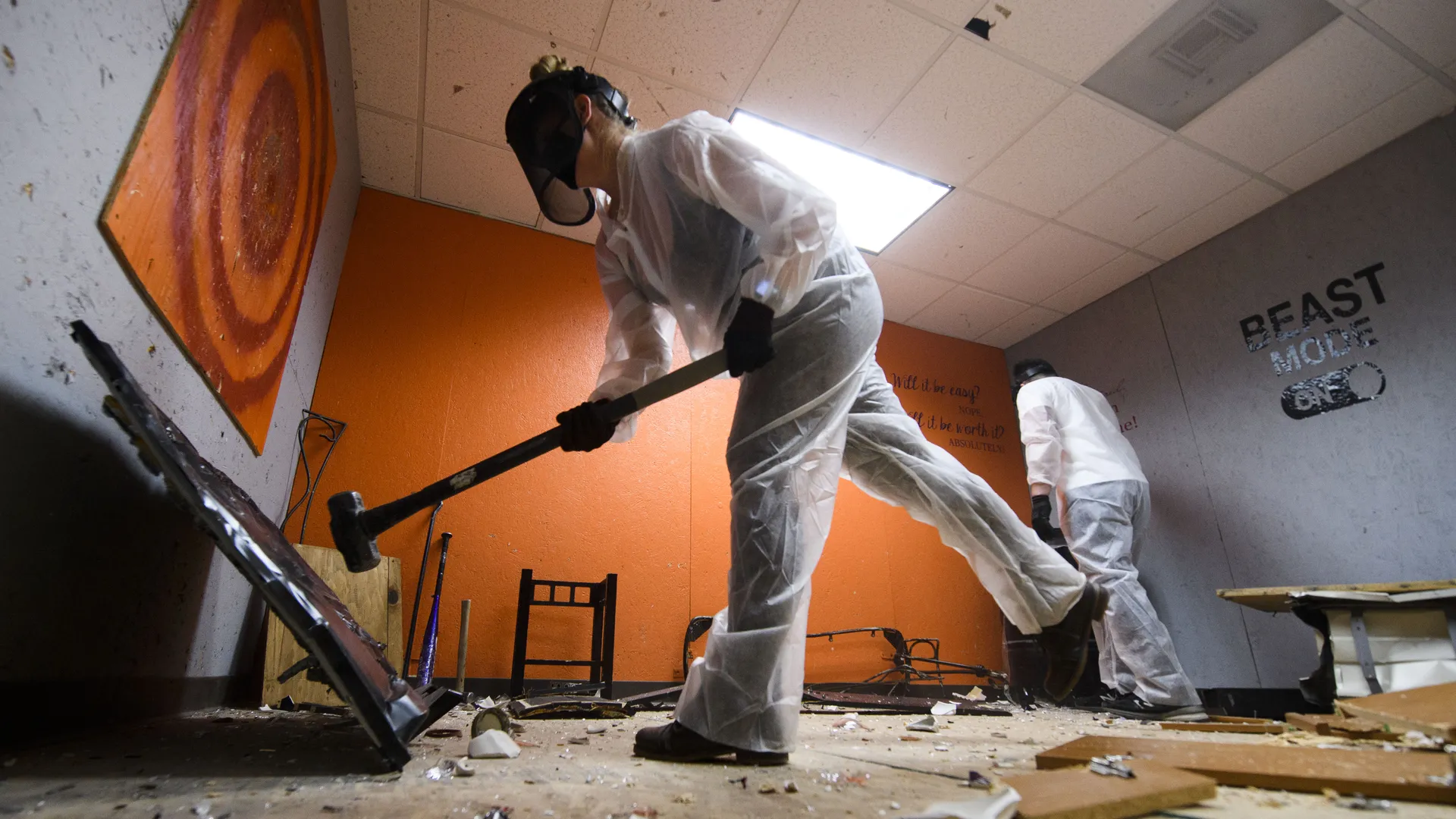
We may not all smash things or visit rage rooms, but we all find our own ways of coping with the darkness.
Poet Maggie Smith’s poem “Good Bones” went viral in 2016 after one of the many mass shootings in our country. It was her attempt to express the angst she felt as a mother watching her children grow up in an increasingly conflicted world. Her way of trying to cope. It goes like this:
Life is short, though I keep this from my children.
Life is short, and I’ve shortened mine in a thousand delicious, ill-advised ways, a thousand deliciously ill-advised ways I’ll keep from my children. The world is at least fifty percent terrible, and that’s a conservative estimate, though I keep this from my children.
For every bird there is a stone thrown at a bird.
For every loved child, a child broken, bagged, sunk in a lake. Life is short and the world is at least half terrible, and for every kind stranger, there is one who would break you, though I keep this from my children. I am trying to sell them the world. Any decent realtor, walking you through a real shithole, chirps on about good bones: This place could be beautiful, right? You could make this place beautiful.
You could make this place beautiful.
The last line of the poem inspired the title of her divorce memoir. On the surface, the poem is comforting. The idea that you … I … we could make this place beautiful — just by putting in some solid effort and elbow grease. Sounds so inspiring. And I probably agreed with that sentiment when I first read it … before now.
Now, I’m thinking Maggie got it wrong.
Sorry, let me clarify. She nailed the dark part. But me — make this place beautiful? No. I can’t. I can only hurt, break, and destroy what’s around me. Look, I want to smash things to feel better! Sure, it may feel good at the moment, but it’s just more destruction. I’m a rock with sharp edges sliding towards the bottom and doing some real damage on the way down.
I’ve taught the rock cycle to fifth graders enough to know more than I need to know about rocks. You know what rocks do?
Break. Crumble. Weather. Fall. Erode. Change. Slide. Compact.
But see, the rocks don’t actually “do” any of those verbs. They are passive participants, not actors. The actions are being done to the rocks not by the rocks. They are acted on by external forces.
Rocks weather and erode due to water and wind. Rocks compact because of exerted pressure. Rocks slide and roll because of gravity. Rocks get kicked, tossed, moved around, broken…all because of someone or something else. They take a beating just for existing in the world. They have no control. Rocks do not independently make the world beautiful.
On a recent trip to Placerville, California, I gave each of my kids $10 and said they could buy whatever they wanted in the old hardware store. Anything. And you know what they chose?
A bag of rocks.
Well, to be specific, a bag of polished gemstones. You know, the colorful kind where for $10 you can take as many as you can fit into the little black pouch.
I was shocked. They had a store full of random treasures and they both chose the same thing. When I asked them about their selection, my daughter said, “I like how smooth they feel and how they shine.” And my son said, “It’s cool to lay them out and see all the different colors at once.”
We find the most precious gems in the darkest spaces and disaster zones, places where time, pressure, heat, and erosion have transformed mere rocks into beauty.
A couple of months ago, my therapist proposed the term “diamond hunter” for me. She said I had a pattern of sharing my darkest moments, pausing, and then naming something beautiful that came out of it. Essentially, I would work my way through the darkness and come out with a diamond on the other side. While I agreed with what she saw, I laughed and said, “Well, ‘diamond hunter’ might not be the best nickname when there isn’t one on my finger anymore. Could be misinterpreted…”
But thinking of my kids I offered up “gem collector” as an alternative.
“There are all these hidden gems I’m discovering,” I told her. “Gems right under my feet that have been here all along and I just didn’t see them before. Now my eyes are open, and I see them everywhere. They’re giving off glimmers of hope and it makes me feel a lot less alone.”
A time for rocks and a time for gems. Our God is a God who shows up in the dark.
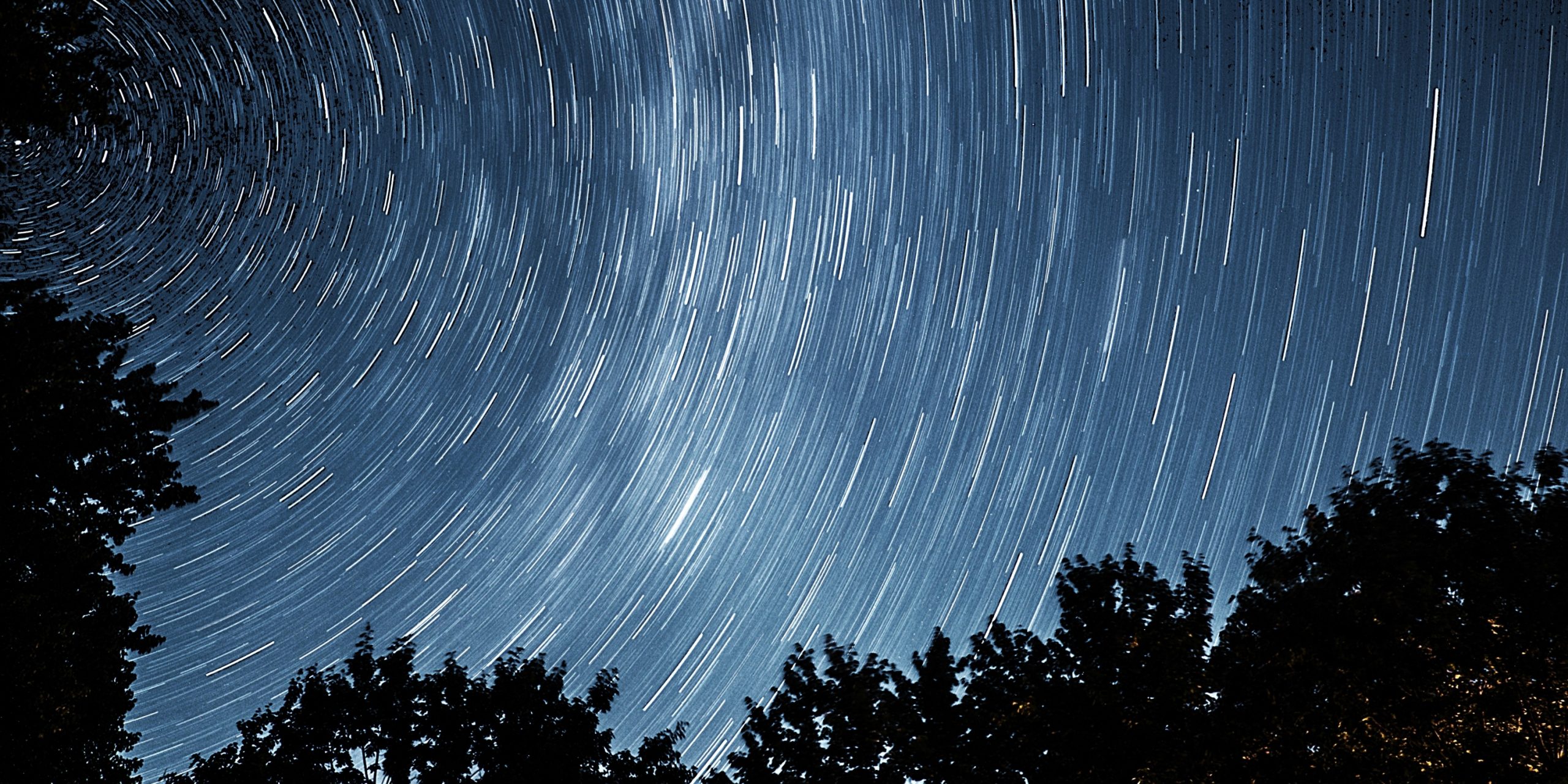
In him was life, and that life was the light of all mankind. The light shines in the darkness, and the darkness has not overcome it.
Our God came down to us and he was battered, broken, and bruised just like us — FOR US. But he was not destroyed by the darkness.
That’s why even in the deepest darkness we still see him. And I’ll go even further and say that’s where we see him most clearly.
My son explained to me recently that our eyes are built for light. The darker it gets the more our pupils dilate in order to detect even the slightest hint of light. Our eyes open wide in the dark.
This Saturday may be the longest night of the year and it may be dark, but we are not in a black hole. The light still gets through — we haven’t been left in total darkness.
Jesus, “the true light that gives light to everyone,” has come into the world and I see him in the light of glimmers. Emmanuel — God with us. God with me.
See, I didn’t tell you the full story of my tooth extraction last week. After I made the crack about my divorce and extracting my husband, the dentist gave me the local anesthesia and left the room.
After he walked out, his assistant turned to me and said, “I’m so sorry. I know it’s hard — I’ve been there. It’s a lot of pain right now, but you’ll get through it. I’ve been with my second husband twenty years now and he’s amazing — more than I ever imagined. Just hang in there.” I grabbed her arm and tried not to cry as I whispered, “Thank you. I needed that glimmer of hope today.”
Emmanuel — God with me.
Or just the other day, in the midst of a painful reunion with my kids, I had to pretend to use the bathroom so I could go sit and cry. Right then a text from my neighbor popped up that said, “Want to come over for a cup of tea?” When I got to her door, she greeted me with a hug and said, “When I took the dog for a walk he stopped at your driveway and just stared at your house. It was the strangest thing, I couldn’t get him to move. I figured he sensed something I didn’t, and I should probably check in.”
Her dog laid at my feet the whole time I sat at her kitchen table and bared my bruised soul.
Emmanuel — God with me.
Or the coworker I now have a weekly lunch with who bought me a fish keychain on their vacation and says, “I saw this and thought of you. You’re a fish out of water right now, but you’ll learn to swim again.” How did they know? I use that gift every day.
Emmanuel — God with me.
See whenever I have shown up as a hot mess — the honest, open, transparent mess that I am — I’ve been met with unexpected love and grace. A reflection of the light — a reminder that I’m not alone.
I started writing them down when I first started noticing just so I wouldn’t forget. But now I’ve seen so many glimmers that there are too many to recount.
I mentioned the list to my aunt, a widow for many years, and she half laughed and half caught her breath. With a knowing smile and tears in her eyes she said she remembered keeping a similar list when my uncle died. “There was something every day,” she said.
My hunch is you see them, too.
But you haven’t just seen them, you are the glimmers. Hidden in rock, broken and exposed in the rubble. You are the colorful gems that reflect the light. Gems don’t shine because they have their own internal light. They shine and shimmer because they reflect the presence of an external light in the same way John says, “He was not the light; he came only as a witness to the light.” You witness to and reflect the light in the smallest of moments — in ways you may not even realize.
Fleming Rutledge said:
The mystery of God’s activity in the world is that the tiny signs of faithfulness and love and mercy and hope, the tiny signs enacted by the Christian community, are the pointers to the glory that will come when the Lord takes his power to himself. This is not the way I would have done it; it is not the way you would have done it. No wonder we take offense. You and I would have made it obvious, so that it would have stunned everybody and made argument and questioning irrelevant.
She’s right. This isn’t the way any of us would have done it. Let’s be honest, we want a blinding, piercing light so obvious that we all fall to our knees.
God chooses glimmers. And rocks. Rocks that break and crumble. Rocks that have no control, no power. But rocks that he transforms through heat and pressure and water and wind…and time. Exposed gems that reflect his glorious light into the darkness.
It’s not that he could make this place beautiful. He is making everything beautiful in its time.








Wow, Katie, this is awesome. Thanks so much.
Beautiful stuff, Katy! “God chooses glimmers. And rocks. Rocks that break and crumble. Rocks that have no control, no power. But rocks that he transforms through heat and pressure and water and wind…and time.”
Thank you for embodying what it means to testify to the goodness of God in the midst of life’s messiness. Your words are a gift to the Church and to anyone searching for assurance that they are not alone.
May God continue to bless you as you share your story and bear witness to His abiding presence.
I agree with Anthony; WOW. It’s brings so much comfort when you know someone gets where you are, even though they can’t fix it.
Exodus 34:6-7 has become my favorite scripture. I read that it’s the only place in the Bible where God describes Himself in the third person, and is subsequently the most quoted scripture in the rest of the scriptures. The part in verse 7 that is normally translated as “visiting the sins of the fathers down to the third and fourth generation”, I’ve read in the original language is the word “piqqudim”, which among other meanings can be translated “supervises”. God supervising the consequences of the sins of the fathers so that the full corruption of them does not affect us or His creation. But they do still, as your article beautifully illustrates, affect us. The description of how rocks are changed sounds, to me, just like that. Your article is one of the best things I’ve read. Thank you!