




“As it was in the beginning, is now and ever shall be: world without end. Amen.”
These words reverberate against the many cold slants of the chapel walls until they reach its stone ceiling top. Sitting in a room like this — detailed, lofty, and calling your eyes upward — these words seem more true, more alive. It’s as if this “world without end” might just be breaking in on you, with or without your consent, during these dimly lit evening prayers.
The ancient practice of Compline makes me less afraid of death, because there are some days when our finitude seems like a shadow behind all my thoughts. When the reality of what Sally Rooney calls “the cruelty of time” begins to set in.
In Rooney’s most recent novel, Intermezzo, two brothers wrestle through the grief of their father’s death, trying to process mortality with the tools they have available to them as young men in modern-day Dublin. You can feel the gritty flatness of urban existence pulsing in the novel as characters check their iMessages, spiral into quiet anxiety, and exist in a state of isolation, sharing apartments with roommates they barely acknowledge and in strained relationships with their families.
But in what feels like a grey-colored wasteland, flashes of glory do indeed break through. Quick and inconsistent moments of joy arrest each of the brothers, stirring them as they offer love — tentative and sincere — to their budding love interests. Rooney’s writing style reads uncannily true to life, with all our inner dialogues, our reckoning with hollowness, and our flushes of intense emotion attentively represented.
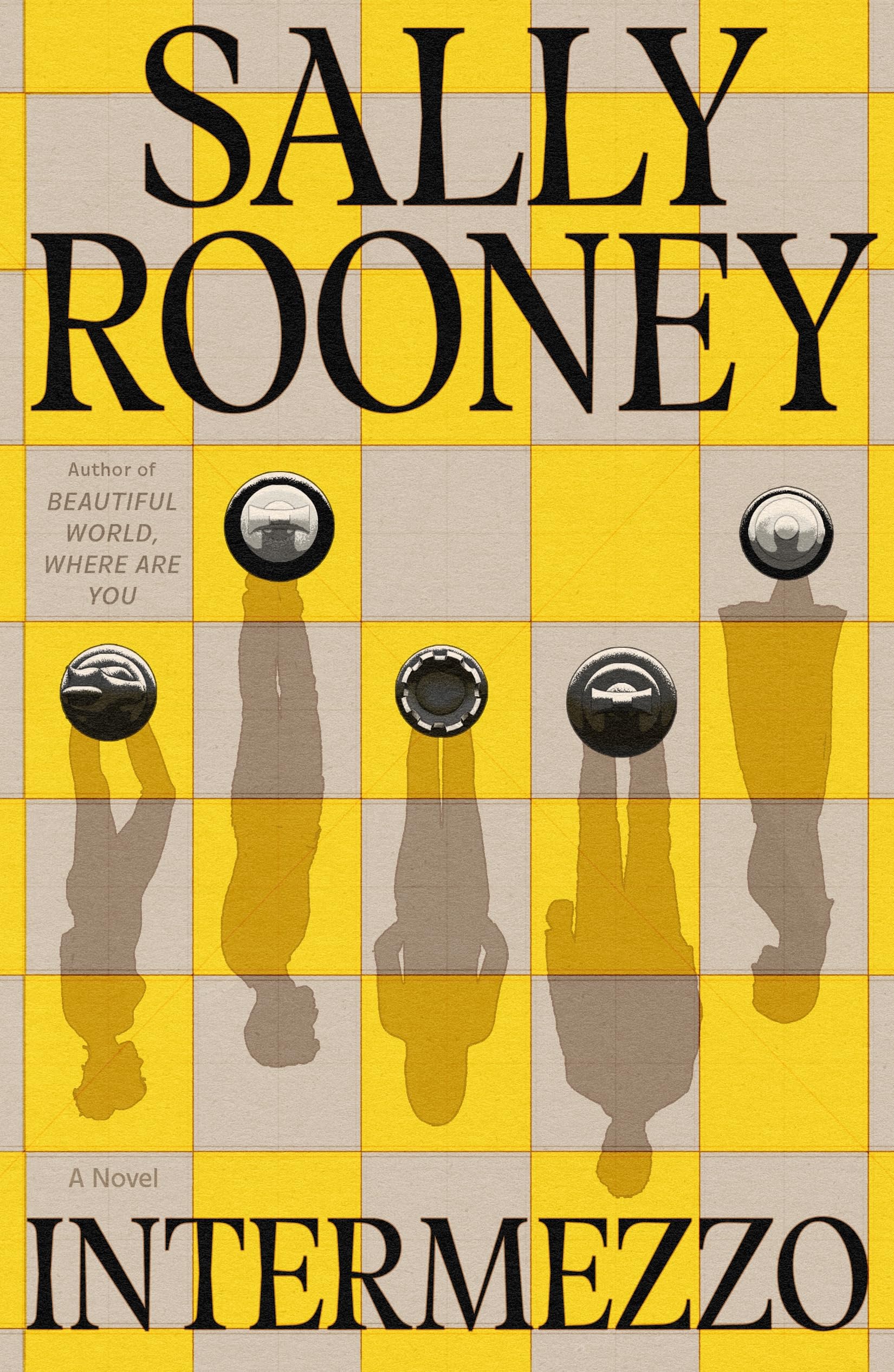
Towards the end of the story, one of the brothers breaks down in tears while talking about his father who passed away, saying, “The person who’s gone has no reality anymore, except in thoughts. And once they’re gone from thoughts, they actually are completely gone. If I don’t think about him, literally, I’m ending his existence.” His words capture the feeling — even the burden — of life for so many young people today living inside what Charles Taylor calls the “Immanent Frame,” or a trademark of the modern subconscious where only the material is real and the supernatural has been dismissed.
There’s something claustrophobic about Intermezzo.
Without the supernatural plane, all the glories of the divine must be crammed into fleeting moments of fluctuating affection with girlfriends and the fragile scaffolding of the memory of their father. And yet, the irony is that the story is ultimately framed through grief. Death enters, and with it, an ache too vast for the space allotted to it, and the characters become yoked with ungraspable longings. Perhaps this may even be the very tension Rooney is trying to highlight, her work embodying Taylor’s concept of the mutual haunting occurring in both religious and secular minds. Taylor argues that in our times, the believers harbor secret doubts, and the nonreligious person fights the feeling that maybe there really is something beyond — both instincts being easily located and experienced by the reader of Rooney’s narrative.
***
There are moments when heaven and earth kiss before our very eyes. Time, in this way, is not merely a “horizontal” linear ticking of the clock forward, but, as Charles Taylor argues, “vertical” and tethered to the transcendent eternal. Because, as Augustine recognized, all of time is equidistant to God, then through him the believer is invited to a kind of fellowship with God’s people across the ages in the here and now. Theologian Hans Boersma takes this further, arguing for a Christian sacramental view of time in which heaven and earth are not “two essentially unconnected stories, where the bottom half at best vaguely resembles the top,” but rather, interwoven realities.
In Intermezzo, one of Rooney’s female characters thinks to herself, “The only answer to death, she thought: to echo back its name in that way, with all the same intensity, and senselessness, on the side of life.” This response throbs with energy, resolve, and desire, yet satisfies only half of the equation and leaves us with a strong taste of the absurdity of death in our mouths. And while death will always carry the hint of absurdity while we are in this life, a sacramental view of time bypasses the cruel cage of the mere immanent. It shows us more than just meaning through a kind of defiant act of living, ushering us beyond and into a delicious communion with the eternal on this side of life and the side after death as well. Yet also — I don’t fully blame the perspective voiced by Rooney’s female character. Sometimes, I can get quite cozy in the immanent frame. My own time scarcity mindset begins to take hold — hands helplessly clutching the people and places I love before something takes them away.
I live in a 1,000-year-old city established as a cluster of monastic learning communities in the Middle Ages, I think about monks a lot. And don’t monks ponder death all the time? Or so goes the old anecdote about the monks who displayed the former abbot’s skull on their desks to keep their mortality top of mind. Consequently, I’ve found their bedtime prayers oddly helpful to my young modern soul.
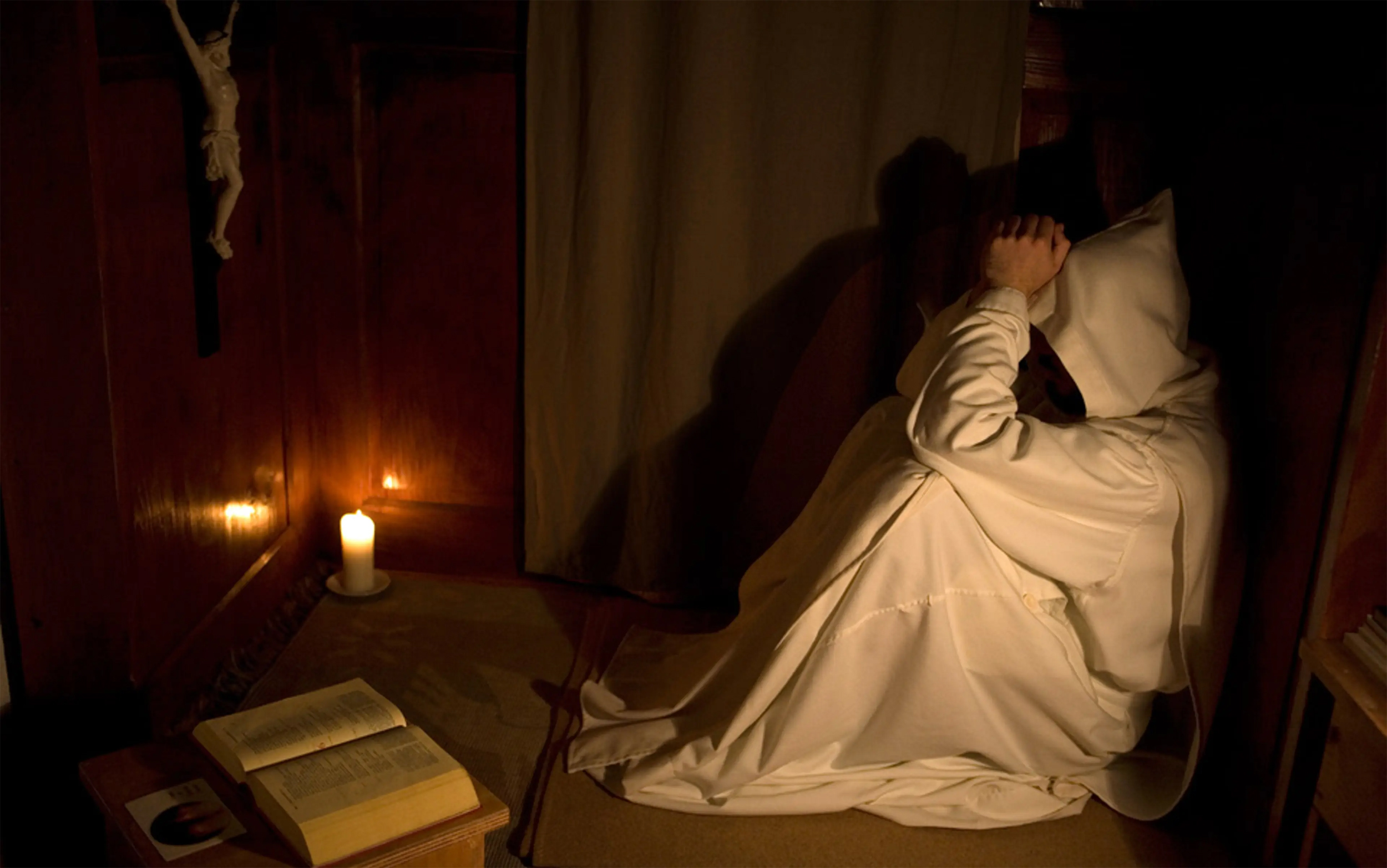
Compline comes from the Latin word completorium or completion, to signify it as the final fixed-hour prayer service observed in the daily office, rounding out the day. While its exact origins are debated, some scholars attribute it to the desert fathers and their early monastic communities formed in Egypt in the fourth century. Other liturgists argue it was institutionalized by the Rule of St. Benedict in the West in the sixth century and by St. Basil in the Eastern church. Regardless, a monk’s life was organised by the interweaving of “sacred” and “profane” times — around set routines of worship and a life of prayer and service. Compline formally became their bedtime prayers.
The service is short and sweet, only lasting about twenty minutes, but enough time for its contemplative themes to settle over you. You slowly enter a dark chapel and are handed a candle to hold throughout, joining the other small flickering flames which line the space. The service’s content plays with the themes of light and darkness, which you are in the process of so viscerally soaking in through the physical setup of the room. What first seems like a strange or otherworldly practice grows slowly familiar through regular attendance. The loving labor of ritual has its way with you, motioning in spiritual growth through the backdoor of the senses and not only the mind.
One luminous line includes a request to God, asking him to “lighten our darkness,” offering the participant the chance to reflect on their day and enter into a moment of repentance as they sit in a room thickly cloaked with a deep dark. The liturgy also asks for spiritual protection during the hours of the night, pointing back to more ancient times when people believed that the darkness of the night brought heightened vulnerability to spiritual ills, highlighting the more enchanted worldview of the medievals — or one that saw the spiritual realm as an undeniably alive and active force in our world. Other themes during the service include meditating on peace, our own mortality, and entrusting ourselves to God’s tender care. Sounds like a soul well prepared for bed if you ask me.
***
In Compline’s quiet repetition, I find myself becoming a kind of spiritual timekeeper, leaning into rhythms that push against the frantic and consistent march of ordinary hours. James K. A. Smith writes, “An eschatological life is one animated by the cadences of two hopeful exhortations: ‘Lift up your hearts’ and ‘Be not afraid.’” Compline is one such moment — an anchor in higher time, a glimmering whisper and quiet confirmation that eternity exists and that it does not merely wait at the end of history but presses in on us now. Thankfully, we are not contained in a cold, impersonal universe, subjected to false and arbitrary pangs of immortality.
No, we are caught up in an intimate and wild cosmic narrative — complete with talking snakes and evil spirits, a gentle king, the age-old sacrificial hero, a climactic rescue, an endless good, and union with the divine. All our mythic longings are true, including the especially stubborn one that death is outsmarted.
When I sit in the cold darkness of Compline, I think about death. I think about my beloved mentor who recently passed away, wondering if her spirit might even be whirling around somewhere in the room. I am ever so tenderly held by small flickering lights — the one I am cradling and the tiny warm flames dotting the dark room. Their physical nature awakens me to spiritual realities poking through, all the while casting light on a chapel that makes me dream — or even touch momentarily — the “world without end,” this lovingly strange cosmic drama ever enfolding me.
Carolyn Morris-Collier completed her master’s at the University of Oxford’s international development department. She is an assistant editor for Ekstasis Magazine by Christianity Today. Carolyn writes a Substack called The Green Door, where she thinks about religious trends, re-enchantment, and culture. She’s also been published by The Gospel Coalition.
Works Cited:
Charles Taylor. A Secular Age. Harvard University Press, 2007.
Hans Boersma. Sacramental Ontology: A Christian Ontology of Participation. William B Eerdmans Publishing Co, 2011.
James K. A. Smith. How to Inhabit Time: Understanding the Past, Facing the Future, Living Faithfully Now. Brazos Press, 2022.
Sally Rooney. Intermezzo. Atlantic Publishers and Distributors, 2024.








Thank you, Carolyn. For me, Tish Warren’s book, Prayer in the Night, is a God-inspired work of theological art on Compline. In one of her darkest moments of life, Tish says: “I needed healing—but I needed more than just healing. I needed this moment of crisis to find its place in something greater; the prayers of the church, yes, but more, the vast mystery of God, the surety of God’s power, the reassurance of God’s goodness.”
This is great!
There is so little opportunity for Protestant monasticism here in the USA. I recently did a Zoom call with the SSJE (Society of St. Joseph the Evangelist) in Boston, MA, which is the Episcopal Church’s (ECUSA) monastic community for the USA. Because I was not in favor of their monastery’s policy of accepting women who have ‘transitioned’ to identifying as men, I was told that their community was not a good fit for me to pursue. They discriminated against me. (VTS in Alexandria, VA also did this to me with their student contract that requires all students to reject ‘heteronormativity’). The SSJE in Boston struggles with membership and I suggested that if they return to their orthodox and traditional roots, they would probably have more young men join, or at least discern with them.
The Dominican Order (Roman Catholic rite) in the USA seems to be flourishing. Plenty of young guys seem to be doing the novitiate year to begin discerning lifelong vows, and the Washington, D.C. Dominicans support the academic evangelism of the “Thomistic Institute,” a sort of the Catholic version of Ratio Christi.
I don’t think Protestants will sufficiently value or promote monasticism until we value the Eucharist and celibacy the way that the Bible does. The Council of Trent elevates singleness above marriage as a more eschatologically advanced state, and I think it’s actually a wise articulation. As long as we Protestants talk about “being like Christ” as moral and behavioral category over and above an ontological, sacramental category…then we won’t have monasticism. Celibates are more like Christ than marrieds in a very real (and ontological) sense.
As we Protestants pine for the spiritual goods of monasticism… we will continue to either be restricted in theological retrieval by the regulative principle of worship in the PCA, for instance, or we will have to wait for the ECUSA to get back on the path of wisdom and join the extant ecclesial structures that have gotten a little wonky (like ECUSA’s SSJE).
An alternative to this, though, is that the ACNA has the ability to house and promote residential orders. I think the ACNA should start a rural, residential monastery here in the USA’s Deep South, probably somewhere in Alabama or south Georgia. It would be awesome.
See the provision for this in Title 1, Cannon 4, section 7: https://anglicanchurch.net/wp-content/uploads/2020/02/CURRENT-C-and-C-2019.pdf.
We in the ACNA need a “monastery planter” (similar to a “church planter”) like St. Teresa of Ávila who can go out, recruit guys and plant monasteries…!