




Never meet your heroes, they say. The same might be said for meeting your favorite saints. Even still, the history of the church is full of countless people whose lives have been a gift to us. The following isn’t a celebration of canonization so much as a celebration of sinner-saints for whom we are particularly thankful.
***
Irenaeus of Lyon (125–202), the disciple of Polycarp (who knew the Apostle John personally) said, “If anyone reads the Scripture carefully, they will find some word, some hidden treasure in the field, which is Christ.” I’ve always loved that — such simple yet profound hermeneutical advice. Just look for Jesus, he says. He might feel hidden at first, but when you’re armed with the right questions and expectations, and when you’re set free from looking at salvation through the lens of self, there you will find him, in the field of grace. – Christopher Wachter
 Lawrence of Rome (225–258): A sense of humor is a great gift to have if you are a martyr, particularly in the third century. When Saint Lawrence was asked by the prefect of Rome to turn over the church’s treasure, Lawrence brought him the poor and the sick the church had been helping, declaring them its treasure. Not finding this to be the least bit funny, the prefect ordered the saint to be placed upon a hot iron grill; and after a bit, Lawrence cheekily asked to be turned over, as “This side is done!” Humor and knowing you are secure in God’s grace is a blessing, and that security allowed Lawrence’s final words to be, “It’s cooked enough now!” Now you know why he is the patron saint of both cooks and comedians. – Josh Retterer
Paula of Rome (347–404) was born into a wealthy family and married an equally wealthy husband. Her young life and early adulthood were as comfortable as they could have been for a woman in the 300s. Then the heartbreak and grief came — her husband died along with one of her four children. It was then she turned fully to her faith. This pull by the Spirit brought her into connection with Jerome. She funded and supported through study and writing his translation of the Bible into Latin while also establishing monasteries in Bethlehem. She gave all her worldly possessions in service of the Lord. I am captivated by how her life was headed in one direction, and then by God’s grace she was invited onto an unforeseen path that by worldly standards seemed like a downgrade; and yet in Christ she became more fully alive than ever before. – Kallie Pitcock
Augustine of Hippo (354–430), that great Doctor of Grace, will always be the GOAT for me. Not only did that man help me come to understand the inner and existential restlessness I felt for so much of my life, but he taught me where (or better yet, to whom) I ought to direct it. Also, who else could get away with recording one of the very first instances of the fart joke: “A number of people produce at will such musical sounds from their behind (without any stink) that they seem to be singing from the region” (City of God XIV.24) – Jeb Ralston
Bernard of Clairvaux (1090–1153): I’m not an expert on the saints in either the Catholic/Orthodox capital “S” form or (obviously) the broader (and preferable to me) Protestant definition, but I did enjoy Bernard of Clairvaux’s On Loving God when I read it for a class a couple of years ago. Though God’s love is the main thrust of the book, Bernard also focuses on unmerited grace and our inability to ever balance the scales, which I think helps explain why Martin Luther liked him as much as he did: “[Bernard] deserves to be put ahead of all other monks!” As is the case with many mystics, there is occasionally a sense of easily mapped progression in Bernard’s writing on the spiritual life (the “four degrees of love”), which can raise my hackles pretty quickly, but you also get a sense that he doesn’t necessarily believe that we progress by what we do. Rather God, as the active agent, may make us more aware of our need for him, and that humility and receptivity are the actual marks of spiritual “progress.” “If man’s tribulations, however, grow in frequency and as a result he frequently turns to God and is frequently freed by God, must he not end, even though he has a heart of stone in a breast of iron, by realizing that it is God’s grace which frees him and come to love God not for his own advantage but for the sake of God?” – Joey Goodall

Julian of Norwich (1343–c.1416): I think the first time I heard about this great English mystic and theologian was in relation to her famous quote, “All shall be well, and all shall be well, and all manner of thing shall be well,” which I have found to be a comfort throughout my life. When I became a mother, I found that her situating of divine love within descriptions of maternal love — as she does in Revelations of Divine Love — provided another entry point for me to feel loved and understood by God. Add to all that the facts that she was a woman living at a time when they were largely ignored, that she offers a glimpse of divinity through the lens of experience and mystery … and well, I’m a fan. – Stephanie Phillips
Martin Luther (1483–1546): Irony abounds in this choice, but it’s appropriate for that very reason. The merits of calling him a saint are mixed. He wasn’t a martyr, was declared a heretic in his day, wasn’t famous for his extreme piety — quite the opposite! — and his life was not without its inexcusable faults. And yet, without him the very idea of sainthood (and even salvation itself) would have remained a category reserved for the famously pious who managed to have their faults omitted from the history books. Luther uniquely understood that saints were just ordinary people who were justified by faith, which is the kind of brilliant insight that might just qualify one for sainthood. Not that Luther would care, of course. – Todd Brewer
Teresa of Ávila (1515–1582): I only came upon St. Teresa within the last five years. Mother Teresa of Calcutta I was familiar with and in awe of her obedient devotion. But Teresa of Ávila, with her “interior castle” and “let nothing disturb you” and “whoever has God lacks nothing?” — how could she say such mystical and sure things? I bet God has a good laugh with us grasping for new inspirations and ways to pray when there is literally an entire cloud of witnesses who have gone on before us, leaving their written wisdom in their wake. Engraved on my little wooden icon of St. Teresa, she is declared to be the patroness of “faith invoked against headache and heart disease.” I turn it over in my hand and read, “Let nothing upset you. Let nothing startle you. All things pass. God does not change. Patience wins all it seeks. Whoever has God lacks nothing. God alone is enough. It is love alone that gives worth to all things.” For a woman who followed God through terrifying darkness in prayer and was even reported to have said to God, “If this is the way you treat your friends, it’s no wonder you have so few!”, she has become a welcome companion. – Janell Downing
Johann Friedrich Oberlin (1740–1826) (yes, as in the college!) was a Lutheran pastor in a tiny village in the Vosges Mountains west of Strasbourg for nearly 60 years. His gospel passion overcame the congregational posse that intended to beat him up on arrival, the poverty that left his village destitute and starving, and the French Revolution that deprived clergy of their living and frequently their lives. To my eyes, Oberlin is the most beautiful embodiment of total commitment to all the needs of God’s people, never prioritizing one over the other: deep instruction in the “dear Bible” paired with better breeds of potato, education for little children with a printing press to make cards with scripture verses on them, conscientious refusal to consume the sugar and coffee produced by faraway slaves with continual exhortation to grow in obedience and holiness. And he had a happy marriage and raised children who loved him. What amazes me most of all is that this man, already renowned in his own time, never left his Podunk village despite “better” offers that poured in — even when the money evaporated. Worldly insignificance means nothing in the kingdom of God. Quite the opposite! – Sarah Hinlicky Wilson
Fanny Crosby (1820–1915) A minor eye infection as a six-week-old baby blinded Crosby for life. Nevertheless, she developed a joyful love and facility with beautiful words, especially poetry and scripture. At Broadway Tabernacle Methodist Church in NYC, then 30-year-old Fanny had a deep experience of the assurance of salvation (“My very soul was flooded with celestial light”). She would go on to write over 8,000 hymns, including “All the Way My Savior Leads Me,” “Blessed Assurance,” and my personal favorite, “To God Be the Glory” (#41 in the Baptist hymnal of my childhood). This woman who could not make out a hand in front of her face would later write: “But purer and higher and greater will be / Our wonder, our victory, when Jesus we see.” – Larry Parsley
Anna Alexander (1865–1947) was born the youngest of eleven children to recently emancipated slaves in St. Simons Island, Georgia. She learned to read and write using the Bible and Book of Common Prayer and eventually became a school teacher, hoping to teach children not just to read but also the story of God’s love for his people. In 1894, she founded a mission in the rural town of Pennick while continuing to teach in nearby Darien. When the mission was initially unsuccessful, Anna took a job in Virginia but was asked to return and restart the mission in 1897, establishing both a church and a school while supporting herself with sewing projects. In 1907, she was consecrated a deaconess in the Episcopal Church, the church’s first and only African American deaconess. But that same year, the Diocese of Georgia split and the new bishop withdrew funding for African American missions. Anna persevered, scraping together enough donations to keep the mission going, sharing God’s love and educating young people for over three more decades. – Jane Grizzle
Josephine Bakhita (1869–1947) came from a small village in what is now western Sudan. In 1877, when she was only seven or eight years old, Bakhita was out with a friend when she was taken captive by slave traders and forced to walk over 600 miles to El-Obeid. In all, she would be bought and sold five times, experiencing all manner of hardships including being marked by one of her enslavers with 114 cuts that were treated with salt every day for a month. The scars remained for the rest of her life. In fact, Bakhita is not her original name, as the trauma of her experiences caused her to forget her birth name. Ultimately, her last enslaver brought her to Italy where Bakhita ended up at a convent run by the Canossian Sisters and experienced a religious awakening. As she later wrote, “These holy mothers … introduced me to that God who from childhood I had felt with my heart without knowing who he was.” With the help of the sisters, she was eventually freed then baptized and confirmed; and in 1896, she herself became a Canossian sister, serving in Vicenza for the rest of her life. Today, Bakhita is venerated as the patron saint of Sudan and human trafficking survivors. – Jane Grizzle
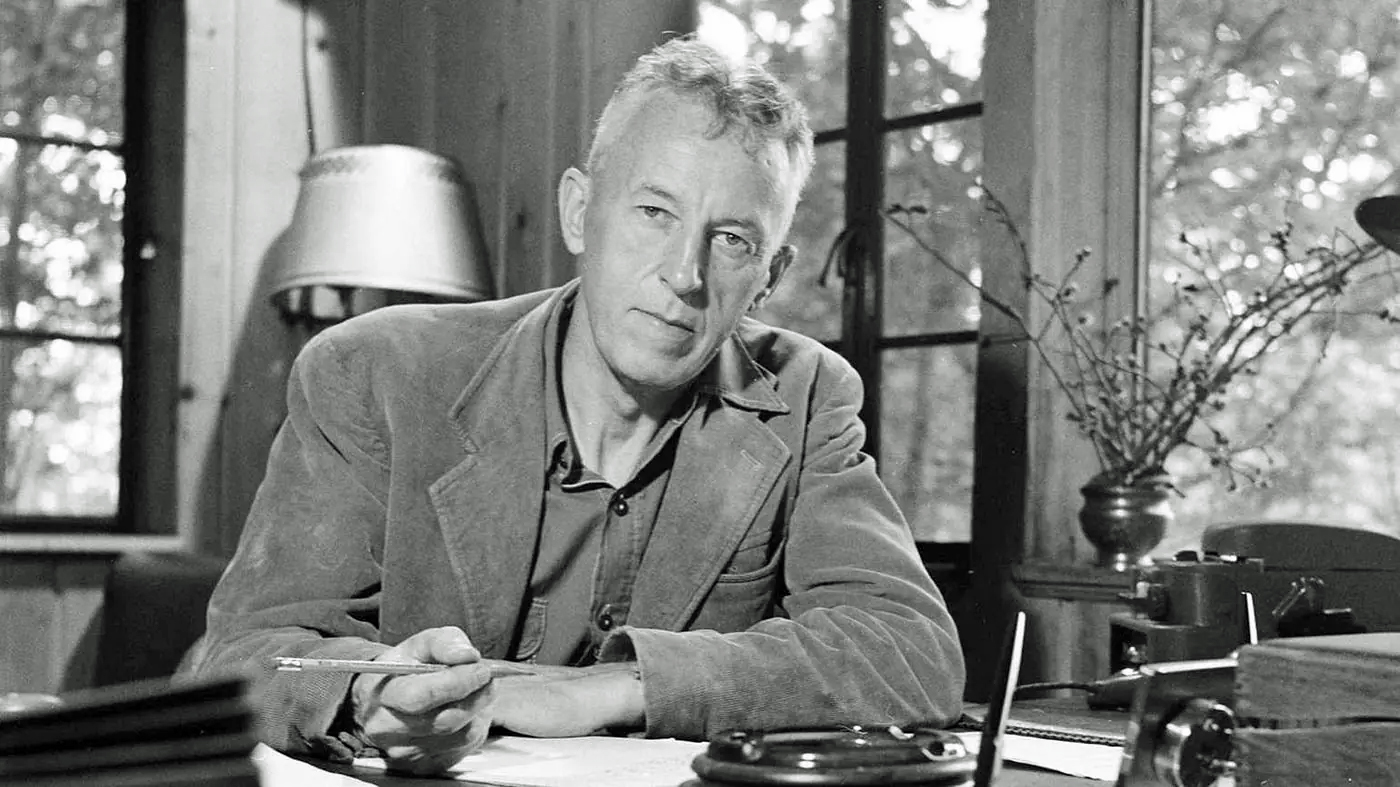
Bill W. (1895–1971): In 1999, Time Magazine listed Alcoholics Anonymous cofounder Bill W. among its “100 Most Important People of the Century,” designating him “The Healer.” While he certainly belonged on the list, that honorific was half-witted. Bill didn’t “heal” anybody. The whole essence of the 12 Steps, which have helped millions of people in the vise grips of addiction, is that “no human power could [relieve] our alcoholism … [and that only] God could and would if He were sought.” On our own, we are all just like Bill W. was — sinners “of the hopeless variety.” Before his spiritual awakening in 1934, Bill was an unemployable drunk, living on the charity of his in-laws, in and out of asylums, occasionally panhandling for booze money, and on the verge of premature death. God rescued him from the pit of despair, and then it was God who used him, like every great saint, to create something beautiful in this world — a fellowship and a program that has offered a conduit to so many for, yes, healing, but God’s healing. – Ben Self
The Village of Le Chambon and André Trocmé (1901–1971): During Germany’s occupation of France in World War II, the 3,000 villagers of Le Chambon saved the lives of almost 5,000 refugees. At the center of the action was the local church and its pastor, André Trocmé. At the beginning of the war, they didn’t have any plans for getting involved. But as they prayed and read scripture together, God led them and thousands of others through a horrifying time. And the amazing thing is that the villagers didn’t see anything remarkable in what they had done; they had just done the next faithful thing. – Joel Steiner
Franz Jägerstätter (1907–1943): The culture wars have made a lot of hay about Dietrich Bonhoeffer, who is certainly worth our consideration for his opposition to the Nazis during World War II. Less well known is Franz Jägerstätter, whose story I find to be much more grounded. Unlike Bonhoeffer, who had international partnerships, financial support, and a network of opposition to tap into, Franz Jägerstätter was a simple Austrian farmer. He saw how Nazi ideology conflicted with his Catholic faith and basically just noped out of forced conscription. His town hated him, his bishop found him to be petulant, and he had no platform to speak from. His resistance was singular, impoverished, and lonesome. He was eventually executed for refusing to fight. His story was made famous by both Trappist monk Thomas Merton in his 1968 book, Faith and Violence, and film director Terrence Malick in his 2019 film A Hidden Life. I lack the money, connection, and influence of Bonhoeffer. I also lack the constitution, conviction, and devotion of Jägerstätter. I admire him nonetheless and wish I had an ounce of his courage. – Bryan Jarrell
Czesław Miłosz (1911–2004): “I enter the common childishness and brittleness of the sons and daughters of the human tribe,” wrote Czesław Miłosz, the twentieth-century Lithuanian-born poet, “and I preserve faithfully the prayer in the cathedral: Jesus Christ, son of God, enlighten me, a sinner.” True saints deny their sainthood, knowing themselves too well. Often in his seven-decade, Nobel Prize–winning career Miłosz lamented his failures, even while, under the spell of his “daimon” (muse), he transcended them. Acquainted with and admired by Pope John Paul II, yet haunted by the horror he’d witnessed as Eastern Europe suffered under Soviet and Nazi occupation, Miłosz was tempted towards Manichaeism, but his agonized doubt was tempered with gratitude and wonder. Whether penning elegies for “you whom I could not save,” limning the delights of nature and carnal love, or repurposing the myth of Orpheus and Eurydice as autobiography, he carried out his “mission” to “present a report.” I’m thankful he did. – Ken Wilson
Fred Rogers (1928–2003): I was a TV kid. Old-school Power Rangers, Wishbone mysteries, and Scooby-Doo’s motley crew — these were the shows of my youth. Yet amidst the throng of sordid and silly characters towers one name — Mister Rogers’ Neighborhood. Fred, who was an ordained Presbyterian minister, knew the miracle of childhood was not innocence but wonder. In the simple liturgy of red cardigan, playful imaginary friends, and real conversations about real life (race, suicide, abandonment, divorce, betrayal, loneliness, grief, heaven, hell) he met a generation of children with gratuitous grace. He fought for the inner lives of children in the halls of Congress, and he famously spent time with a child in person before every broadcast. In the tear-jerking documentary about his life and work, Won’t You Be My Neighbor, Fred told the cameras that for his whole adult life he kept his body weight at 143 pounds — each number a reminder of his core message, a gospel message I needed to hear when I was small in a big world: “I (1). Love (4). You (3).” – Josh Gritter
Desmond Tutu (1931–2021): Laughter, it’s been said, is “a religious exercise, for it bears witness to the soul’s emancipation,” and while this may be an overstatement, it certainly reflects the contagious joy and inner freedom of so many saints, those who know they’ve been redeemed. Tutu exemplified this joy. In all his years fighting apartheid as a teacher, activist, clergyman, mediator, and ecumenical leader — and then serving as chair of the Truth and Reconciliation Commission — it’s safe to say he experienced some serious evil and suffering. And yet, he was one of the most jovial, affable public religious figures I’ve ever encountered. For him, joy was a charism. And while I can’t speak to the specifics of his theology, there is no doubt that his nonviolent, stubbornly joyful approach was grounded in a sense of our equality as sinners before a loving God, saved only by grace. As Tutu liked to say, “We may be surprised at the people we find in heaven. God has a soft spot for sinners. His standards are quite low.” – Ben Self
Bonnie: Every summer when I was back from studying theology in college, I was beckoned to my grandmother’s kitchen. “Gram,” as I affectionately called her, had an eternally filled glass bowl full of tootsie roll suckers. Over coffee my gruff Grandpa would quiz me on doctrine to ensure I had continued to walk the Dutch Reformed straight and narrow, and Grandma would remind me she was praying for me. At 85, she was kicked out of Wal-Mart for handing out Romans Road tracts. She fought bipolar disorder her whole adult life, and I never knew her unmedicated. At her funeral were her grandkids, some church members, her pastor, and an unseemly crowd of sinners with tattoos, piercings in places I had never witnessed, and the smell of Marb Red caking their Slipknot shirts. Addicts, alcoholics, the traumatized and bruised who had slept on Gram’s couch. She lived her pain-stricken life forever in the shadow of the cross of Jesus Christ. – Josh Gritter
Mike Benke: In praise of a loose grip. I grew up thinking of my Pastor Mike as the way pastors are. He remembered names and faces, had fancy handshakes for the kids, and loved to sing. As I pursued ministry as my vocation, I was struck by how little he tried to take me under his wing or control my outcomes. At the time I thought he didn’t care, but as I got to reconnect with him this summer (he’s retired, and I’m sixteen years in), I realized a loose grip is his m.o. for ministry. Little did I know how much he was preparing me. The only advice he gave me when I set out for school was, “You’re going to learn a bunch of fancy stuff and think you’re smart, but remember that ministry is about people.” What a gift! – Ryan Alvey








SO GOOD!!!!!
Great list. So important to lionize and celebrate those who inspire and uplift. Thanks.
I’m pretty sure all twenty of these “Saints” would suggest that a better name for this essay would be “our 20 favorite sinners”.
Such a great list–ranging wide.
Thank you. Their witness is stabilizing, stoking of my affections, and sanctifying. Great cloud!
Thank you for including some women in this list.
If I could add anyone it would definitely be Corita Kent!