




A Porsche used to streak past me on a fairly regular basis when I would drive down Maui’s Haleakala Highway. In stark contrast, I was in a tiny gas-guzzling pickup, and possessing far, far less discretionary means. My particular gas station had, at one time, the highest prices in the entire United States, which is why I loved the ride down the volcano. Starting from a 1500 foot elevation, I could coast for most of the way down. Had to save those pennies for the ride back up!
The streaking car was a shade of brown that reminded me of 1970’s major kitchen appliances. I remember it because it happened often, and being passed like I was standing still by a Porsche the color of a fridge tends to stick in your head. Around that time I was watching Top Gear, Mick Fleetwood was the guest, and he was telling the host, Jeremy Clarkson, about racing down the Haleakala Highway in his brown Porsche. He said it was the only place on the island that had a long enough straightaway to really open it up. Allegedly. Passing by my little coasting pickup. I waved, complete with a “Hi Mick!” each time after that. No, not really. Well, maybe once.
It’s a surreal moment, the experience of the speed limit feeling like being at a dead stop. Like standing on the shore, when the water rushes out, going from knee deep foam to wet sand in seconds. Everything is moving but you. It’s a sort of internal free fall, a physical sensation brought on by visual cues, but it can also occur in response to emotional stress.
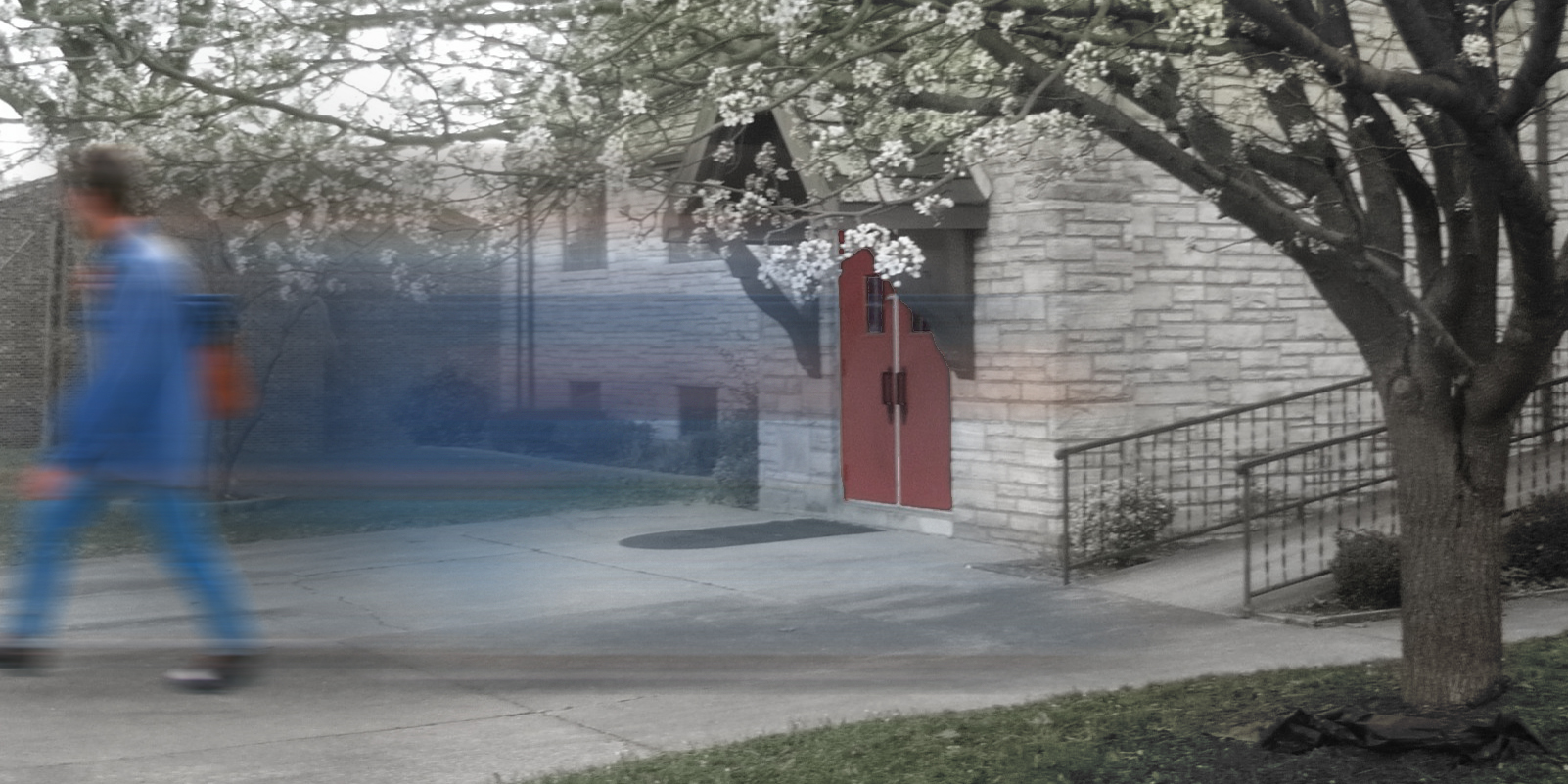
At the latest Mbird conference in NYC, I met up with a friend from a church where I spent a very formative time of my life. I was telling him that I think of that place and all of the people there every single day. I barely got the sentence out, surprising the both of us when I got all choked up, visibly enough that he put a hand on my shoulder. Some obvious indicator lights flashing with that one. The church we were talking about was an Ephesians 4 equipping type of church. They prepared lay and clergy folks to do the work of the ministry by having them do it.
The next church I attended was not an equipping church. It was more like living in that Little Britain skit; Carol Beer repeating, “The computer says, “No!” We found ourselves constantly muttering, “what the,” under our breath and to each other. For years. And then one day, that horrible moment comes; you have to go. Because. I spent several years in what I call the bewilderness, before and after the parting of ways. Both parts of what’s already one in Christ, looking confused and dazed. This isn’t what was supposed to happen. Not a lot of forward motion when you’re feeling confused, which is why it seems like you’re standing still while everything is racing around you. Because you are, and it is.
Hearing about my brush with Mick Fleetwood (of Fleetwood Mac fame), you might be expecting to hear about how their song “Tusk” was like a beam of light breaking through a cloud. Counterintuitively, no. Instead, I’ve become a bit obsessed with a pop song of much more recent vintage. Dealing with the questions asked by the lyrics moved some rusted gears around enough to change my perspective, my tears signaling the start of something. Fortunately, tears aren’t always corrosive. Sometimes they work like lenses, so you can see what’s really going on. What got the waterworks going was a lyric in Cannon’s “Fire For You.” I’m partial to the slowed down version.
My heart just dropped / Thinking about you
The song describes a romantic breakup, but for me it described a particular church, specifically the moment I knew I had to leave it. With a minor tweak to one lyric from, “I’m leaving without you, love / I have no choice” to “I’m leaving without your love.”
And you can start to get what it feels like. We leave churches with their love or without it, and they are two starkly different experiences. The amount of time it takes to work through the two is what’s telling. We wouldn’t have stayed for so long if we didn’t love them. We left so we wouldn’t have to stop. That’s the horrible part.
“Wish I never met you / Started to regret you”
The regret ship having already long set sail, I started to notice my questions becoming rather pointed as I aimed them at God. “Why did You waste my time there? What was the point for either party?” Real resentment wasn’t buried very deeply, so that question wasn’t hard to access. The answer came back quickly with another question: Are those children of God excluded from even having been helped? With hindsight, how did anything that happened exempt them from help or me helping them? “Was it that contingent upon performance?” the crucified Savior seemed to be asking this contingent being. Oops.
It was a season of my life and theirs. God hadn’t gone missing, on the contrary, he had been there all along, actively working. I was there for the time I was there, the harvest is the Lord’s, and the rest is God’s business. There is no doubt the pain I felt was mirrored in the pain I caused. But, as hung in most churches, the cross serves as a reminder that the person standing in front of me is already forgiven, because I am, too. A great deal of healing happened in that moment. A particular meme in a series of memes that Paul Zahl talked about in a recent episode of PZ’s Podcast helped me see what had been happening internally, at least enough to connect some dots.
If the great challenge of life is assimilating its negativities, the resolution is found in seeing the loving hand of God in all things.
I wanted to know more, like what does that look like for folks who have been through painful experiences, even churchy ones. So, of course, I typed up an email and sent on my musings to the Rev. Dr. theol Paul Zahl, who answered, of course, with gold …
I’m really thinking about this — what you have asked, and what you are thinking about (and especially in connection with the very negative church experience you had). As I walked upstairs to my study to reply, what came to mind is a pretty oft-quoted maxim these days, which is “Feel to Heal”. In other words, when a person is processing a negative experience, one actually doesn’t wish to “feel” it. “Feel to Heal” sounds like the very opposite of what you want to do. And yet that is the very (and probably only) thing which promises the start of a new life in relation to the bad thing: a “resolution” if I can put it that way.
I could offer many examples from my own experience, but just recently, when a college girlfriend from over 50 years ago suddenly died in NYC — I had only seen her once since, at the Harvard Club with Mary — the pain of our last few months so long ago “came home to me” and I really felt it. Then, with a classmate from those years who was kind and supportive, I attended the person’s funeral. And at the reception after the funeral, in the parish hall of an Episcopal church, the family showed pictures from very long ago that I had taken. The event functioned as an almost complete deliverance for me. I could die now at peace concerning a painful breakup so long ago. I literally felt the peace come over me.
So “feel to heal” — that is my message to you. And if one doesn’t do so — and many people do not, mainly because the maxim sounds like a re-entry into a pain that no one wants to re-feel — the negative experience hangs on! As a matter of fact, a negative experience that one has had at an impressionable point in one’s life sometimes never goes away unless it is assimilated thus.
Listen to Jimmy Webb’s song (sung by The 5th Dimension) entitled “Requiem: 8:20 Latham.” It is the last word in describing a teenage experience processed as painful — an experience that the songwriter posits as lasting forever — literally! That song by Webb is so heavy that even I, who treasure his work, give it a miss. Yet he captures the unendurable eternity of a negative experience that is not assimilated.
We avoid pain, in church and out of it. We avoid owning up to causing pain or even avoid avoidance itself by pretending none of it happened in the first place. Sometimes we are just exhausted from years of spinning our wheels, replaying what happened until ruts are worn into the ground beneath us. Healing can only happen when we are delivered from the cause, when pain is replaced by peace, which is our experience of assimilation. The delivery part Zahl is talking sounds a bit horrifying, because it moves you closer to dealing with the cause of the negative feelings. The “new life” he talks about is on the other side of it, where Christ is with healing. It just is.
I take great comfort in the “is-ness” of God when I’m hurting or bewildered. The God who is present right now, always. I mean that not aphoristically, but death-grippingly. The Father of all mercies and consolation, who even — or especially — for those burned by a church, consoles us in our affliction (2 Cor 1:3).
One way love. In him everything is made right, all the negative experiences are assimilated in Christ, to the point that God wipes away every tear. We won’t need them anymore … like the tide that just rushed out.








Thanks for writing about this so poetically josh. Every part of that journey is so true. What grace it is to be able to move through it with Jesus (and great music of course) 🙂
This is so profound, Josh. Thank you. And that song! Ooof.
Thanks for this Josh, and for going to a deep place to bring it to us all.
Josh, this is better and more needful than this inadequate praise. Similar specters were summoned as I read this but I felt a tinge more courage in letting appear despite their sadness and discomfort. This makes me want to adapt a line of Hamlet: “Thou art a scholar, Joshua. Speak to it.”
Good word, bro…
This is lovely, Josh!