




Last week, I saw a guy riding a fixed-gear Surly down Greenville Ave. It felt like a sign, the canary in the coalmine. Bon Iver had a record out last month? And it’s great? OK, we might be back. The global economic landscape seems to be getting less and less reliable, more and more recession-able, and that’s got me thinking I should grab my American Apparel deep-V, because buddy we are so back.
Specifically, we are back to the late aughts, AKA the zenith of American civilization, when those of us floating towards 40 first started using phrases like “coffee culture” and “craft cocktail.” In American Evangelicalism, this was the height of the “emergent church movement,” and it was a wild time.
Not to overgeneralize, but social media and an inability to determine a concrete set of beliefs led the emergent church to decide it didn’t need the church part at all. Deconstruction became defenestration as the Jesus who loved the poor was chill, while the Jesus who was the Judge judged in our place wasn’t welcome anymore. We started out wanting to reform the church into relevant communities that served the poor and needy, we wanted to divorce the church from the political right, but we ended up with empty buildings, loud arguments online, and a belief system that was often indistinguishable from the political left.
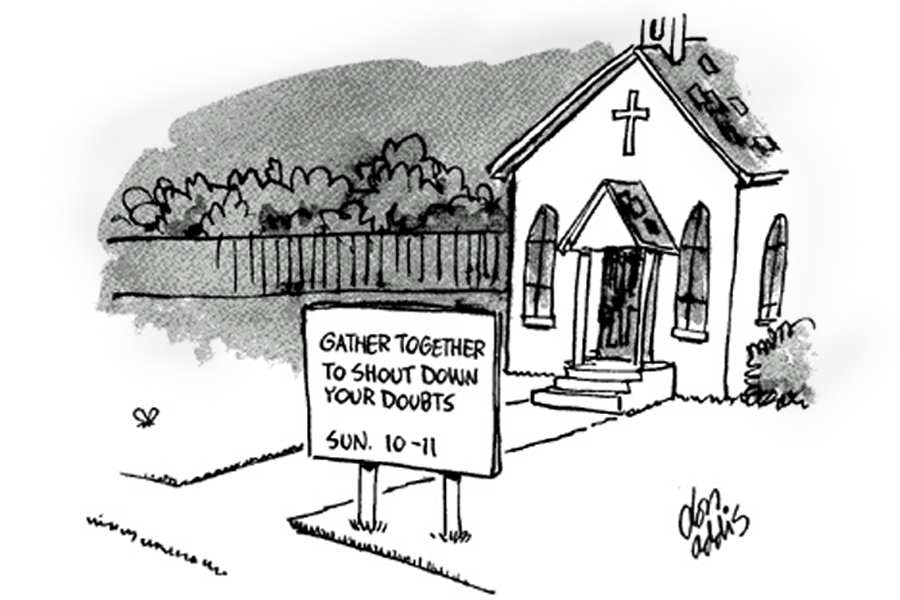
This was my young adulthood. I went to churches where everyone sat in a circle and there wasn’t a “lead pastor,” checked out congregations that used to be Baptist but were now observing Lent, and listened to a worship band cover the Beastie Boys before the sermon. Rob Bell taught me to surf in Laguna Beach. I attended conferences with one-word names and had earnest conversations about abandoning “Christian” as a moniker in exchange for “Jesus follower.” This movement gave my faith its legs. I screened Invisible Children on my college campus and wore a pair of hemp Toms shoes until my big toes stuck out the front of them. I used a crystal for deodorant[1] and had earnest discussions about New Monasticism with people, longing to move to Philadelphia and melt down some guns. I deconstructed my faith well before anyone was using that term, but I felt like I was the only one able to put Humpty Dumpty back together again.
Early on, we tried to be relevant — to speak postmodernism’s language — and we tried to ask questions that demanded answers. We were critical of our institutions and worked to evangelize culture with authentic and beautiful expressions of worship.
But eventually we stopped evangelizing altogether. We abandoned the kerygmatic call and deconstructed ourselves into oblivion. The movement in which I rediscovered my faith, the movement that formed me and that allowed me to feel a call to do ministry, had abandoned me, the faith, and Jesus. Friends I ministered with stopped identifying as Christian, then admitted to no longer believing in an interventionist God. I was hurt by leaders and pastors who left their ministries or left the faith. Some became marketing gurus, and others just got really into psychedelics.
Much like those times, there seems to be a genuine hunger for something fresh and authentic[2] in the current climate. We might be back, and this time, we need to not screw it up. I get the feeling that those of us with a drawer full of mewithoutYou t-shirts who wonder what the Psalters are doing these days might be getting a second chance.
Maybe this movement isn’t dead, it’s just relocated. Evangelicalism looks a lot different now than it did in 2008, but the mainline is in a different spot, too.
I’m an Episcopal priest, which would have been unfathomable to me then, but somehow makes perfect sense now. The movement that swept me up and then left me somewhere along the way may have formed me and those of us left for gospel ministry in 2025. Maybe Aaron Weiss (quoting Hegel) was right: “All circles presuppose they’ll end where they begin, but only in their leaving can they ever come back ‘round again.” We are back ‘round, and the lessons we learned from the pain we suffered and the faith we reconstructed show the patterns of the Creator, providentially guiding us into place and purpose. This isn’t the way I thought it was going to go in 2009, and I don’t think I would have signed up for all of these experiences, but sometimes grace brings us this far with a gentle hand, and sometimes it drags us with a rope, but it’s always grace.
If I’ve gone ’round the circle and been changed in the process, where I’ve landed has likewise changed because many churches across the spectrum of Christianity have shifted from where they were 30 years ago. They made space for creative and boundary-pushing congregations to grow while anchoring them to the gospel, word, and sacrament. They allowed for artistic expression and doubt and infuse ancient practice and wisdom into a modern context (the way the church always has done). And sometimes they even now warn that abandoning the “legalistic” structures of your parents’ institutions while curating the opinions and beliefs of your friends in a constant purity test simply trades one law for another.
The emergent church movement started outward facing, but swiftly pointed inward and decimated itself. This time, maybe turn back around?
The kind of Christianity that changes the hearts of seekers, unchurched, de-churched, and deconstructed ultimately rests upon a clarity of the gospel. One that offers comfort while showing the vanity of the things to which we cling (Acts 14:15). It requires the creativity and the open hands of someone built from the ashes of the emergent church. It’s going to require us to police belief a lot less, allowing for people in the pews to have some kooky and even heretical theologies on their way to Jesus. Grace and mercy on our lips, we can preach Christ crucified while allowing for wondering and wandering, knowing those who seek will eventually find. Keeping the main thing the main thing, pointing to the altar and what’s on it and not the person in the pulpit, offering a weird and timeless moment in time — this hour of peace amid chaos where we celebrate that Jesus loves them and died for them and is right now talking to God about them — this just might work. This is how we do this thing right.
So fire up a Nooma DVD and put a Cornerstone Festival poster on the wall. We are so back, and we are so needed.
[1] The only thing that masked the ineffectiveness of crystal deodorant was the stench of my Toms
[2] ‘Authentic’ was easily the most overused word in the English language from 2004–2010





This was really good. Well done! Let’s together just be more passionate about God and His Creation.
So good Drewde.
So good
Yes!
“Those who seek will eventually find” – yes! This is the Gospel, baby!!!