


There are not a lot of years in my life that stand out quite as much as 2020. What a ride that year was. From the shutdown in March, the riots in May (to which I had a literal front door seat from my house in Minneapolis), to the election showdown in November, all wound up in a collective fear and distrust and concern over Covid … It was a perfect storm. All of us, in some way, were altered by that year, and yet all of us, in most ways, would like to move on, put it in our past, and go back to our regularly scheduled programs. What is it about 2020 that has us collectively turning our heads and looking the other way?
The tumultuous turning over of those months seemed to turn over more than we bargained for. We were at once thrust into isolation while at the same time thrust into a world wide web of an unending supply of voices, opinions, and fear-mongering. The world of social media arose in full force, providing a balm and a burn simultaneously. We met for Sunday services online, our kids went to school on Zoom, and a large portion of the population began working from their homes. Families were forced to distance themselves from each other, first by local mandates, and then unfortunately and gradually, by cancers that began to grow from seeds of distrust and disillusionment. We began to lose our sense of middle ground, as the points of contention seemed to grow taller, sending us all sliding back towards our own camps of thoughts and ideas and opinions with growing speed and determination and, some would say, pigheadedness. As we lost our need to cohabitate physically with people, we often lost our ability to cohabitate mentally and spiritually, especially with those who held different opinions than us. The church, for its part, mirrored the broader cultural tumult. Instead of rising above all the fear and mistrust and divisiveness, it splintered along with the rest of America.
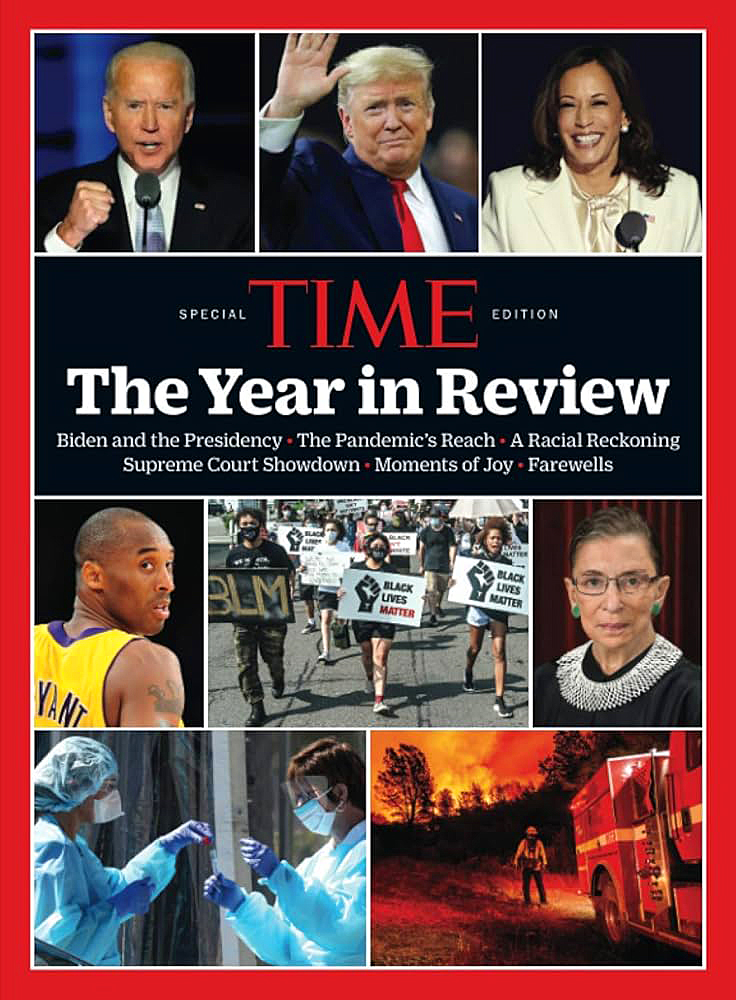 Looking back to 2020, we probably all thought or said or did things that are regrettable to our properly socialized selves now, or maybe that line in the sand has been forever moved, and things that would have been taboo in 2019 are just par for the course now on this side of 2020. Regardless, there are cultural grains of sand stuck in our teeth now, a grit that we would like to ignore but just can’t as it makes its way around our collective consumption of the years since.
This truth can be disheartening. I look back at that year in my life and I see a lot of raw edges, and the first thing I feel is shame. I didn’t love others as I should have. I didn’t turn the other cheek or absorb criticism quietly. I didn’t spend my time praying for my enemies, unless of course you count praying that my enemies would JUST COME TO THEIR SENSES. I did not look in the mirror and see Christ’s perfect reflection staring back at me. Instead, that mirror cut me with its sharp edges, reflecting back to me my cheeks, flushed with pride, my eyes, hardened with frustration, my mouth, set with stubbornness. There were right and wrong ways to feel and live through 2020 and all its complexities, and when you and I didn’t align on that, there would inevitably be friction and often straight up division.
There is grace there, though. I believe that 2020 was a year of grace, in fact. Rather than a time we’d probably all wish to forget, its tumults offered far more than inconvenience. There is a sort of stupor that can come with an uninterrupted life, where things go on as they should, with perhaps a few bumps here and there but nothing that would rock the boat too much. We begin to forget that we aren’t the captains, and we begin to imagine that we are in fact in control of how things play out. The devil loves that kind of boat ride. We forget our need for a savior, because look at us, saving ourselves so well.
What 2020 did was overturn every single one of our self-steering voyages. We were violently cast into the storm, and our initial knee jerk reaction was to get and maintain control at any cost. To many of us, it felt like drowning, everything changing so quickly. We flailed and gasped and grasped, trying to find purchase on anything. And when we didn’t find any, we had two options available to us: continue to fight for any sense of control and leverage we could find, or to stop, to calm our minds and our hearts and our bodies, and to look up at the one standing on the storm, casting his hands down to find us in the deep and dark waters we found ourselves in. This lack of control was not new, but our naked and uninterrupted view of it was new for quite a few of us. The chance to see our way around it, to see our bruised and crucified and risen Savior there, the world his footstool … what a grace indeed. Of course, this type of grace, the painful, tearing kind, does not usually feel good as it happens. I’m sure Lazarus didn’t feel great as he died to himself. But to hear his name flying out through the lips of his savior from beyond death’s doorway? Any kind of pain is worth that.
As we ride into the end of 2024, with natural disasters and elections and war and illness still banging on our doors, as they will continue to do until the day Jesus comes home to claim his bride, we can continue to let fear take the lead, to flail and fight and tear. Or, we can let ourselves die to this world. We can release our white-knuckle grip on needing the world to bend to our will, and we can instead listen for our names on the winds of grace, finding us in our helplessness, urging us forward into the light of Jesus’s mercy and love. We can revel in the truth that God sees every iota of brokenness we have brought to the table, in every year of our life, not just 2020, and yet he calls our name with gladness and joy wrapped in and through it. We can let the echo of that call soften our edges and quiet our minds, making it easier to see the people around us, regardless of their opinions, as fellow men and women of great, desperate need, a need that matches our own. In that desperation we are all equal. And, joyously, in the cross, we are all equally and resoundingly saved.