



My husband and I don’t vehemently disagree on much, but until recently one subject that divided us down the middle was a person: Taylor Swift. He regularly and happily listened to her entire catalog while working from home as I rolled my eyes and fumed one floor below him, silently mocking the self-serious lyrics and queuing up my own rockin’ Bach playlist. Then he convinced me to watch her two documentaries and, as with so many debates in my life, I had to cede ground, retreating to eat my own words, which I’ve found pair best with a full-bodied Cabernet and spirit of contrition. The artistry behind the music was undeniable during her recording sessions, and the earnestness of her lyrics — formerly a liability in my mind — became a mark of genuineness.
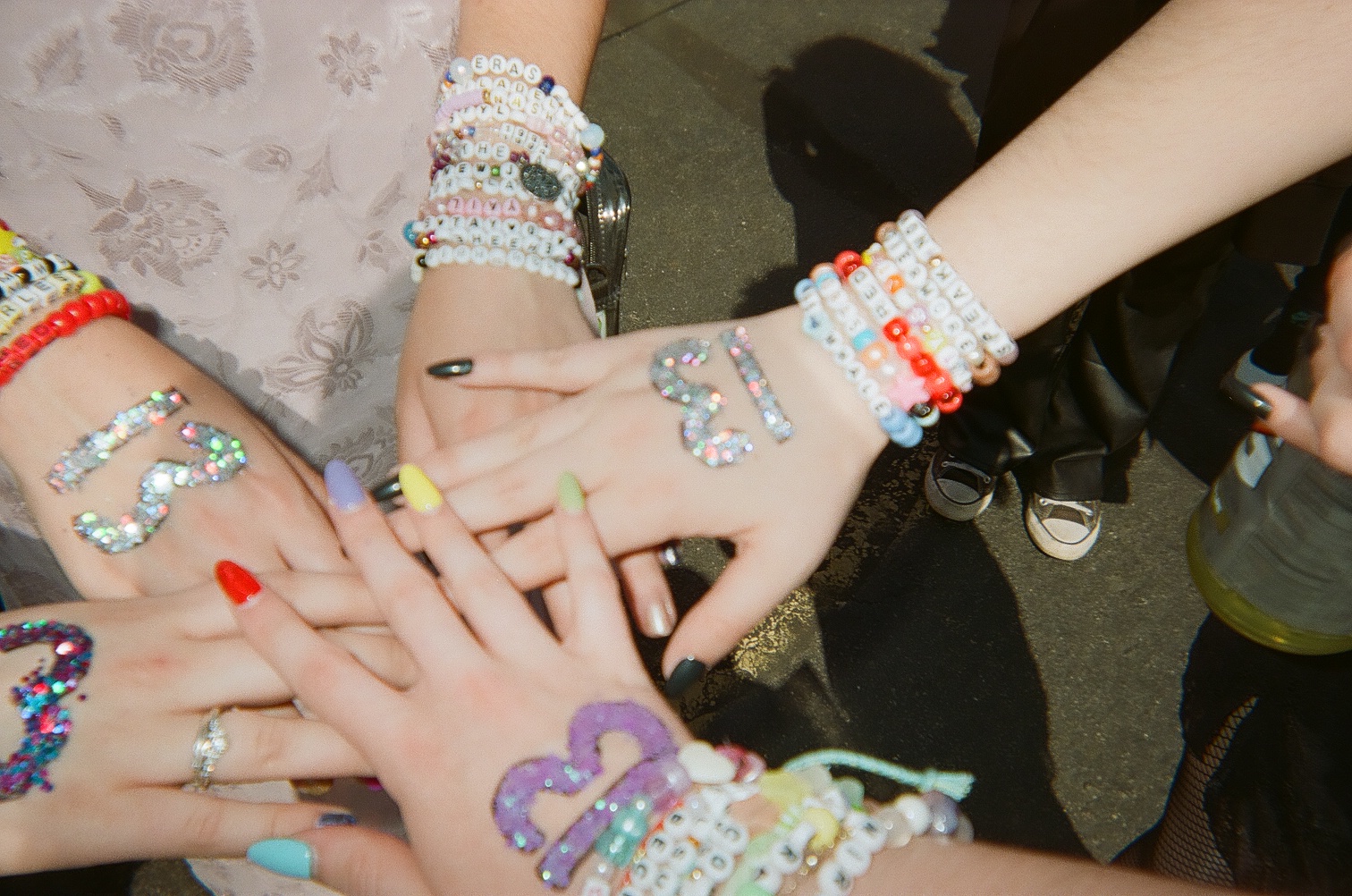
As Sydney prepared to host four nights of her Eras tour, I watched my surroundings grow populated by superfans. Sitting on our back deck, I heard our teenage neighbor belt out songs and found myself humming along. My younger son’s teachers described their plans to attend the concert with their kids. My own friends grew more excited by the day about their hard-won tickets. I saw online posts glowingly relate the joyous tailgating atmosphere outside the concert. Even the cool and collected twenty-something at my hair salon transformed into a giddy fangirl when describing her experience at the show.

Maybe I was born a cynic, or contrarian, or just plain antisocial, but when everyone loves something I am primed to hate it. I am only now, in my forties, readily recognizing both expressions — fandom and its opposite — as what they so often are: sprints toward identity, efforts to be defined by something outside and bigger than ourselves, stabs at belonging by way of something external to ourselves dignifying our experience.
I mean, sure, for some it’s just about liking or not liking songs. But in a world that has grown increasingly polarized and organized into extremes, simple preferences can be synonymous with staking a claim, planting one’s flag in the ground of one group or another. We are increasingly defined, by ourselves and/or others, according to the groups to which we belong, i.e. what we like or dislike most. And the figureheads of these groups say something about our deepest, often most hidden, selves.
Perhaps our personal avatar of said group is a singer who repeatedly and unrepentantly relates the details of her own life, waxing poetic about joy and (especially) heartbreak. Alain de Botton contends that “all we are chiefly in search of when we are at our lowest point is evidence that we are in company ” I don’t know about you, but I’m at my lowest point a few times each day. When describing art (specifically Mark Rothko’s paintings), he writes that “they lend our difficulties dignity and legitimacy.” Lyrics, prose, paintings, rhetoric — the points of connection held within them can all serve to validate the “self” we think we are, or want to be.
Alongside such validation there’s what French sociologist Émile Durkheim called collective effervescence: when individuals coalesce as a group defined by a singular thought that becomes action, the profane becoming sacred. I hear there was a lot of that at Swift’s concert. That and group-coordinated LED wristbands, which — with their act of illumination — may be the same thing.
My older son recently decided not to try out for his new school’s basketball team. Since then, I’ve watched him steadily target other interests, proclaiming each in turn as his “new thing.” He recently denounced religion, declaring himself an atheist. I’m not thrilled, but I’m also not too worried. He’s doing on the outside what I’ve spent much of my inner life doing: looking for a place to belong. A home within the chaos of the world, a port of certainty amidst all the questions without answers, and a group to swear allegiance to that seems to provide all that. In other words, a connection. I know that, just as I struggled through painful shyness and introversion, he battles through a challenge with reading social cues and following conversations. We all tuck ourselves into pockets of identities with spokespeople loud enough to say what we wish we were free enough to utter, and only seldom do they end up being matches for our truest selves.
All of us want to know we’re not alone and we’ll latch onto, or denounce, any number of groups or people to confirm this. Voices outside of our own tap into a deeper part of ourselves that hasn’t been given proper amplification. Thus begins the catharsis — and the journey to freedom if our own voice is given attention and space. What are we clinging to, or running away from, in order to express ourselves in a way we feel we can’t?
The problem I’ve found with cynicism is that all of us, at some place within ourselves, want to be taken seriously. And deeper even than all the poetry and lyrics can delve is a cry to be seen, an answer to the question “Who am I?” and a need to know that whatever the answer is, we are accepted.
I long for my son to renounce atheism and truly, deeply know the God who made him and loves him beyond description — yes, even beyond what lyrics can express — as the source of all his meaning and location of all his belonging. Until then, I trust that he who began a good work in him will carry it to completion. Until then, I will rest in that faithfulness that has never failed me. Until then, I will take solace in the fact that atheism may be his current landing spot, but it has never inspired his awe. And I know that awe can be a bridge between the profane and sacred. Like the other night, while we were watching the Eras tour at home, and he proclaimed, “Wow — she’s amazing.” And so is he. And so, more than anything, is He:
The body of Christ, the priest murmurs,
Placing a morsel of bread in my palm.
Only I hear my son whisper, No, it’s not.
Eight year old skeptic, creed-smasher,
How to stop the erosion of what’s possible?
Or unhook faith from what can be seen?
One evening, strolling the Jersey bay,
We took flailing horseshoe crabs
By their spiny tails, tossing them into tides
So they could glide back to the deep sea.
And wasn’t that impulse, to save the ugly,
Love? My doubter, miracle-denier,
May God hurl your spikey edges into the waves.
May you be cradled in his body forever.– “No It’s Not” by Anya Krugovoy Silver







Smiled my way through this piece – so good
Absolutely lovely piece.
Oh, how my heart breaks that community is found in Taylor Swift and not the church. This is the reality. Lord, revival please!