




André 3000 is known to many as one of the greatest lyrical rappers to have ever lived. OutKast, the infamous duo consisting of André 3000 and Big Boi, is enshrined in the Hip-Hop Hall of Fame in the rap fanatic’s mind. Their album, Speakerboxxx/The Love Below, was recently declared the best-selling rap album ever, after going 13x platinum (13 million units sold). And yet, it’s been about 17 years since they’ve released an album. André somewhat disappeared from the limelight years ago, popping up here and there on some features and slowly becoming a mysterious John-the-Baptist-in-the-wilderness figure with his choice wind instrument. Over the years, he’s been spotted donning his on-brand unique attire while playing his flute all over the country. Fans have taken pictures with him as he melodically strolls around American cities. And now he’s reluctantly stepped back into the light for one reason: an album nobody asked for.
At least that’s how some of the online hip-hop community is reacting to the new album, New Blue Sun. It’s not as if a new album wasn’t asked for — just not this album. The record is strictly an instrumental project, with André 3000 playing from an assortment of wind instruments. The album is as unexpected as it is strange.. André 3000 has gone from lyrical rap music to music without any words. If that weren’t enough, the album features the most obscure, zany song titles that take their time to cross the screen in a sideways Star Wars crawl. “That Night In Hawaii When I Turned Into A Panther And Started Making These Low Register Purring Tones That I Couldn’t Control … Sh¥t Was Wild” and “BuyPoloDisorder’s Daughter Wears A 3000® Button Down Embroidered” are a couple examples.
While the idea of an album consisting of wind instruments and no lyrical rhyming from a rapper seems laughable, especially considering the song titles, the concept can be no more ridiculous than other ventures in the hip-hop genre. The leading superstar of said genre, Drake, released his latest music video which features a towering golden calf-esque statue with a corresponding wandering Israelite crowd below as he dances above them with the iconic single Michael Jackson sparkly glove. Perhaps he is on the precipice of becoming the new king of pop, but still. (Although, don’t tell my mother I’ve said so, these words are heresy to her.)
André’s decision to drop this kind of album has potent themes which are reminiscent of familiar biblical motifs. After some hip-hop commentators have declared the genre’s decline over the past few years, there’s widespread hope that perhaps one of the rap gods of years past would come and bless the people. Come and bring salvation with conquering rhyme schemes and words of weaponry that defeat the oppressing sounds of the rap industry’s mediocrity. Messianic undertones are prevalent in the world of hip-hop, especially when we’re utilizing the language of “gods”, “saviors” and words from them which bring auditory salvation. Ideas of single rappers “carrying hip hop” or put another way, “bearing the burdens” of the genre alone, are heard all around the cultural water cooler.
But much like Israel under Roman occupation, we want a king/messiah in our own fashion. And just as Jesus attempted to warn the disciples of his upside-down, undesirable ways to victory, André has also attempted to make it plain exactly what his new project is and how it doesn’t live up to the heavy expectations. In his NPR interview he was asked about the first track’s title, “I Really Wanted To Make A ‘Rap’ Album, But This Is Literally The Way The Wind Blew Me This Time”:
“I don’t want to troll people. I don’t want people to think, Oh, this André
3000 album is coming! And you play it and like, Oh man, no verses. So even actually on the packaging, you’ll see it says, ‘Warning: no bars.’”
Although, much like Jesus’ disciples, such warnings might go unheeded. That being said, André arriving on the scene as flute-playing-nonrapping-rapper does not appear as a victory on the horizon — at least in the typical sense.
While there will be plenty of people who cherish and enjoy this new venture from André 3000, myself included, it will surely leave some wanting. But André himself says he can’t meet the culture’s demand on him. With his grey bearded wisdom, the rapper has to confront the reality of what’s filling the gap between his pen and his pad:
“It actually feels, sometimes it feels inauthentic for me to rap because I don’t have anything to talk about in that way. I’m 48 years old, and not to say that age is a thing that dictates what you rap about, but in a way it does. Things that happen in my life, like what do you talk about like I gotta go get a colonoscopy. What do you rap about? My eyesight is going bad?”
While some of us would be eager to hear that verse, it sounds more like Lil Dicky’s territory. This type of honest humility and humanity is unusual in the world of hip-hop. It’s a humbling thing to have the status of “rap god” and don the likeness of banal humanity. This is seen even in the location of his GQ interview — a local laundromat he frequents because it gives him a chance to “be out in the world.” He emphasizes how important it is to him to meet real people. To brush up with the authentic, non-celebrity world.
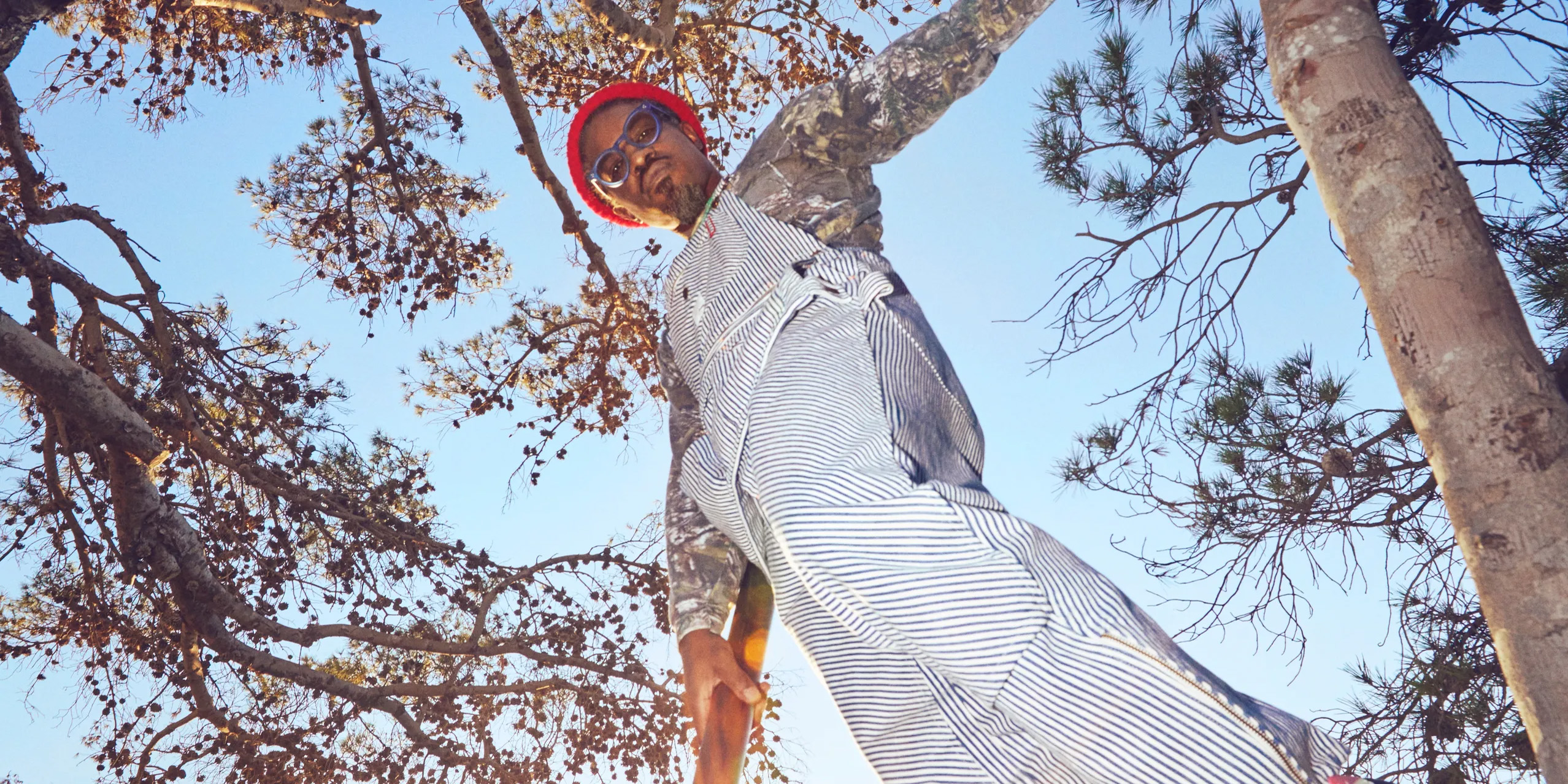
Perhaps the humble humanity exhibited by André helped him to reflect on the “loudness” of the current rap culture, an apt description not just in the sound but in the necessary virality of music today. It’s all about numbers and who can get the biggest hit, usually wielding “loudness” — not just in the listening experience, but also in bravado and personality. This trait of the genre is what makes André’s album stand apart; the quiet, tranquil peacefulness versus the competitive loudness of everything else:
One thing that I noticed listening back at the album is it’s kind of a reset or a reintroduction of a new volume. I’m not trying to compete with people on the radio. Like most records that come out, when you master them you master them to the loudest that they can go, you know? And I was having a conversation with the engineer, and a lot of his engineer buddies, they were saying ‘we’ve realized as engineers that as humans we’ve got as loud as we can get in human history.’ When you think about that, we can’t get any louder.
Loudness is a perfect description for the hip-hop culture André is stepping back into, but it’s also a fitting way to describe life.
There’s loudness in the political realm (with multiple wars, upcoming elections and innumerable politicians on either side still desperately clinging to their tribe). Parenting itself could be defined as loudness. Not just in the ear-piercing screams the four-limbed creatures emit, but their existence is deafening at times with every-other-week runny noses, jaw-dropping messes repeatedly made, and the seeming inability to understand simple instructions (not a subliminal diss toward my son, I promise). Family members suddenly pass away, the eggs are becoming a luxury purchase, and there’s weeds in the flowerbeds. Again. Also, what’s that dripping in the kitchen wall I hear from time to time? Sounds expensive.
Life is loud, the knob is turned all the way up.
In the spirit of messianic undertones and loudness, it’s worth recalling the almost-King David’s unexpected arrival with a lyre to a similarly “loud” situation. Here is David, God’s newly anointed king, while Saul is oppressing his people — even limiting them with weird Eden-like “do not eat” commands as if he were God himself and Israel was his new Garden to rule (1 Sam 14). What does David do? Well, he doesn’t come and outright obliterate the current king, even though he will get the opportunities to do so, astounding others with his lack of supposed justified actions. He doesn’t berate or belittle, even when the people champion him as the better warrior. Instead, in Saul’s “evil spirit” and slow fall into becoming essentially an enemy of God, he played his lyre for him and “Saul got relief from his terror and felt better, and the evil spirit left him.” (1 Sam 16:23). An unusual and certainly unexpected scene, untypical of the violent leaders in the past. Saul eventually plots to kill David, yet he continues to pluck his strings for him.
God is used to bringing peace in the midst of loudness in unexpected ways, even with unexpected instrumentation lacking words. Into the loudness of our world steps not only a flute playing silent rapper and a lyre strumming typological king, but a God in the flesh come to bring some quiet to the soul. One could argue Jesus’ cross is the loudest thing in the universe and simultaneously the lowest decibel word of peace. This Jesus comes in similar fashion to André, or more properly vice versa, who made himself nothing by setting his raps aside and becoming vulnerable:
It’s a very new experience for me … it’s all in your face. You’re on a tight rope the whole time. I can’t hide behind a beat that you already know or hide behind lyrics that you already are into. It is what it is. It’s fun to do it. When I’m actually playing, it’s fun.
God has laid himself bare by “playing” before us in the face of Jesus. He incarnates into our loudness not with the word we want, the one we demand from Him but the word we need. The reset of peace in our loud surroundings. God’s chosen instrument is the cross and His performance is dying upon it — by its amplification he brings forth, if we may borrow André’s term, a new volume for whoever has ears to hear.







I don’t know anything about hip-hop and frankly, even less about jazz or the flute. But this story is fascinating. How courageous, to go public with a completely new art form, after dominating in a different one. Like the quote about the tightrope, he cannot take any of his former prowess along for the trip.
quite courageous and humble, thanks for the read!
I love this so much, Blake. What a truly fascinating and refreshing man he is. We’re gonna talk about it on the Mockingcast.
thanks for the shout out! the album has been refreshing as well