




As we approach the quarter century mark, we expect to see lots of “best of” lists popping up. In fact, that’s part of the rationale for our own ongoing “favorites” series: check out our other recent lists of films, paintings, and podcasts. This month, while we would not presume to quibble with The New York Times — which recently compiled a heavy “100 Best Books of the 21st Century” list — we thought we would offer our own non-definitive, grace-centric take on a book list, with a focus on novels arranged below in chronological order. Feel free to tell us in the comments what great reads we missed!
If I’m being honest, J. K. Rowling’s Harry Potter and the Goblet of Fire (2000), Harry Potter and the Order of the Phoenix (2003), and Harry Potter and the Deathly Hallows (2007) are my top three, in that order. In a time when we believe we are in control of everything in our world, HP’s sense of enchantment, mystery, and being a wanderer among powers bigger than oneself (those three amount to the same thing) provide not just escape, but escape into a world where surprise and salvation (of a sort) become concrete possibilities. [Spoilers follow] Still, the books’ epic scale remains firmly grounded in relatable characters: the orphaned Harry’s search for friendship and belonging is just as high-stakes as anything going on in the wider wizarding world. Rowling’s focus on relationships carries through to the core of the plot, where two brilliantly rendered acts of sacrificial love bookend Harry’s yearslong struggle against Voldemort and prove the key to deliverance of the wizarding world. They’re also incredibly fun to read. – Will McDavid
The Harry Potter series! Technically if we’re talking the 21st century, I can only list the last four books in the series since the first three came out in ’97, ’98, and ’99. If you want to reminisce, just search “Harry Potter” on mbird.com, and you will find quite a few articles about these books by Ethan Richardson and Margaret Pope. Although the books are full of wizardry and magic, at the heart of the story you have an unassuming, mistreated, and weak boy who becomes the hero for many. There is also a great play script called Harry Potter and the Cursed Child (2016). It takes place 19 years after the original series when Harry is an adult; someone who was able to save many but who struggles to know how to reach his own son. I was a bit behind in discovering it and wrote an article about it last year. – Juliette Alvey
Jim the Boy (2000) by Tony Earley: This slight novella wrestles with big themes way above its weight class. In Depression-era North Carolina, Jim Glass marks a milestone tenth birthday with his widowed mother and the three uncles who live with them. The mood is elegiac and innocent and the writing as direct and economical as growing up in rural country demands: “The death of Jim’s father had broken something inside [his mother] that had not healed. She pulled the heaviness that had once been grief behind her like a plow. The uncles, the women of the church, the people of the town, had long since given up on leaving it where it lay. Instead they got used to stepping over, or walking inside, the deep furrows she left in her wake.” You will come to love these characters and rue the fact that this Bildungsroman isn’t substantially longer. – Ken Jones
Jayber Crow (2000) by Wendell Berry: After taking some inventory for this poll, I realized most of my favorite novels are from the 20th century. But right at the turn of this newest century, Wendell Berry published a story about a man named Jayber Crow. Twenty years later, I’m sitting in my living room immersed in a story about this man and the lives of those in Port William. In my world at that moment there was a pandemic, and churches and institutions were falling into ash. But in my solitude, my imagination was ignited. I’m reading about the grace of open windows during bad sermons, the value and discipline in stability and longevity, and the hope that will never let us go. So much so, that I credit Wendell Berry’s Jayber for bringing me back to church. Shameless plug: thanks to fellow Mbird contributor Joey Goodall’s editing skills, you can read about that here. – Janell Downing
Lamb: The Gospel According to Biff, Christ’s Childhood Pal (2002) by Christopher Moore: The dim bulb angel Raziel resurrects Jesus’ childhood playmate in the 20th century with the hope that “Levi bar Alphaeus who is called Biff” will fill in the gaps of the gospels. What, for instance, was the Lord like as a kid (petulant and prone to giving people he’s ticked with the old fig tree treatment)? What was he doing between getting lost in Jerusalem at 12 and showing up at the Jordan at 30? You’ll also learn that it took some time for Lazarus to leave his tomb because he felt that, as he is four days dead and stinketh so, he feels he’s too “icky.” This is irreverent stuff, dabbles in Gnosticism, and is likely to offend some, but it’s a dang fun ride. And if you enjoy it, you should also check out Moore’s 2004 novel, The Stupidest Angel: A Heartwarming Tale of Christmas Terror. – Ken Jones
 Gilead (2004), Home (2008), Lila (2014), and Jack (2020) by Marilynne Robinson: I’m always on the lookout for great contemporary literature with meaningful things to say about matters of faith — and it’s especially impressive and encouraging when such books manage to cross over with “secular” audiences. Classic 21st-century book club reads like Life of Pi (2001), A Man Called Ove (2012), and Pachinko (2017) come to mind as examples, but perhaps no author has managed to achieve this mass crossover appeal so consistently in contemporary fiction as Marilynne Robinson. While some complain that her novels are slow, I have found each of these four interconnected works to be soul-stirring explorations of the internal human experience. They are gifts that have enlarged my heart and my faith, full of warmth and wisdom. For all the poignant loneliness that her characters struggle with, you always get the sense when reading Robinson that no one is ever, in fact, truly alone. – Ben Self
The Hammer of God, a Novel about the Cure of Souls (1941, translated in 2004) by Bo Giertz: Earlier translations of Giertz’s novel about a Swedish Lutheran congregation were published over the years. Giertz (pronounced yeerts), bishop of Gothenburg, tells how a tiny, rural nowheresville church contended with clergy good and bad, along with society’s pressures across decades. Often, pastors get told what’s what by savvy faithful members who know the difference between what is Christ and what is not-Christ. The 2004 edition contains the final section that was considered too racy by earlier publishers because it concerned pastors and sex. This book is a primer for all new pastors for how to be public proclaimers and a caution for what not to do. – Ken Jones
Prayer of the Night Shepherd (2004) by Phil Rickman is one representative in a series of mystery novels following the life of a diocesan exorcist, Merrily Watkins. Living on Herefordshire’s border with Wales in the smallish English village of Ledwardine, Watkins leaks grace while embracing a realistic low anthropology, avoiding becoming a whimsical – therefore useless – caricature of a pastor to her flock. Even Merrily’s thoughts on Christ’s Matthew 10:8 command to “heal the sick” sound more than a little like something Paul Zahl would say: “Since the days when hundreds of medieval pilgrims had dragged their crippled limbs to the shrine of St. Thomas of Cantilupe in Hereford Cathedral, the Church had become increasingly uncomfortable about healing. You prayed for sick people, you might even light a candle, and if there was a cure, you thanked God. Beyond that, a certain wariness crept in. Not strictly our thing. In which case, what was the Church’s thing?” – Josh Retterer
Holmes on the Range (2006) by Steve Hockensmith: A pair of cowboy brothers who are fans of Sherlock Holmes employ the great detective’s methods to uncover dirty dealings on the ranch. A hilarious first-person narrator, brilliant chapter titles, and just enough emotion to tug at the heartstrings without distracting from the action. Oh, and did I mention the brothers are Lutheran? Like I was ever going to say no to Lutheran cowboy detectives! Bonus: a bunch of sequels, just as good. – Sarah Wilson
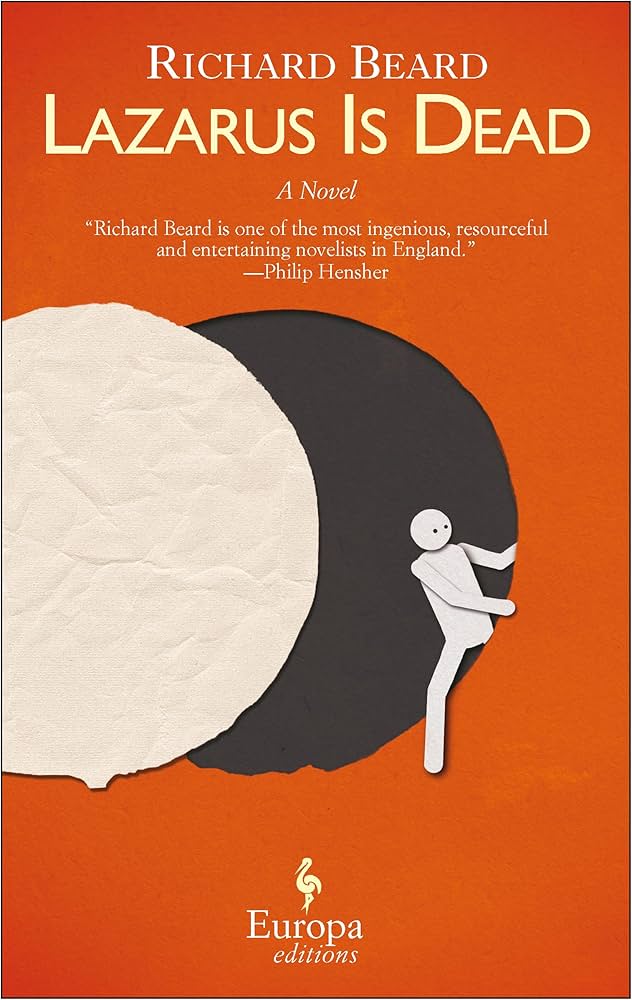 Lazarus Is Dead (2011) by Richard Beard: One of the greatest reading experiences I can recall having, Lazarus Is Dead is inventive, informative, genuinely funny, and almost unbelievably moving. I’ve preached the amazingness of this book repeatedly on this site — it’s the story of Lazarus and his childhood friend Jesus. Sick and dying, Lazarus is also growing more resentful that Jesus won’t come and even attempt to make amends with him. A boyhood tragedy has driven a wedge between them — why didn’t Jesus intervene then? Why won’t he now? Well, Bible readers know what happens next, AND IT DOES. But far from a “safe, Christian” retelling, this freewheeling retelling confronts the senselessness of death while staying surprising, exciting, and fresh. A FAVE. – CJ Green
Laurus (2012) by Eugene Vodolazkin: This ostensibly magical realist novel by a Russian-Ukrainian medieval scholar is both heartbreaking and hilarious, and an extraordinarily vivid work of the imagination, which really gives one the sense of inhabiting the worldview of its protagonist — Arseny, a 15th century Orthodox healer, mystic, and monk. For all of the weirdness and tragedy of that context, it was a world I was really sad to leave, and a world I look forward to returning to from time to time when I get weary of our 21st-century theories of reality and human purpose. – Ben Self
Ordinary Grace (2013) by William Kent Krueger: I was in the middle of the Pacific when this novel gave me a strange escape to Minnesota. A friend had recommended it after I shared about my stresses in ministry. I’ve tended to think of escapism as consuming media that is the equivalent of cotton candy, but this novel is harsh. It is part coming-of-age, part mystery, and all glimpses of grace through the cracks of loss. It’s exactly what I needed at the time I needed it most. – Ryan Alvey
The Book of Strange New Things (2014) by Michel Faber: Faber pens the story of a missionary who heads to space to preach to an alien species. Back home he leaves a wife and a world that’s falling apart. The tension between his pastoral work for his newfound converts and the love of his wife drives the reader to wonder if pastors should be free to wave the white flag and whose hands the church is in anyway. – Blake Nail
Above the Waterfall (2015) by Ron Rash: Centered around an Appalachian crime investigation, the two narrators are a late-in-his-career sheriff and a new, young forest ranger fleeing her past. You’ll get lost in the poetic prose before being snapped back to reality. It’s a harrowing tale that takes fallen humanity seriously, but ends with a graceful note. – Will Ryan
Homegoing (2016) by Yaa Gyasi: A novel about two sisters in Africa, which follows their separation and their descendants in both West Africa and the United States. It’s a story of generational trauma, interconnectedness, and a reminder of how all stories can be redeemed. – Jane Grizzle
Version 1.0.0
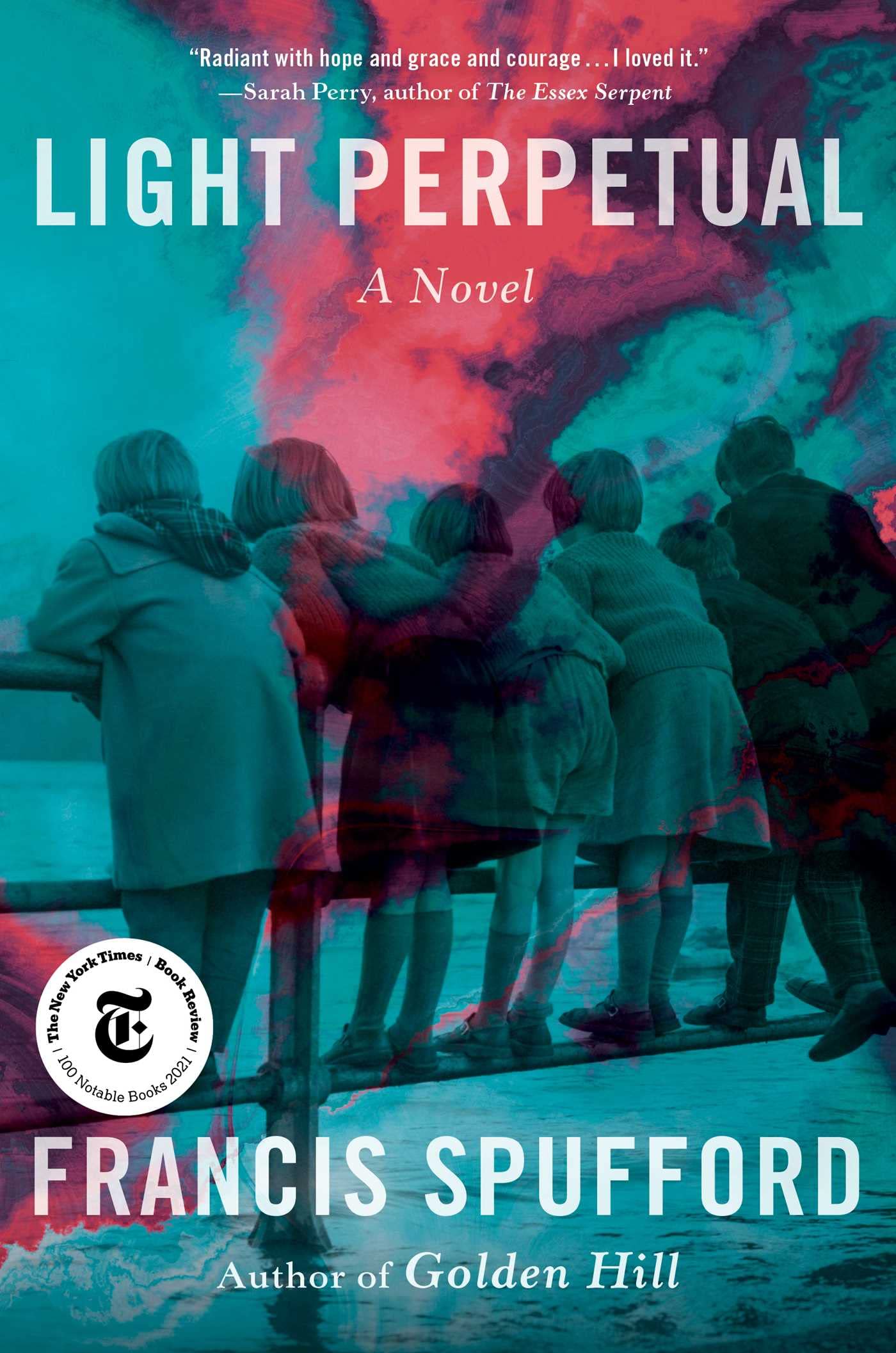
Golden Hill (2017) and Light Perpetual (2021) by Francis Spufford: Mbird folks will know Spufford from his book Unapologetic and occasional pieces in MB magazines. If you don’t know his novels, by all means get acquainted. Two I’d suggest are Golden Hill, set in the once small town of New York in the mid-18th century, and Light Perpetual, which begins in a World War II London under bombing. Both are rooted in history, in particular places and times vividly drawn, but from there it is, for Golden Hill, a wild journey with a shocking ending. Light Perpetual is equally imaginative but more poignant as it follows lives that might have been but for a bomb. Both portray grace at work, not least in Spufford’s graciousness toward his own characters. – Tony Robinson
Lincoln in the Bardo (2017) by George Saunders is one of the most memorable and haunting (see what I did there?) books I’ve ever read. I’ve written here before about how I love a good ghost story (or podcast), but this was so much more than that. It’s unflinching in its examination of grief and love and transcendently beautiful in its descriptions of both. As Christians we inhabit the now-and-not-yet, so the bardo is a place strangely familiar yet altogether new — sort of like I imagine heaven will be. – Stephanie Phillips
The Dearly Beloved (2019) by Cara Wall is a decades-spanning story covering some of my favorite topics: faith, skepticism, marriage, parenthood, and disability. The characters are complex and unpredictable, and their struggles are infinitely relatable. Wall wrote them with an empathy that jumps off the page and a realness that brings them to life. And since picking favorite novels is hard for me, a couple other honorable mentions from the last few years include Gabrielle Zevin’s Tomorrow, and Tomorrow, and Tomorrow and Amity Gaige’s Sea Wife. – Stephanie Phillips
The Dutch House (2019) by Ann Patchett: Patchett is just so good at writing about families. In this one, the titular house is the symbol of broken families, resentment, dashed hopes, and envy. The main characters, Danny and his sister Maeve, keep vigil over the house after their father’s passing, unaware of all the ways that the past is playing out in their own futures. Ultimately a story of forgiveness and redemption, Patchett deftly handles human nature with wit and honesty. – Jane Grizzle
Deacon King Kong (2020) by James McBride: Cuffy Lambkin, or Sportcoat as everyone calls him, walks up to Deems, the project drug dealer, takes out an old .38, and pulls the trigger point-blank in front of everyone. The shot doesn’t kill Deems, though, just injures him. With that, the heat is on. But instead of running for his life, Sportcoat just goes about business as usual. He lives out Jesus’ lousy advice that those who try to save their life will lose it. And live he does. As Jesus promises, life unexpectedly crops up all around Sportcoat. Ultimately, death is served up for all, and the party is nothing less than a foretaste of that great heavenly banquet! – Ryan Cosgrove
Hamnet (2020) by Maggie O’Farrell: The compassion and curiosity you will feel for people centuries away from you will be only part of the goodness. This is really a work of historical fiction on the life of Shakespeare, who was, lest we forget, a mere mortal. But the reason you should read Hamnet is the swoop of selfless love that comes out of nowhere to the end. Also, there are ghosts. – Sarah Condon
The Lost Shtetl (2020) by Max Gross: A forgotten Jewish town in Poland that somehow dodged Hitler’s path is forced to reckon with the modern world when a member flees the town. Questions of religious identity, unity, and how to (or if one should) assimilate follow as the member is chased after and the outside world comes knocking. – Blake Nail
Piranesi (2020) by Susanna Clarke is a spellbinding world of mystery and discovery within a vast, echoing House filled with endless halls and statues. The narrative unfolds with a quiet invitation to a reality beyond our grasp. Much like how grace finds us in unexpected places, the main character’s journey through the House feels like an exploration of the human heart – lost, searching, haunted, yet always pursued by a deeper truth. It’s a story that resonates with the longing for a new heavens and a new earth, a place where beauty and healing come not from our efforts, but as a gift from the House that reorients and renews. – Davis Johnson
 The Five Wounds (2021) by Kirstin Valdez Quade: This big and bighearted novel is about four generations of one Mexican American family just trying to get by, all while wrestling with what their faith means for their everyday lives. I’ll remind everyone that I had the distinct pleasure of chatting with KVQ for the Age Issue of The Mockingbird magazine, and she’s extremely insightful and eloquent. This is a beautifully written novel dealing reverently but also realistically with religion. BUT, more importantly, the ending bangs. So good! – CJ Green
The Librarianist (2023) by Patrick deWitt: Here’s one from my part of the world, the Pacific Northwest. Set in Portland, Oregon, this novel portrays a low-anthropology character if ever there was one. Bob Comet is a librarian who reads to escape life. Despite that, his life manages a peculiar and touching form of greatness. – Tony Robinson
I Cheerfully Refuse (2024) by Leif Enger: This was the last novel I read, and the first one I’ve read by Enger. I’m hooked. I’m so glad this story came to us in an election year. It quickly became my favorite protest book. It’s dystopian and has the sweetest protagonist ever. Much collapse has happened in the world, but Rainy sails on in pursuit of hope. He’s weak and he’s sad and he’s not afraid to show it. There’s a part in the story where he admits: “It’s taken all my life to learn protection is the promise you can’t make. It sounds absolute, and you mean it and believe it, but that vow is provisional and makeshift and no god ever lived who could keep it half the time.” This sentence haunts me, and yet the confession is freeing. Does that make me a bad Christian? I think it makes me less attached to these crumbling empires, and that helps some. It helps me find my sense of home and belonging in Jesus, whose name gets twisted by the political dogs in the ring. Do they not want to be protected too? Do they know they are weak but are afraid to show it? God forbid America shows her weakness. I know plenty who are weak and sad and sail on anyway. Dead bodies from a hundred years ago are rising to the surface, and maybe it’s time we give them a proper burial. – Janell Downing
Long Island Compromise (2024) by Taffy Brodesser-Akner: I saw a review that described this book as Philip Roth meets Nora Ephron, which works in a pinch, but more than that I think Brodesser-Akner might actually be our best contemporary novelist. LIC is the story of the Fletcher family, how they all dealt with (or didn’t) the kidnapping of their wealthy polystyrene-factory-owner father when they were children, and about the repercussions of that event into their adulthood. It’s also about inheritance — of money, of trauma, and more. I wouldn’t recommend it if you’re squeamish about sex, drugs, language, or if you need “admirable” characters who undergo a lot of moral growth. None of these characters has it all together, and what a breath of fresh air that is! Brodesser-Akner’s books are very funny, not least because they have an accurate understanding of human nature. I also loved her previous novel, Fleishman Is in Trouble. – Joey Goodall








I’m down-right giddy over all of theses recs! Whoever said fiction was dead? 🙂
Great books. I just reread the 1960s novel TELL NO MAN by Adela Rogers St Johns. Still powerful today, about a modern-day young
Chicago exec who has an epiphany. Great!
OH and Crossroads ! https://www.christianitytoday.com/2022/01/crossroads-jonathan-franzen-novel-church-youth-group/
@Janell Downing, Leif Enger’s Peace Like A River is an amazing novel, as well. I look forward to reading his latest offering.
I can’t wait to read it
I have enjoyed and reread Our Lady of the Lost and Found by D. Schoemperlen. Also Breakfast With Buddha by R. Merullo and Peace Like a River by L. Enger.
.
So grateful for this list as my husband and I were just discussing our need for some fresh books to read together over his upcoming deployment. Thank you!!
Definitely Crossroads by J Franzen!
A Gentleman in Moscow by Amor Towles
Yes! How kindness, care and decorum can lovingly survive during indecorous, boorishness.
I’d like to throw “Theo of Golden” by Allen Levi into the discussion. Hopeful, heart wrenching, and covered in grace.
[…] our series of lighthearted lists (grace-in-practice movies, paintings of Jesus, podcasts, and 21st-century novels) we figured it was time to do a Bible-themed poll. We hope you enjoy this two-part miniseries. Of […]
Umm, you made a few of these recs, Janell!
[…] so you know that even though we’ve already done some recent literature-themed lists — e.g., 21st century novels and devotional poems — it was inevitable that we would get around to a list of our favorite works […]