The cultural critic Katherine Dee concludes that we need new and modern fairy tales, and I agree with her, but we arrive at our conclusions from two opposing avenues.
On my end, I’ve watched how my preschool kiddos devour stories of talking horses, selfish giants, magic pebbles, and wise kings, as if they were as necessary as dessert or their favorite blank. It strikes me as odd that all these fairy tales take place in medieval agrarian fantasy landscapes of yesteryear. Certainly, it’s a much easier world to understand, but it seems ill-suited for teaching life lessons to a world that produces things like the Metaverse and AI. It’s not just the environment of these fairy tales that seems outdated, but the stakes seem outdated too. Things like famine or sickness or crises of royal succession seem less relevant than they did 250 years ago thanks to globalized food supply chains, modern medicine, and the spread of democratic values. That’s not to say that these things aren’t realities today or that things won’t fall apart tomorrow, but for a modern kid growing up in a western, industrialized democracy, they make fairy tales seem distant and irrelevant. New fairy tales would be great, even if our disenchanted age resists the idea of “fairies” in the first place.
Dee, by comparison, was shocked by her friends’ response to news that a popular influencer had a baby with Elon Musk. The influencer seems to have no plans for paternal arrangement with the infamous billionaire, and this lack of arrangement seemed to be no problem to Dee’s friends. The immense wealth that Musk offers is reality changing, argued one friend. Another agreed: even the fame of being in Musk’s orbit would pay dividends, even without child support. The fact of this child’s billionaire paternity, they argued, would make up for his lack of a father. Dee, of course, couldn’t believe what she was hearing.
At some point, I thought to myself that maybe all those people I’d written off as “pearl-clutchers” weren’t entirely wrong and our moral foundations had eroded beyond recognition. It’s almost embarrassing to have to say that no measure of wealth, celebrity, or power can fully substitute having a father. I asked a few of them if they’d ever read a fairy tale. “Money isn’t everything” is one of the first lessons we learn as children, and we learn it from fairy tales.
There are so many lessons that come to us through fairy tales. In fact, most of them are life’s most important lessons. We don’t just tell people that beauty is skin deep, that character attracts opportunity, that strangers with candy are dangerous, and that fathers are priceless. We couch them in drama and performance, creating fictional landscapes where we can imagine the consequences of our actions without experiencing them in real life. We don’t do this about everyday habits or simple niceties: we don’t have fairy tales about cleaning a room, eating vegetables, or sharing toys. The most important lessons get wrapped up in stories like a dog’s medicine wrapped in a slice of cheese, given to cute little puppies who don’t even realize the hidden benefits of their treat. As the magical fairy-tale nanny Mary Poppins sang, the story is the spoonful of sugar that helps the wise life lesson go down.
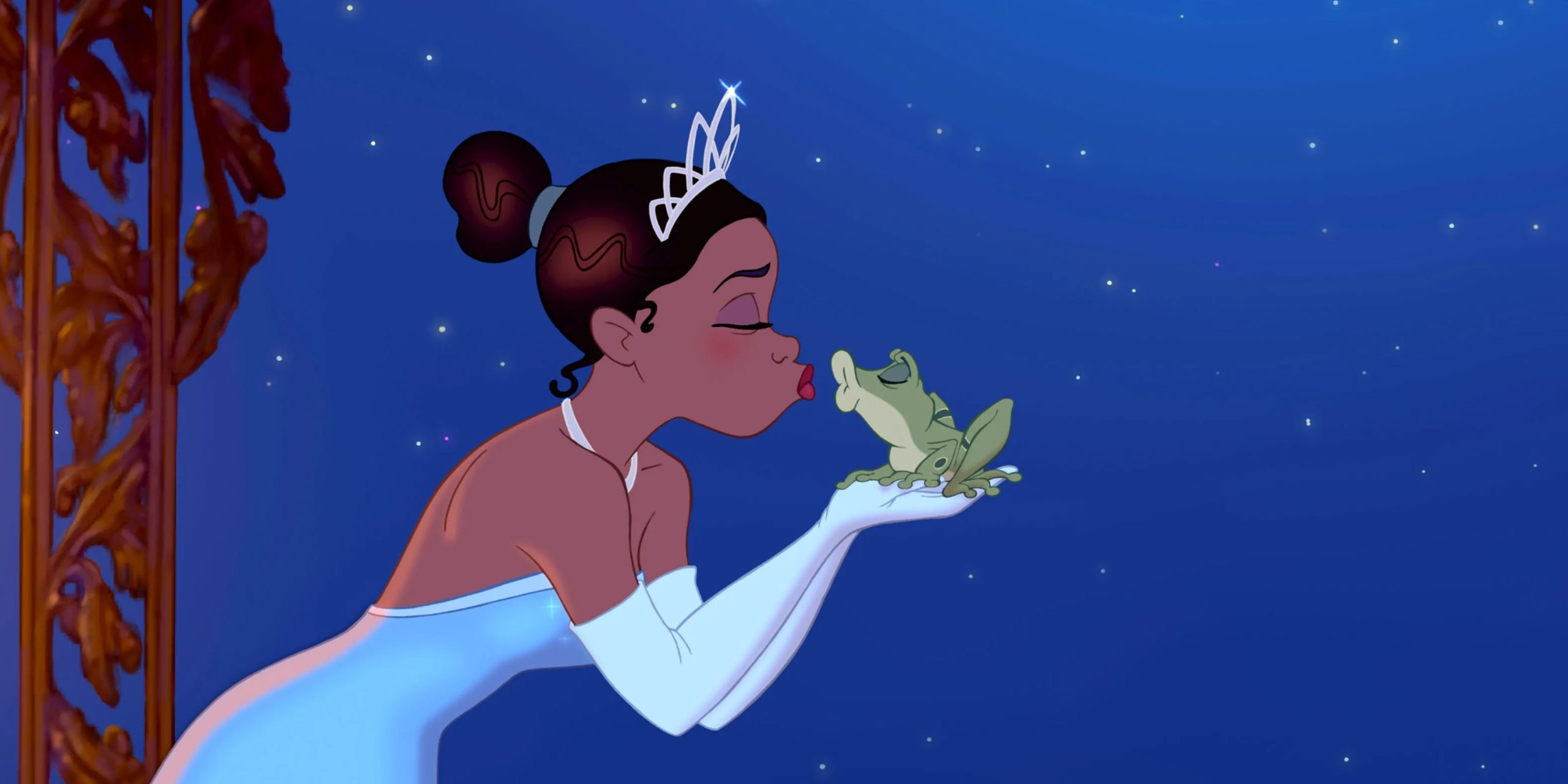
You can probably think of an influential fairy tale that has changed the way you think and behave. As a five-year-old child, I had figured out that if I needed anything, I could call out to my parents, “Help, it’s an emergency,” and they would quickly come running. When they tried to correct me on the proper definition of an emergency, it didn’t sink in — not being able to open my pack of stickers was an emergency to my pre-K brain! But when my parents told me about the boy who cried wolf, something clicked in my five-year-old brain. I intuitively understood how I wasn’t just annoying my parents, but I was actually setting myself up for harm by calling everything an emergency.
We know that these life lessons are important, and we know that fairy tales can work. The question that Dee wants to explore is *why* fairy tales work, so that we can reconstitute them for a new generation of digital natives and, perhaps, bring some of these important life lessons back to our collective adult subconscious as well. She offers a number of insights: fairy tales are short, they are clear, they are archetypal, and they have a straightforward structure. But those aspects of fairy tale form belie a much more important reality: fairy tales are effective because they impact our hearts and not our heads.
Fairy tales thrive precisely because they offer clear, archetypal portrayals of good versus evil and cautionary lessons that cut through intellectual ambiguity by directly engaging our emotions.
The controversial psychoanalyst and author of The Uses of Enchantment, Bruno Bettelheim, made at least one good point in his checkered career. He recognized that fairy tales speak to core human anxieties like abandonment, inadequacy, isolation and mortality, precisely because they bypass intellectual resistance. Similarly, the great C.S. Lewis believed fairy tales uniquely “steal past those watchful dragons” of skepticism by situating common moral questions in imaginary worlds. In these imaginary worlds, conventional wisdom, cultural biases, and preconceived answers don’t hold sway, and we can see the moral questions more clearly for what they are.

This year, my wife and I made a big decision to send our eldest child to the local private school instead of our local public school. Our chief reason for doing so was that the private school had a much more thorough and thoughtful technology policy, while our local public school would be sending tablets home with kindergarteners. All decisions, of course, come with a cost, and our son is very sad that he won’t be going to the same school as many of his other pre-K friends. It made me wish I had some sort of fairy tale, some affective tool I could use, to help him navigate his sadness. It might go something like this:
Once upon a time, there was a magic kingdom in which every citizen had a small magical mirror. These mirrors contain an overwhelming amount of magical power and can make life better, but like all tools, they are not wholly good. Some citizens look at their reflection in their mirror and are provoked to inordinate self-love, like Narcissus in Greek mythology. Some citizens are provoked to jealousy and wrath, like Snow White’s evil queen. Some, like Chicken Little, see in the mirror that the sky is falling and panic without checking the actual sky itself. Some citizens use their magic mirrors to peer into the lives of others, only to discover that evil eyes might be peering back at them, as Frodo discovered in Galadriel’s mirror. Maybe their mirrors become like The Mirror of Erised at Harry Potter’s wizard prep school Hogwarts, which doesn’t reflect a person’s visage, but the desires of their hearts. Or, like Hans Christian Andersen’s fairy tale The Snow Queen, some may find their mirrors hide the good parts of themselves while showing only the worst parts. Magic mirrors are not wholly good. They respond to the unique personalities, strengths, and weaknesses of their user. To use the power for good, and not succumb to the temptations of the magic mirror, people must train and prepare for their use. Otherwise, the mirror will not be a tool, but their undoing.
Alongside Dee’s insights, however, we should note that there are ancient fairy tales, fables, and myths that remain relevant today. Before Grimm or Disney compiled a list of iconic cultural fables, an itinerant Jewish rabbi told stories about unforgiving servants, lost sheep, and good Samaritans. His stories transformed the world by reimagining the nature of love, which in turn inspired nearly two thousand years of reevaluation of our concepts of race, class, sex, socioeconomic status, and nationality. They haven’t lost their relevance through the vicissitudes of history, cutting straight to the heart and inspiring humility and mercy in every generation, which means we should probably pay attention to them. Nobody who follows the teachings of Jesus would ever consider taking a father’s money while leaving behind a father’s love (though the one time that did happen, the kid regretted it, and the father was pretty gracious about the whole thing).
In fact, if these quality, time-tested fables aren’t enough to change the hearts and minds of Dee’s friends, it gives me pause. Are we so certain that new fables would be any different? They might be compelling and helpful, but sometimes, the fairy tales don’t make sense until after life has knocked us around a bit. Just because a story can bypass the brain and head to the heart doesn’t mean that the heart is fertile ground for a story’s lessons to grow. And to criticize my own earlier critique, just because a fairy tale is culturally relevant doesn’t mean it has the same power as the time tested medieval tales of yore.
Still, it is good to craft fairy tales for our modern age. The big changes of our time require new life lessons to navigate. We would do well to also revisit those parables of old as well, especially those known to “cut through intellectual ambiguity” and help us to love better. Those insights are timeless and worth our continued meditation. As much as I would love a fantasy series that takes place in a digital realm, or a children’s book series filled with cautionary tales about a kingdom of magic mirrors, we have a significant corpus of parables, myths, and fables that are worth our consideration already. My kiddos always enjoy new bedtime stories — but they love the classics too and return to them with good reason.