




I baptize you with water for repentance, but the one who is coming after me is more powerful than I, and I am not worthy to carry his sandals. He will baptize you with the Holy Spirit and fire. His winnowing fork is in his hand, and he will clear his threshing floor and will gather his wheat into the granary, but the chaff he will burn with unquenchable fire. (Mt 3:11–12)
My son has been obsessed with the Grinch lately. The book, the old school and new school animated movies, and especially the live-action movie starring a zany Jim Carrey dressed in green fur. As you might know, and as I have been forced to remember with each viewing, the Grinch lives above Whoville, out in the wilderness of the mountains. He is alone, shouting down at the town odd ramblings of his detest for Christmas. His diet consists of trash and glass. He is eccentric, angry, and as we later learn, misunderstood.
John the Baptist isn’t furry, but he does rock camel’s hair. When he bursts onto the Advent scene, we also find him out in the wilderness. He shouts odd messages of repentance and the Messiah coming with unquenchable fire. His diet consists of locusts and wild honey. And John the Baptist is eccentric, angry, and often misunderstood.
John the Baptist is the Grinch of Advent.
Having grown up in the non-liturgical tradition of fog machines and long sermons, one of the things I have come to love is the season of Advent. Every Advent I am reminded of something Brian Zahnd once said, that for the church “there is another way of telling time.” The liturgical calendar ends with Christ the King Sunday just as the world around us begins brewing hot chocolate and hanging Christmas lights. The church year begins with four weeks of expectantly waiting for Christmas while assembling Advent wreaths and singing carols. The weather starts to cool off. People start to cool off. Grace becomes a bit more in supply. The vibes are solid. And then, the Grinch of Advent resurfaces.
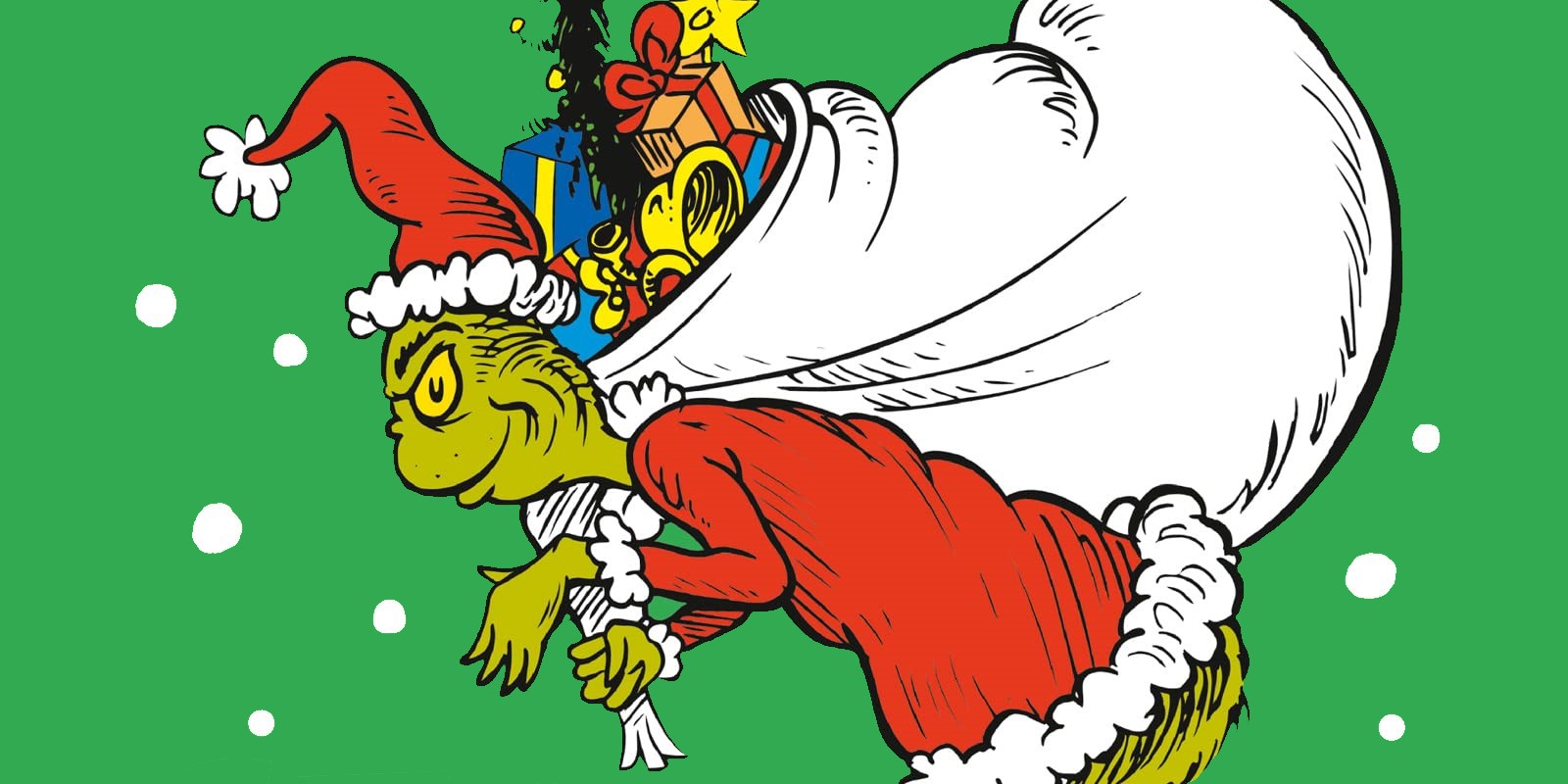
Every year on the second Sunday of Advent, John the Baptist comes from out of the wilderness back into our Whoville churches to rain on our Christmas parades. Like the Grinch, he sneaks down the chimney of our holiday season to steal our tidings of comfort and joy and replace them with the cryptic talk of the coming Messiah who will arrive with power, unquenchable fire, and punk rock. John the Baptist is ready for a military conqueror who will bring down the corrupt Roman government with a winnowing fork in his hand, all while I am ready for the sounds of the Bright Eyes Christmas Album and Arnold in Jingle All the Way. (“Put that cookie down!”)
I’m a pastor, and every Advent I look to the lectionary calendar in hopes of preparing a few warm holiday sermons. And every Advent I let out a tired sigh as I am confronted with John the Baptist and his wild message of “unquenchable fire” once again. I sit at my desk and wonder how this Grinch ever had such a following. As I write, I nimbly try and find ways to make his Advent medicine go down a bit easier for my sure-to-be-disappointed congregation.
And then…something happens. It’s never immediate, but in my Advent sermon writing my frustration and confusion with John the Baptist is eventually mirrored by his own. John is expecting the Messiah to show up as a soldier, to ride in on a war horse to break necks and cash checks. And then…a helpless baby is born. In all the vulnerability and humility and powerlessness of a birth that comes of a virgin from the wrong side of the tracks. The Messiah is laid not in a royal crib but in a feeding trough for barn animals.
We can chart John’s surprise in his change from confidence in Matthew 3 to confusion in Matthew 11:3. John does a double take from prison as he asks Jesus via his disciples: “Are you the one who is to come, or should we expect someone else?”
In the end, the Grinch is surprised at his upended expectations of the Christmas people of Whoville as his small heart grew three sizes. His warming towards this Christmas community helps dispel their (and our) hollow holiday nostalgia, reminding them that this season is about something more than all the trappings, trimmings, and a propensity for capitalism. John the Baptist does something similar. His surprise at who Jesus turns out to be keeps us focused on what is so integral about these first four weeks of the Christian calendar. Tis’ the season where we are confronted with the holy surprise and confusion of the coming of Christ himself, and how Christ inverts our expectations for a powerful ruler with the arrival of paradoxically powerless Messiah — one who descends into the fleshliness of our humanity to be like us and with us.
Maybe John the Baptist should be included in our nativity sets after all.








My son too is obsessed and has been for years. This breathes new life into this holiday tradition. Nicely done Kollin.
I hadn’t thought of John’s disappointment: surprise at Jesus before. Great observation and truly fun read.
Great article. I think about
Baby John jumping in the womb when he was near Jesus also in the womb. Luke 1:41
I absolutely loved this. Thank you!
How insightful. Great job, Kollin. Thanks for sharing with us
Fantastic article at this time of year! Nice job!
We often forget the different time and different place (sic “Jesus Christ Superstar”). No strings of lights, no lights except the torch and hearth and no media feeds or even selfie pictures. That we remember Christmas at all is, in effect, a miracle of its own. This suggests most assuredly that our Savior did come to save us all.