




In Thornton Wilder’s play Our Town, the town drunk and choirmaster Simon Stimson describes life to another character. To be alive, according to Stimson, is “to move about in a cloud of ignorance; to spend and waste time as though you had a million years. To be always at the mercy of one self-centered passion, or another.” It’s a sad but true depiction of reality. Finally, the wonderful Mrs. Gibbs interrupts him, saying, “Simon Stimson, that ain’t the whole truth and you know it!” While the old choirmaster isn’t exactly lying, Mrs. Gibbs convicts him for leaving out some key important details about life.
Consider it the theological version of the “glass half-empty, glass half-full” conundrum: with every Louis Armstrong singing “What a Wonderful World,” there is a Simon Stimson to remind us that the God of the rainbow is also the God of the flood; that with every birth there is a death; that to be alive is to be at the mercy of our self-centered passions. If you were to spend any time on the internet, it would seem that the Simon Stimsons of the world are having a field day right now.
Conventional wisdom asserts that suffering, and the people that inflict it, shouldn’t define our life story. It’s not what happens to you, but how you respond that makes you who you are. Should we choose to live this way, whenever someone hurts us we are to respond with an almost stoic denial of that person. We block their calls, we ghost them, all in the hopes of editing out our memory of that person (Eternal Sunshine of the Spotless Mind anyone?). But blocking someone out of our memory does not lead to healing. We may bury the hatchet deep underground, but, as American cartoonist Kin Hubbard once said, “Nobody ever forgets where they buried the hatchet.” The problem with this kind of “shake it off” mentality — which is relational equivalent to the “no regrets” philosophy — is that it nullifies any chance of forgiveness or reconciliation.
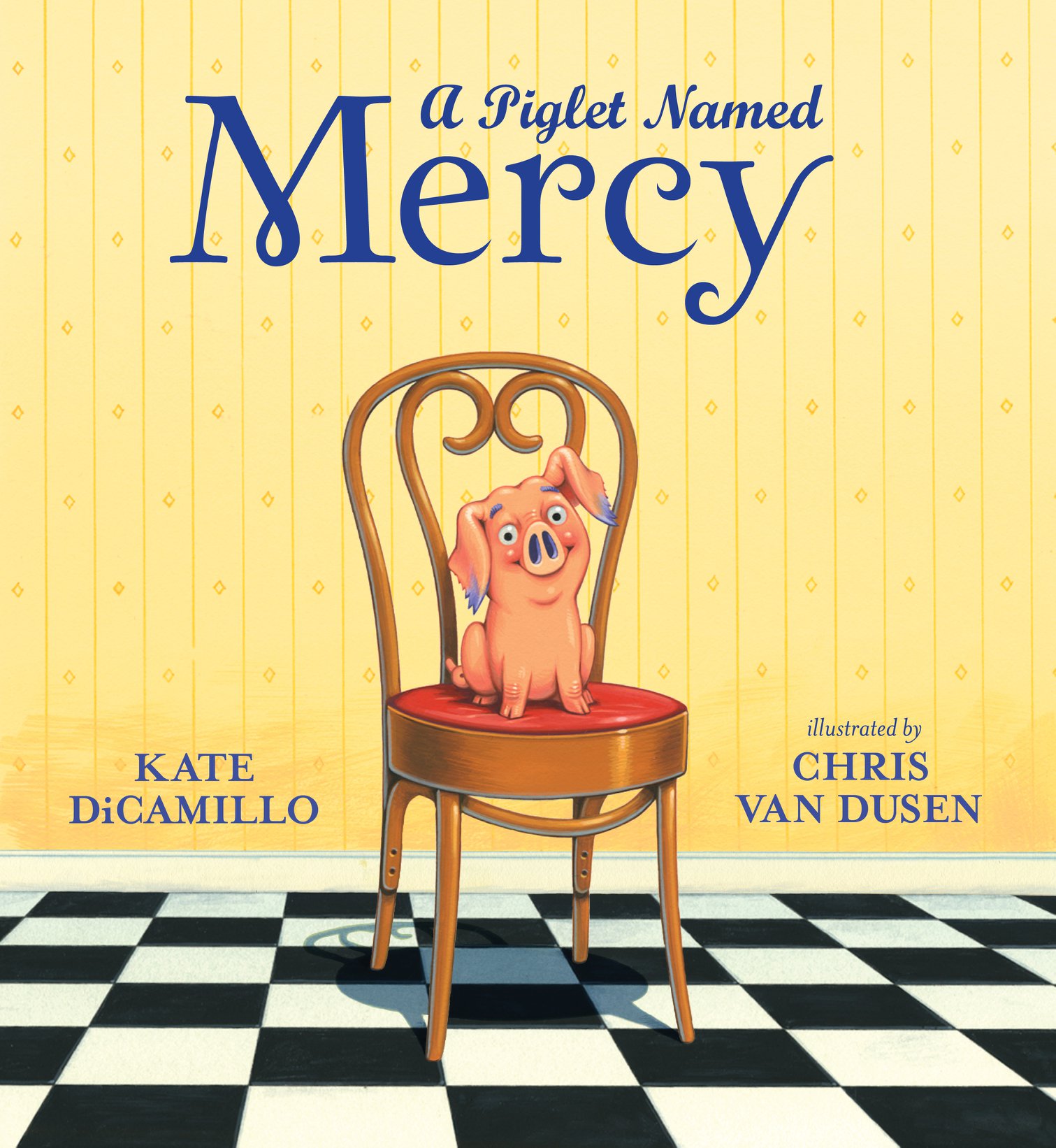
Casey Cep’s recent New Yorker profile on children’s author Kate DiCamillo sheds some light on when life gets dark. DiCamillo’s overwhelming success (she has sold over forty-four million books) can be credited to her innate sense of telling the whole truth. Much of what sets her apart as a writer has been shaped by a life of brokenness. DiCamillo’s father, a well-respected man in their town, was a menace at home, once holding a knife to her mother’s throat on Christmas Eve. When she was a child, a long bout of health issues, including chronic pneumonia, led to a series of hospitalizations. Considering DiCamillo’s childhood, you would think her life would be a perfect recipe to be the next Simon Stimson.
Rather than use her hardship as a punching bag, she has used it as a lens through which to see the world and herself. Rather than denying the traumatic events in her life, she embraced the fact that these experiences did define her. Whether it was subconscious or not, the suffering of her childhood worked its way into her stories. As she tells her young readers in The Tale of Despereaux, “Everything, as you well know (having lived in this world long enough to have figured out a thing or two for yourself) cannot always be sweetness and light.” She is even willing to implicate herself. In her acceptance speech for her first Newbery Medal, DiCamillo said even a child’s heart can be “full of treachery and deceit and love and longing.” For any story to be complete, it must include the bad with the good.
Despite everything, DiCamillo has somehow retained a childlike sense of wonder about the world around her. While she has received more than her fair share of suffering, DiCamillo wants to remind her readers that there is always more to the story. She quotes the Jack Gilbert poem, which warns the reader, “To make injustice the only measure of our attention is to praise the Devil.” Well aware that she had inherited her father’s temper, she knows her propensity to lash out and hold grudges. But after decades of channeling her experience through her writing (as well as significant time in therapy) she has experienced healing. In The Tale of Despereaux, she writes of a character forgiving his father. “And he said those words,” the narrator explains, “because he sensed that it was the only way to save his own heart, to stop it from breaking in two. Despereaux, reader, spoke those words to save himself.” DiCamillo realized that her story would be redeemed not by denying her father, but by forgiving him.

This embrace of suffering is completely otherworldly. Left to our own devices, we will bury the pain without giving it a proper burial. Inevitably, it will rise from the dead and continue to haunt us. Either that, or we’re convinced that justice will settle the score. When a 19th century prime minister of Spain was on his deathbed, he was asked if he wished to forgive his enemies. He replied, “I don’t need to forgive my enemies, I have had them all shot.” Whereas justice demands punishment, forgiveness is choosing to take the bullet yourself. It is not simply shrugging off wrongdoing, but dying the death that the wrongdoer deserves. Rather than take the bullet, we will sooner hold a grudge. And yet, nothing inspires courage when someone takes a bullet for you.
When DiCamillo wrote to her father telling him that, despite everything, she loved him and forgave him, he questioned her, asking “Who are we to speak of forgiveness?” While she never responded to him, in the interview she said, “I so wanted to say, I can speak of forgiveness. I wanted to tell him that I have been forgiven again and again by all these fabulous people in my life who have taught me to be a human being — that’s how I can speak of forgiveness.” In other words, the forgiveness she was extending was nothing other than the forgiveness she had first received.
DiCamillo’s outlook on life is not the result of positive thinking. Her joy has not come from choosing to see her glass half-full. Rather than analyzing the contents, she has simply drunk from the cup that has been given to her. The truth, it turns out, is more vast than we are able or willing to believe. It is able to hold two things at the same time: that all is not well and that all will be made well. That is the truth, the whole truth and nothing but the truth.








I obviously love this. Hope you’re well, Sam!
Really good
Great post. We have been fully baptized in Kate Dicamillo.
Tears. It seems you’ve touched a nerve and my heart.
A moving prompt for me and an affirmation after some scary events in my life from parents and relatives, friends. Facing life, we flower. Thank you.