Summer break’s midpoint has come and gone, friendos, and while most folks are scrambling for sunscreen and clinging for dear life to good vibes, we — Ian, Blake, Blaine, and Caleb — have come to fright this boat and corpse correct. The four of us each selected a movie that bore at least a tangential connection to summer and have convened to pick each other’s hearts and brains, unpacking the fun and the gospel connections tucked within the scares.
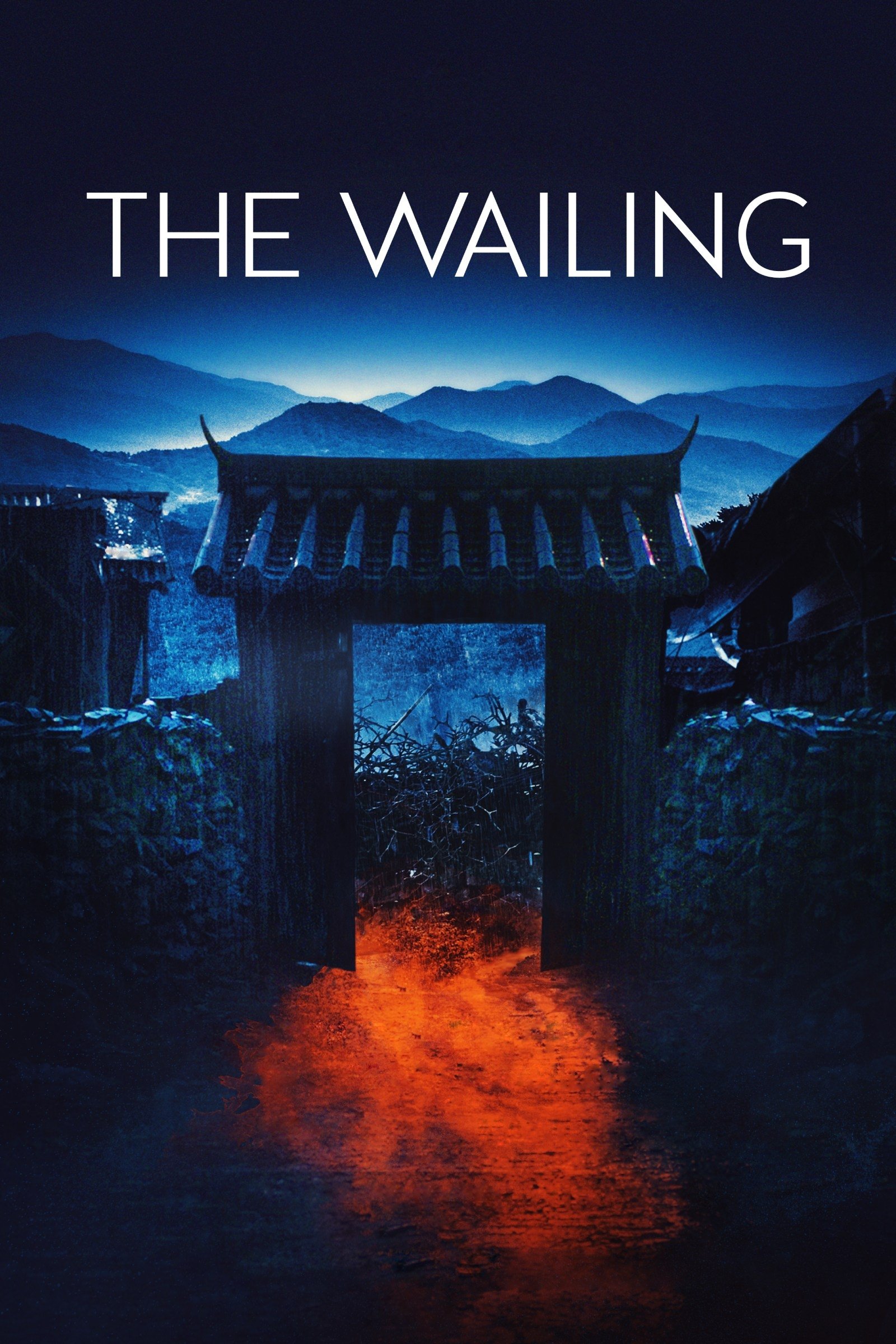
First up this week is The Wailing, Na Hong-Jin’s 2016 masterwork about a policeman desperately seeking to unravel a mystery that has engulfed his village and threatens his daughter.
Blake: I forgot how funny The Wailing is.
Ian: It certainly begins that way, at least! The comedic setup wonderfully gives way to dread, terror, and despair, but without feeling like a mistake in tone. We follow Jong-goo blundering through his world, so we are as unprepared as he is for the deepening of the horror.
 Caleb: I think the humor also underscores the ordinariness of life: this is a small-town cop. Nothing is ever usually at stake for him. He can barely please his wife, barely keep up with his daughter, barely get to work on time. But suddenly, he’s thrown into the middle of a murder scene with a culprit that’s ten times the enigma — is he a zombie, is he an occultist, or just some hapless victim of an accidental mushroom trip?
Ian: It’s so disarming to me that our protagonist is kind of a dummy.
Blaine: I think of Jong-goo as the Unholy Fool. Or, more colloquially, dumbass.
Blake: I can’t help but like him.
Blaine: When he screams, “WHAT SIN HAVE I COMMITTED?!” I kind of vicariously facepalm for him.
Caleb: Would y’all say that Jong-goo is the only character that is what he seems to be? Every other character I can think of has some hidden side to them, or at least, is shrouded in some mystery. But what he is on the surface — I think — is what he is beneath, too. The hapless and unholy fool.
Ian: That’s a great point, and I like that it shows up his foolishness. A fool is exactly what he appears to be at a glance.
Blaine: I realized something for the first time this go around. In addition to the shamanic rituals not being directed towards whom we are led to believe, I don’t even think they’re happening at the same time.
Blake: Give me more deets.
Blaine: I believe that the shaman is directing his ritual towards either Hyo-jin (trying to speed along the possession; she clutches her stomach as he drives stakes into the pole as well) or the Ghost Woman in White (which we don’t see).
Caleb: But the Japanese man seemed like he was in pain while the shaman was driving stakes into that wooden statue …
Blake: This could have been just as likely happening offscreen by the good ghost in white. Meanwhile the Japanese man is, I believe, either trying to resurrect the guy in the car to serve as a red herring/decoy for the group to follow (since they are on the trail of the Japanese man) or is in combat with the Woman in White.
Caleb: Speaking of the good white ghost — her character has always been the most mysterious to me. Is she an angel?
Blake: Or something — being in white should be the dead giveaway.
Blaine: I would have to brush up on my Korean mythology, but I believe they speak of local villages having a guardian spirit. She would be it.
Blake: I also wonder if all of it was directed toward our failure of a protagonist also. Remember, the human shaman states that the “rat has fallen into the cage” (or “trap,” I can’t remember).
Caleb: There’s an interesting overlap of distrust of cultures, whether that’s religious or ethnic, and how that moral doubt leads to all kinds of certain disaster for this village.
Ian: But at the same time, I also like that the obvious distrustful move is in fact the right one. He is the Devil.
Blaine: A Tengu!
Ian: He’s a cheap foreign Amazon …?
Blaine: The Japanese Man is a Tengu, or a devil. Perhaps even the Devil. The Woman in White is a village guardian spirit — need to look up the actual word — and perhaps an angel … [checking Wikipedia] Holy moly guys: they’re called jangseungs, and they refer to the totem pole and the deity.
Blake: I do want to note that the director is a self-proclaimed Christian.
Caleb: Na, the director, has said that a lot of the idea of this movie came in the wake of his going to the funeral of three loved ones close together. I know grief is an overplayed theme in horror movies from the 2010s, but tangible death does tend to lend itself to a crisis of faith and knowledge.
Ian: Caleb, what is the summer connection here?
Caleb: The film opens with the Devil fishing. I believe it’s Il-gwang, the shaman, who says that sometimes evil goes fishing just to see what it will catch. Tragically, he hooks Hyo-jin, and by extension her family — perhaps even when she and her father were sitting on the idyllic river on an early summer’s day. That is, I think, where she sees the Japanese man for the first time — across the river.
Blaine: Wild that the Devil is the fisher of men in this.
Blake: This MF right here …
Caleb: Bro’s out of control!
Blake: SEE, CALEB, THIS IS WHY WE FORCED HIM TO JOIN. HE SMAHT BOI!
Ian: This man goes into self-imposed exile from writing when he just casually ekes out gold nuggets like this one …
Caleb: Nothing’s more summery than a dad sharing snacks with his daughter by the riverbank, though. This is one of the last things Jong-goo reminisces about as he dies.
Ian: I found it interesting that the local church’s impotence did not undercut the reality of the Devil.
Caleb: Oh absolutely.
Ian: I think for many people the one would imply the other. But reality is messier than that, and this outpost of the church can fail in what the church is meant to be, and it does not change the fact that there is a true Lord and an Enemy to be repulsed.
Caleb: I think the trope often is that the religious body is ineffectual because the metaphysical entity it opposes isn’t real, and so the real monster will often turn out to be the humans wielding the ritual power. But as recent history has made painfully obvious — what if the religious body is ineffectual, and there really ARE metaphysical monsters out there? It’s doubly frightening then. If the monsters are on two fronts — both ordinary humans and otherworldly entities — then are there any other powers out there that might be for us?
Blake: This is in fact how the Devil would play the game at this juncture in history.
Ian: Yes, I find the webs of enmity and opposition fascinating, part of it being, “Is being the enemy of the Enemy enough?” And this is me dwelling in the Woman’s ambiguity. She may be the village guardian spirit, or she may be an angel (per the biblical allusion “three times”), or … both? A servant of the True God who is not understood by her wards? Which, in the primary world, I do wonder about some of the ancient deities. Whereas many, assuredly, were appointed wardens but coveted top-tier status for themselves.
Caleb: The clear lack of categorical boundaries is itself disconcerting for us the audience — subverting our ability to rely on tropes of movie watching to anticipate what’s next and, therefore, find some comfort.
Ian: The film does what the characters do: try different rules and hope for the best. But the whole time it was the Devil in the Other!
Blake: I think in a broken world, dubiousness is the only certainty we can attain outside of the God of the cosmos speaking and being in the world. And I’m not saying that in a cheap progressive way, but in a robust, “limits of man” kind of way.
Ian: That ain’t progressive, that’s Barth, baby: “You think you know that? Interesting. Did God say that …?”
Caleb: Who Barth-ed? For real, though, we’re not getting too philosophically dense here, are we?
Ian: My man said, “Who Barth-ed?” and then asks this! In Mockingbird terms, also, and in line with all of these points, I would say all the frantic busyness of the film shows how much the laws to which we adhere offer a dubious certainty that we will be okay. We’ll follow these steps, we’ll turn the crank, and out will come blessedness and security, perfect. But most laws do, in fact, lead to death, as they do here: we’re turning the crank and — we don’t have to mention the death drive explicitly — when the “certainty” begins to falter because the laws do not produce the effects we are seeking, we just crank it all the more, trying to get a better result.
Blake: Don’t crank me, Ian.
Ian: Don’t @ me.
Blaine: “We don’t have to mention the death drive explicitly.” (Sure … )
Ian: I just know there’s a crank I tend to, well, crank. Any concluding thoughts from you fellers? What brings this film home for you?
Blake: I think for me, especially on the second viewing, it’s one of the very few films that is able to scare the hell out of me in such a complex human way. It never chooses the easy road narratively, and yet the way it manifests evil feels the most real of any horror film I’ve seen. This is why it’s my favorite horror film, so far, of the new century.
Ian: Love it. And I feel like it mimics the obscurity of the Devil at work in the world so aptly. The genre bending accomplishes — I think — a cinematic judgment: “You are no different.” And I will take every warning of my foolishness that I can.
Caleb: The Wailing is a Top 10 movie for me. It’s endlessly rewatchable. I could not recommend it highly enough.
Ian: Blaine?
Blaine: Yeah. I can’t believe I let you guys talk me into going out in public again.