




In space, no one can hear you scream — not unless you are Ryland Grace.
There has been a lot of positive noise about the new movie adaptation of Andy Weir’s book, Project Hail Mary (directed by Phil Lord and Christopher Miller), but it has not gone without criticism. While many have praised it for its visuals and charming performance from its leading star, Ryan Gosling, some others have claimed that it’s simply too sentimental or too feel good for its own good. As a recent New York Times reviewer criticized it:
Before long, a science-fiction freakout — one that is easy to see as a metaphor for our own climate catastrophe — has turned into a good-natured buddy movie that becomes increasingly, almost willfully more insubstantial with each new chuckle. Lord and Miller, almost by default, accentuate the positive to the detriment of the very movie that they’ve painstakingly created. Like a lot of Earthlings, they seem more at home in a far-out fantasy than on our ordinary, terrifying planet, which is why this particular message of hope ends up being a bummer.
The science fiction genre is no stranger to gritty existentialism, intergalactic daddy issues, environmental collapse, sobering reflections on love and the desire to not go gentle into that good night, putting the grave in gravity, and loneliness. Frankly, it’s a genre that is well suited to converse with those themes. And yet, this is not all it must be confined to be, as films like E.T., The Martian, Wall-E, Super 8, and others have already proven. Project Hail Mary is simply a foil to the mainstream trend of science fiction stories that use the dark vacuum of space as the backdrop for the even darker themes present in reality. And while PHM is a bit too neat at times and borrows a bit too much from films like Moon and Ad Astra, its refusal to accept the idea that we are alone and without help in the universe cannot simply be discounted as a fundamental weakness in writing.
At the heart of Project Hail Mary is not the terror of cosmic isolation but the wonder of discovering there just might be a friend to find at the end of the galaxy.
Ryland Grace’s story begins with a familiar sci-fi trope: He wakes up from an induced coma to find he is alone, light years from home, and his two other crewmates are dead. He slowly begins to recollect where he is and why he is on a mission to the star, Tau Ceti. A microorganism, called astrophage, has been rapidly dimming the sun resulting in what will be a catastrophic freeze. Grace, a disgraced scientist, alone and barely qualified for space travel, soon puts it together that this is a one-way trip to the only star in the galaxy unaffected by the astrophage. It is, against all hope, humanity’s Hail Mary attempt to stave off its own extinction.
PHM is an undoubtedly optimistic film, but perhaps more than that, it is hopeful. But it does not stake its hopes on the competency of its protagonist or on a brilliantly executed plan. By all measures, the characters know that there is not enough time, manpower, or resources for this to be a plan that has any human chance of success. The only real self-conscious consideration of the chance of this plan working is between Grace and the head operation strategist, Eva Stratt (played by Sandra Hüller), who replies to Grace’s inquiry of the mission’s probability of success with simply a pious answer: “God willing.”
Grace does not find himself alone for too long before he discovers an alien spaceship with a benevolent, and similarly isolated, pilot who Grace names “Rocky.” With both crews dead except for these lone survivors, these two form a fast bond. The great wonder of this movie is how it interweaves the individual relief of these two protagonists in finding each other against all odds, finding a way to communicate with one another, and the collective relief of these two protagonists working together to save their respective home worlds. In PHM, finding relief from loneliness and finding a cure for a dying world are not a zero-sum game.
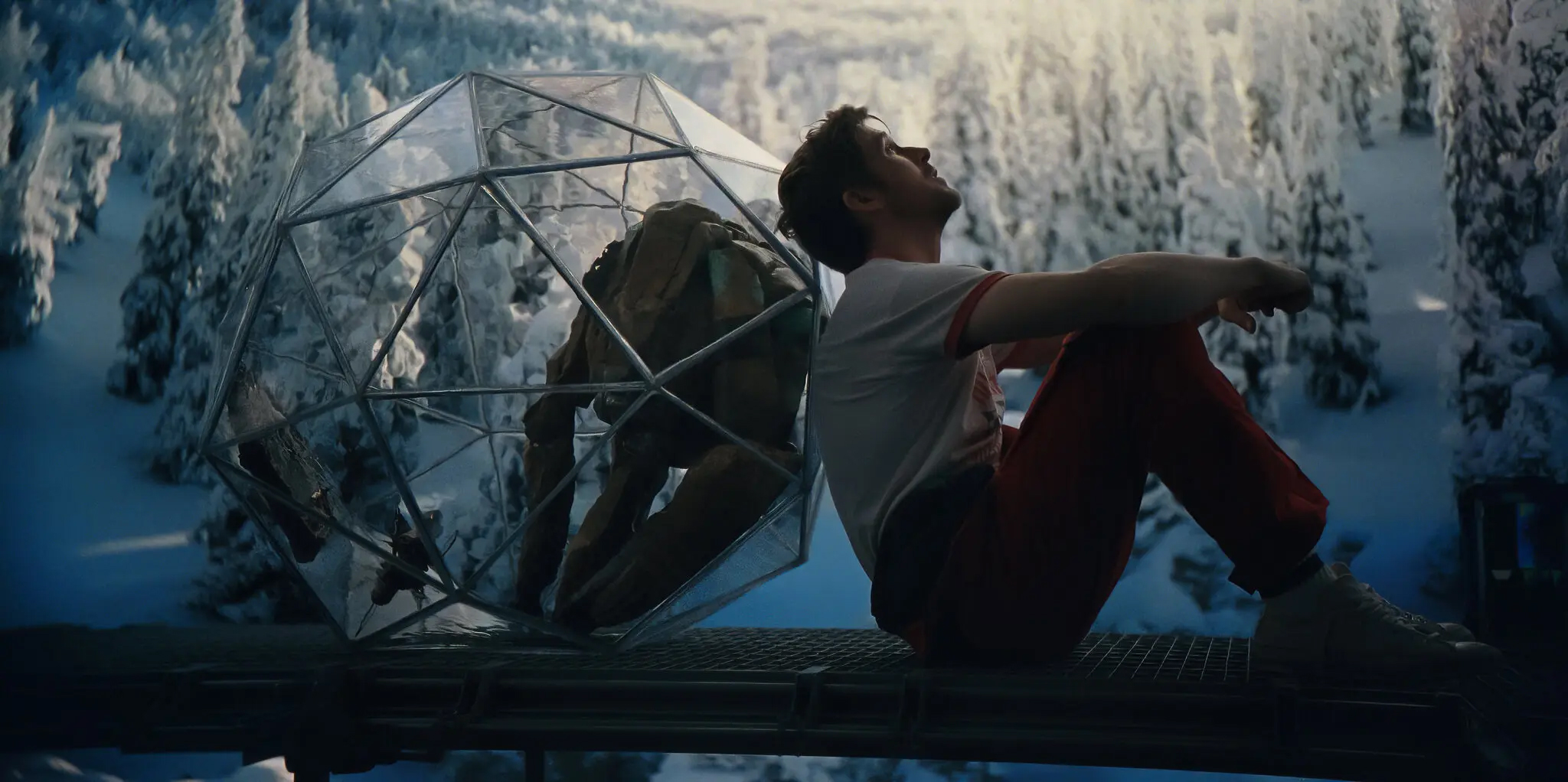
One might call this overly sentimental or perhaps just a sort of escapism (as the NYT review above claimed) from the plight of earthly problems, but I think this is a naïve perspective. Loneliness is one of the greatest threats to humanity that we are currently facing. You can call it a “good-natured buddy movie” about the power of friendship or working together (or other such tropes), but you cannot deny that something as simple as a lonely man making a lonely friend speaks to the sincere aches of many of our world’s most profound sadnesses.
What is revealed only later in the film adds to the irony of the choice of name for our protagonist. We find out that Grace, humanity’s last hope of salvation, outrightly refused when given the choice to be a part of the mission. I’ll save the details for you to discover just how he becomes part of it, but what is clear is that Grace is not so much an agent of grace but its recipient, indelibly impacted by the gift of finding a new friend.
I will again try not to give too much away here, but in the final act of the film, Grace is given another choice, which he must make of his own volition, to save Rocky at the ultimate cost of not being able to return home. Grace is not an escapist, and grace is not escapism. Our protagonists’ actions are more along the lines of heroic self-sacrifice akin to John’s Gospel, “Greater love has no one than this, that someone lay down his life for his friends.” When one’s life becomes recalibrated by grace, the love of one’s friends becomes a centripetal force.
At the other end of loneliness is love.
Just because grace seems unrealistic or so unaccustomed to the patterns of earthly life does not make it necessarily naïve. And just because the stories that resonate with us are eucatastrophic in nature does not make what we find to be so wonderful within them untrue. The violent interception of grace is no mere sweet sentiment but something sincere and predicated upon a profound truth: God came into this broken world, into our cosmic loneliness, to restore all things, to lay down his life for us, and certainly not least, to be alone with us until the end.








Grateful for this, Jeb!
Well said! I’ve been craving a thoughtful examination of this movie which I found so beautiful, for more reasons than the production value and Gosling’s charm.
Thanks Austin <3