




This past summer marked my eighteenth year in full-time pastoral ministry work. I have served churches in Sacramento, Hawaii, and now Minnesota (makes perfect sense). My congregation here in Bloomington (we just hosted the fall Mbird conference!) decided several years ago to establish a sabbatical policy for our pastors. A sabbatical is extended paid time off, anywhere from a month to a year, for the individual to rest and/or research. The modern versions of this started at Harvard in the late 1800s as a way for professors to have a break from the grind of classrooms to dive deeper into some form of research. In recent years, this concept has expanded to many professions, and particularly into ministry.
The sabbatical I received this past summer was three months and carried no requirement for continuing ed or book writing. The goals were to unplug, rest, and spend time with family. They also wanted me to provide some reflections on the experience. Not wanting this to be a summer vacation report on steroids, I thought I would provide a general view to the experience, with some deeper reflection on the nature and purpose of rest. My hope is that you will be able to recognize God’s gifts of rest in your own life.
Though I gave you the quick definition of a sabbatical, the concept is rooted in God’s Word, so I turned there first to try and make sense of the strangeness I just experienced. Leviticus isn’t the first place I think of in terms of grace and rest, and yet in chapter 25 the Lord instructs the following: “For six years sow your fields, and for six years prune your vineyards and gather their crops. But in the seventh year the land is to have a year of sabbath rest” (Lev 25:3–4). He goes on to describe how the land going a bit wild will still provide food to eat but shouldn’t be in any sense “worked on.”
It sounds strange to my ears to hear that the land itself needs a break. Does it manage a life/work balance? Is there a time when it stops doing what it’s doing? Jesus doesn’t add much clarity for me on this. In one instance he tells us that the flowers don’t “labor or spin” (Matt 6). In another the plants are described as growing unceasingly: “Night and day, whether he sleeps or gets up, the seed sprouts and grows, though he does not know how” (Mk 4).
It’s helpful to not have clear pragmatism about the command to give land rest. We can, of course, point to studies about fallow fields. We can see that the lack of harvesting is about rest for the people. But the truth remains that God commands rest and doesn’t give us all the reasons why. The idea of sabbath is built into God’s created order. In other words, our discomfort with rest is strange, not the rest itself.
Beyond Deserving
But did I deserve a sabbatical? The very first Mockingbird conference I attended was in 2019 and titled: “Beyond Deserving: Hope in a World of Performance.” To say that I was at a point of burnout would be an understatement, and that conference and phrase are forever embedded in my heart. Grace is all about being beyond the question of what is deserved, and a true sabbatical is rooted in this.
In the lead-up to my planned break, I tended to receive two kinds of responses from people concerning the idea. The first kind was more common and positive. Many people told me I deserved it and that pastors work hard and that I’ve earned it. These are kind words from kind people and rooted in love, and I accept them as such. But as I think about my life, I can’t say that I deserve three months of paid vacation to do what I want. Every time someone has asked about this, I feel a little uneasy and am certain there are way more deserving people who aren’t receiving such a gift.
And some people told me as much! The second kind of response I received was along the lines of “Well, I pastored for 40 years and never had a break.” In other words, you young’uns are soft and you don’t deserve this sabbatical, so you shouldn’t have gotten one. Somewhat threading the line was another well-meaning individual who said they shouldn’t have a policy for every seven years. If any of us pastors (or other workers in the church) are having problems, we should just ask for help. The first image that came to my mind was a drowning person being asked to explain themself.
But in a sense this individual gave me an incredible gift. I realized that the policy or rule that my church has instituted is in line with Leviticus and God’s grace. The rule is every seven years. It isn’t about how hard I work or how stressed I am, it’s just there. Whether anyone believes the rest is deserved or not is completely beside the point. It is a gift that is beyond the question of deserving, and as such, it has helped me to see with gratitude all the little sabbaths that God grants me without my ever asking for them.
Preach the Gospel, Die, and Be Forgotten
Of the twelve weeks of sabbatical, six of them were spent traveling with family. My wife and I immediately did a solo road trip, leaving our kids with the grandparents. A little later we took the whole family out West to see extended family and play tourist a bit. Lastly, my dad and I took a trip, just the two of us, and he spoiled me like I was still his boy living at home!
I mention all of that because I wasn’t asked to write a book, do continuing education, or otherwise “improve myself for ministry.” I was told to take a break, enjoy my family, and see what happens. My family was not a side project but the main focus. I have often been warned that ministry can become total in its requirements and your devotion. People talk of it as a “mistress” or confess that it drew them away from their family’s needs. The allure of being helpful or important has definitely led many individuals to poor decisions and much regret.
Years ago I first heard the quote “Preach the Gospel, die, and be forgotten.” Ironically most know that Count Zinzendorf said it! On its face it sounds overly pessimistic, and many rightly point out that God, of course, never forgets us. But the way I heard it framed came as a relief. It is not my calling to do something great or memorable by the world’s standards. I don’t need to make a name for myself.
Far deeper than my calling as a servant in the church is my calling to Jesus and my callings to my family, my wife, and my kids. The sabbatical provided two healthy reminders for me: The church existed before me and will exist when I’m gone. I’m not that important, especially for the sake of the institution, but I am pretty crucial to my wife and kids. The gospel I receive is shared first and foremost with them.
Ministers aren’t alone in the temptation toward total work. We all struggle with our value as a metric of what we produce. It was simultaneously challenging and freeing to “accomplish nothing” and be in relationship. In a sense it was placed upon me, and I suspect when God strips this from us at times, the same gift can again be revealed.
Further Up and Further In
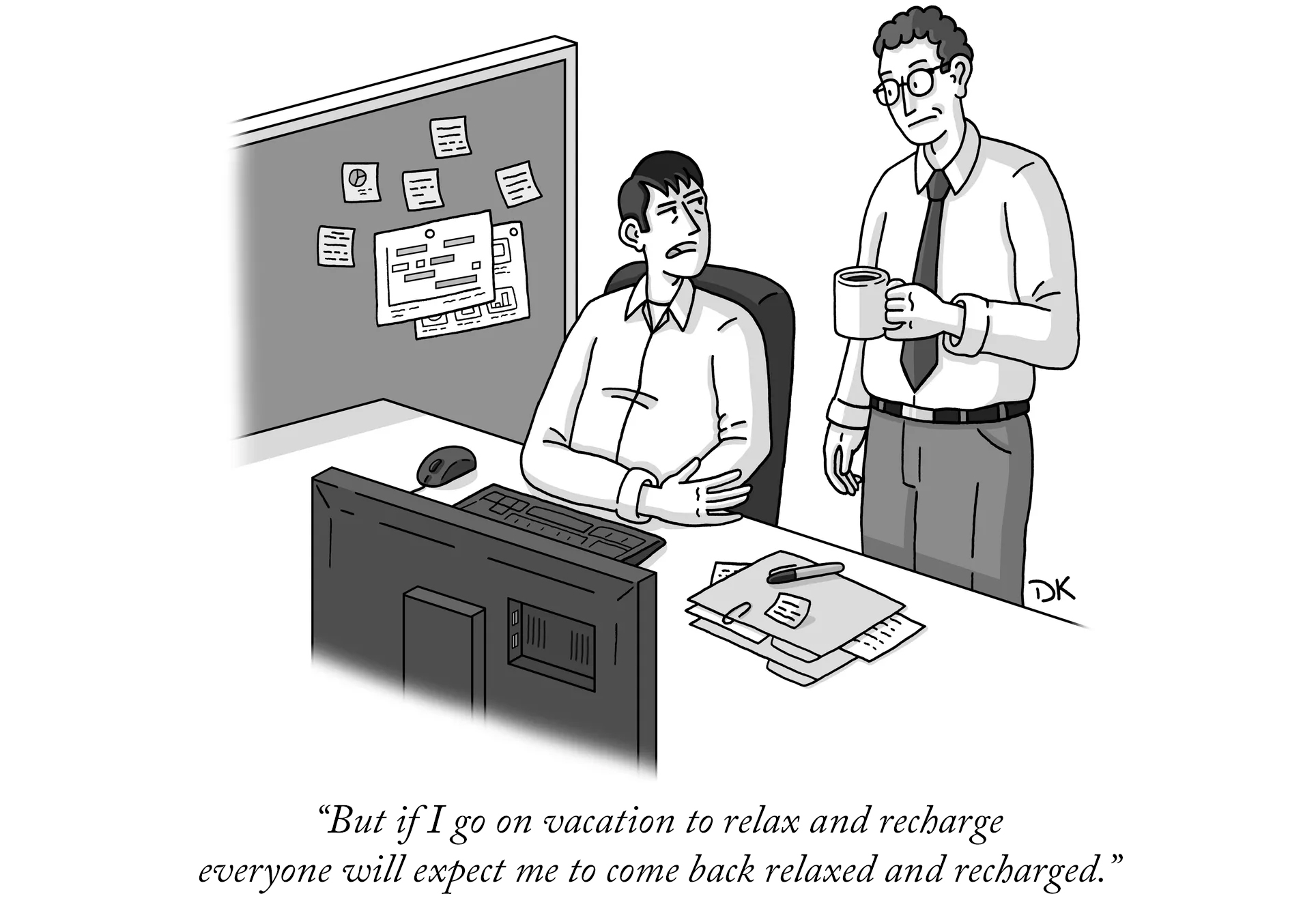
My last reflection speaks to the purpose of rest more generally. Is rest just for recharging batteries? Does rest make you better at what you do or produce? Is it an escape from demand? Our instinctive answers betray that sabbath is rarely seen as an end in itself. God nowhere says to rest so we can be more productive for him. Rest isn’t given as a consolation for the hardships we suffer in this fallen world.
Rest isn’t an absence of any kind but a fullness. Rest recognizes the fullness of God’s gifts and the ever-expanding nature of his grace. It’s difficult for me to put my finger on this, but during my sabbatical, all kinds of spaces began to take on the significance of holy ground. The same living room with my kids meant more under the banner of sabbath. Conversations with my mom or dad seemed untethered to constraints of time and place. It’s not that I had a better perspective or finally figured something out. Things just felt more full. There’s something about rest that causes that. Perhaps you’ve felt it at a funeral or family reunion. Set apart space and time, and it is holy.
There’s a section of Lewis’ Narnia book series where our heroes experience the end of the world and go through the door to the new Narnia. As they enter, they realize that the new world is far more real and more truly itself than the old world. They continue to explore, going “further up and further in,” and as they go, the world just continues to expand. Lewis is painting a beautiful picture of how Jesus will raise us on the last day and make all things new. In a way, I can see how sabbath is a kind of inbreaking of that truth into our current lives. Like all of God’s gifts, true rest isn’t something we earn or grasp after. It is given. It is given because God loves us. It is given as a glimpse of the fullness of his grace.





Well said! I love the idea of rest being not about absence but fullness. I am challenged and encouraged by the Zinzendorf line, too!