Ithink I am purchasing a house soon. Completely by accident, of course. Now, no one purchases a house unintentionally, as if it were surreptitiously placed in their grocery cart. But when an eviction notice becomes a purchasing contract within the span of a few days, “by accident” might aptly describe the near-miraculous reversal of events. Last week I was searching for moving companies; this week I’m making plans to go to Home Depot. Go figure.
That one’s fortunes can turn on a dime shouldn’t be much of a surprise to anyone at this point. But it’s still striking to notice how so many pivotal life events seemed to dance on the edge of a knife while seeming to occur with little input from ourselves. Our accomplishments, however hard earned they might have been, often depended just as much on circumstance as anything else. The admissions committee decided in your favor over another, equally qualified, applicant. You scored a career-making contract because the buyer was desperate. You met your spouse on an elevator while heading to the wrong doctor’s office.
Even the best laid plans are no guarantee. A recent episode of the How I Built This podcast featured an interview with Lloyd Armbrust, founder of the company Armbrust American. The show typically interviews business entrepreneurs to glean advice and inspiration for its aspiring business audience, a kind of “ten steps for becoming a success.” Armbrust built a mask production company from nothing in just six weeks, but his lesson for the listeners was anything but conventional. “I think the companies that are successful, they end up doing a lot of right things accidentally. Like, there’s a lot of luck.” Sure, Armbrust worked his tail off, but by his own admission what made his company successful was the product of sheer happenstance.

By the same token, our failures and misfortunes can often follow the same chaotic randomness. The stock market tanks, an important phone call is missed, you have an unexpected diagnosis, or you have to fly a plane because the pilot loses consciousness. Whenever things fall apart — regardless of how it happens — blame is easy to come by, whether it be directed at ourselves or others. There’s certainly no shortage of books out there that diagnose what precisely went wrong with your life. Perhaps it’s the curse of middle age to look back at life and wonder what might have been.
This week, NFL player Tarik Cohen wrote a “Letter to My Younger Self” in the Player’s Tribute. In it, he chronicles the endless succession of tragedies he has suffered since high school. While his football career has been a short success, earning him millions of dollars and a Pro Bowl selection, his family has spiraled downward. Cohen’s brother was paralyzed after a gang-related gunshot wound. His twin brother was then killed after wandering into an electrical power station. Some might view these as tragic accidents. But Cohen blames himself and the decision he made in high school to pursue a football career: “looking back on everything, it almost feels like, with football, you kind of made a deal with the devil or something.” The decision to leave home to play football in college was, in his mind, the precise point his family began to unravel.
Could things have been different for Cohen and his siblings? It’s impossible to say. It’s hard to not overlook, though, how far upstream Cohen attributes the first snowball ahead of the avalanche, years before his family’s tragedies. But the idea of Cohen not taking the free ride to college would have appeared insane at the time. What feels like choice now was likely far less so in the moment. While he believes his younger self made the wrong decision, it’s difficult to imagine him taking a different path.
Long before the Marvel films began playing with the idea of parallel universes, the movie Sliding Doors depicted the life of a woman who missed the subway on her way to work. This small disruption creates two parallel storylines — the woman who caught the train and the one who did not — that twist and turn before ultimately intersecting. She gets the guy in the end either way. But more than a hypothesis about romantic destiny, the film contends that life itself has an almost divine inevitability to it. The movie suggests that life is not ruled by a measure of personal control, or even karma, but that there is a fundamental, providential trajectory to one’s life with only apparent deviations.
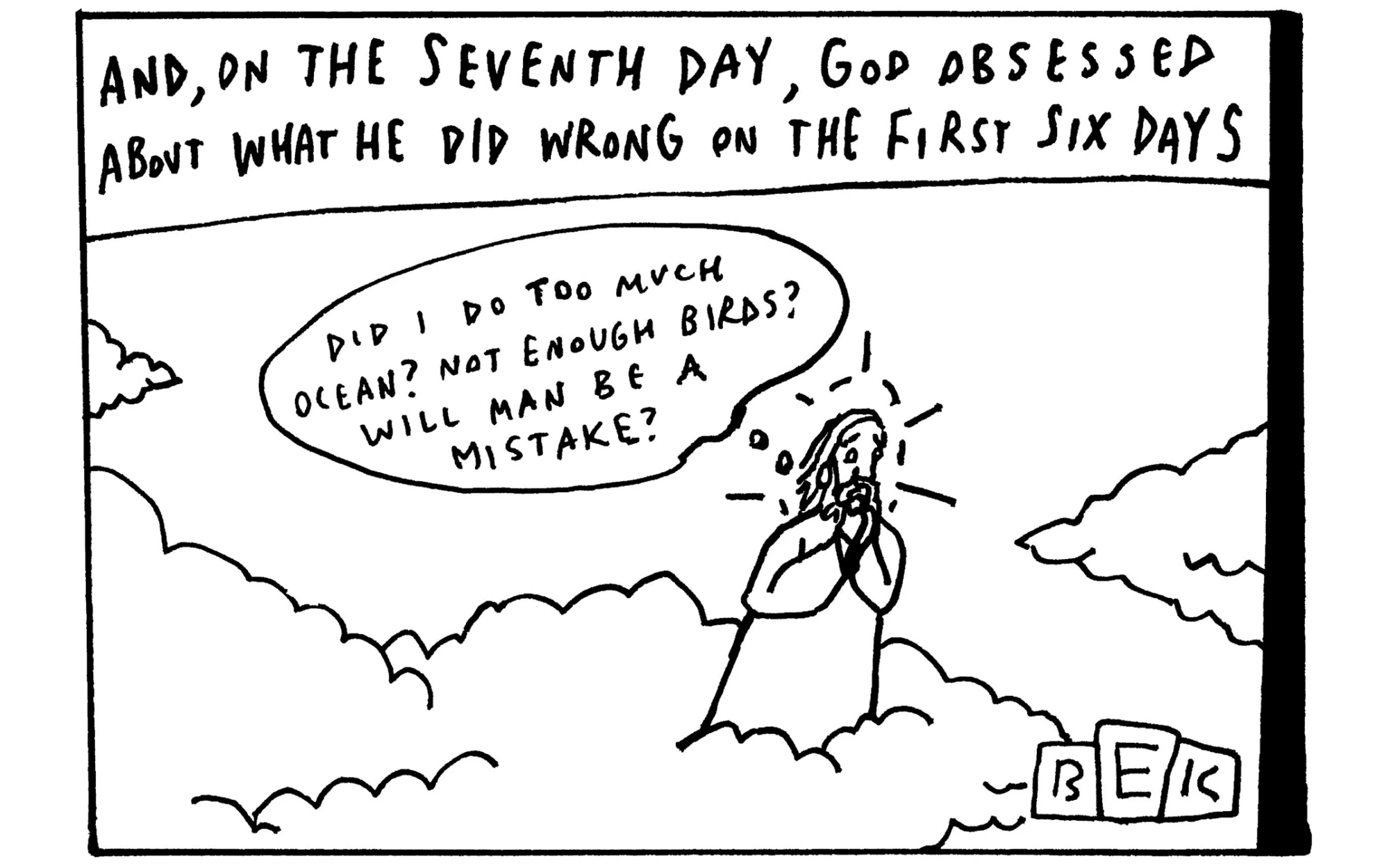
Whether the idea of providence is a source of comfort, resignation, or anger probably depends on where you are sitting at the moment and/or whether you believe God, the universe, or the fates is fundamentally benevolent. Maybe behind the accidental mishaps and windfalls is something more than random chaos.
One of the more poorly quoted portions of scripture is Romans 8:28: “in all things God works for the good of those who love him.” The verse is cited to wrongly claim that Christians are somehow immune to calamity and success is always in the cards. It is a particularly alluring view to have when purchasing a house. It’d be nice to know all things will work for my good and the roof won’t collapse the day after closing (who needs a house inspection if God has promised me success?).
But Paul’s optimism has very little to do with our measures of financial security and personal success. For him, there is no difference between luck and misfortune. Paul boasts in his sufferings and praises God for his blessings because he believed God’s power is accomplished in weakness. The accidents and sufferings of his life were not tragedies because God brings life out of death, in all things working for good. And yet, the mistaken view has a degree of truth to it, because God is not aloof from his creation, leaving the fate of our lives to the roll of a dice. To him, there are no accidents.
Perhaps our lives don’t dance on the edge of a knife. Perhaps the house sale doesn’t go through. In either case, the God who will raise the dead is the same God at work in the here and now, who does not punish us for our accidental mishaps or abandon us to the grave. Go figure.
featured image via Giulia Bernardelli