It may not be as prevalent as it was in decades past, but Christians have long distrusted horror movies. Portrayals of evil and the depths of human depravity don’t exactly qualify as “edifying” entertainment promoting good morals. Better to watch Little House on the Prairie than The Exorcist… or is it? In his recent book, Fear Not! A Christian Appreciation of Horror Movies, Josh Larsen offers an impassioned set of speeches to horror’s pious despisers. He has heard many times what I have read when people send me screenshots of Facebook posts in response to things I have written: “Why would you want to watch that?” (1).
Questions like this perplex me because I wonder what world these folks reside in where they think they can keep horrors out. But additionally, it makes no sense to me because Holy Scripture tells a tragic tale of terror that, though it ultimately resolves as a comedy (it ends with a wedding, after all), makes no pretense of the world being a safe haven from sin, the flesh, and the devil. Try as you might to quarantine it, horror finds us all. And the more you try to quarantine it, the stronger its efforts to break in become.
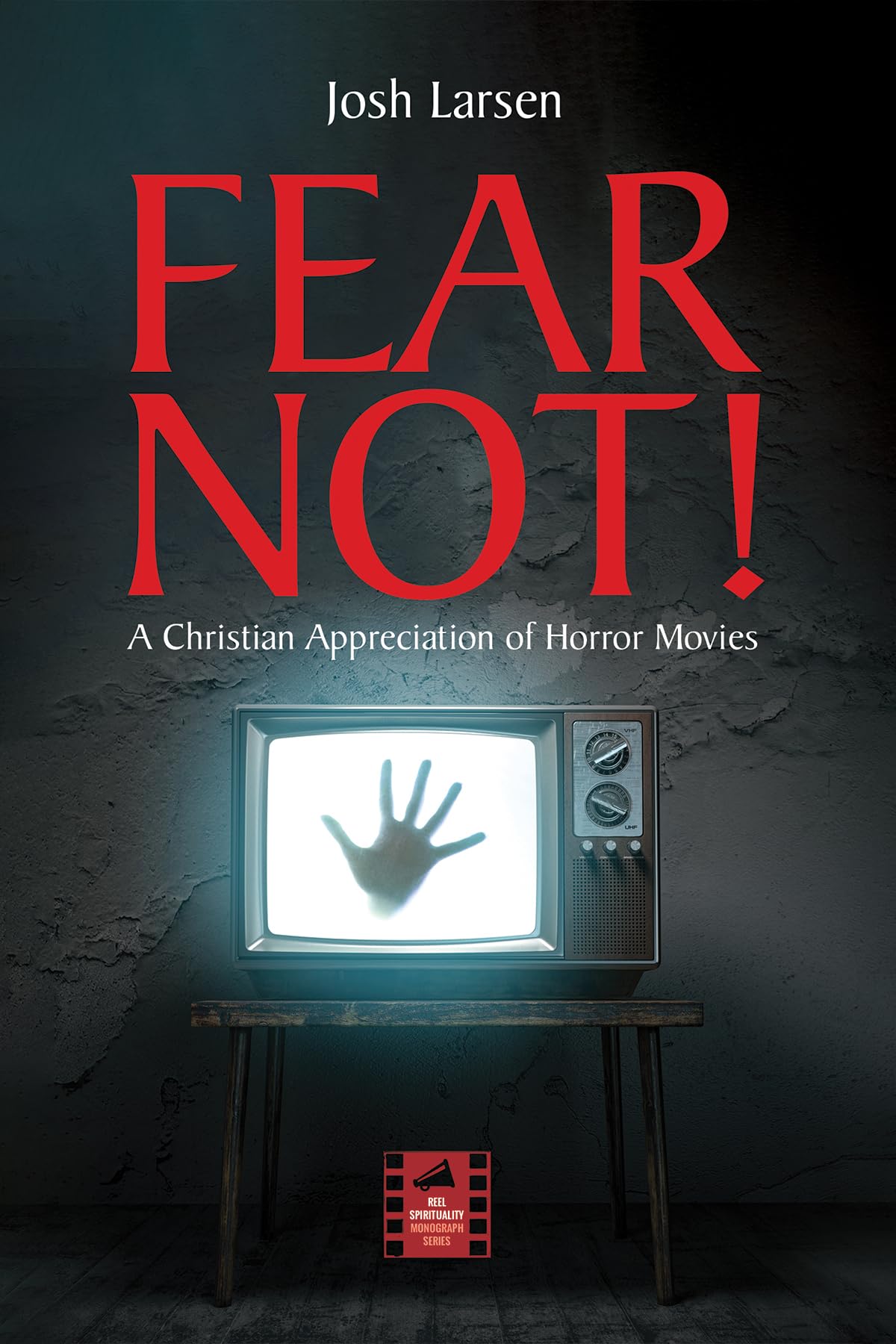
Larsen is nicer than I am, though. He explores not why Christians should enjoy horror movies but what could persuade some who otherwise steer clear of horror to give it a chance. At the least, he wants you to acknowledge how the craft of horror filmmaking stands out in the field (like a killer scarecrow, right?). “If method is as much a part of the art form as meaning,” he notes, “then few forms are as fertile a playground for playing with film form as horror” because the creative decisions have resulted in some of his most memorable experiences with film (2). Ours is an age in which one of the only things stronger than our consumerist zeal and our need to belong (whatever the cost) is our apathy, so it’s noteworthy when something can provoke us to feel strongly.
I think all of us know this at some level. My contention is that this is why some folks steer clear of horror and why horror is so important. We often try to inoculate ourselves against feeling except under certain conditions we think we can control. We have an incredible ability to conceal the truth from ourselves and constantly develop new strategies for avoiding anything that carries even the residue of that which we want to ignore. Horror tells a truth about ourselves and our world that we will not hear with the same urgency and gravity in other genres, and this is why we need it and why many spurn it.
Larsen’s approach highlights correlations between important details in a given film and the redemptive motifs of Scripture. He identifies several major themes that horror movies darkly illuminate, all of them fears of a certain sort, clustering around concepts that we, if we are honest with ourselves, can recognize strains of our own anxiety within. These include our own capacity for sin; the fear of losing ourselves; and the fears of nature running amok, of being alone, of a realm beyond the everyday, of sexuality, of darkness, of our own flesh, of societal evil, of our own neuroses and subjectivity, and finally of our guilt.
These themes may seem mundane when they’re listed like this, but one of the astonishing things about horror is how it reckons seriously with how profound and how grave they actually are. Horror isn’t reducible to these things in the sense of “Vampires aren’t really scary, it’s just that there are people that drain you, and for them it’s their way of being in the world.” These things are indissolubly linked because they all participate in the symbolic register of our shared world.
Horror puts its finger on the junction where monsters and the monstrous meet, on the pitiful, frightened creature at which the subjective and the objective poles of the world’s horrors collide. Man is the creature that trades in symbol, and it is for this reason that our fears communicate more than the manifest danger of this or that peril: it always carries resonances of those things that are too deep for prosaic description.
These themes are fleshed out in eleven chapters that typify them according to various horror subgenres: monsters, zombies, slashers, found footage, body horror, and others. It’s short on jargon and big on brevity, clocking in at only about one hundred pages. Larsen doesn’t provide comprehensive readings of every movie he discusses, offering instead fun-size overviews of films from The Wolf Man to Night of the Living Dead to The Witch and The Babadook, emphasizing not only how they force acknowledgment of our fears, but also gesture towards the reality of original sin and the importance of confession, atonement, and reconciliation.
And the conclusion is really more of an apology that he couldn’t cover every single horror fan’s favorite or cover more genres in-depth (102). The one thing I would change about this book is including more analysis of films between the classic Universal era (e.g., 1931’s Dracula and its ilk) and contemporary elevated horror. I’m sure Larsen would have done so had he more space and time, so I’m not rebuking him, but I think that the inclusion of more films from these decades would demonstrate how pervasive such themes truly are, especially during a period when horror was, by and large, less anxious to prove it was “real cinema.”
Larsen’s title alludes, of course, to that oft-repeated admonition from angels, “Fear not,” or “Be not afraid.” Have you considered how God’s response to some predicaments was to dispatch beings that provoked such awe and terror in his people that the first thing they needed to be told was not to be afraid? When Daniel and Zechariah see these messengers of God’s goodness and grace, fear falls upon them (Daniel 10:8–9, Luke 1:12).
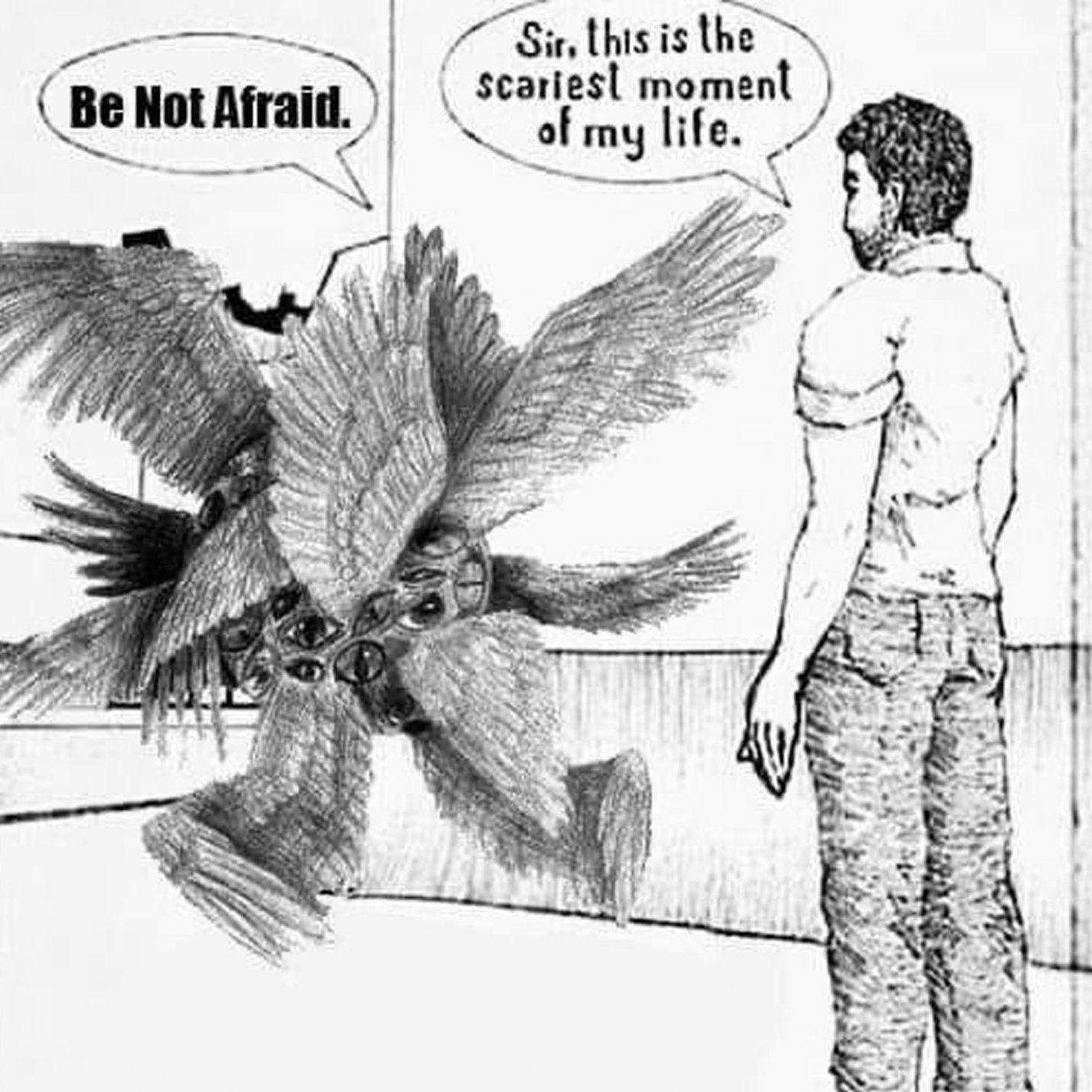
It’s important to understand that this urging doesn’t convey “what’s happening right now is actually perfectly normal, there’s no need to be afraid.” No, it acknowledges that this encounter is unusual; it is terrifying; things are not okay. Fear is a fitting response right now, but because of the nature of the intervention, of the One who has intervened, take heart. This will not destroy you. Fear not.
The horrors of our world don’t go away when we close our eyes and pull our blanket over our heads. Relief and hope are only possible because God has promised to defeat them. But the thing is, you don’t get that relief until you first admit how scared you actually are. The consolation of hope does not appear as hope until the threat that looms over us is appreciated in all of its terribleness. What comfort do we forfeit by virtue of our refusal to admit how frightening our world is? This is my counter-question to all haters of horror.
Larsen rightly links this acknowledgment of horror to the posture of faith when he describes a prank pulled on him when he was a child. While he and a cousin camped in a tent, his aunt and some other older cousins shook the tent and made terrifying sounds, ultimately knocking it over, leaving Larsen breathless in a helpless heap. “What I mostly remember,” Larsen writes,
balled up there in that tent, was the feeling of surrender. I was helpless in a visceral way I had not felt before or since. This is where horror takes us: to that place of surrender, where what some consider to be the platitudes of Christianese suddenly have real power, because we have no other choice. In horror, there is humility. And in our humility, the good news of the gospel offers true comfort, because it arrives from completely outside of ourselves, despite ourselves. (10)
Amen. The only way to hope is through horror. Happy Halloween!