




Jesus said, ‘Let the little children come to me, and do not stop them; for it is to such as these that the kingdom of heaven belongs.’ (Mt 19:14)
These are familiar words for me, and beautiful ones. They conjure up an image of Jesus, with laughter and delight shining out of his eyes, sat perhaps, in his off-white robes, with a group of rapt and starry-eyed children gazing up at him.
As I imagine the scene, helped by countless kids’ Bible illustrations, I see the innocence and delight in those little faces.
I hear the squeals of joy as these youngsters know, in a way that surpasses knowledge, that here is an adult who truly loves them, who truly knows them.
I imagine Jesus talking, playing games, swinging them off their feet.
And then, in the breathless calm that follows wild activity, listening deeply as they whisper to him.
I see him delighting in the wonder that is a toddler’s imagination. Asking, with an attention and compassion that astounds me, the questions that will unlock the secrets of that little world. Bearing patiently with the stuttering, and the repetition, and the faltering words that share a vision of the world at once comically magical and magically realistic.
What an inexpressible, wonderful truth, that God loves little children. What majesty, and wonder, and counterintuitive hope there is in the reminder that we can only come to God as little children. Of course we have so much to learn from the little people in our midst. From their innocence. From their confidence. From their joy. From their instinctive sense of God.
But I was struck, recently, by the thought that this picture of the little children coming to Jesus and everything being beautiful and wonderful and innocent says a lot more about my sentimentalized vision of childhood than it does about the actual children that I know.
I had this realization at 3 a.m.
I was awake, obviously, because my four-year-old had cried out in thirst and fear at the dark, and then I couldn’t get back to sleep.
So, after some sugar I didn’t need and some tea I definitely did and some obligatory mindless scrolling, I somehow pulled down a book of prayers for parenting (it’s called To Light Their Way by Kayla Craig and I highly recommend it) and turned to a “Prayer for a Child with Big Feelings.” And, in a fairly innocuous line, I read “O Christ, who welcomed little children in their full humanity.”
And something clicked.
Full humanity.
 When I picture Jesus welcoming little children, I always picture him welcoming my little children — I’m sorry I can’t help it. But I always picture him welcoming them at what I think of as their best.
I imagine Jesus listening to my incredibly earnest four-year-old son telling him with intense seriousness about the wild adventures of his cuddly toy monkey.
I imagine Jesus holding my two-year-old daughter close as she points with enormous pride at all the objects she has just found words to name. Open Door. My bear. My buggy. More milk.
But my children are real children.
And so maybe I should imagine other scenes too. Maybe I should picture Jesus with his off-white robes stained with snot and vomit, as he holds a virus infected child to his chest.
Maybe I should picture Jesus sat on the bottom step beside my son, trying to calm his desperate sobs as he rails against the injustice of his sister having presents he wanted to receive. Maybe I should picture Jesus, kneeling next to my daughter as she throws herself on the floor, kicking and screaming with a power that is scarily impressive, because I had the audacity to tell her she had to wear a sweater in the winter.
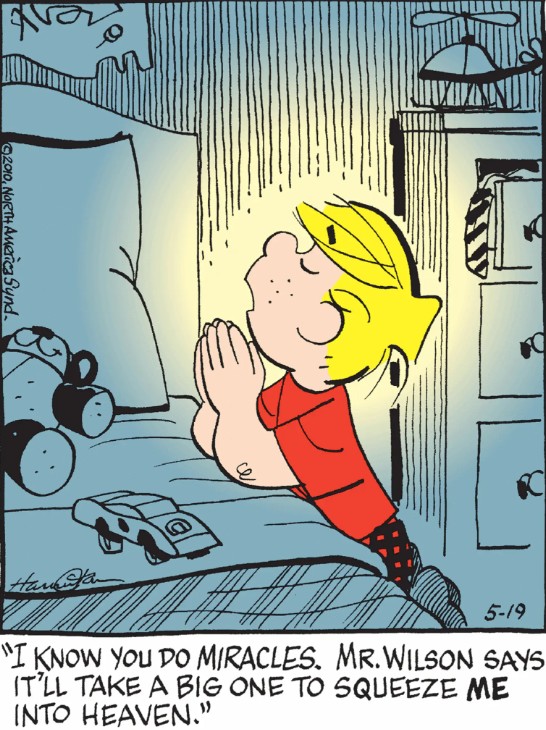
In other words, maybe I should picture Jesus welcoming actual kids. Little people, who have big emotions, and are not perpetually bathed in a warm soft-focus glow of sentimentality.
And, maybe in all of that, I should rethink what Jesus means when he says I need to come like a child.
Yes, children are trusting and dependent and wildly creative, and strangely innocent and honest and open and hopeful. And so yes, coming to Jesus as a child means embracing those things. It means putting down my adult cynicism. It means giving space to my imagination and whimsy. It means being willing to play. It means trusting his love.
But children are also, to be frank, completely emotionally out of control.
Children have huge feelings. Children cannot disguise their jealousy. Children push other children over. They snatch toys, scream when they don’t get their way. Children thrash about in their pain, hurting those who are trying to love and care for them.
And so maybe, coming to Jesus as a child also means bringing all those things in me, and daring to believe that he wants those parts of me too.
Maybe it means coming as one who is out of control. Who wants things they can’t have, especially if someone else is playing with them. Who gets so exhausted they can’t sleep. Who is, metaphorically but also literally, a driveling mess and just wants to wipe their snot and tears on someone’s brand new jumper. Who is afraid of the dark. Who is always thirsty. Who consistently, and willfully, does exactly the thing they have been told not to do. Who hates to hear no.
And finds Jesus crouching down, with laughter and tears and love in his eyes. Ready to embrace all the mess, and pain, and big feelings.
Ready to pull my sin-infected self close to his chest.
Ready to listen to my irrational tears and keep on speaking his works of love.
Even, perhaps especially, at 3 a.m.








Brilliant. I’ve never heard this necessary truth in my 74 years.
This is beautiful! And very resonant to me as a mom. It started me wondering – as my kids are now near-adult teens and not ‘little’ anymore – how exactly we adults grow away from the ‘little children’ whom Jesus welcomed and, importantly, insisted we should imitate. You’re so right that we are still all at heart vulnerable and often badly-behaved children – so then what’s missing?
I guess, for one, that the littlest kids haven’t yet taken on the all-consuming madness of prioritising what others think of them – FOMO, keeping up with Joneses, impressing the room, ducking embarrassment. They’re just being themselves before God.
As adults that feels scary – it’s almost impossible to put social conditioning to one side. But by the way he lived and other things he said, isn’t it what Jesus demands? Bang goes all our social media narcissism, our self-conscious reluctance to risk embarrassment by taking on church ministries, our pride in our own supposed sophistication. Seems like a timely lesson these days…
Beautiful!
Thank you for the reminder that he receives all his children, even when we’re “untidy” and unraveling.
“…his compassion rests on all he has made,”
Psalm 145:9 CSB