




Last week I was in San Diego for the annual meeting of the American Academy for Religion and the Society of Biblical Literature (AAR and SBL). One of the largest professional conferences in North America, it’s where all us Bible and Religion scholars gather to exchange papers, buy books, and see friends. I’ve attended the event nearly every year going all the way back to 2008 when I was first thinking about doing a PhD. I didn’t know it then, but 2008 would prove to be the high point of the AAR/SBL conference, and the years that followed have been marked by both slow decline and increasing politicization.
I can still vividly remember that first 2008 conference. Traveling from Pittsburgh to Boston, I drove with a friend through a snowstorm to get there. If the financial markets were crumbling and millions were losing their houses, there was little sign of panic atop the ivory tower of academia. I met with prospective doctoral supervisors who spoke glowingly of the future, and their excitement was mirrored by how massive the conference itself was. The book hall rivaled the markets of Elizabethan England, both in size and activity. The countless drinks receptions were (excessively) extravagant. One book review panel was held in a colossal auditorium filled to the brim. Before thousands of onlookers, N. T. Wright castigated a book that was to become the first obituary for historical Jesus studies of the day. It was exciting theater, if not gladiatorial spectacle, that changed the state of scholarship.
You probably know what happened next. The years since 2008 have been marked by an economic depression, university budget cuts, and a global pandemic. Over that time, conference attendance has dropped by roughly 35 percent, and membership in SBL has fallen by 24.4 percent — reliable bellwethers of the current state of theological academia and the humanities as a whole.
The devaluation of the study of the humanities isn’t a new story, nor is the deterioration of churches that would naturally support academic theology. But it is this broader economic context that best explains what I observed last week. Everything was smaller, a shell of its former glory. The book hall was smaller. The drinks receptions were smaller, with cash bars for attendees. And even as fewer and fewer papers are offered, the rooms they are held in have somehow shrunk.
I have been tracking fashions and trends at AAR/SBL for a few years now, and throughout the conference I typed out a number of observations on possible items to explore. There was increased curiosity in what might be going on with the Paul Within Judaism sessions. A new edited volume was published claiming to embark on the next quest for the historical Jesus. The Q Studies section was virtually nowhere to be seen (heh, sort of like the Q document itself!). And for the first time, there were precisely zero papers that sought to constructively engage with the theology of Martin Luther. These and other topics would all be worthy entries to discuss.
But the one trend that was impossible to miss was the way theology and biblical studies was repeatedly employed as a resource for commenting upon debated contemporary issues, whether it be forced migration studies, gender, colonialism, sexuality, immigration, racism, empire, or ecology. In one review panel I attended, the book’s failure to overtly engage in social issues was cited as a critical flaw that was said to reflect the author’s unconscious biases. This push toward explicit public advocacy was especially apparent in the aisles of the book hall, where the most prominently displayed titles could easily have been mistaken for expanded op-ed articles. Of these, I am certain there were many excellent monographs, but the sheer volume was something to behold.
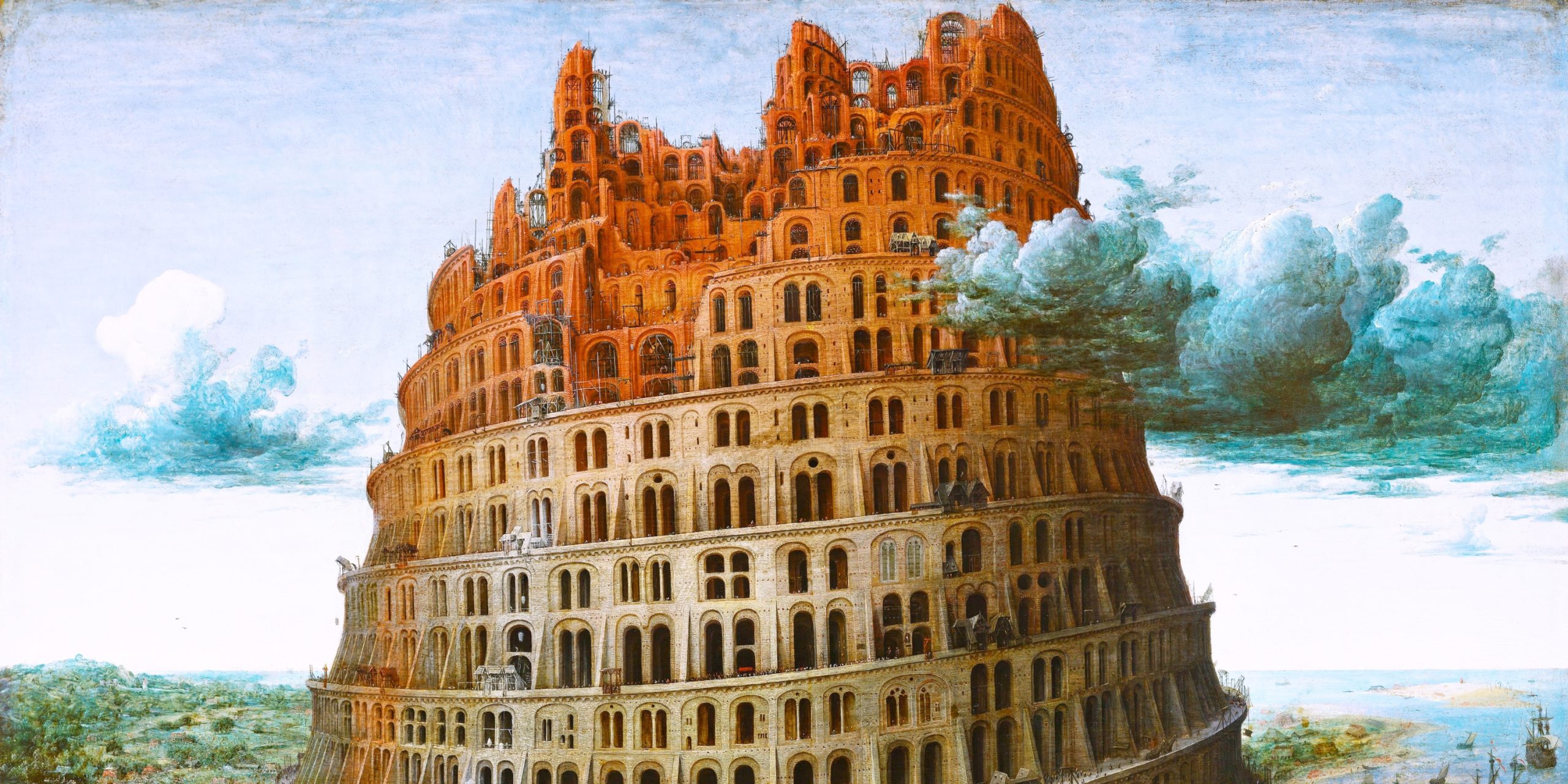
Now, there are many factors for why the slow, creaking wheels of scholarship have so sharply turned toward modern concerns. One could point to social media and the ways it altered both the values of academia and how its practitioners think. Or perhaps there are top-down pressures from publishers, grant funding bodies, and/or universities. Many, both left and right, would argue that the trend reflects the urgency of the present moment and the facts on the ground. Others could draw attention to philosophical shifts emphasizing the historical situatedness of the interpreter. Still others would point to more potent cultural trends of increasing polarization and quasi-religious political devotion.
The best answer is probably some medley of all of the above, and yet it would be foolish to overlook the broader context of academic theology’s decline. At a time when faculties are shrinking, salaries have plateaued, tenure feels tenuous, and student enrollment is waning, the threat of extinction understandably creates an inescapable pressure toward self-justification. It’s not simply enough to do good work; one has to do work that matters. And so one seeks to avoid judgment by demonstrating the value of their research before administrations, funding bodies, students, publishers, and peers. There are, of course, several pathways one could take to justify the worth of theological studies. Theology could be presented as beautiful and compelling, an ulterior world that illuminates the secrets of life itself. Or one could envision scholarship as an aid to the church’s proclamation. But in a broadly secular, post-Christian society, the only place where truth claims might feasibly gain any public hearing is within the arena of politics.
Certainly scholars should be free, if not encouraged, to direct their work toward the issues they care about. And an academia that is responsive to the concerns of everyday life is certainly better than the opposite. But it is naïve to think our desires are entirely independent of the enormous market incentives to politicize one’s work. If you are worried about whether students will enroll in your elective, you will design a course that bends towards current issues because you believe they will have greater appeal. The same is true of pitches to book publishers, grant applications, and editorial boards. There are fewer dollars to go around, and instrumentalizing one’s work is an easy way to promise greater return on investment. In this way, the push towards greater political salience is not, as many claim, a sign that the academy is finally claiming its birthright as a force for good, but instead represents the gasps of a tiring swimmer fighting against the current.
Walking around the many book stalls that demanded I care about the urgency of the present moment, I couldn’t help but wonder about the current state of theological academia. I wondered if anyone is actually buying these books, and will those who do have their minds changed? I doubt it. Perhaps it was inevitable that scholars chase clicks like the rest of the media world, but groundbreaking research with lasting impact takes years, if not decades to produce. I noted the irony that we who have been trained in elite institutions to analyze ancient texts seem ill-equipped to meet the ethical challenges of today with anything more than the wisdom of past news cycles. But most of all, I wondered whether we scholars have traded our birthright for a bowl of porridge, exchanging the pursuit of the truth for a relevance that might itself expedite the decline. Maybe or maybe not; I’ll leave the prognostications of cultural trends to more experienced hands.
At its best, theology concerns itself with speaking about who God is and what this God might mean for the world today. Consequently, the academic theologian finds herself caught between two mysteriously intermingled worlds, between the timeless and the temporal. By careful attentiveness to both realities, theology justly occupies its place as the queen of the sciences — above psychology, sociology, and even politics – precisely because it is never satisfied with the constraints of the present and the mere observation of what is. However uncertain the times may be, however large or small the AAR/SBL Conference is, however much we might feel the need to justify ourselves, there is always reason to hope. To speak of God in this way is to speak of an eternal, immutable, and fundamentally benevolent truth that will persist beyond all sufferings, injustices, and economic uncertainties. In the year 2024, such a theologian might not get tenure, of course, but there are far worse possibilities.








Amen, Todd. This is a great example of hope only being available if and when we acknowledge the dreary reality around us. Thank you for this!
Always enjoy your post-SBL insights, Todd. Thanks for writing!
Very well stated and greatly appreciated.
It is interesting to me that I often read very good critiques of what is wrong and why it is wrong… but then… proposals for how things will be set right… can be vague.
James Davidson Hunter’s new book is an excellent example of that…
We need solid work of deconstructing… and then more work in reconstructing.
I wonder if some of the paradigms are now so out of date, that attempts to duct tape those paradigms (old wineskins) is no longer viable. And that perhaps some quite new, even radically new paradigms are needed… in this case – for the sphere of theological education in particular.
What might that work of reconstruction look like?
p.s. I love the crumbling tower image/metaphor… what do new towers look like if the old is not salvageable.
Todd’s appraisal resonates with this soul. Kołakowski remarks that a “culture that loses its sacred sense, loses all sense.” I think we’re seeing this reality unfold in the academy and in popular culture. The question is how to build an ark (where the door is never shut) that curates the humanities and invites people to “taste and see that the Lord is good.” Grateful for Todd’s analysis.
I completed a Master’s of Divinity in 2008 (back when that degree was a rigorous 95+ credit hour program). I am embarrassed to look back on it and see how little good theological training I had in it. I recall a lot of lectures about race, gender, intersectional politics, economics, psychology, post-modernism, and critiques of shallow spirituality… but very little on justification, sanctification, providence, eschatology, salvation-history, Biblical authority/inspiration, and theodicy. It was only after some years of feeling lost in pastoral ministry that I started to find a ciriculum of Biblical Scholars and Systematic Theologians to fill out my large gaps in theological thinking (Folks like Barth, RW Jenson, Fleming Rutledge, Luther, Wright). Mockingbird certainly helped me re-learn how evergreen basic Christian doctrine can be to the Christian life.
GREAT article, dear Todd! So perceptive, apt and ultimately Vertical!!!
I am an academic with 30 years experience in ecology, which drew me to earth science, which has now led me to theology, a Master’s in Theological Studies. The metaphor I offered in a recent talk was of tea cups, an ecology one that I poured into earth science where all that I knew and more could be considered. And now I’m finding all that I knew about earth science can be poured into this bigger tea cup of theology and ancient texts. I offer this as another way to see our explorations across fields of study. It’s beautiful when our tea cups spill over.
I think what you observe is part of something broader; politicization has been the trend du jour in many walks of life in the past five years. academics doing this seeking to market to students are simply sniffing the prevailing winds. a tentative diagnosis: an epidemic of utopian political moralism.
moralism; a misapplication/over-demanding or misdirected extension of morality
political: moralism extended to politics
utopian: all will be well only if we change the world urgently; so non-political spheres of life, including academic life, must be enlisted on behalf of messianic politics.
This has recently been evident in business, professional, and academic worlds, along with eclipse of an older “small-l” liberalism. very disturbing!
Love this! So refreshing to see the decline addressed head-on. Theology’s role as Queen of the sciences has been interpreted as defining and clarifying their ends and relation to the ultimate end of God. Instead it is having its ends ordained by the issues of the day.
It seems related to a decline of “pure” sciences across the board. It’s a sort of death-spiral: history majors decline; history department leans towards marketing relevance or job skills; history department declines more because those who want job skills will just learn coding or finance instead. The market demands usefulness and relevance. My old University is now much less likely to publicize a professor’s new article in a leading journal than a quote in the New York Times. The latter better markets the University to the paying customer: teenagers and their parents.
The academy too bears some fault for this. The pursuit and incentivization of novelty rather than wisdom in research, years of concern with abstruse critical theory with almost no benefit to anyone who isn’t a professor or grad student… tough situation. I do think theology in the “faith seeking understanding” vein is uniquely capable of being open to an agency beyond the human and outside of our cultural and market forces. Some reason for hope.
In reply to Brian K Rice: You ask, “What might that work of reconstruction look like?”
It occurs to me that *re*construction may not be the right aim. What would we attempt to reconstruct? Is it good to reconstruct it? If academia–and society as a whole–is a crumbling tower, perhaps the best course of action is to construct something new out of the rubble of the old?
What does this look like? I think it looks a lot like Mockingbird patiently and consistently proclaiming the Gospel. Telling the story of God in the world. It’s a retelling for sure, but it’s the work of laying a corner stone. I think it looks a lot like Christians ceasing to do culture “war” and instead doing culture creation–art, education, community. Things I’m encouraged to see more and more of every day!
I think it means individually and communally refusing to give into fear of losing what we had, and then desperately trying to change or fix things quickly through the exercise of power, but instead, patiently, humbly trusting our God and loving our neighbor. This, it seems to me has been the way that Christians have always created and changed their societies. Not by setting out to change them, but by loving without hypocrisy, clinging to what is good, being patient in affliction and persistent in prayer, living at peace with everyone (in so far as it depends on us) and not being conquered by evil, but conquer evil with good (Romans 12)
[…] When it comes to trying to understand the inscrutable Weil, Hanson says, “the personal investment is American as apple pie: if at first you don’t succeed, try, try, try, try….” Biographers’ “insights are hampered by a constant insistence on capturing every aspect of Weil’s life and thought for [the] reader’s use. … there is an inexorable drive to simple application.” (See Todd Brewer’s recent analysis of the crumbling ivory tower.) […]
For decades I sought understanding about who God is, and what He is like. I passed from deistic catholicism, to evangelical hyper-charismaticism, to being reformed with a significant charismatic dimension, to being lost all over again. But God sustained me through it all in spite of myself and the misguided theological information, to stop accepting the preconceived notions of others and to stop laying those over the scriptures, and to begin reading them for what they actually said, back through the lens of the original cultural paradigms and languages in which the texts were written. But all of that would’ve been just more academic exercise if not for God’s presence at critical junctures in my journey and odyssey. Someone said that “God is a person you must get to know”. I find that for me, if the scriptures tell us anything, they are a record of one person after another’s odyssey to KNOW Him. Life altering, self-image shattering encounters with the Living God from cover to cover. He must light the information on fire for us, or we are lost. We I believe have to feel it emotionally and as Yeshua said have eyes that truly see and ears that truly hear. Reading a book doesn’t hurt, and I’m personally grateful for the pieces of truth God has lighted upon for me over the years from many different theologians from different theological streams. But until we MEET Him, and over the course of time, many years, learn to trust Him, and understand our deeply rooted dependence on Him in every moment of life, another book, is just that; another book. Yeshua’s coming demonstrated that you can have all kinds of information about God, and still miss Him when He’s standing right in front of you. God bless you, may He set His face to shine upon you all, and give you peace.
I worked in theological academia for six years and this really resonates with me. By the time I left, I was thoroughly disillusioned with all of it, despite the fact that it had been my lifelong desired field of vocation. Now I work in the construction industry and it’s nice to be around ordinary people, far away from all of the pretentious political activism. Thanks for writing this.
I’m editing an unpublished book manuscript found among the late Gerhard Forde’s papers. Here’s a germane passage from his introduction:
“How do we regain this “nerve,” this confidence so that we can speak with authority? I quite agree that we must be concerned with the issues of the day, those “topics” [Forde distinguishes between what is merely topical and that which is actually relevant] which fill our particular lifespan — racism, poverty, peace, women’s rights, and so on. But it seems that we have not been able to speak convincingly enough, even on those matters to persuade many. We have given the appearance of borrowing our authority from the fads of the day and, thus, have left many behind — or they have left us. Authority has been eroded rather than fostered — perhaps because we thought “relevance” could be purchased so cheaply. How do we regain “authority;” how do we restore lost “nerve”? Undoubtedly that is a very complex problem with many dimensions. This book cannot pretend to deal with all the facets of the problem. It is, however, an attempt to discuss at least one important dimension, that of the message itself, the proclamation of the church and some of the basic presuppositions behind that message.
“The thesis it seeks to establish is that the church has lost the surprise and joy of the message of the gospel because of the fatal compromises that were made virtually from the outset (of the Reformation — if not before) with the idea of human freedom and autonomy. Since the beginning (the Reformation — if not before), ideas like election, predestination, and the like have been threatening to “moderns.” That is to say, to put it bluntly, we have not been able to handle theologically such ideas as predestination and election because they seem to contradict some of our most cherished ideas: the belief in our own freedom. And so, a fundamental impulse of modern theology (if not most all theology!) has been the attempt to compromise between God’s action (God’s freedom) and human freedom. Whatever one wants to say about God, he must be presented to humanity as some sort of opportunity for us to exercise our “freedom” and “choice.” God, we might say, must be presented to us as one “appealing enough” to warrant our “acceptance.” God is a mere logical possibility, among other choices. This approach has many fatal consequences. It leads to the cheapening and eventual end of any meaningful talk about “God” (the “death of God” is only the logical outcome of theology). It leads consequently to a lack of authority and failure of “nerve” so far as the Christian message is concerned. One is put in the position of a peddler pleading with the world to buy the product. The current flap about “relevance” is only the end result of such a process. One has to disguise the product in the “topics” of the day and go begging for attention.”
This was written in the early 1970s just after “Where God Meets Man” and is surprisingly prescient. Forde’s diagnosis revolves around understanding the matter of the will: captive or free. One of those approaches leads to exactly what Todd is speaking of here.
Ken! Wow, that’s quite the diagnosis from Forde. Prescient, indeed, thanks for sharing. And an unpublished Forde book manuscript? What an amazing find.
Here’s his opening paragraph: “A funny thing happened to the church on the way to the Modern World: She forgot what she was going to say! We all experience being interrupted and forgetting what we were intending to say. We stop to listen and the chain of thought is broken. Sometimes it never comes back. The church has stopped to listen to the Modern World — yes, a good thing — but she has forgotten what she was going to say — supposed to say. Listening should alter, make it adapt, etc., but not forget. One is reduced to mumbling embarrassment and falls silent when one forgets.”
It makes me wonder about whether we can go beyond speaking of correlation and move toward [partial] causation when we look at the beginning of church decline (at least among Lutherans) and the advent of teaching systematic theology rather than doctrine in our seminaries in the 1960s and 70s. I’d argue it gave theologian permission to follow their noses and abandon fealty to the church, especially to its proclamation of the gospel. That’s what Forde was going after in “Theology Is for Proclmation.”
Woah, Ken! Thanks for posting. (Amazing post, Todd)
[…] finding books of interest was perhaps more difficult than previous years, that doesn’t mean there weren’t any gems published this year. With everything from […]
[…] dinner than who you voted for three weeks prior. (Which should probably be a signal to pastors and researchers to cool it with the armchair politicking, but I’m not holding my breath.) The overwhelming […]