




As we continue to roll through our series of lighthearted lists (grace-in-practice movies, paintings of Jesus, podcasts, and 21st-century novels) we figured it was time to do a Bible-themed poll. We hope you enjoy this two-part miniseries. Of course, the Bible is a long, wonderfully weird book, so it goes without saying that we are just scratching the surface with this diverse smattering of verses. In other words, if you’d like more Mockingbird-styled Bible reflections, be sure to check out our sermon archive, our lectionary podcast, and our fantastic devotionals and other books in our online store. You can’t go wrong!
Matthew 11:28–30: “Come to me, all who labor and are heavy laden, and I will give you rest. Take my yoke upon you, and learn from me; for I am gentle and lowly in heart, and you will find rest for your souls. For my yoke is easy, and my burden is light.”
About twenty years ago, when I was a sophomore in college who had just transferred from a smaller state school (~10,000 students) to the University of Wisconsin-Madison (40,000+ students), I was feeling kind of overwhelmed and lonely, and I was struggling in a couple of required STEM core classes (I was an English major).
But I started attending the Episcopal student center on campus and got pretty involved there. It was a small community, maybe 15-25 regular attendees and 20-30 occasional ones. We got together a couple of times a week at night to pray Compline (night prayer) together from the Book of Common Prayer, and this verse was almost always chosen (the BCP gives a couple of options) after we read part of a psalm together, and it lodged its way deep into my heart. I’m naturally a bit on the anxious side (at least internally) and prone to overcommitment, so this promise of Jesus — finding rest for my soul and his being gentle and lowly in heart with an easy yoke and a light burden — has always been of great comfort to me (Thomas Cranmer rightly included it in his “comfortable words,” after all). –Joey Goodall
Luke 4:16–19: “The Spirit of the Lord is on me, because he has anointed me to proclaim good news to the poor. He has sent me to proclaim freedom for the prisoners and recovery of sight for the blind, to set the oppressed free, to proclaim the year of the Lord’s favor.”
This passage, in which Jesus quotes from Isaiah, has always reminded me of what Sally Lloyd-Jones, in her book The Jesus Storybook Bible, says about the Bible: “Every story whispers his name.” In this case, Isaiah prophesies about what Jesus will ultimately do; however, when Jesus reads this passage from his own scroll in Luke, he leaves out the part about God’s vengeance (see Isaiah 61:2) because he will be the one to absorb that vengeance, not us. I love the parallel and the poetry of the verses, but most of all I love how Jesus is the fulfillment of all the prophecies that pointed toward him, and that he proclaims himself so confidently and lovingly. –Stephanie Phillips
Luke 22:31–32: “And the Lord said, ‘Simon, Simon! Indeed, Satan has asked for you, that he may sift you as wheat. But I have prayed for you, that your faith should not fail; and when you have returned to Me, strengthen your brethren.’”
Luke 22 was the chapter I needed during a challenging time in my undergrad days. I’m not going to say I was having a crisis of faith, but I was definitely struggling. First, Jesus institutes the Lord’s Supper. Then, in what seems like odd timing, the disciples have an argument about “which of them should be considered the greatest.” And Jesus says that greatness is actually about service and humility, reminding them that “I am among you as the One who serves.” In my early twenties, that passage helped focus my religious yearnings on being useful, on trying to live a life of service, which was helpful orientation at the time. But even then, I think I was most drawn to the verses that followed, in which Jesus predicts Simon Peter’s denial. Even then, I think I knew that I’d never really be up to the task of living a life of service — that when push came to shove, Satan would still “sift [me] as wheat.” And yet, there’s Jesus, promising to pray for me [Peter] anyway, so that, by his grace, my “faith should not fail.” What a relief! –Ben Self
John 3:7: “Do not be astonished that I said to you, ‘You must be born again.’”
I have a love/hate relationship with this well-known verse. Not being raised in evangelical Christianity (sometimes called “born-again” Christianity), I long experienced this verse being turned into a religious test or the code language of an in-group. This seemed to me just about the total opposite of what Jesus might be saying here to Nicodemus, a guy who has all the answers except the only one that matters. Instead of being born again or anew from above being the one thing you must do to be on the right side or in the in-group, this newness is not something we can do for ourselves. It can only be done for us by a power and love greater than our own. That there is such a power is astonishingly good news. –Anthony Robinson
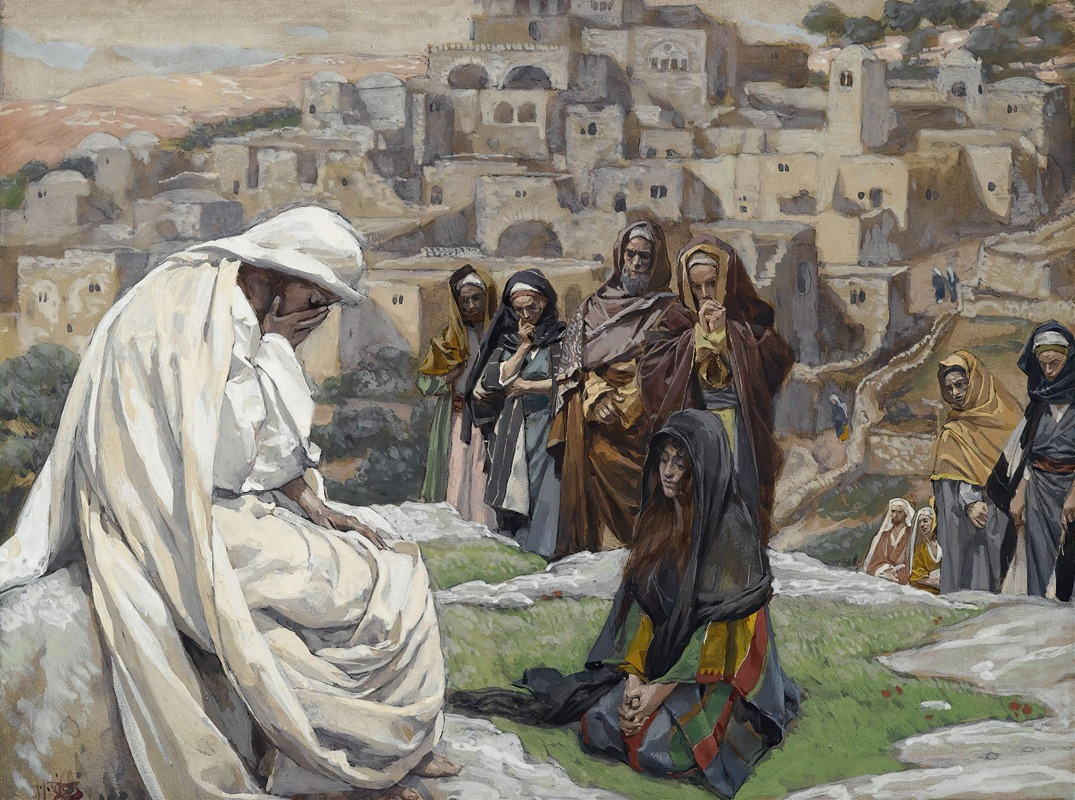
John 11:25: “I am the resurrection and the life. The one who believes in me will live, even though they die.” … “Jesus wept” (11:35).
When my grandma was in her last days, she could not read or write or speak very well because of a stroke she had suffered. The difficult part was that her mind worked just fine, but her words would get all jumbled in her mouth. For a woman who was extremely bright and caring, this was frustrating for her to not be able to express herself. One day I went to visit her, and I read scripture out loud to her. I happened to read the story of Lazarus from John 11, and when I finished that section I went to close the Bible and put it back on the shelf, but she motioned eagerly for me to please keep reading. I will always remember that moment. God reminded my grandma and me that he suffers with us AND has complete power over death… and, as my grandma had no problem communicating in that moment, he leaves us always wanting more of him, in this life and the next. –Juliette Alvey
John 14:5–7: “Thomas said to [Jesus], ‘Lord, we do not know where you are going. How can we know the way?’ Jesus said to him, ‘I am the way and the truth and the life. No one comes to the Father except through me. If you know me, you will know my Father also. From now on you do know him and have seen him.’”
I enjoy exploring multiple options in any given scenario; at the same time, I frequently encounter crippling information overload and decision fatigue as a result. For an overthinking person, this passage is a relief: there is only one way. Amy-Jill Levine offers this interpretation of Jesus’ words, from Jesus’ perspective: “I am saying that I am the way, not you, not your church, not your reading of John’s Gospel, and not the claim of any individual Christian or any particular congregation. I am making the determination, and it is by my grace that anyone gets in [to heaven], including you. Do you want to argue?” No, thanks. I do not want to argue. Still, this can be a) complicated, because Jesus is complicated, and b) clear, because sometimes, Jesus is clear, and sometimes, even quite loud. But the starting directions are clear: follow Jesus; Jesus is the way. –Sarah Gates
John 15:16: “You did not choose me, but I chose you. And I appointed you to go and bear fruit.”
Growing up in mostly evangelical churches, there was so much pressure placed on our choices — moral choices, certainly, but most of all, our choice to “give our lives to God,” usually during some kind of altar call. Yet, faith hasn’t felt like a simple one-off decision for me. Instead, it’s felt more like a long, strange walk through the woods. And while I thought I was finding my own way, looking back, I can see how God was leading me all along, mostly through my faults and frustrated desires. (As Rumi put it: “What you seek is seeking you.”) This precious verse of comfort directly from Jesus reminds me of one of my all-time favorite hymn texts, which opens like this: “I sought the Lord, and afterward I knew / He moved my soul to seek Him, seeking me; / it was not I that found, O Savior true; / no, I was found of Thee.” Now, at 38, as I’ve started the process of possibly, sorta-kinda, following a call to ministry, it’s incredibly comforting amidst my feet shuffling and imposter syndrome to know that God is the one doing the choosing and equipping here, not me. –Ben Self
Romans 5:6: “While we were still weak, at the right moment, Christ died for ungodly people.”
It was a watershed the first time these words sunk their way in. They came to me in a period of my life when I was trying really hard to be godly. It was less pietistic and more mainline progressive; I was operating as if God’s action in the world was contingent on me. Of course, that’s the first sin — wanting to be like God. But here Jesus makes the first move and it is one of grace. He meets us in our weakness and guilt with sacrificial love. It’s not up to me, Jesus has already done the work. I just have to enjoy it. –Will Ryan
Romans 7:15–18: “I do not understand my own actions. For I do not do what I want, but I do the very thing I hate. Now if I do what I do not want, I agree that the law is good. So then it is no longer I that do it, but sin which dwells within me. For I know that nothing good dwells within me, that is, in my flesh. I can will what is right, but I cannot do it.”
If you have spent enough time around the Mockingbird-verse, you’ve undoubtedly come across this passage time and time again, as it informs much of what goes on here. It can sound harsh if you have a high view of human agency, but as a follow-up to personal failure despite your best efforts, it sounds like nothing but the purest distillation of grace. It’s maybe the most true-to-life statement about the human condition ever made, and it elicits us to ask the question, “Who will deliver me from this body of death?” and answer in praise, “Thanks be to God through Jesus Christ our Lord!” (7:24–25) because “there is therefore now no condemnation for those who are in Christ Jesus” (8:1). And all of this, the reality of our situation and the fact that we do not have the solution to it inside ourselves, is something I need to hear every single day. –Joey Goodall
Romans 8:38–39: “For I am convinced that neither death, nor life, nor angels, nor rulers, nor things present, nor things to come, nor powers, nor height, nor depth, nor anything else in all creation, will be able to separate us from the love of God in Christ Jesus our Lord.”
I only ever knew Gram while she was medicated. My dad tells me that when she was younger, my grandmother was an absolute firecracker. At forty, she began a harrowing lifelong struggle with bipolar disorder. Every grandchild knew her home meant Tootsie Roll suckers, “great is thy faithfulness” carved into the keys of a dusty old Steinway piano, and a big, embarrassing, lovely wet kiss at the door. Six months before she suddenly died, Gram got kicked out of Walmart for handing out tracts with Bible verses on them. The day we buried Gram, her beaten up KJV Bible sat atop her casket, open like a window into her beautiful soul. I asked my teary-eyed grandpa, “Gramp, why Romans 8?” “Oh, Josh, your Gram always knew that there is nothing, not one thing, no thing, that can separate us from God.” And now these are the verses painted on the youth room walls at my church. Thanks, Gram, miss you. –Josh Gritter
1 Corinthians 4:7: “What do you have that you did not receive?”
One of my favorite verses in recent years is just this pithy rhetorical question from the apostle Paul. It’s all at once an admonishment from Paul against the game of comparison, a reminder that we are not ultimately what we do or acquire, and an invitation to gratitude. Paul’s question is one I now prompt myself with regularly — it’s either all grace or I’m fooling myself. –Jeb Ralston
1 Corinthians 15:41: “There is one glory of the sun, and another glory of the moon, and another glory of the stars; for star differs from star in glory.”
In the grandeur and sublimity of the whole sweep of 1 Corinthians 15, I think this little verse often gets passed over. And after all, how can you compete with the resurrection and the ultimate triumph over death? But I love that Paul takes the time to recognize the uniqueness and difference among created things, an echo of the loving catalogues of creation in the Pentateuch, and finds a way to affirm and exalt this even in the life to come. And let’s admit, who doesn’t struggle with envy? And yet we are told that even “star differs from star in glory.” Not just one star, not just one kind of glory, but all kinds of stars with all kinds of glory, as the Lord wills and gives. –Sarah Hinlicky Wilson
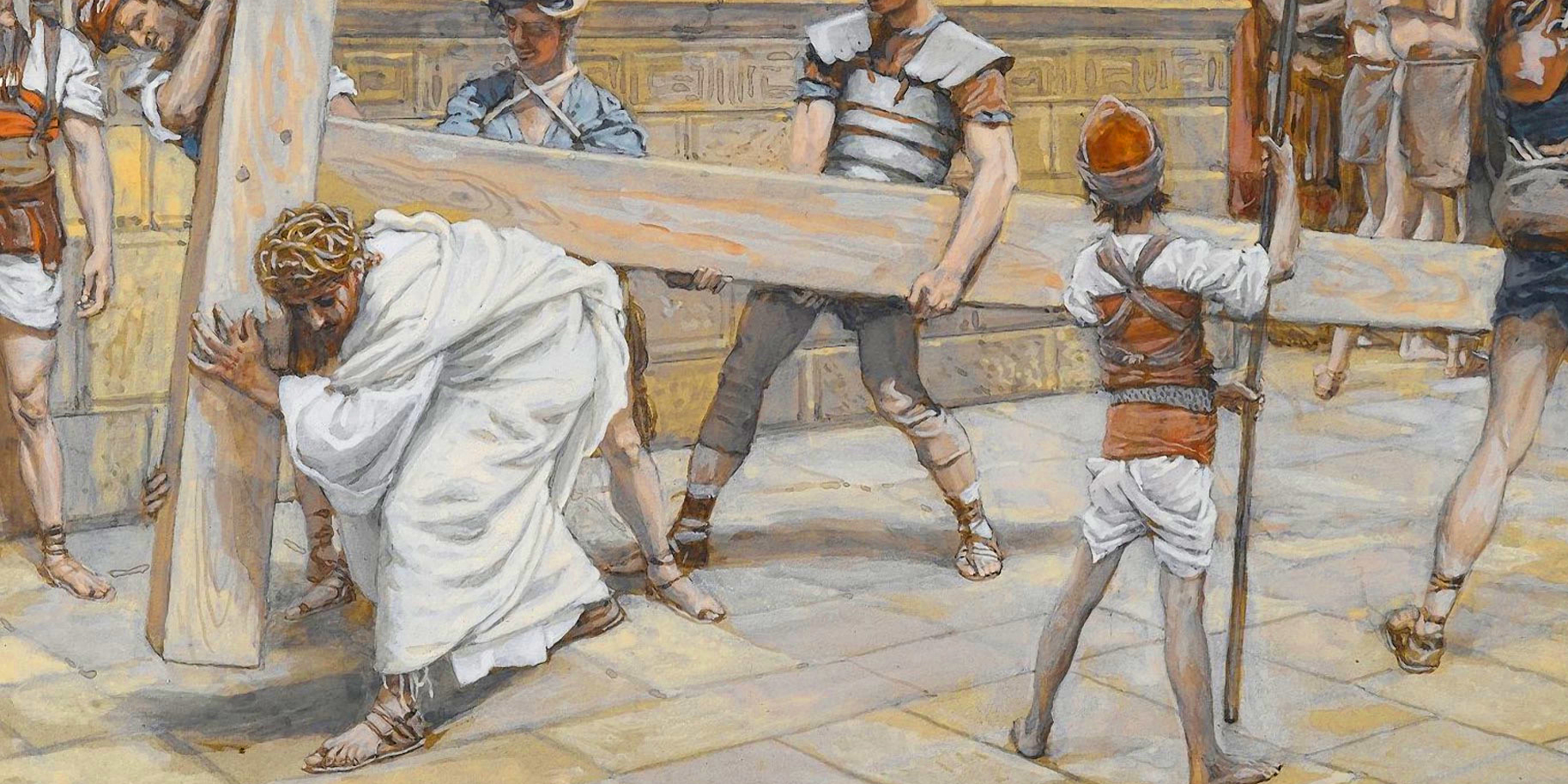
Galatians 6:14: “May I never boast of anything except the cross of our Lord Jesus Christ, by which the world has been crucified to me and I to the world.”
Since high school, when I started caring, I’ve exhausted myself playing religious and secular variations of the same game: racking up enough points to prove myself a worthwhile person. I’ve found that you can rage or scoff at the game, but you can’t get out of it alive. And it’s exactly here that Paul offers me hope: the world, with all its familiar methods of appraising human worth, has condemned and crucified Christ, and I can die with him. What freedom I’ve ever tasted is the freedom the dead enjoy from the endless status game the living must play; but this freedom is found not in oblivion, but in a new and strange kind of life I’m only beginning to learn how to live. –David Clay
Philippians 1:6: “Being confident of this, that he who began a good work in you will carry it on to completion until the day of Christ Jesus.”
I love this verse. It underscores the lengths to which God saves me, how he begins, carries, and completes the whole span of my salvation. The carrying especially stands out. In a world that celebrates running and goads me on to run faster and faster (the law sings the same tune, actually), God’s grace speaks a better word, that I’m being carried by another all the way to the finish line. And the carrier is the one who incurs the suffering, the strained muscles, and the calloused feet, which points me back to the cross where this reality came to fruition. Slowly coming to terms with this idea has been a big part of my spiritual journey. It constantly puts a healthy check on my daily impulse to think I can do something to add to what’s been freely given. –Chris Wachter
Colossians 2:8: “See to it that no one takes you captive by philosophy and empty deceit, according to human tradition, according to the elemental spirits of the world, and not according to Christ.”
I began attending church regularly again because I really liked this girl and knew I didn’t stand a chance with her unless I was in church with her. (I later married her, so it worked!) I found myself liking it so much, though, that even when she was out of town, I went and attended anyway. I was daydreaming during Sunday School and flipped absentmindedly to Colossians 2. Somehow verse eight blazed through my distractions and harnessed my attention. There the admonition to not be taken “captive by philosophy and empty deceit” graciously wounded me and gripped my inward eye. I felt like Dillinger in spotlights outside the Biograph, but instead of the police shouting through a bullhorn, I heard Jesus urging me not to be swept away by the philosophy I read and trusted in, assuring me that I could belong here with the people I had come to like, and that he wanted me to. I told the pastor who was leading the class afterwards and spilled my guts, telling him my life story, and that’s when I began taking following Jesus seriously. –Ian Olson
1 Thessalonians 5:17: “Pray without ceasing.”
As a kid I heard these words as a command that would exclude everything else. When do I eat, sleep, watch the Simpsons, etc?! I’m barely a prayer squire let alone a warrior! It’s amazing how we hear judgment even when the real word is invitation. The Spirit intercedes on my behalf. Jesus is with me, body and soul, to the very end of the age. Is there a thought I have that escapes his attention? No way! Therefore I am praying without ceasing, because I’m never just talking to myself. –Ryan Alvey
2 Timothy 1:6–7: “For this reason I remind you to rekindle the gift of God that is within you through the laying on of my hands; for God did not give us a spirit of cowardice, but rather a spirit of power and of love and of self-discipline.”
Not too long ago, I was looking for my biblical doppelgänger, and the nearest match I could make was Paul’s protégé Timothy. I identify with Tim’s “timidity.” Whether through natural temperament or sinful cowardice, I know what it’s like to lay low and fade into the background. Thankfully, in the midst of all my timid reluctance, there is a God who understands and forgives and a Spirit who fills us with “power … love … and self-discipline.” –Larry Parsley
Hebrews 4:14–16: “Since then we have a great high priest who has passed through the heavens, Jesus, the Son of God, let us hold fast our confession. For we do not have a high priest who is unable to sympathize with our weaknesses, but one who in every respect has been tempted as we are, yet without sin. Let us then with confidence draw near to the throne of grace, that we may receive mercy and find grace to help in time of need.”
There’s something about a God who sympathizes with his people — and that he does so from a throne of grace is that much more astonishing. I have found much comfort in this invitation when weighed down by weaknesses as a father and husband; when reflecting on things said and unsaid, done and undone. The backwards idea of being confident in the receiving of grace and mercy is a relief and truly quite freeing. –Blake Nail