




A few Sundays ago, I listened to a homily that drew a sharp distinction between being a mere fan of Jesus and being a true follower. The preacher’s message was clear: admiration is not enough; commitment is required. And yet, as I sat there, I couldn’t help but think that this framing, while stirring, glossed over the profound complexities of discipleship. After all, what does it truly mean to follow a first-century prophet who renounced self-protection, rejected wealth, and issued radical moral demands? It’s one thing to nod along in agreement; it’s quite another to live as he did.
After the service, I mentioned to a fellow congregant that I don’t consider myself a follower of Jesus — just a fan. And only on my better days. I added that if one takes Jesus’ warnings about self-righteousness seriously, calling oneself a follower might not be the wisest move, at least in the grand scheme of eternity. He chuckled but then called me a cynic.
But cynicism isn’t quite right. I don’t reject faith, nor do I dismiss the longing for moral seriousness that drives people to strive for something greater than themselves. I am not an optimist, but I am suffused with hope. Hope acknowledges the brokenness of the world while still believing in the possibility of redemption. Perhaps, in the end, the real distinction isn’t between fans and followers but between those who engage with faith humbly, with a sense of irony and awe, and those who wield it as a banner of certainty and their own moral rectitude.
The term disciple — so central to the Gospels — virtually disappears from the New Testament after the book of Acts. Outside the Gospels, only twice are believers explicitly urged to “follow” Jesus. In 1 Corinthians 11:1, Paul exhorts his readers to imitate him as he imitates Christ. Similarly, in 1 Peter 2:21, Peter calls on believers to embrace suffering, walking in the footsteps of their Lord.
Why this shift in language? The Gospels, along with parts of Acts, emphasize discipleship as a direct, personal commitment to Jesus — a call to leave everything behind and follow him in a literal sense. The people that were called to follow him usually were doing it geographically. Crowds were going from this place to the place as the they followed Jesus on his itinerant preaching journey. But as the early Christian movement took root, the language evolved. Paul and other New Testament writers increasingly framed Christian identity in terms of faith, community, and participation in the body of Christ. The emphasis moved from the physical act of following to a more theological understanding of belonging to Christ.
The absence of discipleship language from much of the New Testament reflects the development of the early Church. What began as a movement of followers gathered around a teacher transformed into a community of believers united in faith. The language of discipleship gave way to the language of church, mission, and perseverance — different words for the same enduring call.
Albert Schweitzer’s The Quest of the Historical Jesus (1906) stands as a seminal critique of 18th- and 19th-century biblical scholarship, exposing the ways in which historians (often unconsciously) reshaped Jesus in their own image. With scholarly precision (and low-level contempt), Schweitzer surveys the evolving portraits of Jesus, dismantling each in turn, revealing how theologians and historians imposed contemporary values and ideals onto the figure of Christ.
In a sweeping and incisive analysis, Schweitzer argues that these interpretations overlooked a crucial reality: Jesus was not a modern moral philosopher but an apocalyptic prophet, convinced that the end of the world was imminent. Rather than preaching a timeless ethical message, he was firmly rooted in the eschatological expectations of first-century Judaism. Schweitzer’s work was more than just a historical reassessment — it was a turning point. His conclusions shattered the prevailing search for a Jesus crafted in modern sensibilities, forcing scholars to grapple with the stark historical realities of his time. More than a century later, The Quest of the Historical Jesus remains a touchstone in New Testament studies, shaping the ongoing debate over who Jesus truly was. At the conclusion of his tour de force, he considers what it means for the church of his day to engage with Jesus:
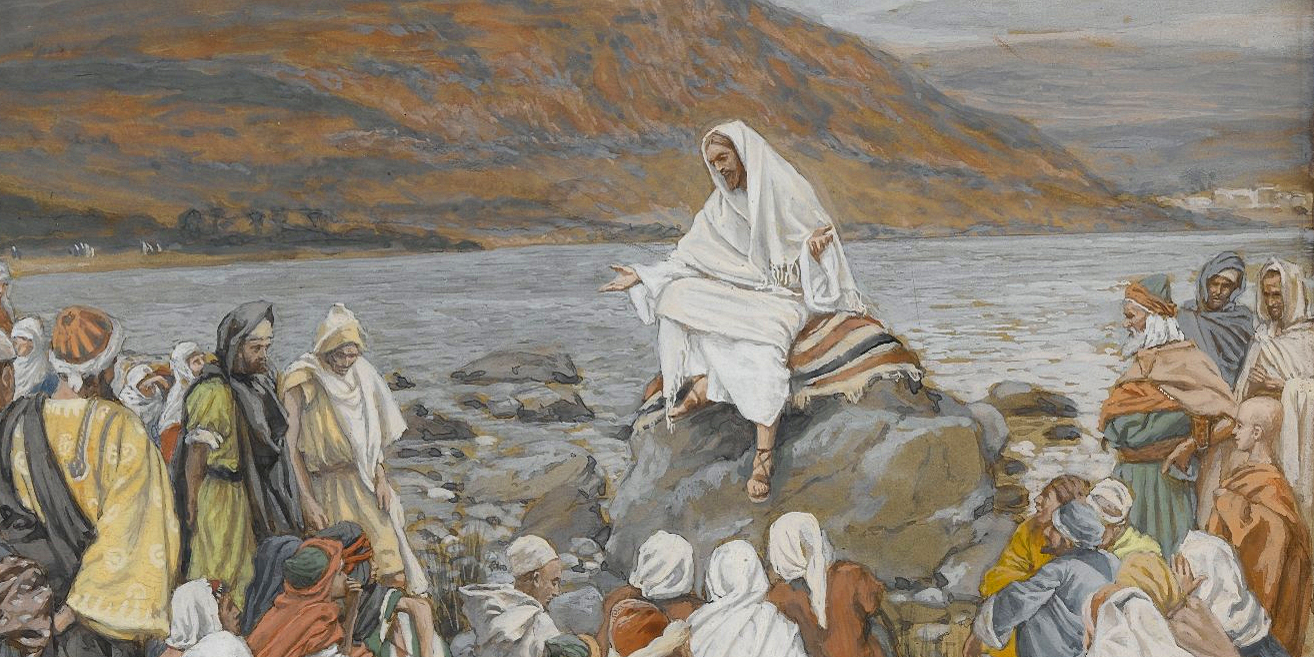
He comes to us as One unknown, without a name, as of old, by the lakeside, He came to those men who knew Him not. He speaks to us the same words: “Follow thou me!” and sets us to the tasks which He has to fulfill for our time. He commands. And to those who obey Him, whether they be wise or simple, He will reveal himself in the toils, the conflicts, the sufferings which they shall pass through in His fellowship, and, as an ineffable mystery, they shall learn in their own experience Who He is.
In his reflections, Albert Schweitzer suggests that Jesus reveals himself not through detached historical inquiry but in the struggles, conflicts, and sufferings of those who walk with him in fellowship. Here, Schweitzer, while maintaining his role as a historian and a skeptic, confronts the philosophical dilemma posed by Lessing’s “ditch” — the vast chasm separating us from the historical events of Jesus’ life. This gap between past and present, between ancient truths and modern minds, presents a challenge when it comes to truly understanding what it means to encounter Jesus.
Schweitzer proposes that this encounter is not found through intellectual history alone, but rather in the lived experience of community — through the shared acts of worship, symbolism, and liturgy that breathe life into his story today. In these communal rituals, the voice of Jesus is heard not in abstract theology, but in the existential reality of those bound together in his name. For Schweitzer, this fellowship, steeped in tradition and shared suffering, becomes the medium through which the divine presence is known, suggesting that the meaning of Jesus’ life transcends mere historical facts and speaks to a deeper, more immediate truth.
This brings us to a fundamental question. Is Christianity about imitating Jesus or participating in Jesus? Is it primarily following a moral example or being swept up into an unfolding mystery?
The divide between imitation and participation in the Christian faith isn’t just a theological nuance — it speaks to a fundamental tension about the nature of Christian life itself. On one side, we have the notion of imitation: the idea that Christianity is primarily about emulating the life of Jesus. This approach asks believers to replicate his actions, embody his virtues, and model their behavior after the historical figure of Christ. The popular WWJD movement, with its bracelets and slogans, is perhaps the most visible manifestation of this mindset, reducing Christianity to a moral project focused on individual actions and ethical conduct. While imitation is undeniably valuable, when it becomes the core of the Christian journey, it risks turning faith into little more than a moralistic exercise — a set of rules to follow rather than a living, transformative experience.
Participation, on the other hand, offers a radically different approach. Here, Christianity is not about copying Jesus, but about being swept into an unfolding divine drama. Participation reframes the entire Christian experience: it’s not about striving to mimic Christ’s life, but about engaging in the ongoing mystery of his presence in the world. The believer isn’t just a disciple learning to imitate an ancient figure but a participant in a larger, living story — a story that transcends time and encompasses both the individual and the collective. Ephesians 3:6 highlights this mystery — through the Gospel, people are not just called to follow Jesus but to become “heirs together,” “members together,” and “sharers together” in Christ’s promise. This is a far more expansive view, one that calls the believer to participate in something larger than themselves, not merely to mirror a past example.
This is where the real contrast lies. Imitation, while offering a clear moral framework, can limit the Christian experience to a kind of historical reenactment. If you focus too much on imitation, Christianity becomes a checklist of behaviors — an idealized set of actions to replicate that, over time, can feel static and disconnected from the lived reality of a world in flux. Participation, by contrast, pulls believers into something dynamic and ongoing. It’s not about asking “What would Jesus do?” but “What is Jesus doing right now?” It’s about recognizing that faith is not just a story to be retold, but a mystery to be lived and actively engaged with in the present.
C. S. Lewis famously said that if you focus on heaven, you get earth thrown in, but if you focus solely on earth, you lose both. The same logic applies here. If Christianity is about imitation, it risks becoming a system of moral behavior that ignores the deeper, richer aspects of faith. But when participation is the central focus, imitation is not discarded; rather, it’s infused with meaning. It’s the difference between following a set of instructions and becoming part of a living, breathing narrative that is still unfolding. In this way, participation adds depth and vitality to imitation, inviting believers to live not just as followers of a historical figure, but as active participants in the mystery of God’s ongoing work in the world.

In the end, the contrast between imitation and participation couldn’t be clearer: imitation asks you to copy, to mirror, to conform; participation invites you to engage, to discover, and to become part of a living story. It’s the story of God engaging in an extravagant project of healing in the midst of a sin-soaked world. If your spiritual life is rooted in imitation of Jesus, you have no use for mysteries like the Trinity. But if it’s about participating and being swept up in the grace and energy of God, you come to see in Paul Zahl’s words how “the unseen-ness of God (the Father)” relates to “his seen-ness at a point and time of history (in Jesus Christ),” and how “both the unseen-ness and the seen-ness … relate equally to his presence in the now (the Holy Spirit).” Participation reveals a God who is for us, with us, and in us. The power of that healing presence is something that mere imitation lacks utterly and completely.
When your spirituality is all about participation, by grace through faith, in God’s outpouring of grace in the world in Jesus Christ, you find imitation language becomes pretty hollow. You don’t ask “What would Jesus do?” That question becomes quite frankly a little flat and boring. It’s replaced by questions like “What is Jesus doing right now?” When you look in the mirror and you realize that a sinner like you is invited to participate in a scandalous unfolding mystery, you start to wonder: “If a sinner like me is invited to the party, what’s next? Who else?” Imitation leaves you looking back with wooden two-dimensional lenses. Participation puts all eyes front, wondering what comes next in the three-dimensional, technicolor, grace infused production in which you’ve been swept up. In Orthodoxy Chesterton contrasts the circle and the cross:
As we have taken the circle as a symbol of reason and madness, we may very well take the cross as a symbol at once of mystery and health. Buddhism is centripetal, but Christianity is centrifugal: it breaks out. For the circle is perfect and infinite in its nature; but it is fixed for ever in its size; it can never be larger or smaller. But the cross, though it has at its head a collision and a contradiction, can extend its four arms for ever without altering its shape. Because it has a paradox in its center it can grow without changing. The circle returns upon itself and is bound. The cross opens its arms to the four winds; it is a signpost for free travelers.
Imitation of Jesus is completely centripetal. It might offer the self-assured a retrospective moral compass, but that’s about it. But participation is centrifugal all the way. Participation offers adventure — the invitation by grace to be engrafted into something far greater than yourself.
For now, I’m not a follower of Jesus, just a fan, but one that’s gratefully by grace fully participating in the drama of the game.








This is wonderful. Participation brings about awe. I would wear a WIJDRN bracelet.
Great essay, Scott! Very Mockingbirdish.
Scott, I really appreciate your reflections here, especially. As someone who spent some formative years in a very discipleship-focused parachurch ministry setting, I have long been slightly puzzled by the lack of discipleship language in the epistles, so this is helpful and congruent with my own experience. That said, I do think we need to be wary of conflating the idea of “following” with “imitating” as you seem to do a bit in this piece. I agree that imitation of one’s (whether Jesus’ or any other leader’s) life is a mistake. But, as Hebrews 13:7 exhorts us, if we “remember [our] leaders and consider the outcome of their way of life,” we are very much encouraged to “imitate their FAITH” (emphasis added), but not their lives. I think this strikes the right balance–freeing us from the potential moralism of aping another’s life choices, while forcing us to discern what underlying faith motivated those particular choices–and then imitating that instead in our own particular contexts. Perhaps this is another way of describing participation?!
Sounds very much like the comparisons I’ve read between the Hebrew-Aramaic paradigm of life and the Greco-Roman paradigm of life, and how the later has changed our interpretation late of scripture and how to live life as a believer.
Participation indeed, is the heart beat of Christian life. That be in the Eucharist, as administered only by a lawfully ordained Catholic Priest.
You say that the term disciple….virtually disappears from the New Testament “after” the book of Acts. Yet chronologically some, if not many, of Paul’s epistles were written before the Gospels and the book of Acts. Why does Matthew record Jesus as saying, “Go and make disciples….teaching them to obey everything I have commanded you. And surely I am with you always, to the very end of the age.”? It seems that Jesus’s last words as recorded in Matthew succinctly emphasize the need for both learning from Jesus how to do as he said—which undoubtedly means, at least in some ways, to imitate how he lived—and the opportunity (and necessity, if we’re to have any hope of obeying him) to participate in his promised ongoing presence.
Your article, ‘Are You a Follower or a Fan?’ provides a profound and engaging exploration of the distinction between superficial admiration and true discipleship. The thoughtful way you encourage readers to reflect on their own commitment to Christ challenges us to move beyond mere acknowledgment of Jesus and embrace a deeper, transformative relationship with Him. Your insights are both convicting and inspiring, offering a valuable perspective for anyone seeking to live out their faith with authenticity and purpose. Thank you for sharing such a powerful and thought-provoking message.