




I was once introduced to a movie producer in the process of making a film about the birth of Jesus. He began to go into great detail about his movie’s set designs, character arcs, and the novelties that would set it apart from other Jesus films. As the inaccuracies piled up, I asked if they had any Bible scholars or historians consulting in the production process. He was happy to report that a friend’s nephew was a seminary student, and he was looking over the script.
More than any other event in the Bible, the birth of Jesus has been the subject of constant speculation and embellishments. Whether it be films, paintings, songs, pageants, or preachers in search of something new to say, the sparse narrative details of Luke’s account are often supplemented with secondary mythologies that heighten the story’s appeal. Many of these interpretive jumps have so thoroughly colored our understanding of the story that we can’t imagine it to be otherwise. But however cherished a misunderstanding might be, it’s no substitute for the real thing. So without further ado, let’s dive in and separate the wheat of the good news from the tares of myth.
***
Myth #1: It Was Winter
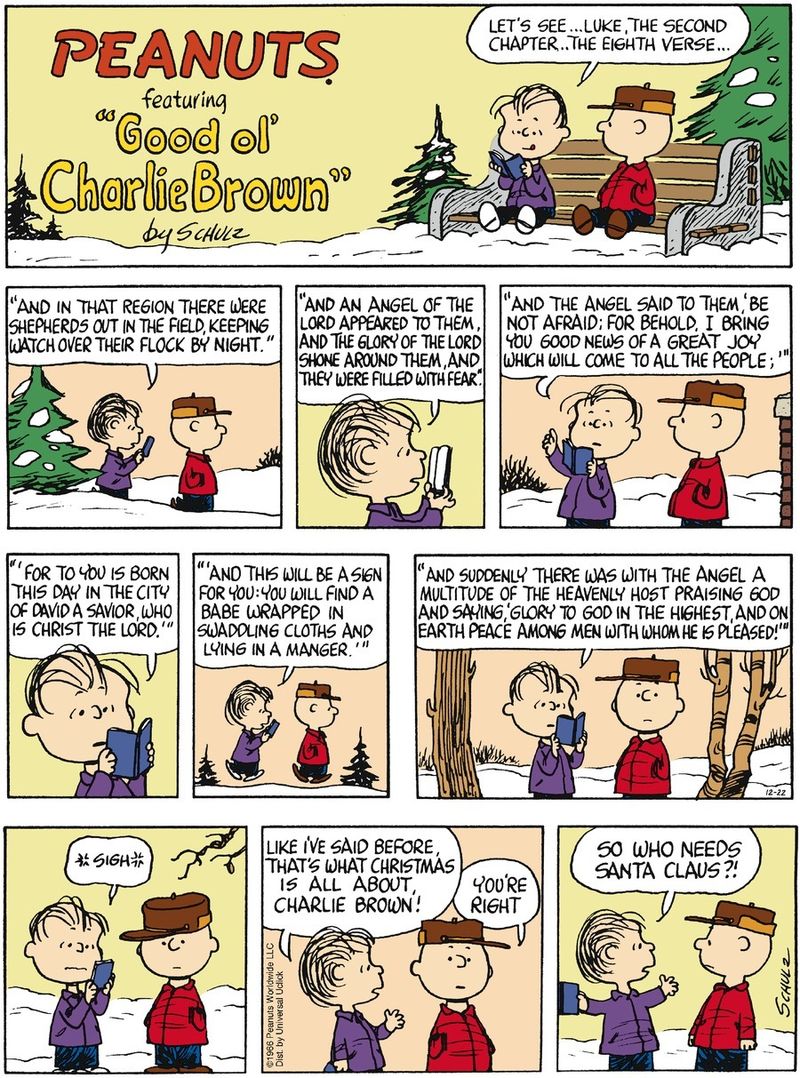
Christmas is on December 25, so Jesus was born in winter, right? As the song goes, “In the bleak midwinter / Frosty wind made moan.” And then there is the Feast Day of the Annunciation, which falls on March 25 (nine months prior to Christmas). As poignant as a snowy birth scene might be, Jesus was probably born during warmer weather. The shepherds are out in the fields with their flocks … i.e., not in the winter months when pasture is scarce and the heavier rain and cold might endanger a flock.
As for precisely when in the warmer parts of the year Jesus was born, it’s anyone’s guess. The first report in the early church of Jesus’ birthday comes from the early third century theologian Clement of Alexandria, who records that some believed the day was May 20, while others claimed it was April 20 or 21 (Stromata 1.21).
Myth #2: Jesus Was Born in a Barn
I’ve written about this one before, but it’s worth restating. The image of the holy family left to its own devices during the perils of childbirth is a powerful one, but it is more myth than fact. To begin with, the idea that Jesus was born in a distant cave comes from the influential second-century apocryphal text, the Protoevangelium of James, which narrates the birth of Jesus taking place in a cave Joseph frantically found about three miles outside of Bethlehem. This text is a fanciful tale, complete with time standing still, the dramatic search for a midwife, and a newborn Jesus healing the leprous hand of a disbelieving midwife. Luke’s Gospel, however, tells a different story.
Upon reaching Joseph’s hometown, Mary gives birth to Jesus surrounded by extended family in the characteristically tiny house of that era. There was no room for them in the guestroom, so the birth takes place in the living room where the animals would have taken refuge if it were cold (ahem, it’s not winter). Perhaps, the ground floor of that simple house was hewn into the side of the hill, but it definitely wasn’t a barn. Which brings us to …
Myth #3: The Grumpy Innkeeper
There was no innkeeper. Apologies to all the pageant directors out there.
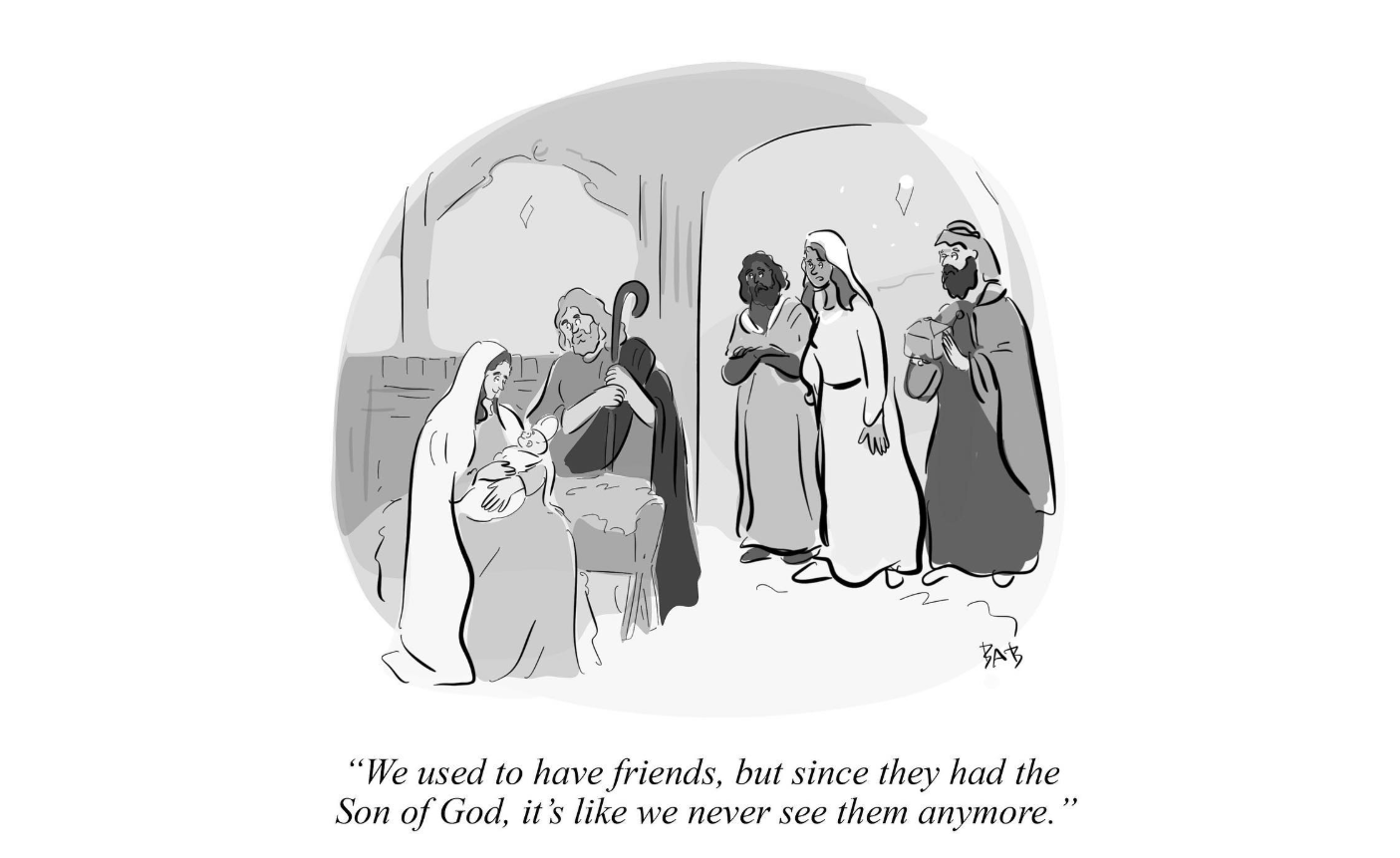
Myth #4: Shepherds Were Immoral People
This is a classic preacher trope. Understandable, but misguided. In search of a gospel hook for the nativity, preachers malign the shepherds as dishonest thieves to emphasize that this Jesus is for all people – even those most contemptible shepherds. The primary evidence for this trope comes from two citations of the Talmud. The first, dating from 270 AD says, “You will find that there is no more contemptible occupation in the world than that of the shepherd” (Midrash Psalms 23 § 2). The second, dating from 423 AD, adds shepherds to an earlier list of those prohibited from serving as a judge or a witness in disputes because they were lovers of money (Tosefta Sanhedrin 5.5).
Christians love to cherry pick from the Talmud, glossing over centuries of cultural distance. But if shepherds were so universally despised, Luke (and Jesus) seems entirely oblivious to their hated status. When Jesus’ later parable about a shepherd, there isn’t any hint of moral duplicity (even on the part of the townspeople who celebrate the salvation of his lost sheep). Instead, what seems to matter most in the angelic appearance to the shepherds is their status as peasants: the “great joy” proclaimed by the angels “will be for all people” (Lk 2:10).This Jesus isn’t just for the rich magi Matthew’s Gospel reports, but for the poor shepherds too. And when these shepherds went to visit their savior, they found that he was born in a house that looked just like their own.
Myth #5: The Lambs of the Shepherds Were Temple Sheep
Sticking with the shepherds for a bit, the flocks they are tending aren’t destined to be sacrificed in the Temple. For more on this one, check out Chad Bird’s judicious handling of the matter:
We certainly do not, by any stretch of the scholarly imagination, have sufficient, irrefutable evidence to teach or preach that these were temple shepherds taking care of future sacrificial lambs.
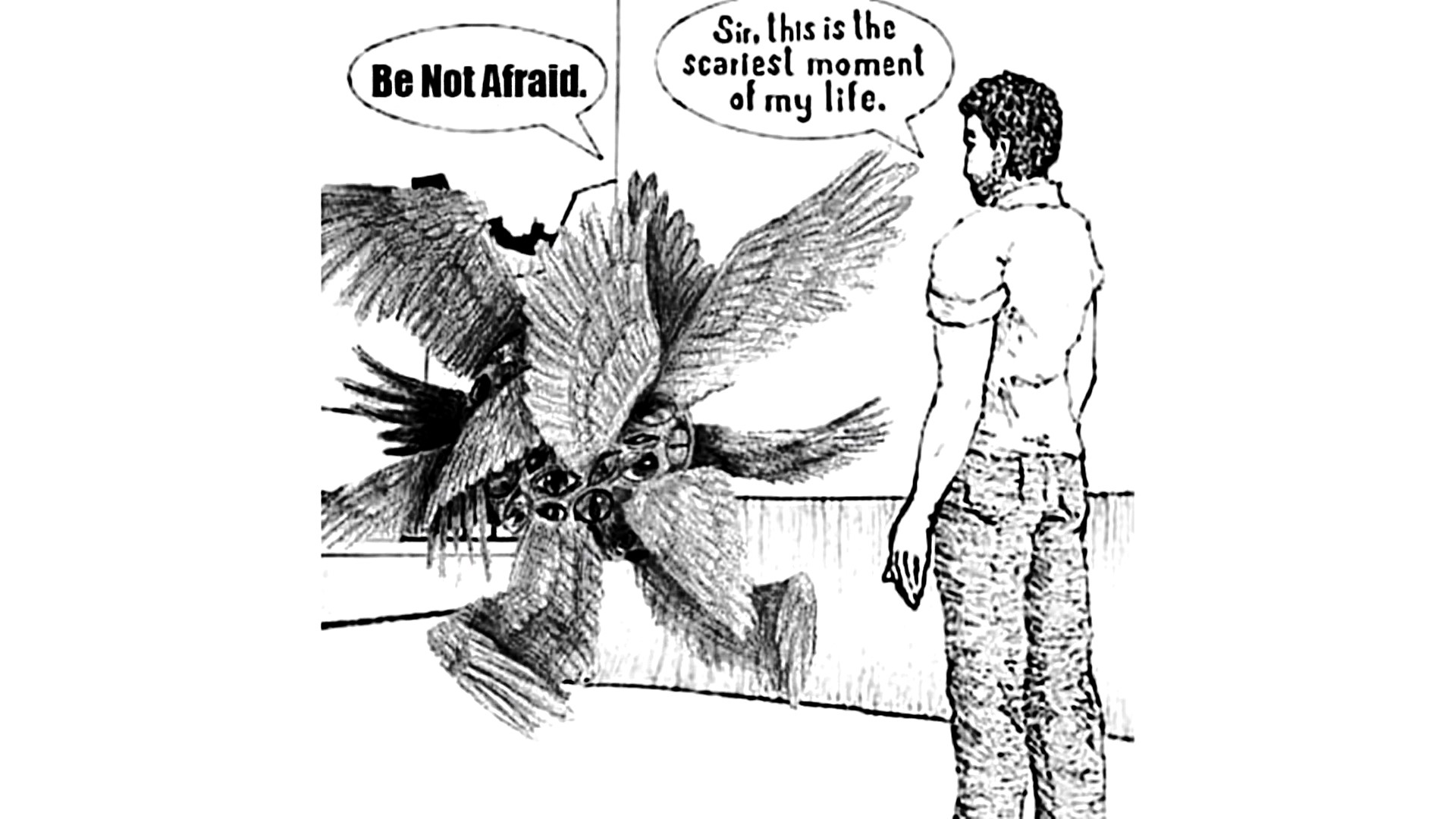
Myth #6: Angels Are God’s Warriors, Now Singing Tidings of Peace
This myth has a subtle tinge of neo-Marcionite masculinity to it, evoking the image of a wrathful God’s armies now laying down the arms to sing of the birth of God’s grace.
Now, it is impossible to adequately summarize here the scholarly literature on the developing views of angels before, during, and after the time of Jesus. Suffice to say that angels are simply divine messengers who function in a variety of ways befitting the context. They aren’t, strictly speaking, divine killing machines. Yes, there is such a thing as an angel of death, but there are innumerable examples of angels who are simply delivering a message (Gen 16, 31:11; Ex 3; Judg 2, 6) or providing timely aid (Gen 21, 24:40; Ps 91:11). And angels even sang when the heavens were created (Job 38:7). Here, an angel appears to shepherds to pass on a message. The subsequent appearance of a heavenly host (1 Kgs 22:19) on earth is unprecedented and points to the meaning of the incarnation: heaven and earth are now conjoined.
So why are the shepherds (or Mary or Zechariah) afraid? Well, the imminent threat of physical harm isn’t the only reason why one might be fearful. I think it’s reasonable to assume that any one of us would be frightened if a heavenly being suddenly appeared next to us — just as the disciples were terrified when the resurrected Jesus pops in on them for a chat (Lk 24:37–38).
Myth #7: The 400 Years of Silence
When talking about Jesus, it’s never a good starting point to mischaracterize the Judaism of his day, which leads to all sorts of unsympathetic stereotypes and ultimately misunderstandings of Jesus himself. While it’s true that 400-ish years pass between the end of the Book of Malachi and the birth of Jesus, nowhere in the New Testament is the idea emphasized or even mentioned. The 400-years of silence idea implies, for example, that the Spirit of God departed and God had nothing to do with Judaism in the time leading up to Jesus. Or that this period was marked by a steep decline into godlessness. In this way, the 400 years motif represents an overzealous narrative reading of scripture that is emblematic of narrative’s tendency to shoehorn data that doesn’t easily fit its paradigm.
The impression of a four-century gap between the two testaments mostly exists for Protestants reading Bibles printed after the seventeenth century. Catholic Bibles, by contrast, include many “deuterocanonical” writings roughly composed within this 400-year window. But regardless of where you fall on the debate over the status intertestamental writings, this period of time was anything but silent: wars were fought and won, prophecies and apocalypses were written, messianic expectations waxed and waned, and Judaism was as lively as it was fractious. In other words, no one in this time actually believed themselves to be living during a period of divine silence. The birth of Jesus was a joyous event because this baby would be the one to turn the world upside down and that God would do as he had promised, but not because they believed that God had abandoned Israel.
***
Christmas is the story of an eternal God who so loved the world that he stepped into his finite creation to redeem the whole of humanity. But more than that, it’s the story of how God came in the most unlikely and unexpected of ways: born not to nobility or royalty of the most powerful empire the world had ever seen, but to Jewish peasants of an occupied colony. The extraordinary good news of Christmas is beautiful enough in its own right. No further speculation or embellishments necessary.







I still wonder why we insist on the myth of the virgin birth…?
I have preached about the location of the “manger” for Christmas many times since our trip—-life-changing!!!!
Unlike the other myths here in this article, this one could be true! The myths in this article are ones that have been added onto the text at later dates…etc. but the virgin birth is affirmed by the text (both Matthew and Luke). Why consider it a myth? Sure, the ‘virgin’ in Isaiah 9 could just be a young woman. But Luke and Matthew, who certainly knew the difference between a young woman and a virgin, seem to think Mary was a virgin. And the virgin birth seems to imply 1. Jesus was fully God and man, and 2. Our salvation can only come through the supernatural act of God! Happy Christmas!
For those of us who believe the Bible is the inspired and trustworthy word of an omnipotent God, the virgin birth is no myth. It is a fulfillment of prophecy and an important part of the gospel.
It really surprises me that the virgin birth is such a point of strife. Christians will believe that God created the universe out of nothing—doctrine, true. They’ll believe that Jesus rose from the dead—doctrine, true. But then they’ll draw the line at a virgin birth, saying, “Oh, well, that’s just not possible.”
When was any of that stuff possible? That’s the whole point! If God can create the universe out of nothing and raise the dead, why stop there? If God does one impossible thing, why not another? In fact, that’s what makes it special. If it were possible, it wouldn’t require God. But it’s not possible—and that’s why we need God.
[…] 7 Christmas Myths That Just Won’t Go Away. Resident NT scholar Todd Brewer reminds us that, no, Jesus was not born sad and alone in a wintery barn. Or a cave for that matter. See also “Stealing the Joy from the Gospel of Luke” […]