




Though finding books of interest was perhaps more difficult than previous years, that doesn’t mean there weren’t any gems published this year. With everything from philosophy to theology and biblical studies — even a novel — it’s turned out to be a great year in books! For a more general book list click here, and for last year’s theology list, click here.
Biblical Studies:
 Romans: A Commentary, by Beverly Roberts Gaventa
Commentaries are notoriously tedious books, but Romans: A Commentary is a welcome exception to the rule. This is a masterful and even riveting book, born of a lifetime of personal and scholarly engagement with Paul’s letters. Gaventa manages to provide sufficient overviews of all of the major interpretive minefields of Romans while also carving her own distinctive path through Paul’s letter. This thoroughly apocalyptic reading of Romans is a landmark achievement that proclaims God’s redeeming power with fresh insight and pastoral sensitivity. This is a commentary I am sure I will return to again and again for years to come.
Hitchhiking with Prophets: A Ride Through the Salvation Story of the Old Testament, by Chad Bird
In this journey through some of the major episodes of the Old Testament narrative, Chad Bird is the most reliable and fascinating of guides. With every step, Bird illuminates both the extraordinary and the mundane aspects of the narratives with a keen eye for their Christological significance. Hitchhiking With Prophets is such a pleasure to read. By the end, the reader will not only have a grasp on key people and events, but a sure faith in the God whose certain promises outstrip the sin of his all-too-human people.
I Judge No One: A Political Life of Jesus, by David Lloyd Dusenbury
Just how political was Jesus’ ministry? Was he crucified as an insurrectionist? In this multifaceted and exhaustively researched book, Dunsbury offers a compelling narrative reading of the canonical gospels alongside readings of everyone from Socrates to Nietzsche to argue that Jesus’ kingdom was radical, but not revolutionary — that our “highest desires lie beyond the political.” Jesus did not take up arms against Rome, but willfully died at its hand to save the world. I Judge No One is unique interdisciplinary study, with fresh insights on an old question.
After Paul: The Apostle’s Legacy in Early Christianity, by James W. Aageson
A far-ranging and impressive study that traces the reception and impact of Paul within the early Christianity. Rather than a linear evolution/devolution from Paul to catholic Christianity, Aegeson emphasizes the diversity of beliefs that emerge over time and their organic relation to the apostle. In this way, the manifold indebtedness of early Christianity to Paul does not necessarily represent a loss from an original purity, but a broader reflection on the genius of the man himself.
The New Testament in Color: A Multiethnic Bible Commentary, ed. Esau McCaulley, Janette H. Ok, Osvaldo Padilla, Amy Peeler
This book has been praised for its selection of contributing scholars from across from a number of different ethnic backgrounds — and rightfully so! But what stands out most to me is how well this works as an introduction to the New Testament. More than addressing the usual questions of authorship, compositional date, or setting, each of the essays is a model of faithful interpretation that is simultaneously contemporary and orthodox.
Theology:
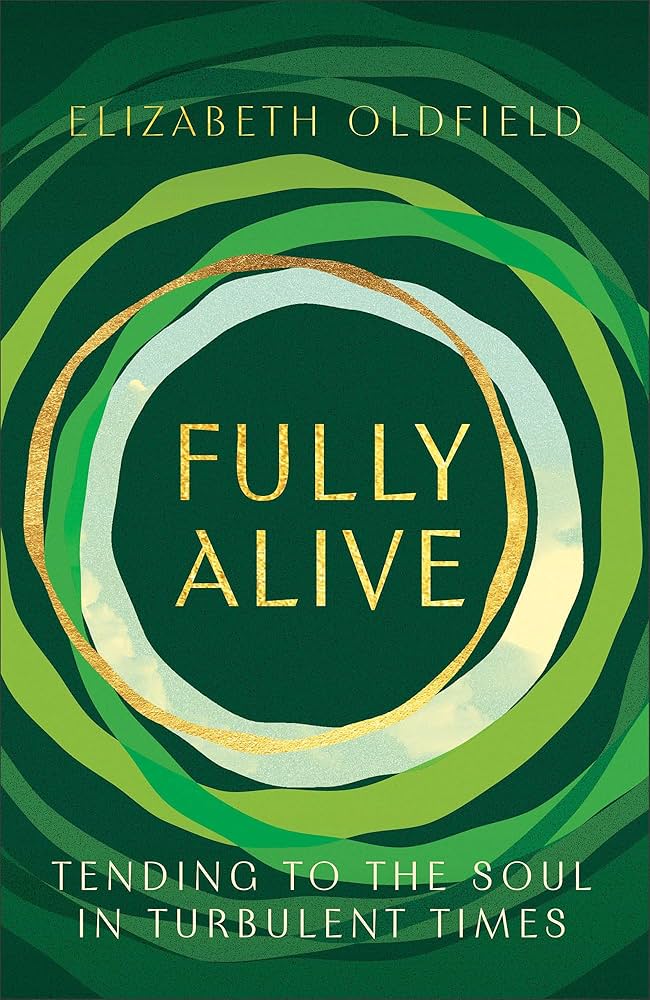 Fully Alive: Tending to the Soul in Turbulent Times, by Elizabeth Oldfield
This was probably the most enjoyable book I read this year. A cursory glance might suggest this to be yet another Christian self-help reflection on the seven deadly sins (wrath, envy, lust, pride, etc.), but it’s really a compelling treatise on what it means to be human within a culture that seems to have lost the plot. For those who loved Francis Spufford’s Unapologetic, Oldfield’s Fully Alive is a fitting sequel that’s as creative as it as erudite. See, for example, her translation of “envy” to “status anxiety” or her gloss of “gluttony” as “numbing,” this learned book is perfect for the Lenten book club and non-Christians alike.
Theology and Technique: Toward an Ethic of Non-Power, by Jacques Ellul (2024 translation)
This previously unpublished (and unfinished) book is a bit rough around the edges, but Ellul’s turning of his insights on technique to the question of God is frequently brilliant. Though written some 40 years ago, his reading of the beginning of Genesis, comments on eschatology, and proposal for an ethic of non-power remain strikingly contemporary.
Broken Bonds: A Novel of the Reformation, Book 1 of 2, by Amy Mantravadi
While this work of historical fiction is not technically a theology book, it makes the cut on account of its sheer brilliance. The way Mantravadi distills history and theology from innumerable sources into an enjoyable and informative narrative is a remarkable achievement. But at the heart of this book are her sympathetic depictions of Luther, Staupitz, Karlstadt, Erasmus, Melanchthon, and others. Though they were giants of their time, their struggles are endearingly human, giving life to the ideas for which they fought so forcefully.
Letters to a Future Saint, by Brad East
A compact, easily digestible introduction to Christianity presented through a series of letters sent to a “future saint.” Each one- to two-page letter takes up one theme to stepwise take the reader on a journey into a variety of doctrinal quandaries. Letters to a Future Saint might be a weighty theological textbook from a prolific theologian, but it feels far more like an easy stroll with a friend through a fascinating botanical garden.
The Riches of Your Grace, by Julie Lane-Gay
In story after story of personal testimony, Lane-Gay shows how the strangeness of old words come to life anew as good news. This isn’t so much a commentary or even introduction to the Book of Common Prayer (there are plenty of those). It’s instead a delightful and moving invitation to the reader to dwell within the ageless wisdom the Reformation and its signature prayer book.
Philosophy:

Embracing Alienation: Why We Shouldn’t Try to Find Ourselves, by Todd McGowan
A creative exploration of an unfashionable topic that I loved. Embracing Alienation brims with fresh insights into the nature of humanity and contemporary society, arguing for what I am tempted to deem a philosophical, quasi-theology of the cross. For McGowan, the experience of alienation and dissatisfaction so prevalent in modernity is not an obstacle to be overcome on the way to better days, but something to be embraced. Indeed, the glorious promise of personal or social utopias makes life worse, not better.
The Examined Run: Why Good People Make Better Runners, by Sabrina Little
Skip the personal fitness influencers and try this one on for size! The combining of athletics and philosophical enquiry in The Examined Run is both fun and necessary. While the sports world is rife with inane maxims that largely reflect our cultural values, Little offers more ancient and profound wisdom. Contrasting performance-enhancing virtues with performance-enhancing vices, The Examined Run dispels much of what passes for wisdom within the athletic community.
Honorable Mentions:
- A Short Guide to Spiritual Formation by Alex Sosler
- Sola: Christ, Grace, Faith, and Scripture Alone in Martin Luther’s Theology by Volker Leppin
- The Broken Body: Israel, Christ and Fragmentation by Sarah Coakley
- The Goodness of Judgment: The Ministry of Christ’s Cross for a Hurting World by Jeff McSwain








[…] our annual list of top theology books, click here. These our of favorites from fiction, general non-fiction, and more devotional […]
Delighted to see Sabrina Little’s “The Examined Run” here. She was a Yale Div classmate and is brilliant and very fast! I gave this as a gift to the runners in my life.
I’ve always found great reads on this list and it is annually looked-for. Awesome.