




Some fantastic books this year, with some surprising gems, new books by beloved writers, and some profoundly revelatory scholarship. Happy Reading!
For last year’s list, see here.
The Church in an Age of Secular Mysticisms, by Andrew Root
This one was a page-turner that I repeatedly dog-eared and underlined. The key to understanding Root’s fantastic book is its subtitle — “Why Spiritualities without God Fail to Transform Us.” For anyone interested in an acute diagnosis of the “spiritual, but not religious” landscape of modern life — aka … Seculosities — this is a must read. Through many different avenues, secular mysticisms seek transformation through the expansion of the self, or becoming a better version of yourself. True transformation, Root argues by contrast, comes through the theology of the cross: through passivity, surrender to negativity, and an encounter with a God outside ourselves. (Side note: is it any wonder Root is going to be speaking at the 2024 Mbird NYC Conference?!?)
Oneself in Another: Participation and Personhood in Pauline Theology, by Susan Grove Eastman
One would be hard-pressed to find a more attentive and dynamic interpreter of the apostle Paul than Susan Eastman. This treasure trove of essays demonstrates a breath-taking attentiveness to Paul’s letters and theology. Eastman not only sheds new light on old debates over the “I” of Romans 7, Moses’ veil in 2 Corinthians, and participation in Christ, she also provides a Pauline analysis of psychedelic drugs, autism, and modern conceptions of the self. Taken together, Oneself in Another offers a way out from strictly individualist readings of Paul’s letters while simultaneously demonstrating their existential vitality.
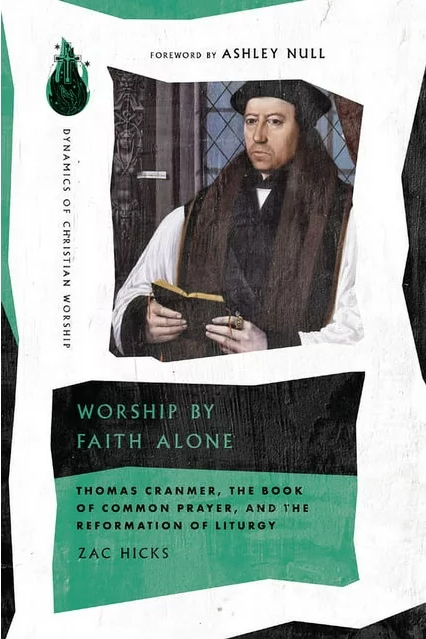 Worship by Faith Alone: Thomas Cranmer, the Book of Common Prayer, and the Reformation of Liturgy, by Zac Hicks
A magnificent study that is an indispensable guide for anyone with any interest in reformational Anglicanism, Hicks shows the Protestant heart of Cranmer and his final prayer book. Both in its structure and content, the 1552 prayer book is its own treatise on justification by faith. But more than that, Hicks presses further to show both the scriptural antecedents to Cranmer’s words and, more importantly, why the gospel preached in this liturgy is so vital. (Oh, and don’t skip the magnificent footnotes!)
Christ and the Christian Life, by Gerhard O. Forde
When I saw the announcement of this book by the long-time Mbird favorite, I thought I had seen a ghost. Perhaps I’m late to the party on this one (I’m sure the Lutherans out there are rolling their eyes), but I didn’t know these essays existed. First published in 1984, some of Forde’s best writing had been buried within a longer two-volume reference work. Thankfully, Fortress Press has saved these companion essays from oblivion and republished them this year as a single book. Part One covers “The Work of Christ” and Part Two turns to “The Christian Life.” Here, Forde succinctly lays out what would become some of his classic themes: justification, sanctification, the theology of the cross, spontaneity, and the distinction between law and gospel.
Paul and Time: Life in the Temporality of Christ, by L. Ann Jervis
In this provocative and thorough examination of Paul’s understanding of time, Jervis probes her readers to reexamine the relationship between our experience of time and the salvation wrought in Christ. Along the way, Jervis overturns many of the tropes offered by scholars and New Testament introductory classes alike: especially the contrast between “this age” and “the age to come,” a convention that leads to the somewhat sloppy shorthand “already — not yet.” While some of her proposed alternatives to this paradigm are not always convincing, Jervis still raises vital questions that necessarily highlight the ways Paul’s complex thought far exceeds our heuristic models.
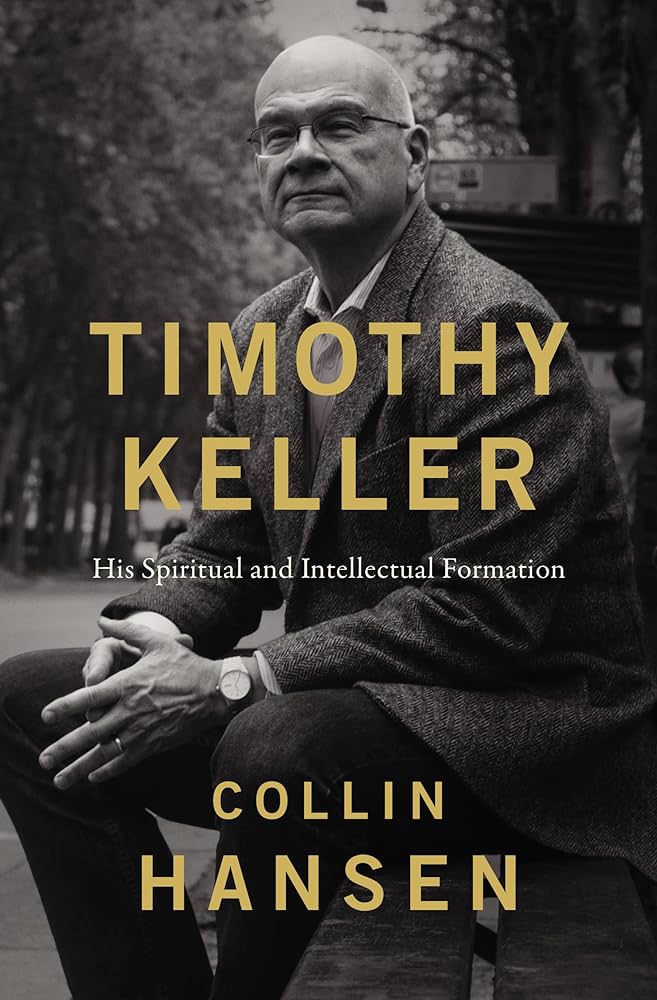 Timothy Keller: His Spiritual and Intellectual Formation, by Collin Hansen
Published a few months before Tim Keller’s death, this (unfortunately) timely book details both the influences that shaped Keller’s thought and tells the story of Keller’s life. Anyone acquainted with Keller’s sermons or writing could not fail to notice how regularly he referenced Anglicans like C.S. Lewis and John Stott along side Reformed theologians like Jonathan Edwards and Catholic thinkers like Charles Taylor. In that way, this fascinating and ground-breaking study is something of a solution to a riddle. Keller was far more than a good pastor who liked to read thoughtful books, but an eclectic thinker in the truest sense of the word, drawing together insights from the many different sources he came across.
Extra Nos: Discovering Grace Outside Myself, by Flame
It seems that everyone nowadays is sharing their story of deconversion: how they grew up in some form of conservative Christianity and now realize it was all a crazy fairytale. Flame’s story is something else entirely — refreshingly so — narrating his intellectual journey from Charismatic Christianity, to Calvinism, to ultimately Lutheranism. More than a theological treatise, Flame lets readers in on his many questions and discontents along the way and the peace and freedom he found in the external word of the gospel. I cannot recommend this book highly enough, in part because I hear more than a few echoes of my own story in Flame’s account.
The Nicene Creed: An Introduction, by Phillip Cary
This lucid and (mercifully!) brief guide to the Nicene Creed outlines its origins, offers a close study of the text(s) of the creed, and demonstrates why this ancient summary of faith continues to be good news. But perhaps most significantly, Cary connects every article of the creed with its scriptural antecedents to collectively show how this confession of faith functions as a summary of and commentary on the Bible. The result is a fascinating and readable exposition of the Nicene Creed.
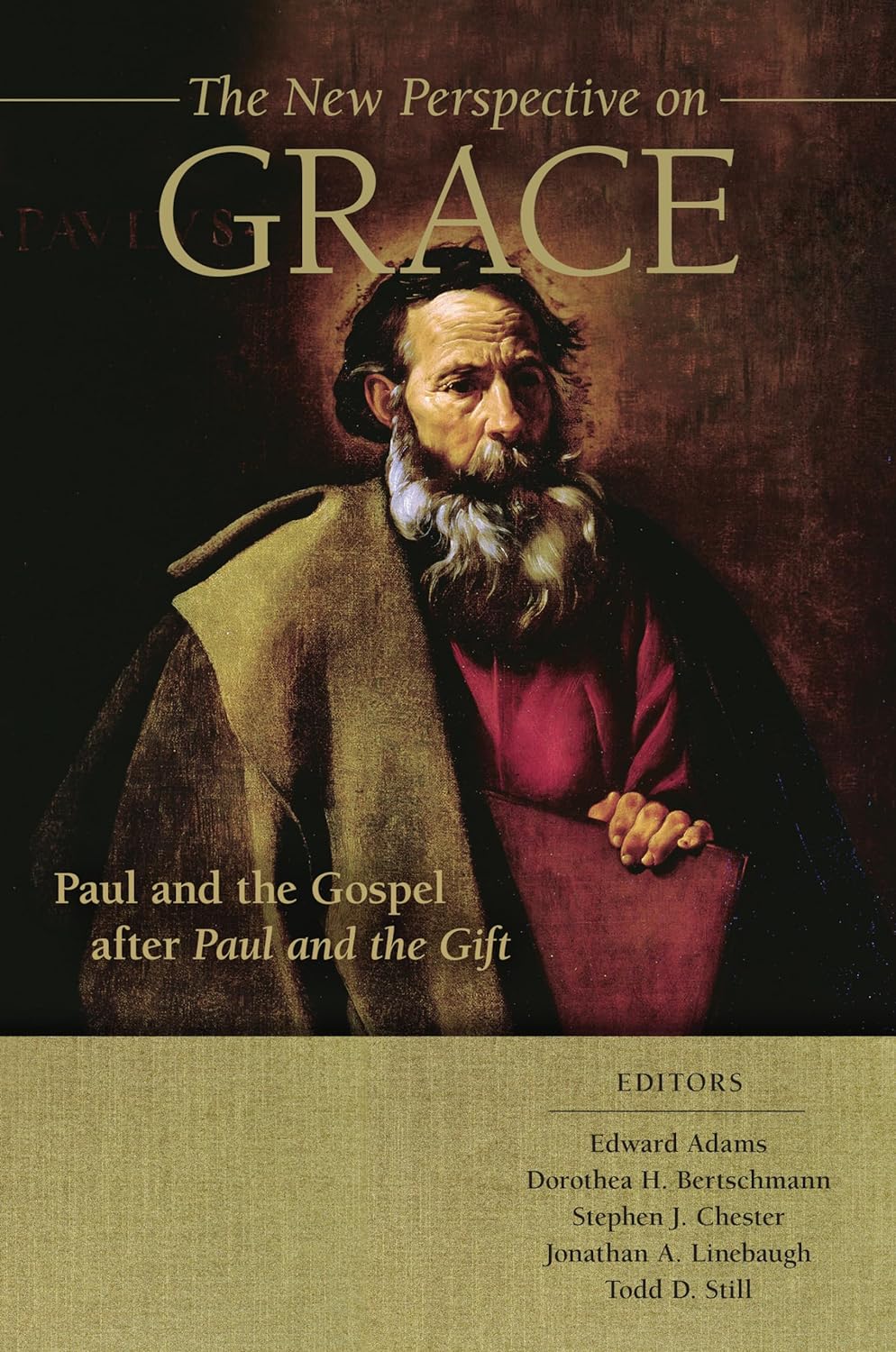 The New Perspective on Grace, ed. by Edward Adams, Dorothea H. Bertschmann, Stephen Chester, Johnathan A. Linebaugh, and Todd D. Still
A splendid book from start to finish. I couldn’t think of a better tribute to John Barclay and his landmark book, Paul and the Gift, than this collection essays, all of whom carry Barclay’s insights on the nature of God’s grace to new heights. First beginning with Paul, the book then proceeds to other New Testament writings, then ancient, medieval, and more modern theologians, before concluding with several essays on the pastoral implications of Barclay’s writings. If Barclay provided new grammar for grace through his reading of Paul, these essays take them for a delightful joyride around the whole neighborhood of Christendom.
Love as Agape: The Early Christian Concept and Modern Discourse, by Oda Wischmeyer
Originally published in German in 2015, this recent translation is a breathtaking study on the concept of love in the New Testament and beyond. Wischmeyer not only examines Paul and John, for whom the multifaceted idea of love is so central to their understanding of both divine and human activity, she also probes Jewish and Roman ideas of love. Then, in a chapter that itself is worth the price of the book, Wischmeyer offers a sweeping comparative analysis of modern, post-Christian ideas of love that place romantic love on the pedestal previously occupied by divine love.
A Quid Without Any Quo: Gospel Freedom According to Galatians, by Jason Micheli
Anyone who has heard his sermons (or read any of his many contributions to Mbird), knows that Jason Micheli has the unique ability to simultaneously capture the offensiveness and freedom of the gospel — all the while bowling you over with captivating stories and illustrations. These reflections on Galatians are no exception! Much ink has been spilt debating over Paul’s explosive letter, but Micheli goes for the heart of it with winsomeness and radical clarity.








These kinds of lists are always so helpful.
I look forward to taking and reading them in the coming year.
Thanks!
[…] Top Where-Have-I-Been Pop Theology Read:* What’s So Amazing About Grace? by Phillip Yancey. (*read our Top Theology Books rundown here!) […]
How do I order a book!
Hi Donna, Each article title has a link that can be clicked on to send you to their Amazon pages.
Phillip Cary’s The Nicene Creed is not only a great book, but a beautiful book. It is a lovely volume.
[…] Though finding books of interest was perhaps more difficult than previous years, that doesn’t mean there weren’t any gems published this year. With everything from philosophy to theology and biblical studies — even an surprising novel — it’s turned out to be a great year in books! (For last year’s list, click here) […]