




1. Starting off with an essay that entered our inbox this morning, and it’s a doozy. For the New York Times, Eli Saslow interviewed a pastor who created an “A.I. twin” of himself to help with the growing needs of his congregants. Justin Lester’s digital duplicate is equipped with “two million words” of his past preaching, reading, and correspondence:
For the last several months, it had been publicly available on his website and Facebook page for online chats or phone calls. It had learned to mimic his bent toward optimism, his obsession with the Green Bay Packers and his casual slang, but it did more than just regurgitate what he had already said. It mapped his thinking onto new conversations to provide advice around the clock for people he’d never met who had questions he’d never been asked.
“It’s a digital version of my mind,” he told his congregation. “If I’m asleep or traveling, you don’t have to wait. You can have 24-7 access to this other version of me.”
The around-the-clock service seems to be the bot’s most appreciated function. Lester’s congregants and even strangers across the country engage with his twin into the late hours of the night. People are going to this bot for answers to their most vulnerable questions and problems: “Why won’t He [God] answer my prayers?” or “Can I still be saved if …?” Lester takes the next morning to review his twin’s work:
“User asks about anxiety and why meds don’t eliminate it.”
“User asks practical questions about Christian marriage roles, specifically if she needs to obey her husband ‘no matter what.’”
Lester skimmed back over a few chats and saw that his twin was chatting in his cadence and citing some of his favorite passages in the Bible. “That’s exactly how I would have responded,” he said. He liked to test the technology himself every few weeks, either by text or voice call, and now he hit a button on his computer to speak to the twin. He waited for the call to connect and then heard a clone of his voice on the other line.
“I built this mind so you can get an answer straight from how I actually think,” the twin said. “Ask me anything.”
“Yeah, man,” Lester said. “What’s your favorite thing right now about artificial intelligence?”
“Yeah, man. That’s a good question,” the twin said. “These tools, they cut hours out of my week. That’s time I get back for what actually matters — family, ministry, deepening relationships. That’s the move.”
Lester hung up and drove to church as he kept turning over the chats in his head. He knew from his own depression that most mental health problems couldn’t be solved late at night in front of a screen. He trusted the technology to act responsibly and give good advice. But it had taken him a decade of work to feel good again in his own skin — in-person therapy, prayer, writing exercises, deep and sustained relationships — and no chatbot could compress that into a conversation.
He wondered about the anonymous users, seeking answers and then disappearing back into space. Often there was no way for him to follow up, and no time.
Is a technology that promises a wider, more efficient reach really worth it? Who knows how many actual people are using Lester’s app (the bots are smart too). And for the actual people on the app, it gave them answers by re-subjecting them to their cycles of loneliness and isolation. They got facts at the expense of a relationship. No computer can mimic the tender warmth of an embrace, the empathetic cries of compassion, nor the spoken words of grace.
It’s scary (and a bit sad) to think of these people screaming into the void, hoping for guidance, wishing for comfort from a pastor that isn’t truly present to tend to his flock. Going to Google and WebMD for answers was bad enough, now our pastors can outsource their care by using chatbots who pretend to be them. Christ, have mercy.
2. How well do people know themselves? This question has plagued psychologist David Dunning ever since he and Justin Kruger published a 1999 academic paper on what is now coined the “Dunning-Kruger” effect. The gist of the theory (which was not named by its authors, apparently) is that incapable people sometimes overestimate their abilities, while capable people may underestimate their abilities. Matthew Hutson, for Nautilus, interviewed Dunning to figure out “Why We Think We Know More Than We Do”:
One of the reasons why people are overconfident in general is that they tend to look for reasons supporting their ideas. In fact, one of the pieces of advice we always give is: If the decision is important, stop and ask why you might be wrong. In planning, one of the procedures that’s recommended for a group is to project yourself into the future and imagine your initiative failed spectacularly. What happened to make it fail? And say, “OK, what can we do to prevent those stories from happening?” That’s called a “pre-mortem.”
Doctors do this as a matter of course. They have a different name for it. They don’t diagnose you; they do a “differential diagnosis.” They may have an idea, but they have to think about what else it can be. OK, you might have Lyme disease, but what else are your symptoms consistent with? We’re going to test you to rule out everything that we can. That’s core to medicine, thinking of alternatives, thinking how you could be wrong.
Dunning and Kruger’s intention was never to make their theory into an adjective. They, er, underestimated human proclivities:
I wish people would stop yelling Dunning-Kruger at each other. We offered the paper as a reason to self-reflect. I remember when I started looking at Twitter back in the day and seeing people yelling, “You Dunning-Kruger idiot” at everybody else. I went, “Oh no.” My biggest regret is that it’s become an epithet to hurl at other people. It’s something to hurl at yourself every so often.
Yes, indeed.
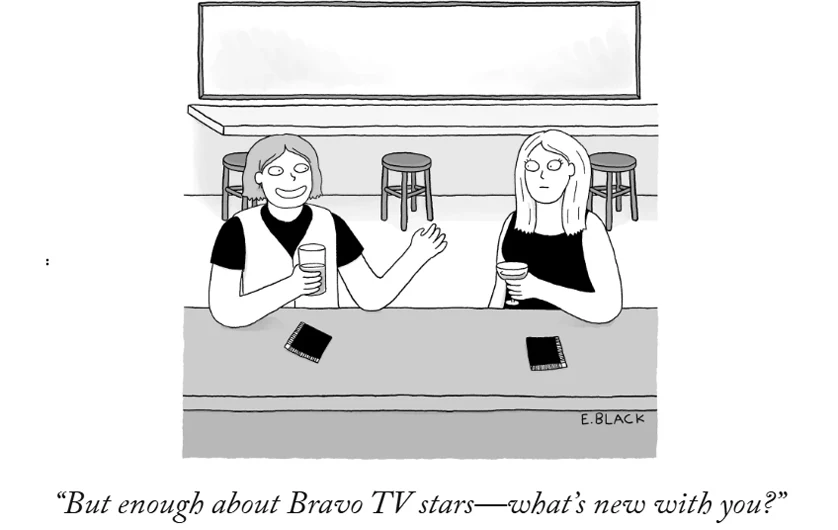
3a. Up next is a term which may be new to you: hikikomori. The Japanese term translates into “pulling inward.” It’s a phenomenon from the 1990s that is still gaining traction amongst young adults today, in which an individual isolates themself from the outside world for a prolonged period of time. A 2022 UK study found that hikikomori appeared “most common in boys and men.” Eva Livingston interviewed a young Brit about why he withdrew from society:
In a series of replies, Lewis told me he is from a small town in north-west England and lives at home with his parents. He’s been a hikikomori for about a year, though it happened somewhat gradually; he’s always preferred his own company and spending long hours online in his room to socialising in person. At one point in 2025, he realised: “I don’t have to force myself to do things I don’t want to. I can just speak to my parents when I go to get my tea and I don’t need to do any more than that.” [..]
The real world is both tiring and tiresome for him, Lewis went on to explain: too many unwritten rules, too many norms that don’t quite make sense. In his bedroom they don’t exist; he speaks to the people he wants to speak to, when he wants to speak to them, in a format — primarily online gaming — where his words and intent won’t be misconstrued, and he doesn’t have to work so hard to understand other people’s.
On Reddit, you can find threads of users writing about their own shut-in experiences and inviting others to AMA (ask me anything). These online forums make it clear that the practice doesn’t involve a complete isolation from the world at large, just that of physical, human-to-human interactions. As Lewis would concur, internet chat rooms are far less messy.
There’s something to be said for the way that hikikomori is actually creating community, albeit online. It’s almost like our souls yearn for it!
3b. Another trend on social media is also, ironically, creating community. But this time it’s mainly women.
Sarah-Jane Hoadley is what they call a “Loneliness Influencer.” Loneliness Influencers create content of themselves doing their hobbies, errands, or any day-to-day activities completely solo. The videos basically romanticize being alone. When you are alone you can prioritize your own well-being — light that candle! Start that bubble bath! As Belle Tindall-Riley aptly points out, loneliness is like a product they are selling:
Loneliness is never the medicine. In fact, I fear it’s the poison. That’s why the rise of these influencers is so troubling, because they’re (literally) selling this poison, pretending (believing?) that it’s medicine. But loneliness is a problem, one that should not be repackaged as a cure.
We were made for connection – we are interdependent beings. Our brains register social injury in the exact same way they register physical injury. Company is as essential to our survival as food and water. Can the research make it any clearer? We need to move toward each other in order to survive. Literally. We were designed to understand our inner and outer worlds by way of the relationships we form and sustain – with all the friction, the vulnerability, and the burden that such a reality entails.
And you may think that this Loneliness Influencer trend is a storm in an online teacup, and maybe you’re right. But there are forces – cultural, societal, economic and spiritual – that do their darndest to keep us apart. And we shouldn’t take any of them too lightly.
4. Influencers aren’t only selling loneliness, they are also marketing an idyllic reality that isn’t possible for 99% of the population. And according to Alex Demas in The Dispatch, they may be responsible for Gen Z’s malaise:
Another metric Nietfeld cites, that around 57 percent of Gen Zers would be influencers if they could, is a telling one. What are influencers, after all, other than performers of success? Influencers design their lives around how they want to be perceived by others, building an authenticity only insofar as it photographs well and is capable of funding their continued stagecraft.
Influencers: the coolest, prettiest, fittest, and smartest peers across the country and world — peers who are often sponsored or paid for their one-dimensional pursuits and who almost certainly shouldn’t be considered peers at all. When your eyes are constantly pasted to a never-ending queue of people who structure their lives not to pursue actual satisfaction but instead to present an image of what they believe satisfaction looks like, you’re bound to end up with an unrealistic understanding of what you should expect from life. And that doesn’t end at wealth alone. Online, you’re faced with people who have dedicated their lives to perfecting one aspect of a good life: the perfect set of abs, an impressive half-marathon time, the most adventurous vacations, the most devout adherence to a religion or creed. Taken together, they offer an image of success that no one person could ever realistically achieve. And if that’s what success looks like, why strive for it at all?
For this, America’s youth deserve empathy, not derision. Undoubtedly, not every Gen Zer has been sucked into this unrealistic digital culture. But those who have are faced every day with the prospect that they will never be good enough and that their own success is out of their hands. The fact that this belief is false does not change the sincerity with which it is likely held by many young Americans.
But Demas still holds that we can’t indulge this burnout:
The risk for America’s youngsters is therefore not that they are faced with insurmountable obstacles. The risk is that they are so bought into that narrative that they give up on success without even trying. “I also wish they understood how the dream itself illuminated the path a few feet ahead of me, until I stood on solid ground,” Nietfeld writes, speaking of her own experience climbing the ladder to corporate success. She is correct: Dreams can be more than just comforting stories — they can serve as functional tools to light the way from where you are to where you want to be. Which is why the narrative of helplessness absorbed by many Gen Zers is so corrosive. The truth for Gen Zers is that the ground beneath them is firmer than they’ve been told. The path is still illuminated, but only if they keep walking.
Influencer culture won’t be going away anytime soon, if ever. There has to be a way for Gen Z to move forward. It doesn’t involve more time online, consuming content about other people’s lives.
5. For kicks and giggles, here’s the New Yorker with an HR-coded breakup text … um … document:
Following a comprehensive internal review (conducted mostly in my head, late at night, while you were asleep and breathing very loudly), I have decided to dissolve our relationship, effective immediately. This decision reflects a strategic realignment of my emotional resources and should not be interpreted as a comment on your over-all market value, which, my friends have warned me, remains strong going into Q3.
I want to start by acknowledging that, in the early days, our partnership exceeded expectations. We had momentum — and, yes, even synergy. We had a shared sense that we were “not like other couples,” which at the time felt innovative. Meetings were spontaneous. Communication was high bandwidth. For a while, this worked.
However, as our relationship scaled, cracks began to emerge in the infrastructure. Small issues (my hatred of your friends, your disdain for my mother) were initially flagged as low-priority bugs. I assumed they would be resolved in a future update. Instead, they were folded into the core system, where they now power most of my anxiety. […]
Furthermore, I want to be transparent about scope creep. Somewhere along the way, my role in the relationship expanded from Partner to Emotional Help Desk. I became the point person for your work stress, your existential dread, and your recurring theory that everyone secretly hates you. While I admire your trust in me, this role was never formally negotiated, and I lack the emotional maturity to perform it effectively.
See also, Points in Case‘s “How to Master the Art of Passive-Aggressive Cleaning.” And last, but certainly not least, McSweeney‘s “I’m Jimothy, the Short-Spined Raccoon Who Has Taken the Internet by Storm, and the Collective Weight of Your Adoration Is Breaking My Already-Compromised Back.”
6. To close, Rachel Mann, for the Christian Century, reflects on Dietrich Bonhoeffer’s famous poem that asks “Who am I?” After 21 years of full-time ordained ministry, health complications have brought on early retirement for Mann. Retirement means the start of something new, but it also brings the death of what once was. And for Mann, it’s the loss of a role which gave her life purpose that brings about her wrestling with the question who am I?
But this loss of purpose, this “death of self” does not have the final word. Our identity crises don’t change the fact that we are God’s:
In the midst of that death, that depth charge in one’s complacency, one might just be changed. I know that along the line of my wounds, my grief, and my bewilderment at retirement, God waits. Christ invites me to place my hurting, doubting hands in his wounded side. He comes alongside me on the lonely road as I head away from the catastrophe of loss; he breaks bread and shows me a new world. Like Bonhoeffer, somehow I too say, “Who am I? They mock me, these lonely questions of mine. / Whoever I am, Thou knowest, O God, I am Thine!”
Strays:
- The Case Against Answering Every Email
- Olga Khazan on what the loss of conversation of doing to us.
- Another fascinating read on fiber-maxxing and the optimization of our guts: “We talk a lot about keeping our guts ‘clean,’ but our guts are the primary site of spoilage in our bodies — they have no business being clean.”








This was a brilliantly concise way of putting the problem: “for the actual people on the app, it gave them answers by re-subjecting them to their cycles of loneliness and isolation.”
Thank you, Cali ! I’m glad to know the writers on this site are real.