1. Wow, this first one. Over the summer, the University of Pennsylvania profiled one of its own in “The Law, The Gospel, and Daniel Skeel.” Skeel serves on the faculty of UPenn Law School, specializing in bankruptcy law. In recent years he has been increasingly bold in bringing his faith to bear on his scholarship, and the result is a vital witness in an unlikely corner of the public square. Much of that witness can be traced to what he sees as the New Testament’s inescapable — and inescapably radical — understanding of debt (and debtors).

“There came a point,” Skeel reflects, “where I realized that the story of Christianity — the story of the Gospel, as we would put it — and the idea of the fresh start with bankruptcy are very closely parallel. The idea that you’re indebted beyond your ability ever to escape that indebtedness, you can’t get out on your own … it’s almost exactly the same trajectory as the idea of what Jesus is” from an evangelical perspective, which emphasizes that reconciliation with God can come only by embracing Christ as the Savior, not through a believer’s good works.
“… it’s not accidental that Jesus used so many economic metaphors in his teaching.” This observation is hardly unique to David Skeel. “Other than sex,” as he put it in a more recent article, “almost no other feature of daily life figures so prominently in Scripture as debt.”
Interesting to note that what some classify as a fixation on money in Jesus’s teachings, Skeel classifies as an emphasis on debt. The Lord’s Prayer being just one example among many.
While I understand how this sort of language might cause some hearers to balk (how transactional! how simplistic!), its pastoral traction cannot be denied. Not among those carrying student loans, not among those with mortgages, to say nothing of those asked to repay a ‘debt’ to society. Debts weigh on people, and the prospect of the clean slate has a gut-level allure and immediacy, whatever your financial situation.
In other words, I don’t think it’s an accident that Jesus used so much debt language. It’s not something to be minimized or condescended to. And not just because those images are timeless, but because they’re profound. What other type of imagery could make the burden of sin — and sin’s forgiveness — more concrete?? I guess what I’m saying is that any preacher (or church) tempted to downplay economic models of salvation might think twice. Same goes for preachers (or churches) tempted to condemn those living with mountains of actual debt.
The last third of the article, in which Skeel outlines the distinction between man’s law and God’s law (as well as the limits of what law can accomplish more generally), is also worthy of reflection.
Making his case for Christianity in True Paradox, [Skeel] stated: “When Christians seek to usher in the kingdom of God through law, they are denying Christianity’s teachings, not promoting them.”
“Conflating God’s law and man’s law does violence to both. It makes far too much of man’s law, and far too little of God’s.”
“The spirit of Prohibition lives on,” he wrote in True Paradox. “Americans’ confidence in the curative powers of the law has not dimmed a whit. Lawmakers continue to pass laws designed to regulate morality, such as the laws making many forms of gambling (most recently, Internet gambling) illegal, and other laws creating a special category of additional punishment for hate crimes.”
Legislative crusades against vices like gambling, in Skeel’s view, succeed mostly in teaching millions of citizens to ignore laws that lack common consent while driving the targeted activity underground — to be policed, or not, at the whims of beat cops and prosecutors.
2. Drawing on another atypical source, ArtReview ran an interview with the South Korean-born, Berlin-based philosopher Byung-Chul Han on the always uplifting subject of digital alienation. I know, I know, a worn-out theme. But give it a chance. While no one would accuse this guy of having a light touch, I found the directness clarifying and his turns of phrase fresh:

The smartphone is the devotional object of the digital-information regime. As a tool of repression it acts like a rosary, which in its handiness the mobile device represents. To ‘like’ is to pray digitally. We continue to go to confession. We expose ourselves voluntarily, yet we’re no longer asking for forgiveness, but rather for attention.
The subjects of neoliberal meritocracy, believing themselves to be free, are in reality servants. They are absolute servants, exploiting themselves without a master. Self-exploitation is more efficient than exploitation by others, because it goes hand in hand with a feeling of freedom. Kafka expressed this paradoxical freedom of the servant very fittingly in an aphorism: ‘The animal wrests the whip from its master and whips itself in order to become master.’
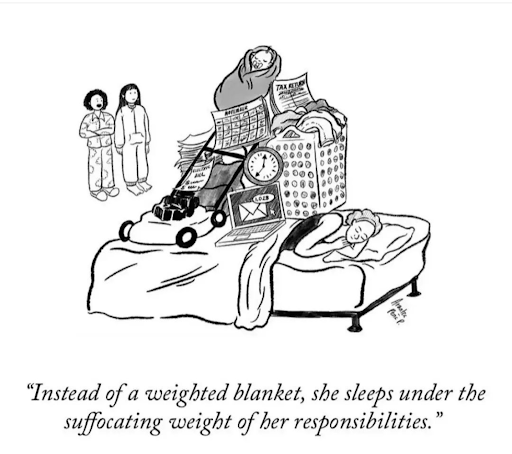
This constant self-flagellation is tiring and depressing. The work itself, no matter how hard it may be, does not lead to profound tiredness. Even though we can be tired after work, it is not the same as a destructive tiredness. Work at some point comes to an end. The pressure to perform that we apply to ourselves, on the other hand, outlasts the working hours. It torments us in our sleep and frequently leads to sleepless nights. It is possible to recover from work. But it is impossible to recover from the pressure to perform.
It is especially this internal pressure, this pressure to perform and optimise, that makes us tired and depressed. So it is not oppression but depression that is the pathological sign of our times.
He goes on to make a surprising pivot toward churchgoing, albeit from an “outside-in” vantage point that’s difficult for a low anthropologist to fully embrace. Interesting dude, though.
3. I’m afraid we’re not done with the headiness yet. Bear with me, though, cause this next essay was equally fantastic. A review of Peter Brooks’ Seduced by Story appeared in the London Review of Books, courtesy of famed literary critic Terry Eagleton, “What’s Your Story?.” Eagleton (ever a favorite) takes the opportunity to muse on the danger of freighting storytelling with more existential heft than it can bear.
This is particularly tempting in a time when Narrative Is Everything. Which I don’t think is meant to denigrate story itself (cue: Tolkien’s True Myth), more the default twisting of facts into plot points, casting ourselves as a certain type of protagonist — and others as certain types of antagonists. The hubris with which we co-opt other people and events to suit our pre-determined framework or, ugh, character arc, and in the process do violence not only to them but to truth itself.
I suppose there’s always a danger when storytelling becomes synonymous with self-justification, but perhaps the worst danger is the boredom that ensues.
It isn’t just that everyone now has a story; it’s that everyone is a story. Who you are is the narrative you recount about yourself. Whether the life history of someone forced into sex work reflects their true self, or whether self-narration might also be self-deception, are questions that seemingly don’t trouble this line of argument. What if someone tells contradictory stories about themselves? How do you decide which tales are true? […]
In aesthetics as in politics, unity is something of a fetish. One reason we want to regard our life histories as all of a piece is a fear of loss and damage. To be self-contained, with no loose ends or rough edges, is to be less susceptible to death …
In Brooks’s view, narrative invests our lives with a shapeliness they would otherwise lack. But the world comes to us not as raw material to be sculpted but as already organised, in however rough-and-ready a way. There may be no grand narrative immanent in history, but that isn’t to say situations don’t have a certain structure which is independent of the ways we articulate them. That there was once a revolution in France isn’t just a tidy way of arranging the world.
There is a touch of desperation about demanding so much of fiction and narrative while acknowledging the ease with which they are abused. It isn’t that Brooks thinks fiction can save us, as I.A. Richards believed poetry could; it’s rather that he can think of nowhere else to turn. Story and poetry are important, to be sure, but not that important. Literary types, unsurprisingly, have often overrated their power, loading them with a pressure to which they are unequal. The hope that value and insight are to be found mainly in art is a symptom of our condition, not a solution to it.

4. Okay, back down to earth, albeit on a related note. In this case, Heather Havrilesky is trying to unburden a young woman whose ‘story of herself’ is bound up with perfection. “Perfection is for Idiots,” writes Heather in what may be my favorite Ask Polly column ever. Definitely top five. The fact that she references my current obsession Rick Rubin in the process is, well, perfect:
This is where the most passionate and complex and (MOST IMPORTANTLY!) most SATISFIED romantics land: in the undefended space of imperfection. In that undefended, imperfect space, there is no guiding principle that needs a thing to be a certain way. There is no aesthetic. There are no assumptions or rules. There is no Greek chorus chiming in about the value or quality or appeal or morality of this or that choice. Words like “beautiful” and “poetic” blend seamlessly with words like “rough” and “uncertain” and “ugly” and “tragic.”…
It’s not weak to feel shame. I’m sure you were raised in a culture of perfection, motion, improvement, finish lines. But great art is the opposite of shame. Any rule with the taint or stank of shame on it will fuck up your art. Every imperative that is perfection-based or perfection-guided is, by nature, broken and twisted and toxic.
Replace perfection with honesty. Honesty is what will save you, and also, conveniently enough, make your writing and your life a million times better.
5. Of course, some of our most seductive self-justification stories are the ones we tell about our enemies. Stories that detail the unremitting ugliness of those people over there, who make us look virtuous or beautiful or wise in comparison. Such folks, e.g., every character save one in Glass Onion, are uniquely deserving of their punishment. Unlike you or me, natch.
To wit, Sam Adler-Bell’s masterful piece on Vulture that went up last week, “The Movie Industry’s Confused ‘Eat the Rich’ Fantasy.” Adler-Bell puts his finger on what troubles me about White Lotus. It allows us to savor our most vicious judgments of the culturally-acceptable Other (in this case, the ultra-rich) while luxuriating in the scenery, yet without turning the finger back at the viewer, a la Tarantino’s revenge cinema. Maybe I’m off base, but Adler-Bell seems to endorse my story, so ha!
Every day brings more nuanced data about the criminally wealthy, the lives they live at our expense, and the elaborate means at their disposal to escape judgment. In this context, the promise of otherworldly damnation is a solace. “We need to believe that the powerful can suffer, that they can be humiliated, that they can be made to feel there is no way out,” theologian Adam Kotsko writes of this dilemma. “If there can’t be any hope for us, we can at least hope that one day there will be hopelessness for the destroyers of our hope.”
Hell, in other words, is our consolation prize for the futile dream of justice — a damnation deferred. My enemies are in power, but I can picture them in flames. And so it goes, of late, at the movies. In film after film, farcically wealthy characters are trapped (usually on private islands and/or boats) without hope of escape and elaborately punished for their moral failings, while we, the audience, are invited to sneer and dared to sympathize…
As critics have noted, there is an element of feeble wish fulfillment in these works, an unctuous eagerness to flatter the audience’s moral sensibilities while satiating a furtive lust for class warfare… As viewers, we get to have it both ways: Indulge in a fantasy of extravagance, and then, remembering we’ll never have it for ourselves, relish watching it turn to (literal) shit.
There is an underlying logic to this distribution of suffering: After all, what we’re fantasizing about is not revolution, nor justice, but a much bleaker eschaton. The have-nots can only hope to drag the haves into hell — where we already reside. With cruelty and hopelessness for all.
I’m not sure I’d lump the The Menu in with this trend, btw. It was a bit more equal opportunity in its, er, flaying of its characters. And a ton of fun, too.
6. Time for some humor, eh?! For that we turn first to “Man having previously good day suddenly remembers hideous faux pas from 2002” on NewsThump, before moving to the funnier SNL Last of Us spoof:
7. I’ll close with a beautiful piece from Mbird staffer Luke Roland, published over on Luther Seminary’s Faith+Lead site, entitled “Abraham’s Obituary.” It details a very different kind of story than the ones we like to tell about ourselves (or our opponents).
If Abraham lived and died in our modern day we would likely read of his many achievements and accomplishments. We would certainly learn that he was a successful man; rich in cattle, silver and gold (Genesis 13:2). The obituary might mention how he was a caring and thoughtful leader to allow his nephew Lot to join him on the journey to Canaan, in direct disobedience to God’s instructions (Genesis 12:1-4). We might read that when strife arose between Lot’s employees and Abraham’s employees, Abraham, as a businessman, instilled good company culture by being a peacemaker in his business practices with Lot and his staff (Genesis 13:7-8)… If this obituary was modern it would definitely list Abraham’s philanthropy including how generous he was to the ministry of Melchizedek (Genesis 14:20). These are notable career highlights and life achievements.
In Paul’s letter to the Romans he uses Abraham as an example of what the Christian life looks like in practice, but he lists nothing that Abraham accomplished, save belief … Paul goes on to tell us in verse two that if Abraham is justified by works he could certainly boast about his accomplishments, but not before God. God will not allow boasting.
This is such good news because it means my failures and successes in life have nothing to do with how God views me. Our work on this side of heaven certainly matters and has great importance. But in the context of our relationship with God, God won’t allow us to bring it up. God’s perspective of our lives is not measured in terms of our achievement and accomplishment, but in the accomplishment of Jesus Christ. The lens through which God looks at you and I is the lens of Jesus Christ. This is good news for any of us that can’t keep a job, are insubordinate, have been fired, homeless, or disabled and can’t work. We get to lean on the one work that counts.
Paul brings it all home in Romans 4:5, “But to him that worketh not, but believeth on him that justifieth the ungodly, his faith is counted for righteousness.” That is the answer to the question Paul poses in 4:1. This is what the archetypal Christian found through the flesh. Paul mentions nothing else about Abraham. The justified know they are the non-working and the non-achieving. In the words of the late country music singer/songwriter, Billy Joe Shaver, we are all “hobos with stars in our crown.”
Strays:
- Looks like someone got their mojo back: Not one, not two, not three, not four, but five new episodes of PZ’s Podcast have dropped in the past couple weeks! They are “The Israelites,” “The KA of Gifford Hillary,” “Dumb Head,” “Perpetual Motion,” and “Joe Meek Is God.” Highly recommended as always, especially for those contemplating their Earthly demise this week.
- Actually, speaking of mojo returning, this past week brought the best surprise imaginable with the announcement of a new book by Bill Watterson! The Mysteries is described as “a fable for grown-ups about what lies beyond human understanding.” Yes please!!
- Another cool surprise: Mbird managing editor Todd Brewer was quoted at some length in an Associated Press article about Soulless Sermons Written by ChatGPT.
- Also up on the Faith+Lead: “The Life Changing Magic of Giving Up,” by Mbird contributor Jane Grizzle.
- Those for whom the words ‘rockism’ or ‘poptimism’ have meaning should check out Freddie deBoer’s impassioned screed “Pitchfork and the Death of Things as Themselves.” Boom!
- In #LowAnthropology news, gosh I was so flattered by Brad Gray’s full-length treatment of the book here. And I was also proud to be featured on the RevReads youtube channel (video above). And the second installment of my discussion with kindred spirit Adam Borneman of The Ministry Collaborative went up, too.
- Finally, I’ll be in Austin, TX, next weekend to give the annual Foundation Lectures at Covenant Presbyterian Church on Friday 2/24 and Saturday 2/25. It’s a free event but they do encourage people to register here. I’ll also be preaching at their three Sunday morning services (8:15AM, 9:30AM, 11AM). Would love to see you there.