




1. Lots of superb articles to highlight from this week! Batting lead-off, we turn to a provocative article by Phil Klay in the New York Times that goes against the grain of so much writing these days, arguing that “Artists and Activists Both Have a Role. But Not the Same One.” Klay served in Iraq War as a Public Affairs officer and has since turned to writing fiction, where he found the truths he pursues to be far different from the facts of the war he presented to the American people. While the activist deploys facts in service of ideology, “Art of any worth” he believes, “explores what happens before political ideologies take hold.”
Great artists make poor propagandists. Picasso’s “Guernica,” one of the most celebrated antiwar paintings of all time, was created in response to the fascist bombing of the Basque town Gernika during the Spanish Civil War and was displayed at the Spanish Pavilion of the Paris World Fair in 1937. … An artistic triumph, it was a propagandistic failure. The architect Le Corbusier wrote that of all the artworks at the World’s Fair, “Guernica” alone “saw only the backs of visitors, for they were repelled by it.” The German fair guide mocked it as a “hodgepodge of body parts that any 4-year-old could have painted,” while Sartre pointedly asked, “Does anyone think it won over a single heart to the Spanish cause?” “Guernica” did not achieve public acclaim until a showing in America in 1939, after the war it was created to protest had been lost.
Klay then turns to George Orwell, who famously joined the military trenches of anti-fascists in the Spanish Civil War and failed to fire his gun when given the chance.
[Orwell] settled himself in a ditch about a hundred yards from the enemy trench, waiting for a target to appear … Suddenly a man appeared, perhaps holding a message for an officer, jumping up out of the enemy trench and running along the parapet, half-dressed and holding his trousers with both hands. Orwell, having traveled from northern England to Spain for this moment, held fire. The trousers, he later reflected, had something to do with it. “I had come here to shoot at ‘Fascists,’” he wrote, “but a man who is holding up his trousers isn’t a ‘Fascist,’ he is visibly a fellow creature, similar to yourself, and you don’t feel like shooting at him.”
A noble sentiment for a human being, and a wonderful observation for a writer, but a terrible one for a soldier.
When examining activist art, Klay can’t help but think of his own service as a military officer, telling half truths in service of the greater good. Committed to a cause he believed to be just meant overlooking American military failures and injustices.
But when the dust has settled and a final reckoning is due, we need to sift through the propaganda to get a true accounting. What evils did we commit in service of our higher goals? What grievous moral failures must we learn from, so we don’t fail again in the future? Solidarity, that necessary virtue for effecting political change, demands compromises with truth-telling, that necessary virtue for writers. The activist always runs the risk of blindness, the honest writer of uselessness.
These days our politics demand blindness. For the greater good, we must believe things that are manifestly untrue. … We’re accustomed to thinking strategically, and thanks to social media we now have ample opportunity, at any time of day, to be that Navy doctor in front of the red camera light, delivering the right messages for the greater cause. We’re all political strategists, fighting tactical battles, acting as though we’re press secretaries for ourselves. But it’s the work of writers to be irresponsible, to stare at reality openly, unstrategically. To approach the issues of gravest political import without fidelity to what we want to believe.
2. Reading Klay, I immediately thought of Nick Cave’s latest Red Hand Files, where he is asked if he ever worries about being “on the wrong side of history.” Cave, ever the artist, responded as Orwell did while lying in a trench. Pastors and theologians, nota bene!
Jean-Claude, I don’t know which side of history I inhabit. What I can say is that I suspect I stand where most do – among the uncertain, the ambivalent, the baffled, the conflicted, the undecided, the tentative, and the cautious. I stand with the spirit and with the soul and live within the ache and joy of the present moment. I ‘Pluck the day, trusting as little as possible to the future’ – Carpe diem! as Horace proclaimed.
Humans are messy, and it can be dangerous to deny our common fallibility by drawing up lines that separate and divide. Right side? Wrong side? Mostly, we are the mess in the middle, dazed within a fog of unknowing, stunned by life and amazed by it too, and all the more beautiful for it.
3. This next article, by Jessica Grose, take a deep dive into our very modern pursuit of happiness to find how little it can be optimized by the multitude of strategies available to us. It’s a sweeping review with far too many choice quote to pick from, but here’s a taste:
Engaging with other people as our imperfect selves shatters the illusion of control that we have when we’re attempting to optimize our moment-to-moment feelings. It also goes against the self-help cliché that we cannot have good relationships unless we work on ourselves first. But there is no committee that will tell you that you’re appropriately actualized, giving you a stamp of well-adjusted approval or an ideal positive feelings ratio to allow you into the general population to fraternize. You just have to do it.
The youngest adults, who have been marinating in a positive psychology culture since they left the womb, may be the most deeply affected by the inward shift of the search for happiness. A recent survey from Harvard’s Graduate School of Education makes the case that we are, as a culture, overfocusing on the “psychological talk and a self-help culture” that has “caused many people to look inward to find meaning and vitality. Yet the self by itself is a poor source for meaning.”
4. In the Wall Street Journal this week, David Yaeger tackles an age-old problem with some surprisingly gospel insight: how do you give feedback to students, employees, friends, family, without them tuning you out. The gold standard over the last couple of decades has been what’s known as the “compliment sandwich,” or burying criticism within perfunctory praise. When I was a professor there were entire (mandatory) seminars on mastering this art of subterfuge, but I always thought this sandwich was a load of baloney. The law always accuses, no matter how much you butter someone up. It turns out I’m not alone and recent research has found, “Your Gen-Z Employee Isn’t Fooled by Your Compliment Sandwich“:
Research shows that when young people are being critiqued by an authority figure, they are not interested in whether the coach, boss, parent or teacher is a positive person. Rather, they are asking themselves a deeper, more existential question: Does this person who has power over my life think I’m incompetent? Notwithstanding claims that Generation Z is uniquely anxious and sensitive, this is a universal concern — one that grows out of what it means to be young, with a yearning to make your name, or at least not to look bad in front of people whose opinions you care about.
The compliment sandwich is meant to create an atmosphere of safety and security, but if the praise is for something seemingly unimportant, it won’t address a young person’s fears of unworthiness. Rather, it may be seen as condescending, which can confirm anxieties about being seen as a rube. Studies show that young people are especially hungry for signs of social status and respect, so they are especially insulted when they sense they are being talked down to.
There is, in fact, a simple but effective solution to the mentor’s dilemma. Cohen and I have found that young people will take even the most severe criticism well if it is clear that the feedback was motivated by an appreciation for their potential. We call this “wise feedback,” because it is more attuned to the needs of mentees, who typically don’t want to be held to an impossible standard, nor do they want to feel coddled or dismissed.
Telling people that “I’m giving you these comments because I have very high standards, and I know that you can reach them” may sound like the colloquial wisdom “No one cares how much you know until they know how much you care” — and that’s probably accurate. But I think there’s something deeper at play here: an imputed righteousness that prioritizes being before act. Or what child psychologist Dorothy Martyn called “noncontingent, compassionate alliance with the essential personhood of the other.” People (Gen-Z or otherwise) are experts at knowing the difference between manipulation and the real thing, and it’s far better to have a boss/parent/teacher who actually believes in you, rather than one who is just following an HR script.
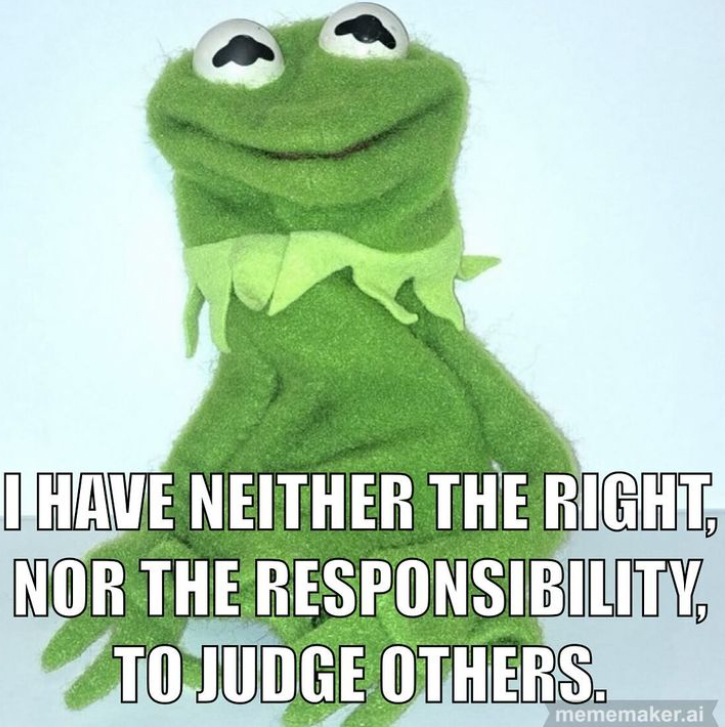 5. Speaking of bosses motivating employees, in humor, the UK’s Daily Mash is not far from the kingdom with their, “Cunning Boss Praises Staff to Trick Them Into Working Harder“:
“My technique is brilliantly simple: telling them they’re doing a great job. They’re still shit, but they’re enthusiastic about being shit and do more of it, leading to a net productivity gain.
“Bill had been off ‘sick’ for three weeks when I emailed him saying he was employee of the month. He rocked up first thing on Monday wearing a tie. He managed to dangle it in his tea, but never mind.
“I also mentioned to Emma that I’d noticed a marked improvement in her public speaking skills, and she immediately volunteered to do the next big sales presentation. It was still painful to watch, but it got done and she didn’t vomit on the floor this time.
“And I told Nikki I could never have launched the brochure without her, even though that’s literally what I did. She now regularly stays at her desk until seven, the cretin.”
Elsewhere in self-care futility humor, Reductress ran “Woman Facing Any Problem Pretty Sure This Can Be Fixed With a Shower.” And after two weeks of watching obscure sports, Australia’s the Shovel wrote an Olympics-themed piece that I found hilarious: “Inspiring! This Olympian Competed Without A Backstory.”
6. Sticking with the Olympics for this next one, Ashley Null, Mbird’s favorite English Reformation theologian, has been a chaplain for the USA Olympic team for decades now. Along the way, he’s written a number of articles (and a short book) on the intersection between Christian faith and athletic competition. This week our friends at Seen and Unseen published one of his essays as a “Letter to the Olympians.” Along with some counter-cultural wisdom on virtuous competition, Null offers some Good News to elite athletes (and the rest of us, too):
But what if things don’t work out as you hoped? God will be there for you and with you in the midst of the pain. As you grieve, look for Jesus.
He will give you the comfort you long for.
He will remind you that his love for you is stronger and will last much longer than your present pain. He will assure you that he still has good things for you.
Ask his help to hold on to this truth. Because when you are hurting, it is so easy to listen to lies. You see, it’s a real danger to view God as your ultimate coach.
The lie says that if you make good spiritual choices then you will be on God’s winning team and blessed with success. But when success doesn’t happen, the lie says it’s because you have made bad choices and don’t deserve to be on the team, at least not until you can prove yourself spiritually good enough again.
In all of your sporting career you’ve probably been taught to only feel good about yourself when you’re winning, that if you lose, you’re nothing. Your coaches may have told you to use the shame of losing to motivate you to success.
Friend, you need to separate your sense of worth, your identity, from your performance. Equating significance and achievement will always leave your self-esteem at the mercy of the natural ups and downs of being a top-level sportsperson. But only love has the power to make humans feel significant, performance never will.
The good news of the gospel is that in God, you have unconditional love, not based on any of your performance. You are valued and loved not because of the talents you have or the way you compete. Your worth and value is seen in the love God proved he had for you when he died for you on the cross.
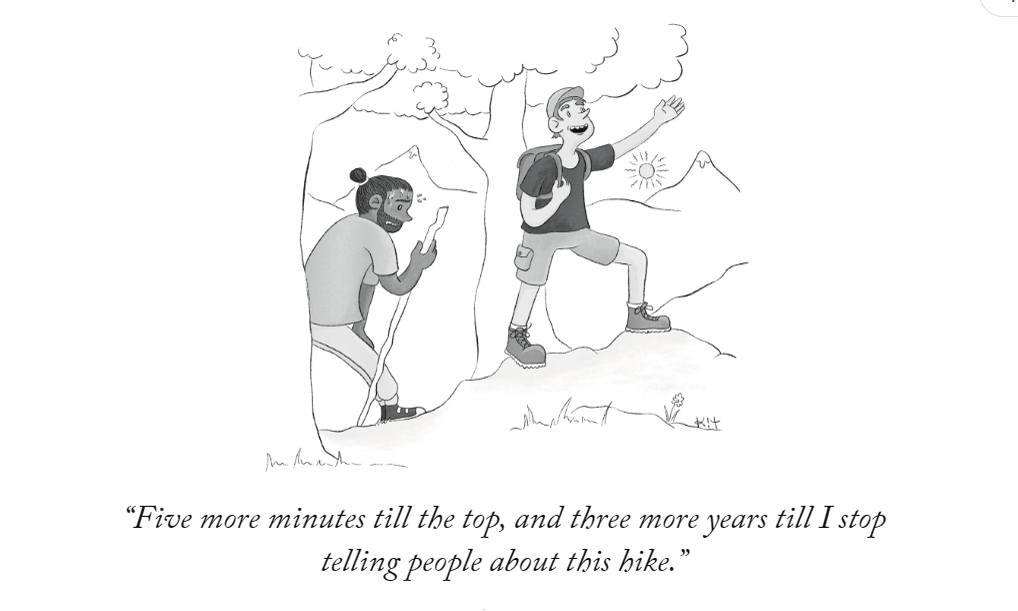
Out of the ten-thousand plus competitors there are only 329 gold medals to be won, so it’s obvious for a chaplain like Null to address athletic failure. But similar difficulties arise for those who win, too. If your worth and identity is wrapped up in success, where do you go when you win? Those who walk off the first-place podium might have achieve a measure of immortality, but even gold tarnishes with age:
7. Moving from the perils of performance — what we achieve or fail at — let’s end with a reflection on where God is amid sufferings we have no control of at all. In her latest Substack article, Nadia Bolz-Weber takes a question from M.S., who writes:
I’m 76 and have been hospitalized for 4 weeks with meningitis. It has been a humbling experience. I’m finding myself wondering why me and if God is with me.
With a heavy dose of pastoral compassion, Nadia teases out the logic of this question to then turn it on its head (emphasis mine):
Friend, it is normal to scan our lives for causal factors when life turns to shit. Christians do it. Buddhists do it. New Age folks do it.
We ask our own version of the same thing: Did I maybe do something to deserve this?
A hidden sin, or an unknown karmic debt.
What in all the power of negative thinking brought this upon me?
“Why me?” is as human a question as any I have heard, but that doesn’t mean it’s helpful.
We tend to quietly ask something similar when bad things happen to other people, (not out loud, of course for that would be horrible of us), like, how much processed foods did the recently diagnosed indulge in? Were they careful, were they prepared, were they being good when the bad thing happened? We MUST know because we must, above all things, assure ourselves that we are safe.
Our sweet little broken-ass human brains look for evidence of blame and deserving like they are our salvation itself.
It’s understandable. We must keep the chaos monster at a safe distance through any incantation or elimination diet or piety available. Because it’s terrifying to allow for the possibility that if it happened to them it could happen to us — and equally terrifying to admit that we do not, in fact, have the power to control the universe. Which brings me back to my sister’s friend, who said the most helpful thing.
“I stopped asking why me,” she told my sister, “and started asking why NOT me?”
M. S., I know you already know this, but I’m going to say it for my own sake. These are not words that ever belong in the mouth of anyone but ourselves.
But for my sister, there was no “fuck cancer” coffee mug, or vapid little “everything happens for a reason” comment, or any other Purpose Driven drivel that did for her what the question, “but why NOT me” did.
Because realizing there was no satisfying answer to why NOT me helped her realize there was also no satisfying answer to why me. And this led her to radical acceptance of what is (not endorsement, mind you, but acceptance).
Now, this answer doesn’t necessarily get at the Big Question of God (Nadia will have Part II where promises to delve into that), but I’ve found that the unknowingness of life and the absence of irrefutable divine causality to be the very means by which God points us backward to what we do know. To use Lutheran terms, the hidden God of providence pushes us to cling to the revealed God who suffered for us. The God who “loved me and gave himself for me” (Gal 2:20). Though the data of our life might appear ambivalent, or our search for karmic justice points toward injustice, in the person of Jesus God immutably revealed his “noncontingent, compassionate alliance” with sinners and sufferers.
Strays:
- The Spirituality of Waiting
- Excited to get my copy of this one: How to Read the Bible in Color.
- What Happened to FOMO?





SO much in this! Every single item. Thank you Todd – I know it’s a ton of work to put together.
Yes, I second that thank you. Also, thanks to all who take the time to write these wonderful pieces on mockingbird. I glean from and am nourished by every new article posted and specifically relish the weekly updates.
One of the best. Thank you, Todd! Have had this on my reading list for some time, and it was a serious devotional moment when I got around to it this morning. Thanks for the grace.