




Forgiveness. To be unburdened by the weight of your failings. To be welcomed back into right standing because your wrongs are no longer counted against you. What emotion does this idea elicit in you?
Undoubtedly you imagine joy and relief as you consider it abstractly. And you are right to do so. Forgiveness is a conduit of new life, a new path out of the dead end of disappointments and betrayals our lives become. There are no new possibilities that do not emerge out of forgiveness. But as soon as you dwell on the shape it would take in your life right now, it’s likely that pain tinges the joy of forgiveness. Because it is no longer abstract. Its particularity stings like a thorn once you reflect on the thing you need forgiveness for. To be forgiven is to be a sinner.
Forgiveness lingers like a phantom in the atmosphere around us all. It haunts our lives. Either you have wronged someone and stand in their debt, or someone has wronged you and there has been no reckoning with that wrong, much less reconciliation.
Karl Barth writes that comfort and joy are of course appropriate responses to the gift of forgiveness, but that we must also be prepared to reckon with “the humility which we so easily forget and lose when we bask in the divine sunshine” (Church Dogmatics IV/2, p. 774). Basking is good, but it is necessary to recall the ground on which we stand when we do so.
It’s too easy, after all, to forget what makes forgiveness possible, to presume it is mechanically certain or even, Lord help us, our due. Most of us would deny this, but it’s in the secret recesses of our hearts that we entertain such ideas. And the heart is deceitful above all things. Consider how, in the moment, we feel that our situation mitigates the awfulness of our sins. But this comfort is one-sided and tends to exclude consideration for others who have also sinned, especially when they sin against us. We sense, rightly, that an imbalance now encumbers our lives and we demand recompense.
Sin has a real impact in the world: it isn’t something to simply “get over,” any more than one simply gets over a gunshot wound or bubonic plague. We and the world are degraded by it; we suffer deterioration and disintegration.
 Forgiveness is a gift. But when we rightly emphasize that it is a free gift we can, if we aren’t careful, give the impression that forgiveness is simply a matter of will, as though it was only a matter of the disposition of the one conferring forgiveness. But there is more, as God is just in offering this costly gift. The demands of justice are satisfied when he forgives sinners. There is nothing arbitrary about it, and he does not ignore the world’s wrongs when he does so.
The gift quality of forgiveness lies in its unexpected decision not to exact the vengeance that it rightly can. The choice of mercy is a forfeiting of this right, an unmerited bestowal of life. To forgive at all is thus to endure a little death. Self-denial is a type of death, as it’s the decision to live with another’s moral failure and its consequences. Death, then, is inescapable, but when we forgive someone, death is subverted: the normal course of death’s operation is redirected to serve life.
The buck has to stop somewhere, though. An end must be made to wrong or else God is an unjust judge, issuing judgment when he feels like it and overlooking sin when he doesn’t. But this isn’t what happens when he forgives. Sin’s heavy toll is paid by Jesus Christ. There is a dreadful weight that is exchanged here. He is, in Barth’s phrase, “the judge judged in our place.” Christ’s death on your behalf isn’t a rhetorical sleight of hand rooted in nothing real: it names the substitutionary aspect of atonement.
Something radical is necessary to overcome the radical estrangement between us and God. The enmity between humankind and God is so pervasive it is the default state of our race for as long as any of us can remember. It is an indicator of how desperately wrong we have gone that this state of hostility and warfare doesn’t tend to frighten us. But it should. It is a remarkable horror that we should be so soul sick and hellbent on defying the One from whom our life and our good comes. And if we try to pretend there is no enmity, we are deceiving ourselves.
You know better than anyone else how badly you want your way, regardless of its cost and consequences. People often ask why God allows this or that awful thing to happen, but they never wonder that when it is their stupidity they want to carry out. Think of the resentment toward God you have felt when you know your desire was contrary to what he had stipulated. That ugliness carries a real weight, a real gravity, that wrenches creatures and their world out of shape.
That deformation can’t be ignored back into shape. Decomposition isn’t reversed by forbearance. At some level we all know this, as all of us have felt the howling, desperate need for satisfaction of a wrong we have suffered. There is a wound that demands recognition and healing, and the wound festers when that does not come.
That distortion and degradation is rectified by Jesus’ deliverance unto death. That death is the prime death in which all the littler deaths we live out in offering forgiveness and in renouncing the death that characterize our lives is nested. If we would live, we must embrace this death. Clawing after life landed us in the predicament that jeopardizes us all; it is the active acceptance of death that mysteriously opens new possibilities.
While some might say, “Jesus didn’t have to die for your sins to be forgiven,” this flatly contradicts the history in which forgiveness becomes possible. However good such a person’s intentions may be, they overlook revelation. God does nothing extraneous; what God does reveals his Godhood and makes actual his relations to us and our world. The death of Christ actually accomplishes something. That death is supremely important, not simply as an example of faithfulness unto death or of his willingness to identify with us, but as the decisive moment in which all that is wretched about us is unleashed upon him.
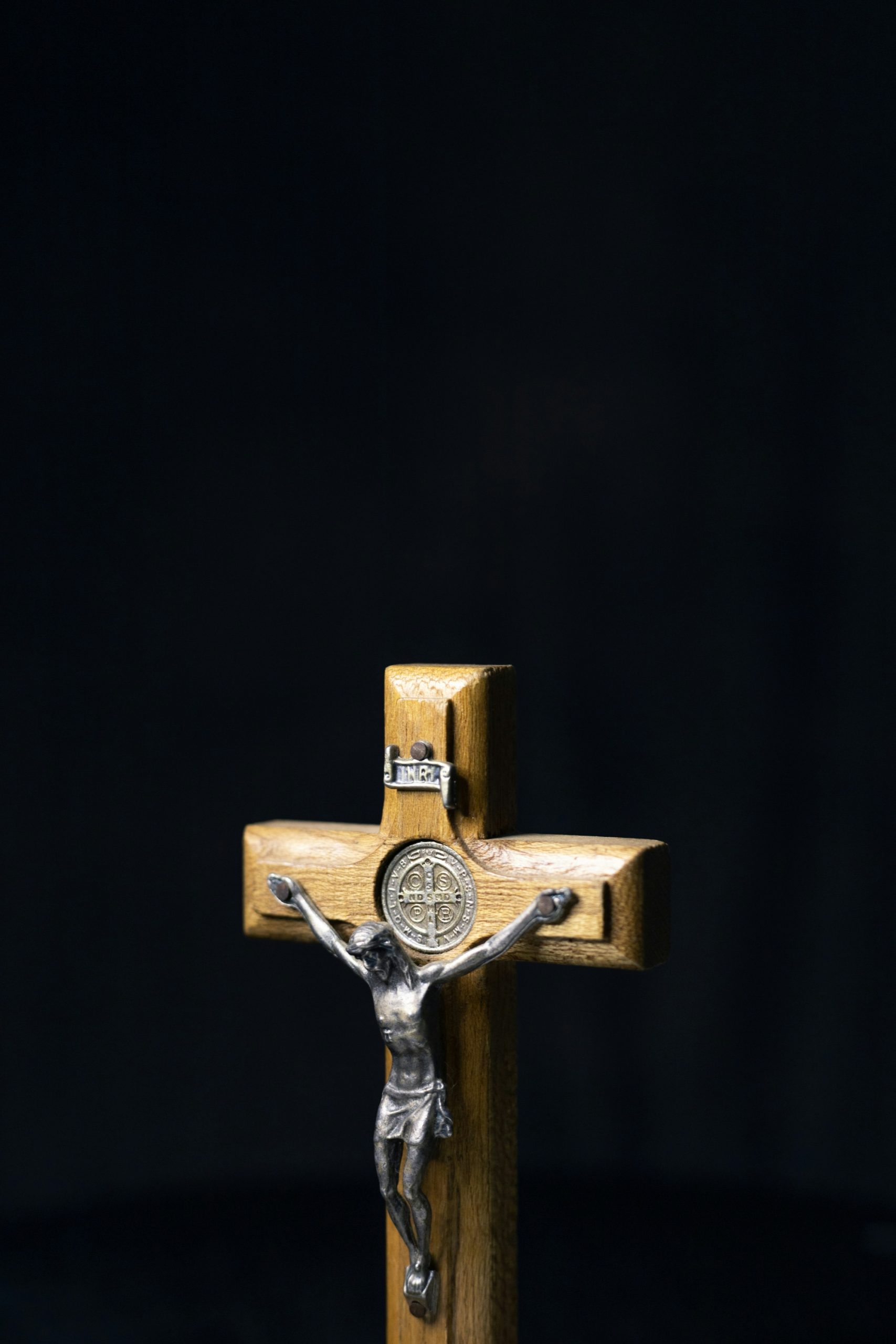
Christ died to redress the wrong that you forgive another for having committed. Christ died to make right what you so heinously and maliciously did wrong. Christ absorbed the excoriating nothingness of our sins so that God could be both just and the justifier of the one who placed their faith in Christ (Rom 3:26). Penal substitution is not the whole of atonement, but without it, there is no atonement and there is no forgiveness. The covering of your sins by love is what the death of Christ is, and “in our place” is an essential aspect of his work in submitting himself to death, or else “for us” means nothing.
Forgiveness exists because sin is answered for; wrong is addressed and rectified. No one gets away with anything because Jesus’ death grounds every death we die in giving and in being given forgiveness. Nothing is swept under the rug: at the cross sin goes to die. It’s just that we do too and in order to rise again with Christ.
Forgiveness can be a frightening prospect when we contemplate the death we undergo in releasing someone from the consequences of what they have inflicted upon us. But it is a death suffused with genuine life: “Unless a grain of wheat falls into the earth and dies, it remains alone; but if it does, it bears much fruit” (Jn 12:24). The cost of forgiveness is horrifying to consider from the standpoint of Christ. But a world without the possibility of forgiveness is just as horrifying to imagine.







Thanks for this, Ian!