Recovery, whether in a body, a community, or a landscape, does not often mean a return to what was. Instead, it is a quiet, often surprising reshaping into something new — combining what remains with the hollow left by what was lost. I learned this from the river — and from the storm that changed it.
When Hurricane Helene swept a wide path of ruin from Florida’s panhandle to the foothills of Virginia last year, it upended lives and tore homes apart. Here in our quiet river valley in the mountains of western North Carolina, we witnessed how the storm’s force inscribed itself on the land, altering creeks and rivers, bottomlands and meadows.
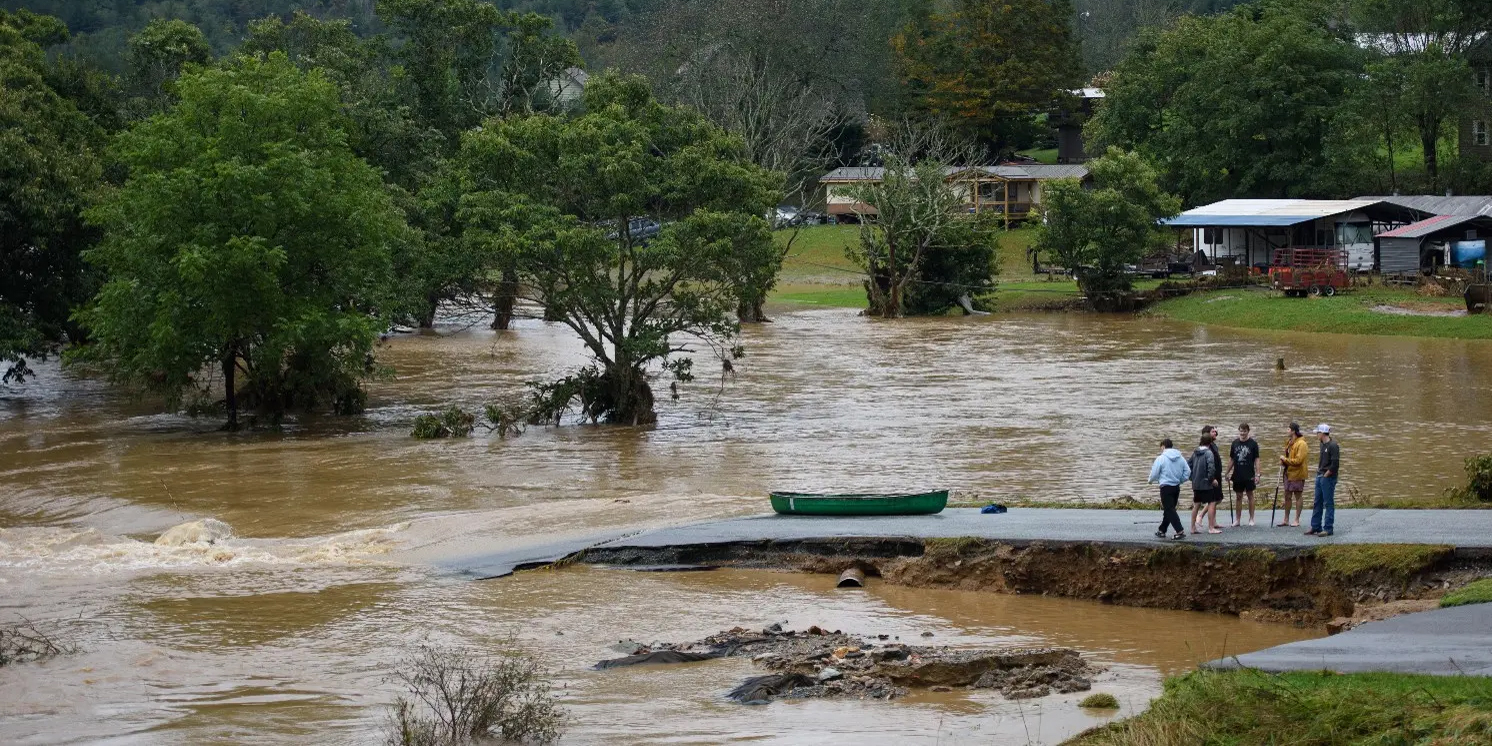
In the dark days after Helene, we walked the south fork of the ironically named New River — one of the world’s oldest — tracing the storm’s brutal path across the newly scarred landscape. As the floodwaters receded just below our home, the full scale of devastation came into view.
We made piles of artifacts the storm had flushed downstream: broken chairs, boots and tires, strands of barbed wire, a plastic comb, a waterlogged computer, and other scattered signs of upstream, pre-storm life. Half a dozen wooden fence posts that had kept deer out of a neighbor’s garden came to rest in our pasture, their concrete footings ripped clean out of the ground. Mounds of stones and small boulders heaved ashore from the riverbed now formed new and lasting features on the land. Nearby, half buried in sand, a missing boat trailer came to rest angled sideways beneath a small grove of pawpaw trees, their storm-pressed branches hanging low as permanent reminders of the powerful currents that pressed them down.
Floodwaters stripped away stands of milkweed, goldenrod, and purple ironweed from the river’s banks, scouring the topsoil and exposing raw, jagged cliffs. Fragile now, the riverbanks collapsed further with hard rains in the weeks after the storm, each fresh swell carrying more sand and soil downstream.
Winter arrived, and the riverbanks, still bearing fresh wounds, gathered wet leaves. Soon, ice storms continued what Helene had begun — limbs snapped, trunks buckled, and whole trees toppled, their loosened root balls torn straight from the earth. In our backyard, a favorite weeping willow stood maimed, half its crown gone, with fragile limbs no match for the crushing weight of ice.
At last, spring returned, its quiet warmth and cautious hope settling over the community and the valley. Reshaped riverbanks slowly dressed themselves in native grasses and wildflowers, binding loose soil and establishing the river’s new edge. Warblers and hummingbirds returned from faraway places to nest, honeybees nosed fresh blossoms, and groundhogs emerged from hibernation looking for food. Flocks of geese reappeared, their cacophonous honks echoing through the valley as they adjusted to a changed terrain and new feeding grounds.
Approaching summer, the cool rains of spring gave way to longer stretches of warm sunlight. The river ran clear again as the mud from disturbed creeks and banks finally settled. Through the clear shallows, we could once again see stones and pebbles along the river bottom, nymphs clinging to them, and crawdads scuttling among the rocks. In deeper waters, smallmouth bass and trout flashed and darted through new patterns of current, weaving among shifted boulders, tangled roots, and driftwood dams. The storm had changed even the river’s hidden depths, carving new shallows beside eroded banks.
At summer’s end, we marked the first anniversary of Helene, remembering and still mourning those who were lost or hurt — and the river valley as we had known it. The land still bears the storm’s imprint — its banks reshaped, its trees splintered, its plants uprooted, its creatures living on within the river’s altered course.
Yet, looking closely, we can find small pockets of beauty amid the storm’s scars. Riverside trees, bent low beneath the river’s surge at the storm’s peak, still put out abundant green leaves, casting a changed — if diminished — shade for life below. A long piece of scrap lumber, its rusty nails protruding, lies wedged in rhododendron roots at the water’s edge, forming a small pool where waterbugs and tiny fish gather. Along the transformed banks, clumps of ironwood and snakeroot continue to take hold, fortifying the topsoil and giving cover for damselflies, beetles, baby wrens, and chipmunks.
In scarps cut into the riverbank, rafts of otters have dug new homes. And tree swallows and chickadees claim tiny cavities in the standing trunks of dead trees, filling them with life again.
This is the river’s hard lesson – and perhaps one for all of life: recovery does not promise a return to what once was, but a remaking of life into something new. The water runs clear again, and life has returned. Yet wounds remain, and scars endure. In time, even those scars may shine with a severe beauty — reminders of what was broken, and of the life that carries on.
The course of recovery holds the ache of what was lost while embracing what remains — even as the future is quietly reshaped into something altogether new.
Aaron McKethan (amckethan@gmail.com) works in health care and teaches at the School of Medicine at Duke University. His family lives in Durham and the mountain town of Todd, both in North Carolina.