




If you are a married, middle-aged person with two preschool children, and if your vocation is an ordained minister in a Christian church, and if you are clinically obese with a history of body-image issues and an undefeated sweet tooth, and if you get a kidney stone at 3 a.m. on a Saturday morning that causes debilitating pain, here are the various observations and heresies that you’ll entertain over the next few days.
Heresy 1: The first heresy you’ll consider is that God is punishing you with this kidney stone. It’s almost cliché to believe our suffering in life must be a punishment from God, and you’ll tell yourself you’re an embarrassing cliché while asking God in prayer what you did wrong. You’ll shift your perspective a bit to the less heretical idea that God uses pain as a megaphone to instigate a life change. You’ll swear off all junk foods, soda pop, and fast food, knowing you’ll probably go back to it the first chance you get once this whole thing clears up.
Heresy 2: Next, you’ll believe you should be stronger about the pain. You’ll feel unexpected guilt as the morphine from the IV makes the pain go away within minutes. You’ll understand exactly why opioids and fentanyl are addictive and how an entire generation of blue-collar workers became addicted to the stuff. You’ll have some sympathy for distant relatives who stash away their unused post-surgery Vicodin and Percocet pills in case someone gets injured and the doctors are stingy. A sense of shame that you weren’t strong enough to fight through the pain sets in, and you pray in fear against your newfound affection for these painkilling drugs.
While you are resting, multiple nurses and doctors will come into the room to check in on you. They will tell you how their kidney stone was the worst pain they’ve ever felt. One nurse will tell you how, when she was pregnant with her second child, she had a kidney stone, and the pain from that kidney stone was worse than the pain of her epidural-free “natural” childbirth. You vow never to tell this anecdote to your wife.
You’ll be embarrassed that the CT scan reveals your kidney stone was only 3mm in size. How could such a tiny calcium buildup cause so much pain?
Heresy 3: You’ll believe church can’t go on without you. After being discharged on Saturday morning, you let your church leaders know about the issue, and tell them there’s a 25% chance you won’t be able to serve on Sunday. You’ll reach out to all your backup clergy contacts to see if they are free, and they are not. You’ll be composing some of these texts and emails soaking in scathing hot water in your bathtub, which brings some relief to the pain. Throughout the day, you’ll tell your leaders that it’s a 50/50 chance you won’t make it, and give instructions for what to do about your absence. By dinner time, it’s now a 75% chance you’ll be laid up on Sunday. You’ll be embarrassed at your early morning optimism, and you’ll pray that the church doesn’t think less of you for having to bow out on the one morning of the week that requires your attendance.
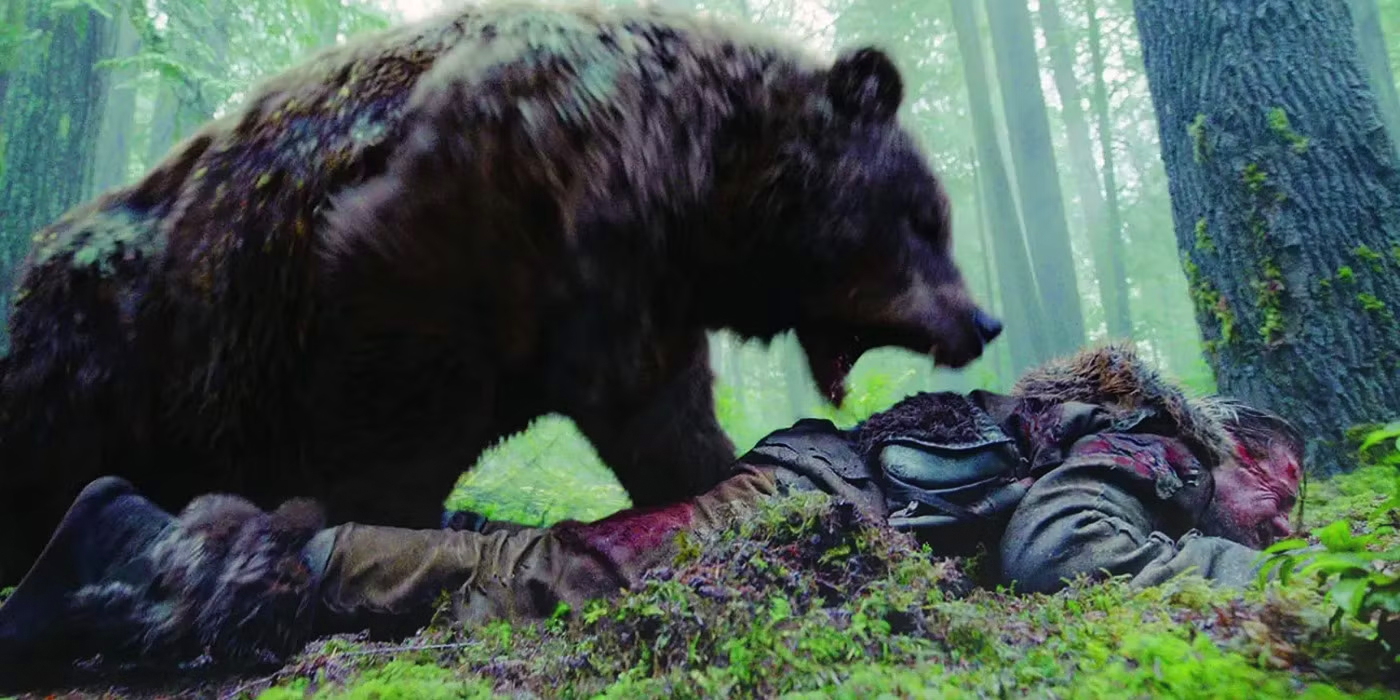
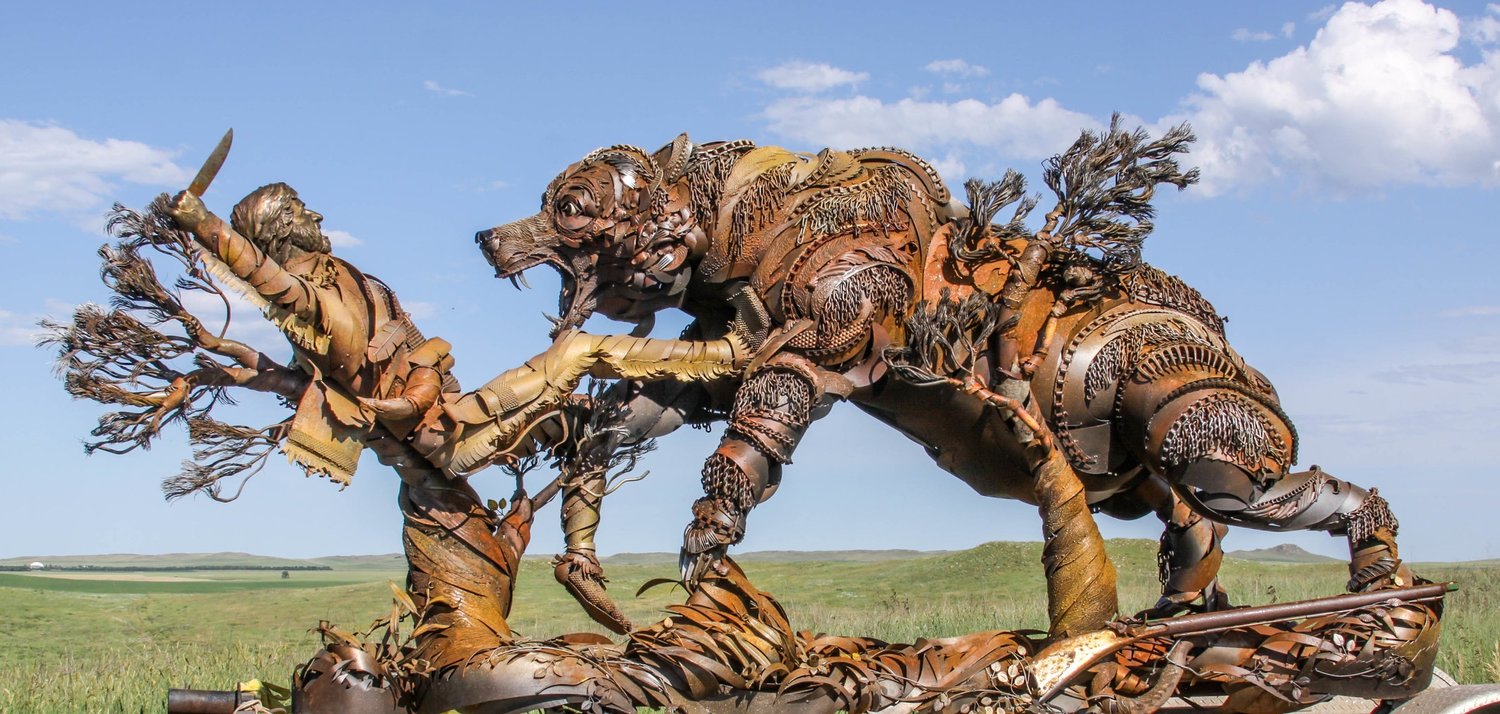
Heresy 4: You’ll forget that God works in weakness, not strength. While resting at home, you listen to a podcast about the American West. You learn about Hugh Glass, the famed fur trapper who was mauled by a grizzly bear in 1823 and left for dead by his travel companions. You’ll hear about how he dragged himself 200 miles in the Yellowstone wilderness to the nearest fort where he recovered, and how it inspired Leonardo DiCaprio’s 2015 film The Revenant. You’ll feel judged by Hugh Glass’ grizzled determination to live. If he can hike 200 miles after being mauled by a grizzly bear, a kidney stone should be nothing by comparison. You’ll later discover that some of the first surgical procedures ever invented by ancient peoples were to help relieve kidney stone pain, and you’ll feel less bad as a result.
The pain returns after the ER’s starter pack of meds runs out. Your small-town pharmacy closed before you could pick up your painkiller prescription, and now you can’t get them until Monday morning. The extra-strength Tylenol isn’t cutting it, and you’re starting to feel pain in your upper left chest too. A brief Google search tells you that heart attacks and kidney stones are linked, and so you make the call to head back to the ER again. Google also turned you on to the relief that heating pads and hot baths can give when you have a kidney stone. You’ll thank God for Google, though you will later discover that you didn’t have a cardiac event.
Heresy 5: You’ll be embarrassed that, in your weakness, you come to rely on your family instead of having them rely on you. Your wife will have thought ahead and called her mother up to help with the kids in case this very scenario happened. She drives you to the ER this time and sits with you throughout the whole process. She hears another nurse share, unprompted, how kidney stones were more painful than her natural childbirth. Your wife jokes that she’s not sure whether to feel solidarity with your pain, or if she feels a little resentment she can no longer hold the title for “most painful life condition” in the household anymore.
The ER admits you on Sunday night so you can see a urologist on Monday morning. You’ll discuss surgical options with the urologist, but the stone will pass into the bladder later that day, lowering the pain exponentially. You’ll be discharged Monday night. Your wife will have picked up the prescription painkillers from your small-town pharmacy with crappy weekend hours. You’re grateful to sleep in your own bed.
You’ll talk to your family on the phone during periods where the stone doesn’t hurt too much. You have told the ER doctors there isn’t a family history of kidney stones, but you’ll learn after you’re discharged that your sister had one a few years back and so did an aunt and some cousins. You’ll wonder what other medical secrets hide in your family tree that haven’t been disclosed.
Heresy 6: You’ll view Jesus’ suffering with envy. Recovering at home, you reflect on chronic pain, a lot. You’ll think about your own father, whose Multiple Sclerosis keeps him in chronic pain, especially when it mixes with his diabetic neuropathy. You’ll consider how the medieval church imagined hell as chronic pain, and you’ll wonder if that has its roots in a premodern world without painkillers. When considering the worst things a human being can endure, an eternal kidney stone in a lake of fire is pretty high on that list. You’ll reflect on the fact that Jesus Christ’s torments began early morning on good Friday with his beatings and flogging. His crucifixion was at noon, and his death was at three in the afternoon. Heretically, you’ll wonder if those in chronic pain had it worse than Jesus. You consider that afflictions of chronic pain are among the most effective evidence against the goodness of God.
The rest of your week will be marked with sleep, exhaustion, hydration, and bathroom trips. You’ll limp to one or two meetings during the week but cancel most of them. You’ll finally feel the stone pass on Friday, and within hours, you’ll feel like yourself again. You’ll thank God that everything has passed. You’ll watch Celebrimbor die in Amazon’s Rings of Power by arrows in his body and a spear in his gut and jokingly think, “Yeah, I know what that feels like.”
You’ll revisit Heresy 3 again next Sunday at church. Recovered from the ailment and back in the pulpit, something like half of your parishioners share their own kidney stone stories with you. One of your more proper elder church ladies tells you about the eight stones she’s had in her lifetime. Being that she’s normally so proper, you’re taken back at the level of anatomical detail she’s sharing. Other church members tell you they’ve had six or seven stones, and they sympathize with your condition. You are less worried that the church thinks less of you for taking a sick-day Sunday.
Restored to your right mind, you’ll review the various heresies you’ve considered from the past week. You’ll do your best to ascribe purpose and meaning to your suffering. You’ll wonder if God orchestrated an affliction to bring you in solidarity with parts of your congregation, whose older bodies are marked by age and their own stories of pain and struggle. Or perhaps God wanted you to have more sympathy for those living in addiction. Maybe it was a wake-up call to start taking care of your body more and work on your diet. You’ll wish God made his purposes more explicit.
Continuing your reflection, you’ll discover that many saints in the past had kidney stones. You’ll read that Martin Luther had them regularly in the last decade of his life, almost dying of a kidney stone in 1537 that kept him from urinating. Many saints in church history had chronic pain and didn’t see it as an excuse to question God’s goodness. You’ll repent of some of your more dramatic thoughts about the anti-apologetic of chronic pain from earlier in the week.
Finally, you’ll reflect on Jesus and his crucifixion. You’ll remember that, in the great trinitarian mystery of Christianity, God himself underwent the pain of the cross. God descended to the dead and wrongly endured the torments of the damned. You’ll reflect on the insight from the book of Hebrews that Jesus was just like us in every way and knows what we’re going through. Looking back, the prevailing emotion is not resentment to God for pain, but gratitude. The gratitude is not for having a kidney stone, but for the confidence that pain isn’t proof of God’s dispassion or distance. Instead, pain is a sign that this world is not what we were made for, and God is working to set things right in the world to come. It’s not a gratitude that the secular world can claim, nor can any religion teach, outside of the crown of thorns and pierced limbs of Jesus.
And when it’s all said and done, you’ll make some diet changes, thank your wife for holding down the fort while you were laid up, and pray that it never happens again.








Darn, I’m envious about the morphine, but the codeine they eventually gave me for my kidney stone was pretty good, and I was feeling no pain by the time I finally passed the thing in a couple of days, in an art museum of all places — while on vacation, staying with friends! Delaying the vacation by a day because I thought I might be having a heart attack at only 53 was pretty embarrassing too. 😉
A year later, im still reflecting on the kidney stone I had. I think you’re on to something about a kidney stone in the lake of fire.