




Then Peter said to Jesus, ‘Lord, it is good for us to be here; if you wish, I will set up three tents here …’ (Mt 17:4)
I don’t like to think of myself as a person who gets caught up in movements of the heart. I’m not tricked like those gullible Christian campers at the end of their “mountaintop experience.” I categorically reject any Wesleyan attempts or acknowledgments of a “warmed heart.” Besides, it’s most likely just increased stomach acid rearing its ugly head after too much pizza, too many libations, overzealous dancing at the EpiscoDisco, and not enough Tums. Mockingbird’s Conference is like any other.
And yet every year, like clockwork, after the last speaker, the last song is played, and everyone begins to rush out of the building to catch flights and Ubers and wander around the city — as the pews empty, it feels as if a great void opens beneath the floor. In a split second, this great chasm forms, endlessly deep and dark, and feels as if it will swallow me, and maybe everything else in the world, whole. Something tangible, palpable, and present suddenly escapes the building like Elvis exiting stage left to avoid a mob.
This is probably an exaggeration and certainly not meant to engender some self-righteousness on the part of the organizers and speakers — we’re all jackwagons and better off remembering that — but Mockingbird is, dare I say it, special. There’s something viscerally, even face-meltingly, real about this annual gathering. It’s embodied, gritty, human — how did David describe it years ago? Oh, right, Mockingbird has the distinct scent of B.O.
At the heart of this ministry is the hard truth that everything, everywhere, and everyone begins from a place of need, of lack, of holes to be filled, wounds to be bound — everything is a cry for help — like John Lennon banging on the keyboard while forgetting the lyrics. Because it always begins from a place of our brokenness — not a disembodied brokenness of others, but of the attendees — the most challenging things in life are assumed and not at all shocking. Our parental issues, the death of our loved one, the failure of our ministry and theology, and the crumbling of marriages, friendships, and expectations. As much as we might think (or others might think) the thing that makes “those Mockingbird folks” unique is a shared hermeneutic, low anthropology, or a soft spot for that curmudgeon Luther, it’s really only our brokenness — named and unnamed, done, and undone. And, of course, the Wounded Savior who meets us in his own wounded and broken body and speaks a word of grace.
This year, I’ve finally been able to name the void I feel at the end of the Conference. It was hard to name before because it seems trivial and assumed retrospectively.
The chasm is grief. “Love with no place to go.”
As I said, an unwanted and unsolicited review of the Mockingbird Conference. Feel free to use this for your next conference ad campaign: “Mockingbird: Where Everyone is Trash, Grief is Universal, & Death is a Prerequisite!” I think it’s catchy.
I couldn’t quite name it before because grief — personal and corporate — is the water that this Conference swims in, to some extent. Sure, we laugh and party, we enjoy our forgiveness and freedom in Christ — but we do those things, as Luther said, “to laugh at the Devil.”
This year I got it — primarily because I needed to: the Mockingbird Conference is different, joyful, and uncompromisingly real because the people who attend have no time for pretense and blame gaming. The wounded have no time for clout chasing. The grieving have no want for platitudes. The dead have no need for grievance.
Because the Conference is awash in wounds, grief, and death; because we are united in our brokenness and the world’s brokenness, we can — as I complained to David Zahl — “go immediately for the jugular.” Nothing will suffice but the Gospel. The saving, gracious, forgiving, helping Good News of Jesus Christ at its cleanest, its purest, its most essential. Brokenness met with love. Sin met with grace. Tears and pain met with laughter. This is how the Gospel works, not because we’re in on some mass-delusion — a church camp-style high. This is what it feels like.
I’d be lying if I told you that this was an enjoyable realization. In years past, I’ve attended the Conference at mixed points in my life — difficult, but with the very real possibility of hope. I hadn’t completely died yet; I was just partially or maybe nearly dead. The wounds were serious and life-threatening, but I was doing okay, maybe I’d pull through after all!
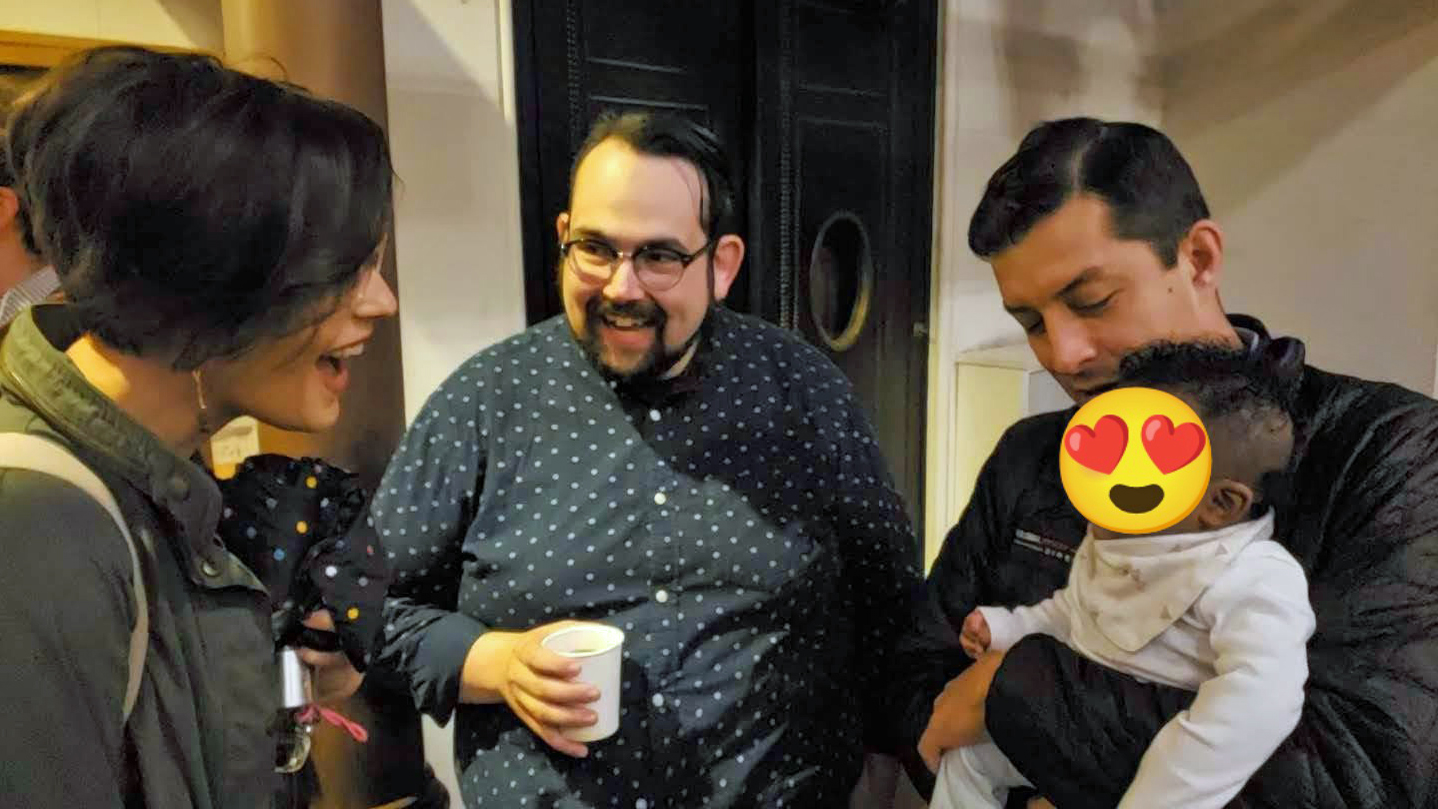
A little over eight months ago my daughter, who’d been with us since she was six days old and was at that time almost 4, was reunified with her biological family. Over the last four years, so much of that hope and the possibility of hope and life and a happy ending involved her. I could laugh at the pain and injury caused by infertility because her little voice was cooing in the back of my first talk. I could shout and curse and tell everyone I hate how much God intervenes in my life, because there she was, all grown-up after COVID, a smiling, beautiful representation of so much pain, and so much loss, but also so much love and oh so much hope.
Over the years attendees and friends gave her nothing but love, laughing at her antics, holding her while she slept, made silly faces, and colored and snuck her snacks during the long talks. You checked in on us. You prayed for us. You didn’t try to say, “God has a plan” or “It’ll be alright.” You said, “I’m so sorry.” “I can’t even imagine.” You said, “We miss her. We still pray for her.”
This year, she wasn’t there. I sat further back than I usually did because even though I didn’t expect it, I could almost hear her little laugh at the magic show. I knew exactly where she would be playing in the isle and making friends with random people. This year, even as the pews were filled with new people, there was a void before we even started. Not just for us, but for you too — for our friends.
This year I had died. No coming back from this one. And my grief co-mingled with everyone else’s and, in that magic that is the Gospel, was met with love and hope, grace and help. My grief and your grief and the grief of the world are met by Christ’s love and offering of himself.
What makes the Mockingbird Conference so special? The collective grief and brokenness of the attendees, obviously.
But that’s not really it, is it? It’s the way the Gospel in preached in that location, preached to that grief, from within that brokenness. It’s a location like few others, and despite how Methodist this might make me sound — it sets this Conference apart, as, and I really hate myself for saying this (really, I do), a forestate of heaven? (Gosh that tacky, but it’s true, and good.)
The grief I felt when leaving previous conferences — and the total heart-rending at the start of this one — is the normal response to leaving “home,” to be sent off into the unknown brokenness that is all around us, with only the promise of a faithful God and the memory of acting and intervention in our lives. “It is good for us to be here” — please don’t make me leave because I don’t know what new horror the next year might bring.
Before leaving the Conference, while saying my goodbyes, I gave David Zahl a big hug and he asked how it was and how we were. “We’re the most broken people you meet stuck between John Lennon and Dolly Parton,” I told him. “But this was good. Exactly what we needed.”
David looked at me, a little misty, and said, “I’m sure it was hard. I’m thinking about her too. I keep remembering our night together.” He smiled from ear to ear, his eyes betraying an impossible amount of love met with overwhelming sadness, and he hugged me, “It was all real. We remember.”
In this foretaste of home, being together — even in our brokenness and grief — is a gift. And after this year, after this realization, I’m terrified of who will and will not be there to see it again. Which pews will remain empty even as they are filled?
After the pews empty at a Mockingbird conference, or after the waiting room clears in an emergency, after you see a loved one for the last time, or turn the lights off on your childhood home, or leave a moment that you didn’t even realize you’d want to last forever — if after those moments you’re left feeling like the void will swallow you whole, please accept this unsolicited review and promise of the Mockingbird Conference and all of those moments where the Gospel preaches life in the midst of death:
It’s all hard. Everything is so broken. We need more help than we can ever get.
But also…
The Gospel is true. Grace is real (even if it’s infuriating.) We’re here with you.
Grief looked in the eyes and met with love. Empty pews in this moment only.
We remember.








This is so beautiful Ben. Thank you.
I looked for your girl Ben—not knowing—and then talked about the loss of my youngest son with a brand new friend. Sigh.
How do I enter this amazing orbit that is Mockingbird?
we drove from canada. it was worth it.
Gosh, Ben, I am so incredibly touched by this. Speechless even. Thank you for writing it.
I’ve been praying and wondering about your little girl ever since listening to your talks online and reading your articles here. I’ve known the pain of sending a daughter back to a birth parent and the grief is indescribable. It’s my dream to attend a Mockingbird conference one day.
As someone who was described as unadoptable and yet eventually that changed and God has provided all of my life , I cannot imagine the pain and loss . Thank you for this . We are not alone when we can share our sorrows and our joys.
Sorrowing with you
Thanks for this beautiful reflection, Ben, and I’m sorry for the specific and awful grief you’ve had to journey through. I know very much the feeling you describe, that emptiness at the end of a gathering, or conference, or vacation weekend with friends. I’ve never had words to describe it before, so thank you for that also: the chasm of grief. Love with nowhere to go. Living alone, as I do, the feeling is always palpable – I’m leaving a space where I have people to love & love me back for a home that is always dark, always empty when I return. I often feel like the void will swallow me up, as you say, so I pray every day for God to help me, to meet me here, to do something to take away the chronic grief of loneliness. I appreciate this reflection because it is a pinprick of light in the darkness.
Great personal and heartfelt reflections on Mockingbird. My wife and I were first time attenders and it was everything you have described.
No apologies necessary regarding a “foretaste of heaven”. Every time water, Word, bread and wine are given over we receive heaven ahead of time!
Dearest Ben,
Your brokenness is palpable.
Rocco and I are praying for your family.
What happened just sucks.
Much love,
Jamie