




We live in a time of mass analytics. We have statistics for our listening habits, our sleep cycles, even for how we spend time with each other. We track workouts and caloric intake and rate books, movies, and restaurants. Everything about our lives has a number for it. Which, for better or worse, makes it all the more obvious when something is lacking.
The benefit to this, of course, is that we can quickly address the identified needs. But we have lost the boundary, in our age of information, between what needs to happen, what should happen, and what we’d like to happen. The requirements for what is “enough” are all vague and arbitrary. Resources that should be aiding us in our physical, spiritual, emotional, and financial well-being are a constant source of anxiety. Plus, we struggle against our own expectations. We have become all the more aware when things don’t go to plan. What could be an opportunity for balance has instead developed into thoughts of “I should be doing more” and “I’m still not where I want to be.”
The trouble is not so much with the statistics as it is with the nature of the world itself. The second law of thermodynamics establishes the concept of entropy: it states that all natural processes trend towards a growing disorder. In other words, there is loss in every action taken: no process is truly reversible. What we’ve discovered is that the universe is hardwired towards chaos — something you and I feel not only in the physics of our lives but also in our relationships with ourselves and others. We miscommunicate, struggle to share our feelings, let the worst parts of us take control. It can feel like the best we can do is only thinning that margin of loss.
This feeling that the rope we’re hanging onto is about to snap is the scarcity mindset in a nutshell. Traditionally, a scarcity mindset is defined by a shift in perspective to focus on short-term needs that disregards any long-term impacts. But it applies in a broader range too; ultimately, it’s a reactionary fear response. When we perceive that there is not enough of a resource for everyone, we begin to look out only for ourselves. It asks us to create comparisons, and those comparisons create divisions.
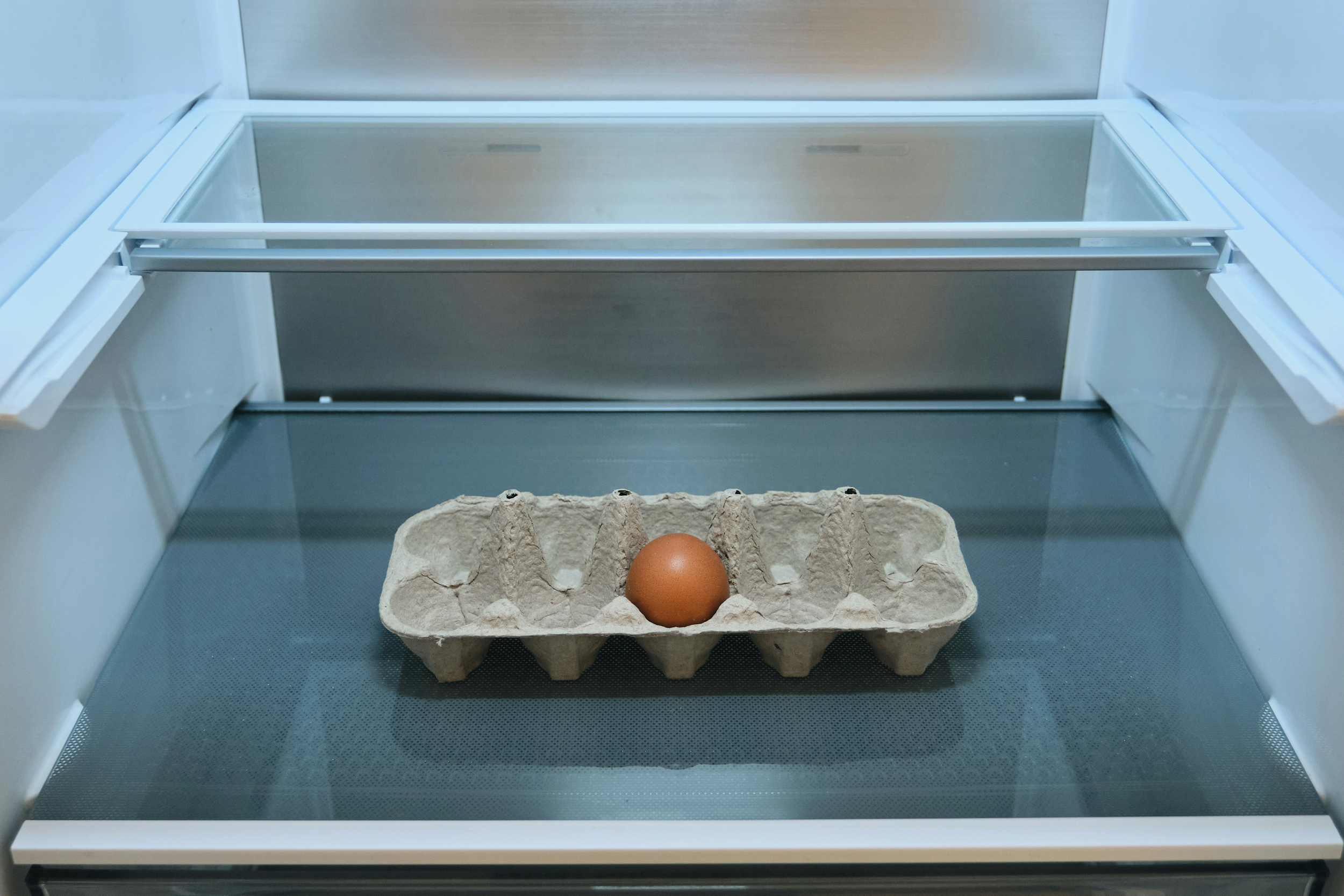
The remedy for a scarcity mindset, then, is to adopt a perspective of abundance — to act out of a belief that there is, in fact, enough to go around. It’s a mindset that fosters cooperation and gratitude rather than fearmongering and suspicion. Which is fantastic, problem solved, done deal … until you can’t make rent, or you get laid off, or you lose a friend to opioid addiction. It’s one thing to shake off the drivel of inconvenience and to learn contentment; it is entirely another to try to stay afloat after having life-changing grief thrust in your face.
I feel as though I watch helplessly while all kinds of crushing defeats compound locally and globally. Injustice abounds in the political and societal structures we have thoughtfully forged. Children are killed by rival nations as a form of oppression. The needs of many are tossed aside for the pleasure of few. Our own country tears itself along ideological lines. There are so many things that I cannot change. But what am I to do when I also cannot accept those things? How do we lead lives believing that there is enough of what we need when those things are clearly and consistently being rent from our hands and from the hands of the ones we love?
In the week before his death, a woman (some accounts name her Mary) came to Jesus while he was dining and poured perfume worth a year’s wages over his head and feet. Some of his disciples, who were eating with him, began to chide the woman for this, considering it an unnecessary act. “Why was the ointment wasted in this way?” They asked. “‘For this ointment could have been sold for more than three hundred denarii and the money given to the poor.’”
It is easy to assume that the disciples (namely, Judas, who agrees to betray Jesus immediately following this encounter) are thinking not of goodwill but of greed. But consider their position: they have been witnessing the most remote depths of human need as a part of their daily lives for years. They have seen the heights of despair. And they have seen Jesus tell people like the rich young ruler that he must give everything away to join their community. To them, it does not seem unreasonable to think that the world is an inequitable place. To them, there’s a need to fight tooth and nail to make every small and noble action as significant as possible.
This is where Jesus meets them (and us). He acknowledges that the world is indeed a brutal and terrifying place of ever-increasing chaos. He tells them that they will always have the poor with them. That there is no end in sight. But, he says, that isn’t the point. The kingdom is one that works by a different standard. The power it holds is only perfected in sacrifice. The life you have been given in him is meant to be spent, used up, laid down.
For each scene of depravity, loss, and grief the disciples saw, there was redemption, healing, and blessing in equal measure. In Galilee, they arrived to a crowd of thousands with no more fish and bread than would feed half their own rank. Yet they left that shore knowing that each person could have eaten no more. They were powerless as Jairus wept over the loss of his daughter. But later that same day, they watched as he clapped and laughed and danced with her, alive again. Like us, they became so focused with what was front and center that they forgot that miracles continued to occur around them.

But this, still, is not the whole story, is it? The 5,000 fed soon grew hungry. Both Jairus and his daughter one day died. The things that were once mended will soon become worn, tattered. Life is a continuum of both growth and decay. Entropy is still a law of the universe. No matter how much effort we can collectively muster, the problems we bear witness to are not going away completely. The poor will always be with us. This is not a war we can win. And there, right there, lies our freedom. We are not meant to be perfect. We are not meant to overcome our weakness, our sufferings, our grief; we are meant to live within them, in spite of them. We must continue to fight, to build castles in the sand knowing that the tide is soon coming. Because the kingdom we seek is one of paradox; in it, abundance resides in each scarce and limited thing.
In her experimentally interactive memoir, Amy Krouse Rosenthal presents the following multiple choice question:
In the alley, there is a bright pink flower poking out through the asphalt.
1. It looks like futility
2. It looks like hope.
For me, the answer is 3. All of the above. In this world where we can know anything, it can feel abundantly clear that we are like that pink flower, biding our time until we are trampled underfoot or scorched by an unforgiving sun. It can feel ridiculous to believe that redemption is coming. But that does not mean it is not worth believing.
The poet John Keats was a man to whom nothing good seemed to happen. Both his father and mother died before he turned 15, and his brother later died of tuberculosis under his care. His inheritance was largely withheld and mismanaged, such that he spent most of his life in poverty. Keats himself died of tuberculosis, his “family disease,” at 25. By then, he had given up a career in medicine to pursue poetry. Keats’ writings were in publication for just four years when he died, and it is estimated that he had sold just 200 copies of any of his works at that time. He was convinced he had left no impact on the world, that he was a complete and utter failure. Yet, he writes this in Book 1 of his poem “Endymion”:
Therefore, on every morrow, are we wreathing
A flowery band to bind us to the earth,
Spite of despondence, of the inhuman dearth
Of noble natures, of the gloomy days,
Of all the unhealthy and o’er-darkened ways
Made for our searching: yes, in spite of all,
Some shape of beauty moves away the pall
From our dark spirits.
Keats knew that the work does not save us from suffering. And yet, his encouragement is to continue doing it: to continue binding ourselves through sacrifice to the earth that cuts, robs, and kills. The scarcity of life does not disappear. But our hope, our redemption, is that some shape of beauty continues to press through. Somehow, miraculously, that can be enough.







