




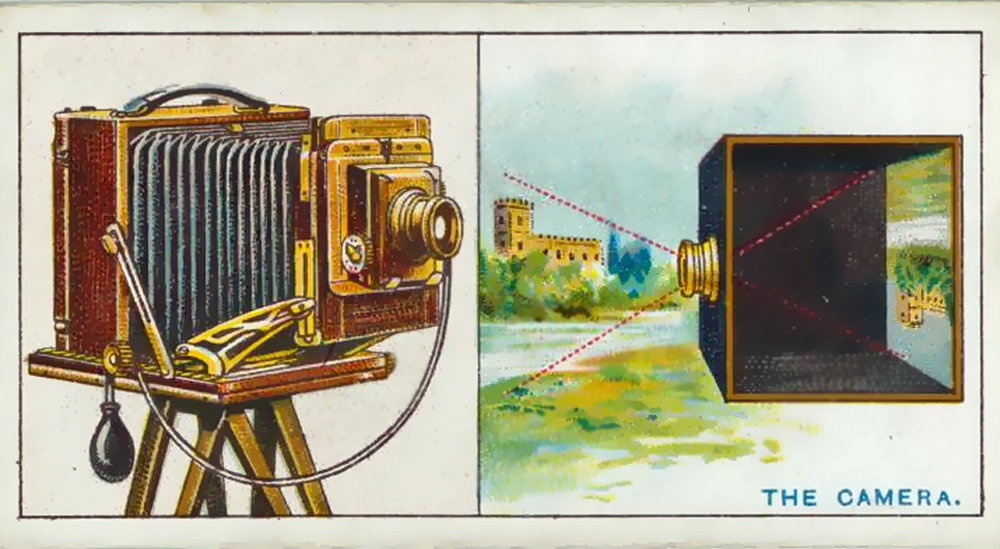
“Sorry,” hollered the red-eyed woman, as she peered out the window over the garage. “I didn’t feel like walking down!” I was too bewildered to ask any questions, but my wide eyes watched as she lowered the knapsack down to me on a makeshift rope strung together from various sweatshirts and pairs of jeans. When the knapsack reached the ground, I dropped in my cash and pulled out the item she had posted on Facebook Marketplace — a vintage Weston WX-7 35mm film camera. I thanked her, then returned to my minivan, where my three sons expressed their own amusement at this spectacle we had witnessed.
My husband has owned a DSLR for many years, and it has always served our family well. Recently, however, a varied succession of Substack Notes persuaded me that we should add an analog film camera to our memory-keeping toolkit. One of these Notes showed a series of side-by-side photographs, each pair featuring the same scene, with one photo having been captured digitally and the other on film. The digital photos, I noticed, were arguably more accurate representations of the scenes they depicted — the colors and clarity all relatively true to objective reality. The pronounced tone curves and contrasting foci of the film photos, however, produced an effect that materialized the sensation of memory: blurred in places, clear in others, with rich colors and bold shapes punching toward the front.
Even as I browsed this stranger’s scanned film photos on the screen of my iPhone, I recalled precious memories of flipping through my family’s envelopes full of drug store photo prints, vicariously reliving the events there pictured. I missed the subtle satisfaction of holding a memory-made-artifact in my hands, and I was readily convinced that I wanted to give my children the same experience.
If my Substack feed is any indication, I am far from the only person who lately feels a wistful pull back toward analog material culture. Against the backdrop of constant fanfare celebrating new innovations in digital technology and artificial intelligence, a chorus of voices now steadily resounds our preference for analog watches, physical books, and vintage cars that are built from mechanical rather than computerized components. But the “analog revival” is nothing new. A decade ago, when Spotify became the new standard for listening to music, all the hipsters flocked back to vinyl. Around the same time, Apple — upon realizing their customers missed the sensation of pressing physical buttons — introduced touchscreen devices that offered haptic feedback.
The technophiles often chalk up the counterculture’s analog preferences to nostalgia: we’re stuck in a romanticized, aesthetic dream of the past. Or perhaps the relative simplicity of mechanical devices compared with digital ones betrays our latent desire to return to childhood, when life overall felt more simple. I won’t argue that these cynics are entirely wrong; I personally wouldn’t mind spending a day back in preschool, watching the Fisher Price record player spin its colorful, plastic discs. But I do believe that there’s more to our longings for analog technology than nostalgia alone, and that these longings reveal something central to what it means to be human.
Digital technology, at its core, is an attempt to outsource and improve upon the functions of the human mind. Our names for these technologies — “computer,” “calculator,” “word processor” — identify the functions they are intended to replicate: They compute, they calculate, and they process words, only more efficiently and more accurately than we do — or at least that’s the goal. Our digital devices promise to store both our individual memories and our collective human knowledge, and as long as the servers are plugged in, they’ll never forget. We can train our devices to solve problems using our systems of logic, and they can make semantic connections between diverse points of data across multiple platforms. Most notably, they now boast algorithms complex enough to imitate generative, human creativity.

If you look at the periodic table of elements, you’ll notice that silicon — the primary building block for digital technology — sits directly below carbon — the primary building block for organic life. Little of my high school chemistry education remains within my recollection, but one thing I do remember is that elements within the same column of the periodic table share many of the same chemical properties, due to the congruence of their valence electrons. Even at a molecular level, in other words, it makes sense that digital technology should be able to mimic the neurological capacities of a living organism.
“Mimic,” however, is our keyword. Silicon will never be carbon, and a digital mind will never be a living mind. Why? Because the digital mind is a creation of a fallen humanity, not of a sovereign and loving God. It can think, but it can’t be inspired, and even as it demonstrates an exaggerated version of our intelligence, so too will it demonstrate an exaggerated version of our apathy. We can teach it to do impressive tricks, but we can’t teach it the virtues than only the Spirit of God can give: wisdom, humility, or love. We can program it to create photorealistic pictures of anything we can imagine; but the imagination will still belong to us.
Unlike digital technology, analog technology augments the functions of the living body but stops short of trying to replicate the living mind. The functional economy of analog devices operates using the same currencies that are used by the human body: particles and waves, heat and cold, actions and reactions of force. As a result, analog devices can act as extensions of the human body, therefore maintaining a sensory quality that feels true to the experience of embodied life. When digital technology translates sensory input into a string of ones and zeroes, then reproduces a pixelated copy of the original, even the most “accurate” reproduction will exclude some of the most visceral sensations of the original embodied experience — the contrasts, the textures, the timbres. A digital photograph might show you what an experience looked like, but a film photograph will show you what it felt like.
People return to analog time and time again, regardless of the digital options available to them, because analog technology allocates all of the mental work driving its operations to the human mind behind the wheel. Will its fruit therefore be more vulnerable to error? Possibly. But it will also more clearly bear the fingerprints of virtue, inspiration, and ingenuity that can only come from the mind of an image-bearer of God. People return to it because it is subservient to the same laws of physics that they are — is limited by the same constraints that they are — thereby granting them opportunity to rejoice that God is God and they are not. They return to it because it doesn’t try to be anything more than a machine; it never suggests it could take the place of a mentor, a teacher, or a friend. They return to it because it augments rather than mimics the embodied experience of human life.
Does all of this mean that analog technology boasts a greater moral standing over digital technology? Certainly not. Morality resides not within an object, but within the human subject who wields it. People can manipulate both analog and digital technologies towards the end of their selfish and sinful desires, but they can also use both in service of the kingdom of Christ. While we are right to question the ethical implications of modern digital technology, we can also celebrate the ways in which this technology can be used in a manner that contributes to the good of God’s creation, his creatures, and his image bearers. It isn’t lost on me that I likely never would have thought to experiment with film photography if not for Substack’s intelligent digital algorithms that predicted I might be so persuaded; nor would I have found my secondhand film camera without Facebook Marketplace. I am writing this and you are reading it largely thanks to digital technology.
But when we feel ourselves spiritually drained after a long stint of digital interactions, wondering momentarily whether an analog life might serve us better, we need not dismiss our sentiments as Luddite nostalgia. Instead, we can recognize these moments as opportunities to rejoice that redemptive history is a gift intended for humans, not machines, to enjoy, and that the power of God’s Spirit works primarily through dynamic, human — not sterile, computerized — channels. We’re welcome to have some fun and try to do some good with the technology at our disposal, but technology was never meant to save us. A sovereign God holds the reigns, and he loves us very much.
Perhaps a day is coming soon when I will be able to order a vintage film camera on my phone, and a series of digital codes will instruct a robot several states away to load the product onto a drone destined for my doorstep — no human intervention needed. But I, for one, would any day prefer to watch a tired, possibly intoxicated, human woman devise a bizarre contraption with which to lower my purchase to me through a second-story window. Perhaps it was less efficient, but at least it was a story.








This article is great and gives a point to why I have been nostalgic for an older time. I love digital technology. But I miss analog technology for a lot of reasons.