




A few weeks ago, Arthur Brooks gave a speech commending what he believes to be “the most countercultural teaching in the history of humanity: to love our enemies.” In this time of polarization and political violence, to call love of enemies “countercultural” feels like an understatement.
A large part of what makes loving one’s enemies seem impossible, not to mention foolish and absurd, is what Brooks calls “motive attribution asymmetry.” Stay with me — I know that sounds like jargon gone mad. Here’s Brooks: “Motive attribution asymmetry is the idea that implacable hostility between people springs from both sides believing, incorrectly, that they are driven by love, and their opponents by hate.” Brooks goes on:
This idea explains civil wars. It explains permanent conflicts among nations. It explains divorces. And evidence for it is everywhere: in the Israeli-Palestinian conflict, the Rwandan genocide, the Yugoslav Wars — and in America. Motive attribution asymmetry perfectly described, even back in 2014, the relationship today between political conservatives and progressives: I love this country, but you hate everything this nation stands for.
Then throw into the mix the internet, social media, and algorithms. Algorithms, as you know, identify the X that makes you go bonkers with fear and outrage and then give you X squared, because like any addiction, it felt so good … that is, until it didn’t. At which point you needed more.
On the perils of the algorithmic trap, Nadia Bolz-Weber recently wrote,
I keep wondering where the curiosity went that we used to have about each other’s views and opinions. Well, the algorithms ate it. One reason it’s hard to lift our heads out of the ideological sand is in part, because it feels good to think the worst of others and the best of ourselves.
So, everything and everyone is divided into one of the two sides. We attribute love and goodness to our side and unmitigated hate to the other one. And it all goes down, sorcerer’s apprentice-like, with out-of-control (at least out of our control) algorithms dancing us to their crazed tunes. No wonder NBZ points us toward AA’s Step One: “We admitted we were powerless over our algorithms, and our lives had become unmanageable.”
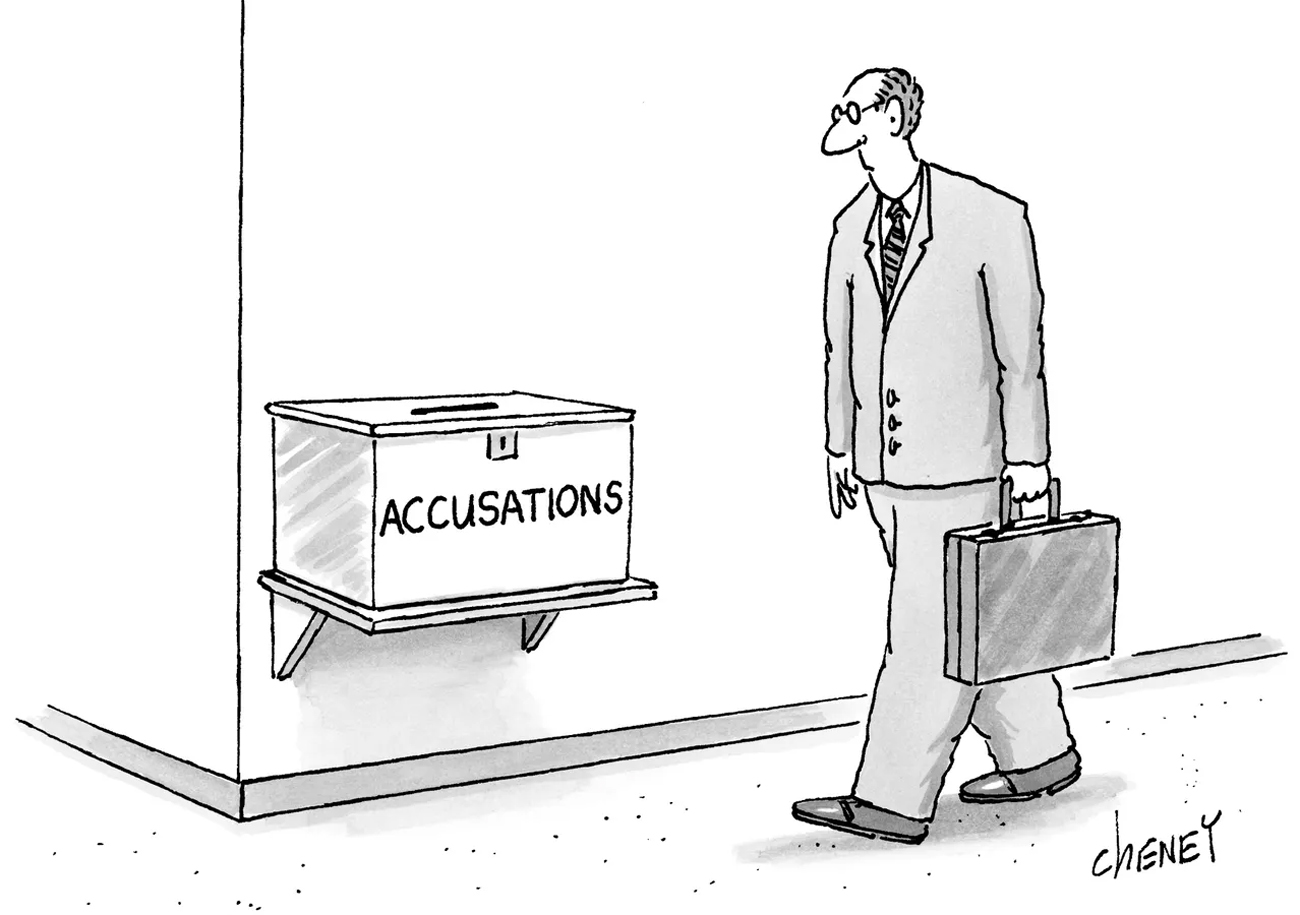
But wait, if we are so powerless, how in the heck are we supposed to manage “loving our enemies?” We aren’t. At least we aren’t going to accomplish that by just trying harder or by trying to be super loving all on our own. Loving one’s enemies is the work of God in us. We love because he loved us first, even when, even as we were/are God’s enemies.
Which is the gospel monkey wrench in the works of motive attribution asymmetry and algorithmic self-confirmation. We are all on the wrong side, each of us an enemy of the God who loves his enemies. “Me, an enemy of God?” I know that’s hard to hear, really just awful. We are not the first. “Not I,” said Peter, “I will never betray you.”
But Bolz-Weber is right. It feels so good (way, way better) to think the worst of others and the best of ourselves. And, all too often, that is exactly what churches, preaching a false gospel of salvation by our superior enlightenment and virtuous behavior, give to people.
But no! “While we were still weak,” writes the Apostle Paul (who would know), “at the right time Christ died for the ungodly. Indeed, rarely will anyone die for a righteous person — though perhaps for a good person someone might actually dare to die. But God proves his love for us in that while we were still sinners Christ died for us” (Rom 5:6–8.)
Note: “while we were still sinners” — in other words, at odds with God, enemies of God. Just then, in the moments when we encounter the darkest truth of our lives, when we are most desperate and without hope, God intercedes and acts on our behalf to change, well, everything.
In trying to make sense of the most radical, transgressive teaching ever, Brooks reminds us of MLK Jr.’s distinction between liking and loving. “Like,” King said, “is an affectionate emotion. It’s conditional on action. Love, on the other hand, is ‘redemptive.’ And only when we love our enemies can we redeem them — and ourselves. Liking is sentimental. Loving is a decision — a commitment.”
A commitment born of having experienced God’s redemptive love for us while we were yet sinners. There it is, the Word of God that cancels the curse and stills the maniacal song of the sorcerer’s apprentice. There it is, the grace of God that makes the impossible possible, our redemptive love of our enemies. I can’t do this. You can’t do this either. But God working in us “can accomplish far more than all we can ask or imagine” (Eph 3:20). Because as impossible as it might seem, it’s more important than ever.