




Is there anything off-limits in the realm of comedy? Can a person ever tell a joke about cancer or Adolf Hitler and successfully pull it off? While many of us would list several topics that should be considered prohibited, a comedian would likely argue otherwise. Joan Rivers, for instance, once admitted she started thinking about 9/11 jokes as she was walking uptown in New York City the morning of September 11, 2001. For the humorist, nothing is too sacred for a laugh. Everything, especially the tragic, is comedic material.
In a recent New York Times interview, Marlon Wayans spoke of how his new standup special (which airs June 4 on Amazon Prime) is centered around the death of his parents and other loved ones. “I lost 58 people that I loved in a matter of three years. It felt biblical,” he says. Such loss would be enough for even the cheeriest soul to be beset by grief, but Wayans talks about his grief like it’s fodder for his standup act. He finds humor in the sadness as if he has been given a spiritual gift. Even at his cousin’s funeral, Wayans’ family could not pass up the opportunity to crack a joke. “We’re crazy people,” he says. “The worst thing happens and the first thing we’d think is ‘What’s funny about it?’” And yet, his use of comedy seems less like a defense mechanism and more of a mode of redemption.
Humor is used for a variety of reasons — as a distraction, as a weapon, as a way to cope — but it is also an instrument of hope. The famous Mark Twain quote, “Comedy is tragedy plus time” is enough to show that humor is hardly mere escapism. Comedy needs tragedy. Its very power is born out of recognizing how tragic life is. At its best, comedy does not mock or make light of tragedy, but helps rescue it from the clutches of despair. Wayans speaks of comedy like a refiner’s fire:
When you talk about real-life pain, like parents passing, and you can get through that set and you can still be irreverent, edgy, crazy, silly, thought-provoking and vulnerable, I think that’s growth. I miss my parents dearly, but I’m a different human with my parents gone than I was when they were here … I understand the quality of life. I don’t look at my phone as much. I walk. I pray more.
The full power of comedy is made known by testing its limits. If we never turn to it when in distress, then what purpose does it actually serve? Humor only has real, substantive value when it is able to face the darker realities of life. Countless studies have shown that laughter is an effective way to vent one’s anxiety or stress. After all, it is not the healthy who need a doctor, but the sick. Comedy is not only the sweetener that helps the medicine go down, but the medicine itself.
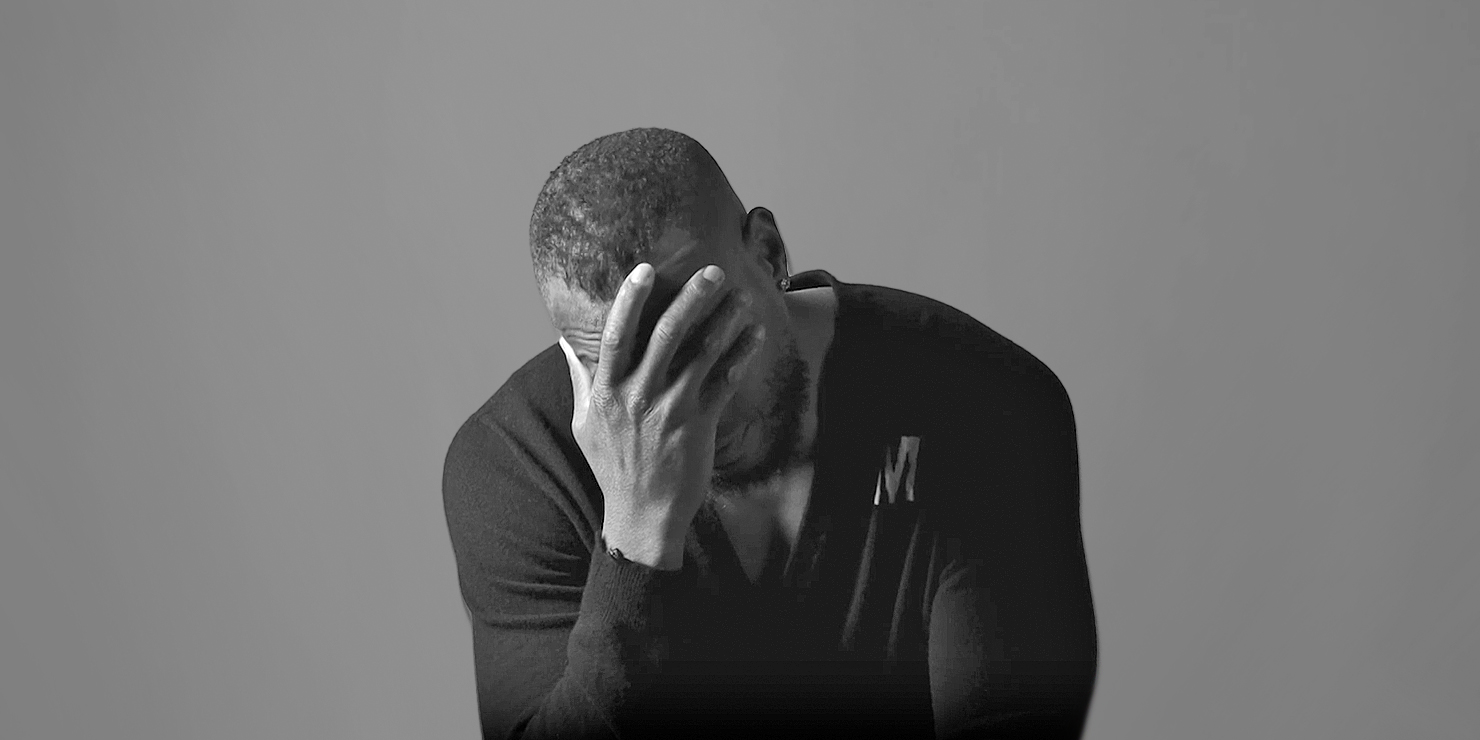
Wayans’ understanding of comedy is consistent with his contemporaries. One of Tina Fey’s comedic rules is that “everything that has ever happened will eventually be funny.” That rule can be a hard one to live by, especially for someone in the midst of grief and suffering — timing, of course, is everything — but Fey hits on something true. She is not arguing for mere nihilism or that life is meaningless and that it is better to laugh to keep from crying. The key word Fey uses is “eventually.” In other words, even the remote possibility of laughing someday about one’s current situation is a spark of hope. While sorrow may last for the night, a good joke helps remind us of the promise that joy comes in the morning.
The theological parallels between comedy and theology are striking. To make sense of why we ever laugh in the first place, the behavioral scientist Peter McGraw developed the Benign Violation Theory. Humor, he argues, appears when there is a violation to normal life, but the violation is not a legitimate threat to our well-being. Consider it the science of slapstick. Imagine someone falling down a flight of stairs, arms waving and eyes protruding, only to reach the bottom somehow unscathed. The event is a clear violation to the normal act of walking downstairs, but the violation itself is ultimately harmless. The proper response to such an ordeal, of course, is to laugh.
How can we, like Marlon Wayans, laugh in the face of death? Because it is a threat that has become benign. Christianity proclaims the real reason why everything that has ever happened will be funny: the resurrection. The risen Christ is the reason why all our tears will one day be wiped away and why, even at the grave, we may make our song, Alleluia, Alleluia, Alleluia. Likewise, we can laugh at ourselves — our sin, our fears, our failures — because our sin no longer threatens our standing with God. It is a violation that, through Christ, has been made benign.
Wayans does not shy away from the Christian element of his comedy. He explicitly speaks of humor like it is a divine instrument. When asked if he remembers the last thing God said to him, Wayans replied with this:
My God speaks to me every day. He’s in everything I do, even in my jokes, even in the darkness. God gave me a gift, which is to stay joyful through dark things, and I’m going to give that gift as much as I can. In the worst moments, I was able to try and find a smile and hold my hand up through the rubble and go, “Hey, guys, take this one with you.”
Wayans is wise to speak of humor as a gift. After all, it is not something that can be commanded out of people. Nothing is worse than the sound of forced laughter. Much like the nature of grace, comedy does not impose, but persuades. It is not something that can be harnessed and controlled; instead, it comes and goes as the Spirit. Should one ever desperately hope for a laugh, one must simply wait on God’s comedic timing.
We may set up barriers to protect what we think is too sacred to make fun of, but nothing is off-limits to God. Being the light of the world, he is able to make light of the darkest of times. Much to our surprise (and much to our horror), everything that has ever happened will be funny. In due time, everything the light touches will be completely redeemed.








This was an insightful piece. What comes to mind is Paul’s refrain in 1 Corinthians 15 in which he mocks the sting of death. Pete Davidson shared similar sentiments in his opening monologue when he hosted SNL: “sometimes comedy is the only way forward…” For the record, Marlon is the least funny member of the Wayans family…but hey, I guess even “the least” can find grace…and impart it others…just ask St Paul.
[…] written substantially on the site on the value of comedy over the years, but Sam Bush’s brilliant essay from earlier this month may take the […]