




Happy second week of January! How are the ole resolutions coming along? Still not drinking alcohol? Nice. Keeping phones out of the bedroom? Good work! Feel like you will be one of the 10% of people who can keep it going for the long haul? Well, if there’s a smidge of doubt in your mind, I have some advice. Break your New Year’s resolution immediately. Don’t wait for your willpower to run out in February, just do it right now.
Allow me to explain. In a recent article for the Atlantic, clinical psychologist Richard Friedman puts forward a theory known as paradoxical intent. Rather than combat your struggle head on, try going in a counterintuitive direction. The idea arose from experimenting with insomnia (apparently, those who have trouble sleeping are more likely to fall asleep by focusing all of their efforts on staying awake), and Friedman argues that paradoxical intent applies elsewhere. Want to spend more time outside? First block out a three-hour period to browse Instagram. Ever wanted to want to floss? Try not brushing your teeth for three days. Want to stop wasting money? Buy a fedora and allow the remorse to immediately sink in. “The specific prescription matters less,” Friedman contends, “than your commitment to temporarily, but wholeheartedly, working against your best interest.” It’s an interesting idea, to say the least.
But I know what you’re thinking: “I’m not actually going to do those things.” And I would argue that you’re right. Friedman’s suggestion invites a kind of antinomianism, the idea that the moral commands of the law are null and void. The truth of the matter is that we do not choose sin as much as we are bound by it. Our vices cannot be conquered by getting them “out of our system.” Live long enough, and it will become clear that your system is hardwired to feed off of vices. Should you invite your temptations inside, it’s not long until they’re sprawled across the couch watching the fifth season of Stranger Things and living there rent free. Why would vices “get out of your system” when it’s a perfectly fine system in which to settle down? And your temptations don’t just linger; they grow. They empty out the fridge. They empty out you. Anger begets anger, lust begets lust, envy begets envy. Sin is so insatiable that it will feed off its host like a parasitic wasp until there is nothing left. So, no. You’re not going to buy a fedora. And I respect that.
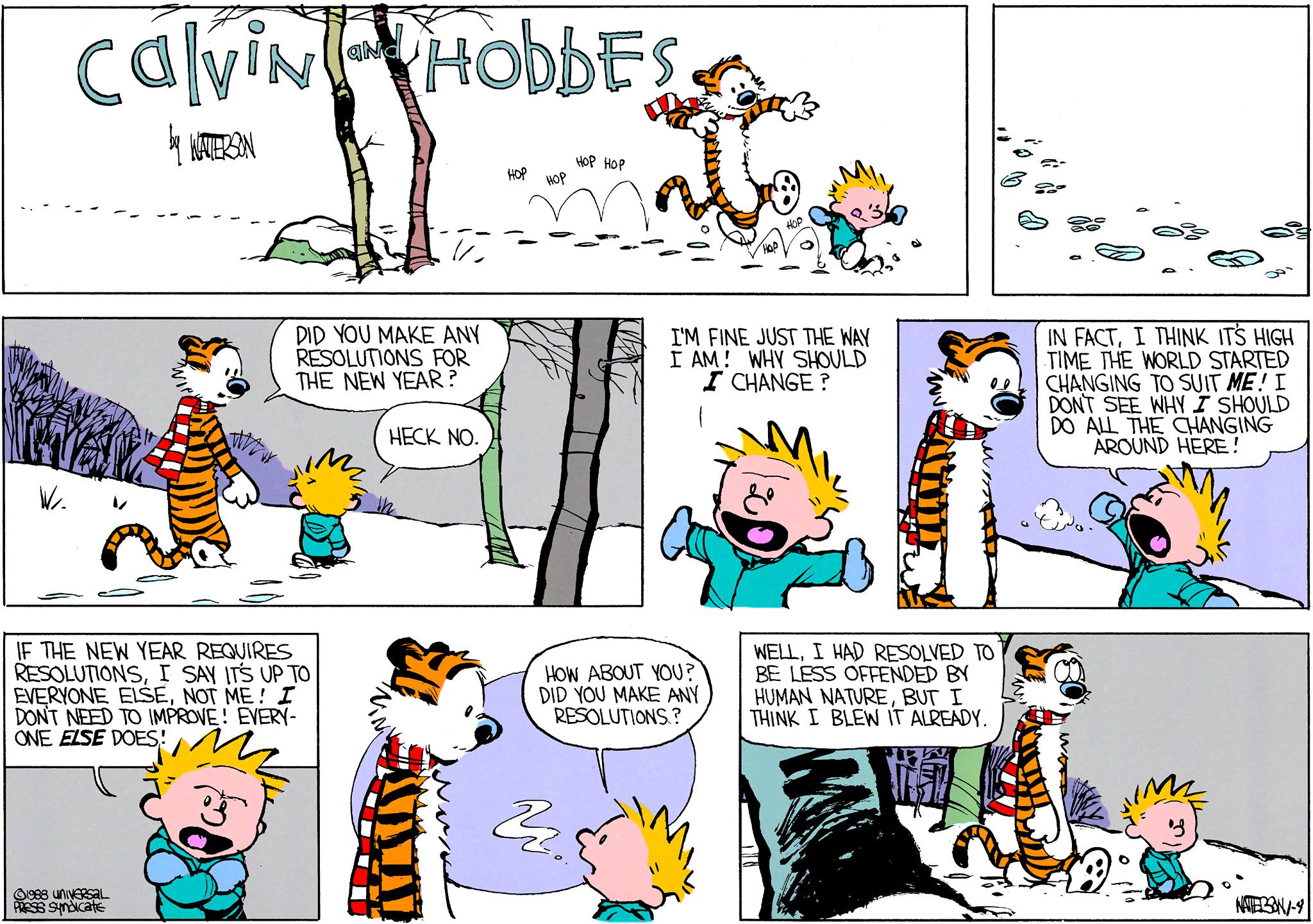
But there’s still something to Friedman’s argument. He’s taking a hard look at our Sisyphean New Year’s tendencies. Every year, it’s the same. Our overindulgence of December is followed by our overcorrection of January and, by the end of February, we’re overspent. Plan A never works any better than it did last year or the year before. The trouble with our annual about-face is that it runs on willpower, a marvelous force whenever its wind is at your back, but a nonrenewable energy nonetheless. Once willpower is gone, it’s gone for good.
Moreover, our obsession with tackling our vices head-on is not only futile but detrimental. For anxious do-gooders, “fixating on a goal can initiate a self-defeating cycle of avoidance,” he writes. It is an interesting take on the law increasing the trespass (Rom. 5). Friedman goes on to suggest that paradoxical intent is a way of lowering the stakes:
Some studies suggest that paradoxical intent works in clinical settings in part because it decreases performance pressure, especially among patients who are prone to anxiety. Most people are distressed by the condition or habit they’re seeking treatment for, so they fear that addressing it less than perfectly will result in failure and make them miserable. But when you intentionally seek the failure you fear, you learn pretty fast that nothing catastrophic happens (usually). But perhaps most valuable of all, paradoxical intent has an absurd, even humorous quality that can jolt you out of an anxiety-induced impasse.
Friedman is not taking aim at the major demons of addiction, shame and mental illness, but the smaller, peskier ones. The ones that whisper to us that if we take one false step we’re done for. He is advocating for those of us who are so hell-bent on perfection and so afraid of failure that the best thing for us to do is to fail. As soon as possible. In a sense, by breaking your resolution, you are breaking free from the grip of fear that your sins have disqualified you from the love of God. Perhaps then, we might be less afraid.
Martin Luther famously told Philip Melanchthon, “Be a sinner and sin boldly, but believe and rejoice in Christ even more boldly.” It was not a challenge to defeat one’s sin but a challenge to confess it fully. While our sins are stronger than us, God’s love is far stronger than our sin. Sins tend to shrivel up when the light hits them. They become dwarfed in the presence of God’s redeeming grace. To sin boldly, therefore, is to not live in fear. It is to take seriously the endless love of God. You broke your resolution? C’est la vie! Your broken promises, however, do not negate God’s eternal promise. Through the blood of Christ, every broken resolution has already been mended and redeemed. All that is left in the aftermath is the freedom to live. Like Steinbeck’s most famous line in East of Eden, now that you don’t have to be perfect, you can be good.
So sin boldly, my friends. Keep the resolutions as long as you can if you must, but all the better if and when you break them. This new year, the sooner you come to the end of yourself, the sooner a new creation in Christ may begin in you.








Amen!
My favorite line: “Should you invite our temptations inside, it’s not long until they’re sprawled across the couch watching the fifth season of Stranger Things and living there rent free. Why would vices “get out of your system” when it’s a perfectly fine system in which to settle down?” This is so well written and on the nose! Thank you Sam. Do you have any book recommendations related to this topic?
Thanks Emily! Highly recommend Fully Alive by Elizabeth Oldfield!