




The Christmas season is an unusual time, a time of endings and beginnings both meeting in a day of profound significance for the cosmos as a whole. And yet, when it occurred, it was just another day in the imperial Roman attempt to capture time. Christmas Day is only rightly recognized retroactively.
This is so with many things on the scale of our lives, as well. Much later do we recognize how important that phrase our friend said to us really was, or that dinner we found ourselves at or the party we hesitantly attended — only to later recognize it was a new beginning.
We are constantly caught up within periodizations of time of our and others’ devising. Church calendar time begins afresh ahead of the world’s calendar reset, and we are always swept along in the time of different ambitions, of work, of recovery, and countless other agendas. The strands of these timelines are knotted together such that we are constantly swimming within the past, present, and future. We long for moments from the past or we flee them, eager to arrive at the future that always recedes as we approach it. Now may not be then, but then is never over.
I feel this temporal tug acutely. I have a memory that is both a blessing and a curse. I recall significant things so vividly it’s like I’m there in this moment I’m recalling all over again. When it’s a good memory, it’s fantastic, but when it’s bad, man … it really dampens the present, not just for me, but for people around me as I’m overcome by situations and sensations I would prefer to banish forever.
And somewhere in-between these two are good things that hurt to remember. I am prone to hoarding such memories, and too often I have reminisced about the things I have cherished that are no more to the detriment of the present. Unfortunately, when I do this, the good things I venerate in memory become barricades within which I attempt to halt the inexorable displacement of the present from that time. It’s like I will not allow for any day to be anything but those days. I fear their loss and in that fear accept being frozen in the inertia of memory as a consolation prize.
I think it’s safe to say I especially feel this during Advent and Christmastime. It’s already a season of sentimentality and hearkening to the past and I am captured every single time. What I recollect so vividly and so effortlessly is my many misadventures in Chicago with Salvation Army friends: freezing cold neighborhood outreach (always in my shorts, because I was that guy); community dodgeball nights with kids who often seemed not to understand what “No head shots!” means; the heartbreaking beauty of street lights reflected in the snow stained blacktop, the panoply of colors swirling brilliantly in the sea of melted flakes as Dave Shay, Mike Steinsland, Justin Rose, and I drove Corps vans throughout the city collecting kettles and giving folks rides to shelters; hardcore and math rock shows they organized at the different Corps their parents were in charge of; picking up friends from my own personal Hogwarts, North Park University, the locus of my escapist fantasies, where I hoped to study with cool Christians and pretend all the sadness of Wisconsin was a galaxy away. (Which, alas, never rose beyond that status as a fantasy.)
So many different kinds of stellar, all of them revolving around the hub of the city. Every shard of falling snow since then is imprinted with the grooves of a thousand times a thousand picture-perfect memories, of friendship and the creative, explosive energy of youth, interwoven with the breakneck activity of the season, made all the more poignant by the melancholy that intersected with how I would have to go back home each time, where there was activity, to be sure, but not of a life-giving sort.
The insanity of the city was always an unstoppable countermeasure for the soul-blunting narcolepsy of home. These were friends who demonstrated an alternative to the languid emptiness of “real life,” who showed me what following Jesus looked like beyond superficial law-keeping, with cultural and artistic savvy, and without imperious condescension to those who did not yet believe. My time with them is still inscribed within how I try to bear witness to the gospel today.
Fast forward a few years from there and the thing I associate most with Christmas (and miss most) is how my friend Henry Cook and I used to take the youth group of the church we belonged to then to Chicago in mid-December. We would always take the L into the city, reserve the basement dining room at the same pizza joint, go to Millennium Park and photobomb people at the Bean, then walk down Michigan Avenue and shop at Water Tower Place.
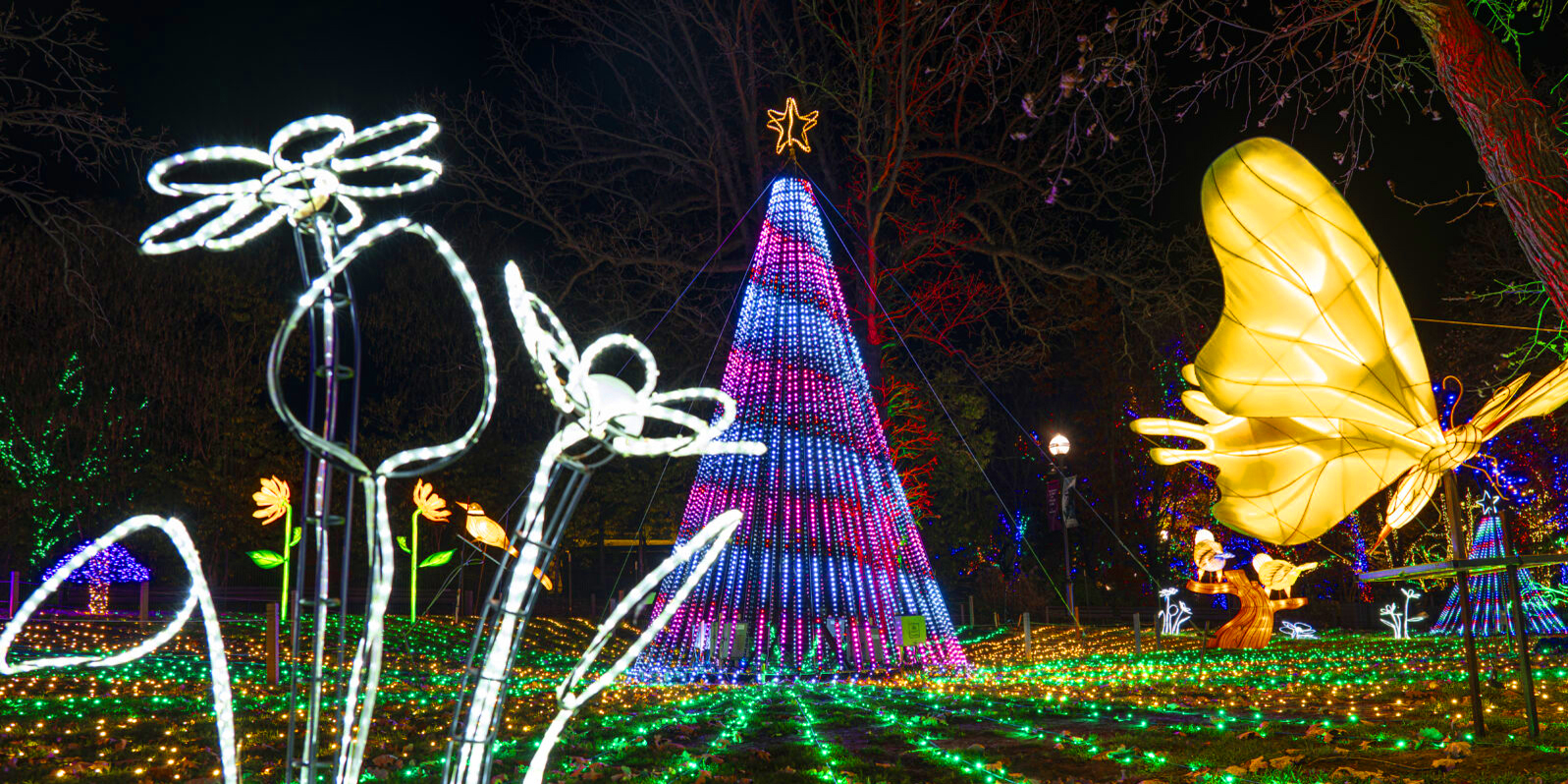
But what I particularly remember is the Christmas lights at Lincoln Park Zoo. It was always magnificent; it felt cinematic, walking along the shore of Lake Michigan to the zoo and arriving at such a dazzling display, every acre bedecked with lights, ice sculptures, and other decorations. It was always one of the highlights of my year, and always made the nonsense of the rest of the year feel like it was worth it to get there.
But that time is past. Some of those kids are married now, starting families of their own, elsewhere in the US. Its deposit is so palpably present in my heart and mind, casting its glimmers upon and beautifying my present, but the era of its annual expectation is definitively closed.
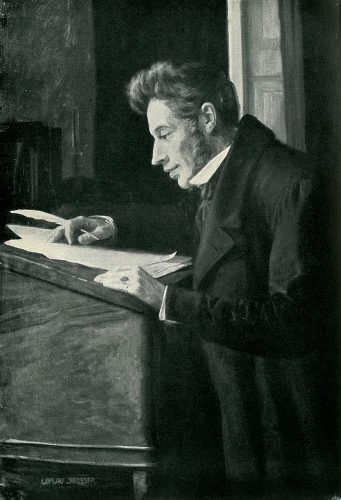
Sören Kierkegaard said that the difference between recollection and repetition is that both are the same movement but that recollection is repeated backwards while repetition is recollected forwards. In his view, my pained recollections are just that: recollection. One of the characters in Kierkegaard’s Repetition revisits a hotel he fondly remembers, goes to the same show and the same cafe he recollects from an earlier time in hopes of reviving the initial experience of these things but is disappointed when redoing them doesn’t yield the same effects.
The point, ultimately, is that repetition in Kierkegaard’s thought is related to mediation, and this is why it recollects forwards: it remembers for the sake of acting in the present. Repetition isn’t about trying to live that wonderful thing you remember all over again. That’s impossible.
Instead, repetition is about soaking up the spirit of what took place in order to do the next thing worth doing. What is repeated isn’t quantitatively the same, but qualitatively. Thus, the celebration of the eucharist is a repetition that remembers Jesus’ death, not as an item in the past, but a moment of contemporary significance. Likewise my times in Chicago can spur on writing new music, can inspire more verve into my witness, can blend even more meaning into taking my family to Christmas lights displays now.
I don’t want to torture myself with the irretrievability of what is past, though there is an exquisite deliciousness to that pain. What I really want most is to become worthy of what I cherish in memory. And perhaps that’s part of why remembering in the way I so often do hurts: it’s always the me I was then in these recollections, and not the person I wish I had been, the person in whom future wrongdoings were yet latent. Repetition permits the past to mean differently in light of now, when I love more rightly, less selfishly.
Repetition allows us to thread our past to our present in such a way that an ethical continuity to our subjectivity can retroactively be sewn into the story. Not by way of works righteousness or some kind of achievement that only Jesus can accomplish, but in the type of middle-voice agency with which we are entrusted. Because it is this type of activity in which imputation is inscribed into our histories by retelling them in light of a renewed present, one God makes new every morning, even every Christmas, if we will have it.





Nailed it! “I am prone to hoarding such memories, and too often I have reminisced about the things I have cherished that are no more to the detriment of the present. “
As Kylo Ren once said “Let the past die, kill it if you have to.” In the same way, come to Chicago and let’s hang out again. Miss ya buddy