




It’s my fourteenth time preaching a Christmas sermon, and brothers and sisters, the well is drying up.
All my fellow clergy know what I’m talking about, and if you’re a savvy church member, so do you. The task is, essentially, impossible. Every year, it’s incumbent upon the pastors of America to take the pulpit on Christmas Eve and preach an insightful, faithful, and succinct Christmas homily. This homily must not only connect with the church’s regulars, but it must also resonate with the visitors: “seekers” looking for a new church, half-drunk relatives attending to please the family matriarch, and the Christmas/Easter only crowd. The homily must also be short. The kids need to be in bed for Santa Claus, and some people still have roasts in the oven. (I won’t speak for all my peers, but my experience is that short sermons are harder to craft than long ones.) And on top of all the demands to be insightful, entertaining, brief, and faithful — the Christmas Eve homily must ultimately be new.
By new, I mean a myriad of things. The sermon must not be a rehash of last year’s sermon or any sermons before that. It must be newly composed, with new illustrations, new insights, and new angles, such that the people aren’t subjected to the same-old-same-old every December. And if you’re a pastor of any longevity, it’s this demand to be “new” that is as crushing as the others. We’ve had two thousand and twenty-five years since Jesus was born. What new take on the Christmas story could there possibly be?
Short. Accessible. Relevant. Moving. Insightful. And New. An impossible task if there ever was one.
To that end, from my own experience praying and preaching and preparing sermons, and from my good ol’ days as a young man in a church pew, here are some of the types of sermons you can preach this Christmas to help your parishioners grow in “the grace and knowledge of God” this Christmas Eve.
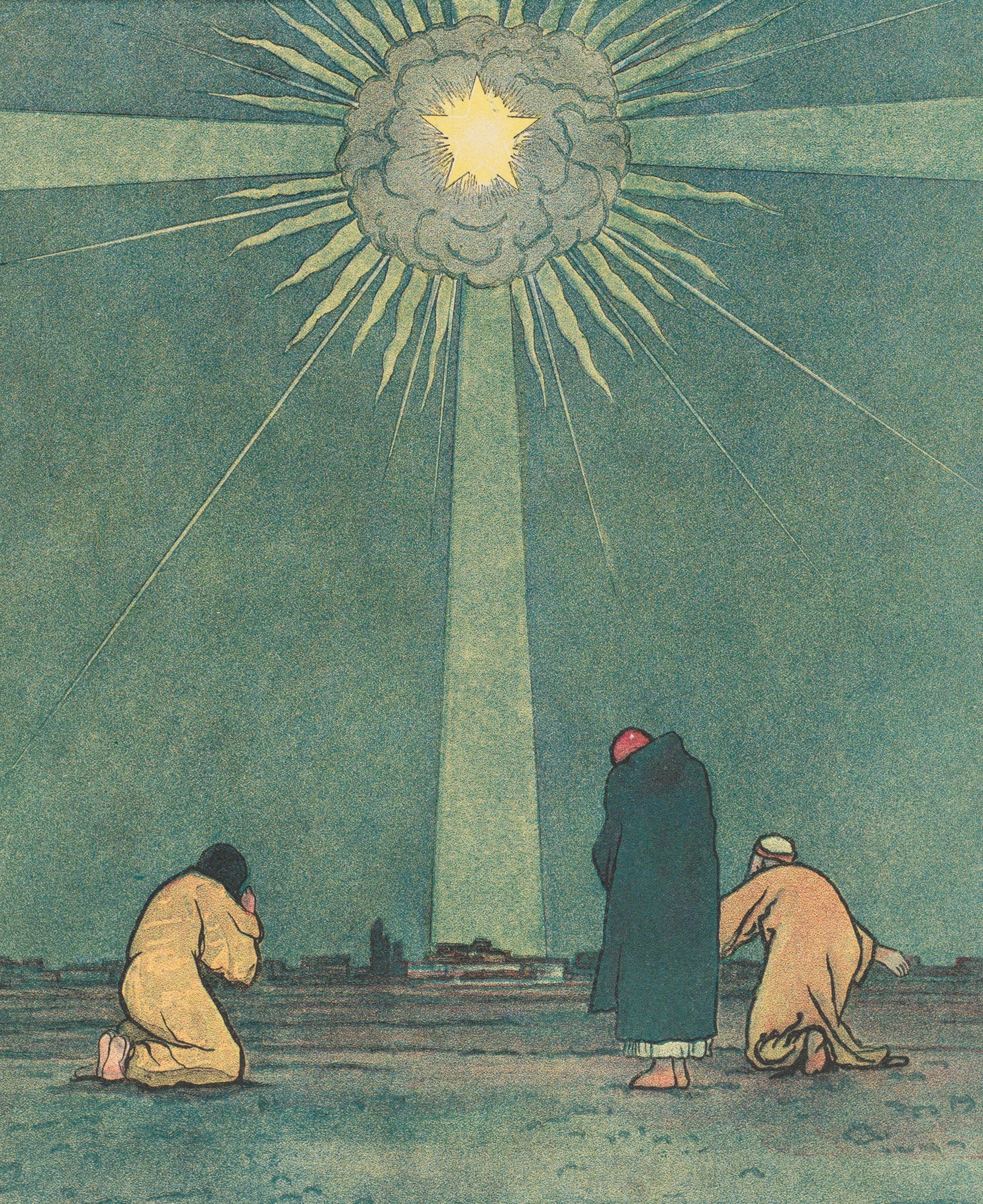 The Nativity Characters Strategy (4 sermons)
This style of sermon gets you through the question of “novelty.” Each year, the preacher takes one particular figure from the Christmas story and offers a reflection on their part in the pageantry. There’s the shepherd sermon, there’s the wise men sermon, there’s the angels sermon, there’s the Mary sermon, and there’s the Joseph sermon. That’ll get you through a few years, but it’s not without its pitfalls. Namely, people come to church to hear about baby Jesus and not the side characters. Who wants a movie about a sidekick instead of the superhero? Why a spin-off without the original show? The preacher must be careful not to offer candles, cake, and gifts to someone other than the birthday boy.
(I’m a little embarrassed to say that I once preached a Christmas sermon like this on the manger itself. I was really grasping at straws that year, but I think it turned out OK. There’s something to be said that the Christ child was not laid in a SNOO smart bassinet that can rock itself, cool itself down, and be controlled from a smartphone.)
This strategy can net a good solid four or five sermons if done properly.
The Prophecy Strategy (0 sermons)
Rooted in texts like Malachi and Jeremiah, with this strategy, the preacher seeks to wow the congregation by explaining the many ways Jesus’ birth fulfills the prophetic writings of the Old Testament. The preacher is not wrong! Jesus does indeed fulfill these prophetic writings. And yet, the fact of Jesus’ prophetic fulfillment doesn’t always move the needle for meeting people where they are on Christmas Eve. For this to be successful, the preacher stresses the glories of God keeping his promises, but at Christmas, there’s no time to do this well. Use this theme as a Christian Ed topic for Advent next year.
The Isaiah Strategy (2 sermons)
Like “The Prophecy Strategy,” the Isaiah sermon highlights the prophetic words of Isaiah, which are less bound in factual prophecy fulfillment (i.e., “He’s gonna be born in Bethlehem”) and more linked to existential prophecy fulfillment. “The wolf shall lay down with the lamb” is powerful imagery, as is “they will turn swords into plowshares.” What a promise from God! And yet, many of these promises have yet to come to fulfillment. Wolves still eat lambs. Swords are still swords. These are promises that the Christmas story highlights insomuch as Jesus *will* fulfill them, but they are as much about Jesus’ second coming instead of his first. And let’s face it, the already/not yet distinction, as helpful as it can be rationally, doesn’t scratch the Christmas itch well. It’s possible to preach this, but the challenge is to keep it at Christmas and not skip straight to Revelation. You might get two sermons out of it.
The Culture Wars Strategy (0 sermons)
On the left, this strategy highlights how Mary and Joseph were refugees, and Herod’s soldiers were the ancient equivalent of ICE. On the right, this sermon highlights the importance of keeping Christ in Christmas and putting Nativity sets up in town squares. Neither are actually sermons, they’re just politics in the preacher’s clothing. Don’t do it. You’re only giving the family members who begrudgingly attend church for their matriarch’s sake an excuse to bail next year.

The “Biblically Accurate Christmas” Strategy (0 sermons)
This sermon is one big nerdy “actually” delivered from the pulpit. Yes, we are aware that there wasn’t a system of inns for lodging in ancient Judea. Yes, we know that houses of that time had the barns attached, and livestock lived in the home with the family. We know that hospitality was a key part of culture, and that Mary and Joseph weren’t left alone to deliver Jesus but likely had Bethlehem’s midwives supporting them. The modern Christmas telling in our popular imagination has some flaws in it thanks to some bad translating work in the King James Bible. Deal with it in Christian Ed, not during Christmas Eve. Nobody will believe you anyways.
The Pop Culture Strategy (0 sermons)
We’re talking about Christmas and the Bible and the birth of Jesus, of course, but why not throw in a healthy dose of the Grinch, or the Peanuts Christmas special, or the hit 2024 Hallmark Channel classic, Hot Frosty? We do not meet people where they are by giving them more of what they can already get outside the church. If people are coming to church, they expect something spiritual and significant, not jokes about whether Die Hard is truly a Christmas movie and some bogus attempt to make John McClane a Christ figure. Time is short — keep the pop culture winks to a minimum, or save them for the Sunday after Christmas.
The Unexpected Bible Passage Strategy (3 sermons, delivered at 4-year intervals)
Be careful with this one. Most people want to come to church and hear reflections on baby Jesus. Sometimes, however, it’s fine to (gently and thoughtfully) shake things up. Preach about the dark side of Christmas and stick with the Massacre of the Innocents, or God dwelling among us from John 1, or even a law/gospel sermon rooted in Galatians 4–5. I once preached a Christmas Eve sermon on Revelation 12, which tells an apocalyptic version of Jesus’ birth involving Satan as a red dragon, and in the context of a Lessons and Carols service, it went over fairly well. Do this only if you’re comfortable alienating visitors who came expecting something more traditional and if you’ll commit to doing something more traditional next year to make up for it.
The Sentimental Strategy (0 sermons)
Peace on earth. Hope. Joy. Human brotherhood. If the core of the sermon can be painted onto a river rock and displayed in a backyard garden, it’s probably not a sermon. There’s real spiritual, existential, and practical blessing at Christmas, and to help people open that gift, there has to be something beyond sentimentality. What brings peace on earth? What is the basis for our hope? Why should we have joy? (See the answer below!) Fill in those gaps and you’ll do better by your people.
The Holy Land Strategy (0 sermons)
Nobody wants to hear about your recent trip to the Holy Land. I know, it must have been a wonderful experience, and I know that it opened up the Bible for you in a new and engaging way. Praise God for that, really, truly and sincerely. Most of our parishioners will never be able to afford a trip to Israel, and your Holy Land experience will only remind them they are poor. Also: some parishioners are too caught up in current events to think rationally about Israel and Palestine in any context outside of polemics. If you must mention it, be modest, but best not to mention it at all.

Bonding time: the Nativity in Townsville. Jan Hynes, 2007.
The Current Events Strategy (1 or 2 sermons)
When people come into church on Sunday, they are sometimes coming in with worries about the wider world. It’s tempting to try and be relevant by preaching from the news cycle and addressing a Christmas take on these hot items. The trick to handling these current events is not to preach about the events per se but to preach about people’s response to these events. There’s a big difference, for example, between saying “America is full of political violence” and saying “Many of us in this room are concerned, and maybe afraid, because we see an uptick in political violence.” Don’t preach the topic, preach to people who are impacted by the topic. If you can thread that needle and apply Christmas to current events without leveraging the Culture Wars Strategy, you’ll be ok. Another problem: Not every current event lends itself to a Christmas sermon, so this option may not work some years.
The Incarnation Strategy (many sermons)
The Incarnation is wonderful. It’s marvelous. The truth that God would take upon himself human flesh to come among us is worth sitting down and reflecting upon for ages. How does the fullness of God fit into an infant, or for that matter, an embryo? Why would the Almighty choose such a vulnerable form? In 1995 Joan Osborne famously sang “What if God was one of us? Just a stranger on the bus trying to make his way home?” and even though I was nine years old at the time, I knew enough to think, “Wasn’t he though? Isn’t that the point? Did nobody tell her?”
Two mild cautions: First, nobody cares about homoousios, the hyperstatic union, or arguments about the significance of being “begotten.” They should care, but they don’t. It’s Christmas, and nobody comes to church looking to unpack the “how” of the mystery of the Incarnation, and time constraints prevent even the best preacher from doing this well. Save it for Christian Ed time.
Second, it remains an object of total fascination to me that the sermons recorded in the book of Acts totally neglect the Incarnation. It is a minor theme in some of the epistles, but the New Testament writers seem so much more concerned about Jesus’ death and resurrection than his Incarnation. It’s cool that God became man, and again, worth our heavy reflection, but the “why” behind the action is as important as its “what.” There’s preaching hay to be made about the ways in which God knows what it’s like to be human, hardship and all. But without Jesus’ death and resurrection, we’re only telling half the story. “That which is not assumed cannot be saved” and all that. See below:
The Easter Sermon in Disguise Strategy (many sermons)
Look, a robust theology of preaching believes that what takes place in the pulpit is not just education, inspiration, or entertainment. It’s “proclamation.” It fits within a wider vision of the New Testament’s greater goal: the announcement that Jesus Christ has died, he has risen, he will come again to judge the world, and he will forgive the sins of the repentant. In this sense, every good sermon is an Easter sermon in disguise, and that includes the sermons delivered in December. Christmas, then, is the great D-Day invasion of God into a rebellious world marked by sin and death and run by the devil, and the war will end at the cross and empty tomb. Use the great hymns of Christmas as your allies — they’re only saying the same thing, right? Long indeed has the world lain in sin and error pining, bound up by the troubles of life itself and troubles of our own making. The baby boy that Mary delivers will deliver those held captive by sin, death, and the devil. Peace on earth and mercy mild will come because God and sinners will be reconciled. Jesus has come to die and rise again for all the Christmas promises to come true.
This year, my sermon will be a mix of current events (the spread of AI), the Incarnation (nobody wants a body, except, it seems, God), and Easter in Disguise (God even takes on bodily death and promises redeemed new bodies in the life to come). It’s a sermon that I hope will have a good Christmas word for people who are aging, who have broken bodies, who don’t feel like they measure up to the bodies on their social feeds, who are overweight or underweight, who are beaten by an eating disorder, or who are otherwise giving in to the siren song of a society calling a good thing bad. That hits enough of my people on any given day that it’s worth addressing. How countercultural is it to celebrate God with us, in the flesh nonetheless, in a time that kicks against the goads of our bodily limitations?
Blessings to all pastors as the juices begin to flow and the sermons are organized. May your visitors be interested, your congregations be blessed, and the gospel do its work this Christmas in your congregations.








This is wonderful! And wise, too. Thank you.
Thanks Bryan. I clocked what may have been my 42nd Christmas Eve homily last night. Roughly speaking 40 have been failures. I’m thinking the purpose of preaching on Christmas Even is the humiliation of the preacher.