




I like to present myself as a competent, independent person. Some who meet me might even think I’ve got it all together — until they see me drive. That’s when they observe my white knuckles on the steering wheel, which I sit so dangerously close to that my worried mother once threatened to take out its airbag. I fit the definition of a safe driver — no accidents, no speeding tickets — but I’d rather have my ribs cracked than loosen my grip.
My anxious driving betrays a larger theme: the desire for control. But no matter how tight I hang on, I find myself relating less to the commanding solo motorist in a car commercial and more to the words of Blanche DuBois in Tennessee Williams’ famous play, A Streetcar Named Desire: “I have always depended on the kindness of strangers.”
Two years ago, my husband and I moved to Buffalo, Texas, where he had been called to serve as a United Methodist pastor. Buffalo is a town of about 2,000, but it’s halfway between Dallas and Houston on the 45 freeway and thus has a disproportionate number of gas stations. Imagine my dismay upon seeing my tire pressure light switch on and finding that only one of those many stations has a working air pump, which is currently blocked off by construction.
After throwing away $2.50 at a pump elsewhere that didn’t work, I called the station that was to be my saving grace. They told me there’s no way to get around that construction, but I could use the one around the back — you know, where the giant 18-wheelers go. After circling that area twice in my sub-compact, feeling like a mouse underfoot, I called again. “Exactly where around back?” “At the diesel pumps,” I was told.
Deeply embarrassed and assuming all the truckers thought I was out of my mind, I pulled up among them to the pump. After turning the air on with some difficulty, I realized it had no pressure gauge. I pulled out the digital one I keep in my glove box … dead.
At that moment, up walked a kind stranger — one of those truckers I’d imagined were laughing at me from on high. He asked if I needed help. I confessed to my frailty. He went and got a gauge, then checked each of my tires with unassuming patience. I thanked him profusely, feeling a mix of gratitude and embarrassment, and drove home mourning my ineptitude.
Two days later, I was on my way home from an overnight shift as a hospital chaplain — a job in which I meet victims of violence, abuse, and poverty, whose wounds prove how unkind the world can be. I’d just begun to transition from the world of real-life tragedies — the kind that continue when the audience is long gone — back into my privileged existence. And, wouldn’t you know it, that pressure light came on again.
I pulled over in another small town, praying the gas station would be equipped with the high-tech air filling stations I recall from my native Southern California suburbs. It was not. But there was a hose in the convenience store and a nozzle on the wall outside.
Naturally, another stranger had to show me how to connect the hose to the nozzle. Moments later, yet another stranger had to show me how to turn the nozzle on. Finally, the tire was full again, but my dear husband will have to accompany me to a third, slightly larger town to get that leaky tire replaced.
Now I’m left with that same disturbing mix of emotions. How can the spectrum of human behavior range so widely, from unmerited generosity to equally undeserved violence? Why does every gas station have a different kind of air pump? And why am I incapable of getting by on my own?
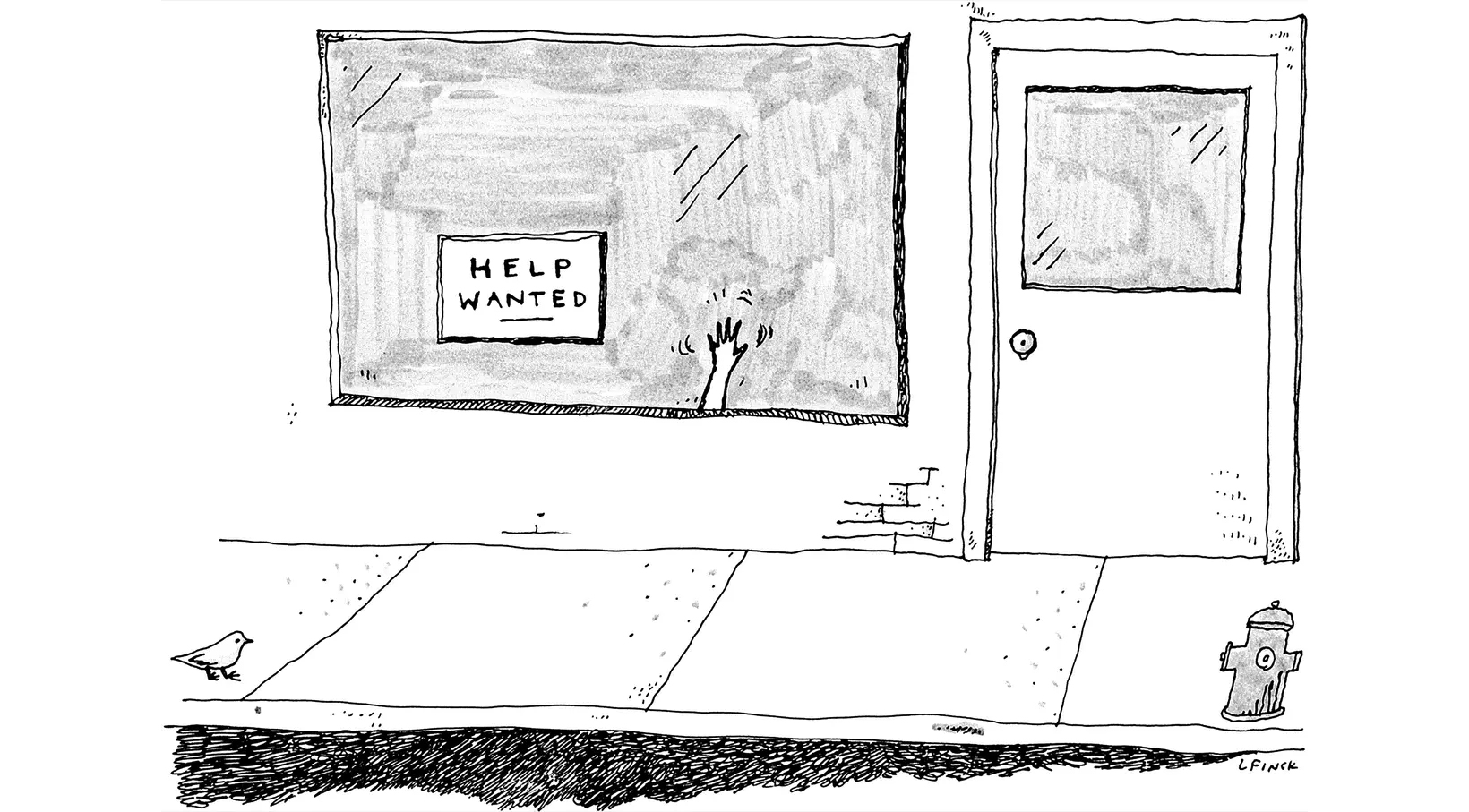
I want to believe that self-sufficiency is a virtue, perhaps one that will be rewarded with protection from people and circumstances that would do me harm. The desire for bullet-proof competence makes perfect sense when one reflects on the very real cruelty of the world.
But the more I live, the more I see that my desire for control evidences human frailty far more than my inability to attain it does. I long for superhuman perfection to keep me safe, missing out on the grace that — though it leaves me exposed — allows me to glimpse the beauty of who God made us to be.
Scripture tells us that “all have sinned and fall short of the glory of God” (Rom 3:23). Yet, we seem to notice more readily how we fall short of the glory of our idols, our false images of competence and security. And when we worship our own warped notions of perfection, we lose track of the One in whose image we are made, whose self-giving perfection is the only kind worth striving toward. Pursuing godly perfection is easier said than done. The world’s enslavement to sin and death, which Paul describes with such aching clarity (Rom 5:12; 7:21–25; 8:22–23), means that there exist cruel strangers, cruel lovers, cruel illness, cruel randomness. We are vulnerable to our own sins and those of others, no matter how street-smart we try to be.
But our God is so tender and so strong that even those evils cannot separate us from the divine embrace (Rom 8:38–39). And if we wander off the road with our leaky, misaligned tires, God-in-the-flesh puts us on his shoulders and carries us back again (Lk 15:3–7).
No one wants to be a helpless Blanche DuBois in a world of Stanley Kowalskis — and we shouldn’t be. We should work to break such vicious cycles of violence as A Streetcar Named Desire displays — who knows what sort of man Stanley would have been if he’d lived in prosperity and never seen war? — and place our ultimate hope on the day when we’ll beat our swords into ploughshares and God will wipe every tear from our eye.
But we must also remember in the meantime that our worth is not determined by our ability to fend for ourselves. Our worth is inherent to us as creatures made in the image of God. And when we can carve out moments of tenderness, caring for our neighbors, we reveal that image, and sin cowers cravenly away from its light (Jn 3:19–20).
In the end, I’m better for knowing how to use every conceivable type of air pump, and I’m very lucky that three gentlemen took pity on me in my ignorance as I learned. But the greater lesson is that I am doomed to depend on the kindness of strangers. We all are, and it’s no more a reason for self-loathing than our dependence on air. We weren’t built to hurt each other, but we were built to need each other — and God.
To be flesh in a thorny world is painful, as the kind, familiar stranger on the cross knows as well as any. Yet at our best, we can rejoice in both needing and serving each other. The grace that saves us is also the grace that moves us to kneel on the concrete of a small-town gas station and fill someone else’s tire — and thank God for that.




