




In the spirit of pragmatism and “application,” this article is written for those who, like me, would like to see their enemies repent. I suspect some of us would even like to see our friends — those who’ve wronged us, anyway — repent. For the guy in front of us in the deli line at Publix to turn around and say, “You know what? Now I’ve thought about it, ordering six different exquisitely customized sandwiches was a bit unfair to the people in line behind me. I’m sorry.” Or for the little league coach to say, “I’ve really been thinking all offseason, and I should’ve given your son more of a chance last year. Will you forgive me?” The following techniques are among those that have the highest chance of achieving those outcomes.
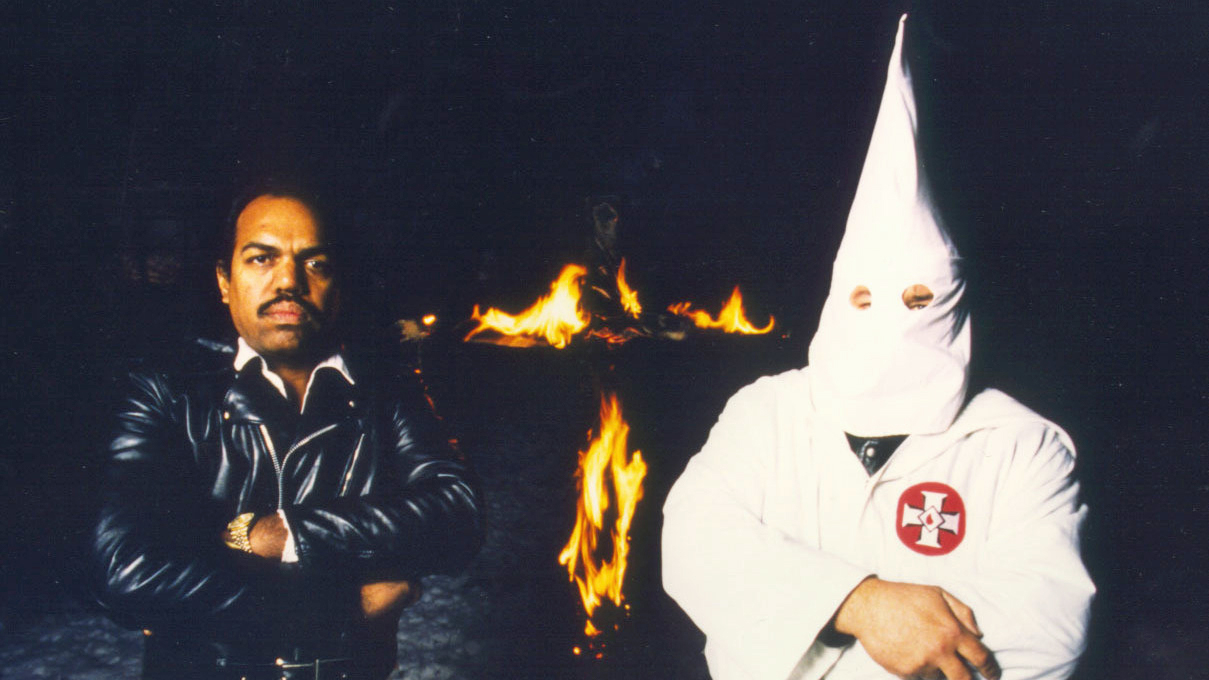
1. Listen to them. Daryl Davis, a talented Black keyboardist, developed a strong curiosity about why some people were virulently racist. He sought out an authority on the matter — the Grand Dragon of the Maryland chapter of the Ku Klux Klan — and asked him. The two men became friends, with the Grand Dragon (who eventually became Imperial Wizard, the head honcho) visiting Davis in his home and inviting Davis to Klan rallies. Eventually, after years of friendship, the man renounced the Klan and gave his hood and robes to Davis, as have many others whom he’s befriended. As David Zahl wrote of him,
It’s his method that boggles the mind. One-on-one is his mode of approach, but he doesn’t lead with stipulations or accusations. He leads with interest and, well, friendship. Daryl lets his antagonists have the first word, and he genuinely seems to listen to their (shameful) rhetoric. He doesn’t demand that they renounce their attitudes and associations before they spend time with him. He simply gets to know these guys (and allows them to know him), and whatever happens next happens of its own volition.
Catch Davis’ talk at Mockingbird’s Fall 2017 Conference here. Of course, years of showing interest in and friendship towards “them that hate you” is a tall order. But for the Imperial Wizard, at least, weaker medicines presumably never worked.
2. Apologize first. This one is a no-brainer. Empirically, far and away the most common trigger for one person’s apology is the other’s apology. Of course, it’s not automatic: you can apologize to someone else you’ve been in a dispute with, and they may or may not reciprocate. Still, apologies in such situations usually come in pairs, and the second usually comes, if it comes at all, on the heels of the first.
There are three hard parts about this. First, other people tend to be extraordinarily perceptive where the sincerity of your apology is concerned. If you don’t mean it, it almost certainly won’t be well received. Second, a precondition for a sincere apology is some degree of repentance of one’s own failings, which is never easy. Third, if you are deliberately using an apology as a technique to force reconciliation, you may well be subjectively disappointed by the results. I don’t know why that is true, but it seems to be.
3. Forgive them. In 1993, Mary Johnson’s only son was killed by a sixteen-year-old named Oshea Israel. When she saw in him court, she wanted to hurt him. Naturally so: A bent toward retributive justice is human nature. During her victim impact statement at his sentencing, she told him she forgave him but, as she recounted later, she hadn’t really. Years later, inspired by a poem, she decided she wanted to start an organization supporting mothers of murdered children, like her, but also mothers of the murderers. But she knew she couldn’t deal with the mothers of the murderers until she’d forgiven Oshea.
She scheduled a visit to Stillwater Prison and told Oshea she wanted to get to know him. As they talked, he admitted what he had done, and she could see how sorry he was. She broke down at the end of a visit, and he held her up the way he would’ve held his mother. As Mary recounted in a later conversation with Oshea, “And I begin to say, I just hugged the man that murdered my son. And I instantly knew that all that anger and the animosity, all the stuff I had in my heart for 12 years for you, I knew it was over, that I had totally forgiven you.” For his part, Oshea said that “You still believe in me. And the fact that you can do it despite how much pain I caused you, it’s amazing. I love you, lady.”
This “technique,” too, has some difficult parts. First, genuine forgiveness is extremely hard to do. Also, if you have genuinely forgiven someone, you will not get as powerful a sense of self-vindication you otherwise get when someone apologizes to you. It’s one of those backwards things — like finding a girlfriend in middle school or having one’s children thrive — where not wanting it to happen in too obsessive or fixated a way is, in a way that is endlessly interesting, a precondition for its happening.
For forgiveness, at least, an explanation can be ventured: facing one’s sin is extremely difficult — mortifying, in the old sense of the word — and it can usually only be done from a place of security. Forgiveness provides that security. Provide it to your enemies, and they will be slightly more likely to repent.

4. Save their lives. This one is, honestly, the least practical. You will probably never be in a position to save their lives. But if you are, it is highly effective.
A classic example of this comes from Victor Hugo (spoilers for Les Misérables follow). First, a peasant thief named Valjean, recently released on parole, is given shelter by a meek bishop and repays him by stealing his silver, the one item of value the bishop has allowed himself to keep. The police catch Valjean and take him back to the bishop, and Valjean justly faces a prompt return to his shackles. But the bishop tells the police the silver is Valjean’s and makes a present of it to him. The ministrations of the law — nineteen years in prison — failed to reform Valjean or make him repent; with his silver the bishop purchases him from under the law and delivers him, instead, to the ministrations of grace — Valjean, bewildered, is given the silver and can do with it what he may. But the bishop’s character, an astute observer of the human heart, knows exactly what he’s done; in the musical version, he sees Valjean off in an assured baritone, “I have bought your soul for God.”
Valjean almost immediately repents and becomes, over the course of the story, more than rehabilitated: he becomes an agent of grace to those around him and, eventually, saves the life of his greatest foe, a detective named Javert.
I’m not sure why having one’s life saved is an engine of repentance. Some of it is probably the perspective that comes from facing imminent death. Some of it is knowing you didn’t deserve to be saved — certainly not by the person you wronged. The contrast between how you treated them and how they treated you becomes undeniable, and the gift you have been given is impossible to give back.[1]
5. Have them fully acquitted by a formal tribunal. In the film Flight, Denzel Washington’s character (Whip Whitaker) is a brilliant pilot and drug addict. On his last flight, as Whip recovers from partying with a flight attendant named Katerina the day before, the plane mechanically malfunctions, and a drugged-up Whitaker somehow crash-lands the plane with consummate skill, so that only six people — including Katerina — die. The National Transportation Safety Board investigates, finding evidence he was intoxicated. Whitaker desperately and adroitly fights to suppress the evidence, lawyering up and convincing crew members not to testify about his drug use. He relapses and drinks himself into a stupor the night before the hearing. Things seem to be going badly, but he fights tooth and nail against both the (underserved) blame for crashing the plane and the (well-deserved) blame for his drug habits and how much of a mess he’s made of his life and family.
At the hearing, the NTSB investigator focuses on the plane’s mechanical issues and commends Whip for his exceptional skill in landing the plane. Although she states they found two empty vodka bottles, the deceased Katerina tested positive for alcohol. And there it is — the perfect excuse, the perfect alibi, the perfect scapegoat. It’s clear where the tribunal is headed: Whip will be formally exonerated. When he realizes this, he immediately confesses everything.
While others were trying to pin the blame on him, he resisted it. As soon as all pressure is removed,[2] he has the space to face by his own volition what he’s done. When the judge steps into Whip’s corner, truth ceases to be an adversary. He even admits he has a personal problem, and the movie culminates with Whip, now in prison, looking happier and more at peace than before, rebuilding his relationship with his son.
Acquittal by a formal tribunal may the hardest of all the methods for inducing repentance listed above. For one, we don’t have the authority to haul our enemies before a formal tribunal and pronounce a binding judgment against them. Also, if we did, I suspect the temptation would be too great to pronounce them guilty. Despite the witnesses of works of art like Flight and Les Mis, we can’t help but default to accusation and punishment as the ways to engender repentance, even though they don’t work.
Thank goodness, then, that for every dysfunctional Whip Whitaker in your life, there is a divine NTSB that will convene a tribunal at the end of time. And though we are too weak to acquit our enemies, ever since a man on a hill died in Roman Palestine in the 0030s, it’s been clear where the Big Tribunal is headed.
Not just (5) Forensic Acquittal, but also (1), (3), and (4), are far beyond our power most of the time; Daryl Davis and Mary Johnson and Bishop Myriel are one-in-a-million, and they — all people of deep Christian faith — could love so well because God loved them first.
But most of us, most of the time, simply can’t do it, which is why we often try to make those who’ve wronged us see their faults using ineffective measures like accusation, reproof, withdrawing, and correction. Those medicines are not only weak but also come with side effects that are often worse than the disease they seek to cure. But Jesus listens to our enemies, Jesus forgives them, Jesus saves their lives, and Jesus acquits them. God himself provides the means of reconciliation that we cannot, and in so doing, he not only restores and forgives you and me — who among God’s enemies were the chief (1 Tim 1:15) — but also provides the only possible means for us to be reconciled to one another.
[1] Javert in particular is bewildered by the fact that, like it or not, he is in a new reality — what he calls “the world of Jean Valjean.” He and Valjean are both snatched from the world of the law and thrown into the world of grace without any input from them. But Javert, who was confident, purpose-filled, and important in the old world, doesn’t take to the new one nearly so well as Valjean and, eventually, decides death is preferable.
[2] “Maneuver X”, for Stillman aficionados.








This is an acute summary of some of my favorite insights gleaned from being in the decade-plus readership of Mbird. Muchas gracias Will!
This is hilarious and so very good. Thanks, Will !
Great article!! Not just dehumanizing technique, but pathways of mutual humanity. Worthy of clipping to Evernote.
The tile alone is a sure winner .. the truth shall set you free to laugh! Can’t wait to read the article. Lord have mercy!
This is MONEY!!
[…] you missed William McDavid’s recent article on this site, here’s your sign: Five Ways to Make Your Enemies Repent. God […]