




I knew it was coming. I had seen it on social media. I had heard about it from other parents. Still, when my kindergartener lifted his palms (as if comparing the weights between two imaginary objects) and said “six seven” in a singsong voice during dinner one night, I was nonetheless caught off guard. So far, throughout my son’s life, we parents were the sole source of inspiration for his burgeoning personality. His quirks and intelligence and goofiness were recognizable in our nature and nurture. As he cackled with Six Seven joy during dinner, almost falling out of his chair laughing, my wife and I exchanged glances.
Who was this kid, and how had he changed so much in barely two months of kindergarten?
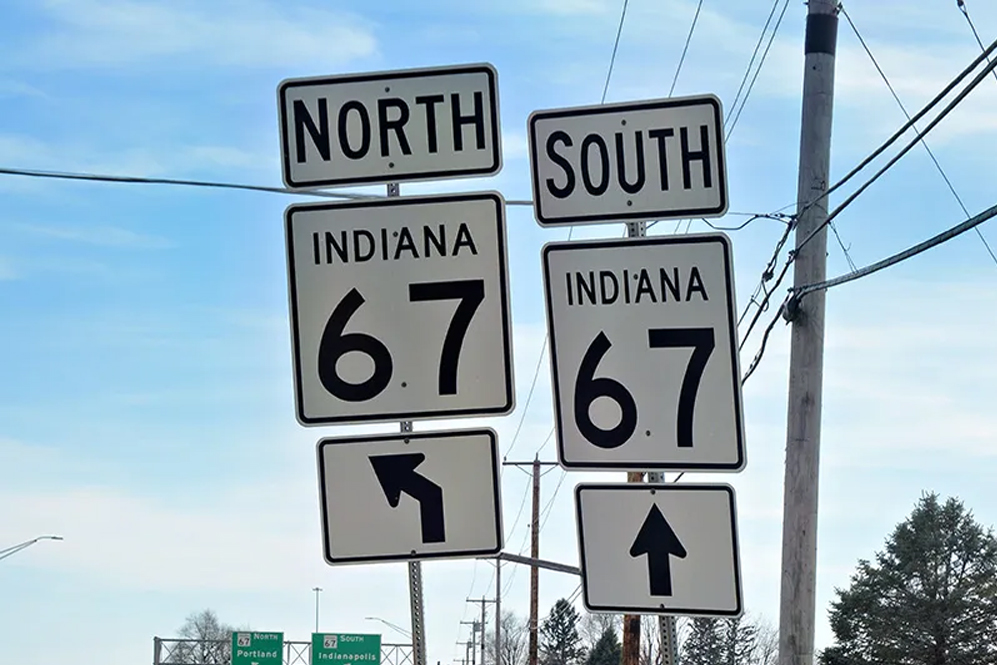
This goofy little meme of a schoolyard joke, Six Seven is all the rage. Stephen Colbert talked about it in his late-night monologue. Dictionary.com declared Six Seven to be their word of the year. South Park devoted an episode to it. The high schoolers with smartphones start to joke about it, which filters down to little siblings, which gets shared on the playground, which makes it to my dining room table. It has no real meaning or ambition other than to be an inside joke that annoys adults. Normally, this kind of every-school transmission is reserved for chicken pox and stomach bugs. I guess that’s why they call it “going viral.”
It’s not that memes are especially new. A famous example of a pre-internet meme was the famous “Kilroy Was Here” graffiti from the 1940s. During World War II, a cute little doodle featuring a man with a long protruding nose looking over a wall became a multi-continental repeated image. The doodle was drawn and painted across Europe on rubble, on destroyed buildings, on the side of American bombers, and in letters and correspondence home. It became a sign of solidarity with American soldiers, an inside joke that bonded the men fighting a war far from home. Other pre-internet memes: the two finger “peace sign” used during Vietnam anti-war protests, the “cool S” symbol drawn using six straight lines, and a Budweiser advertisement that had Americans answering their phone with “Wasssaaaahp” for years to come. Think back to your childhood: you can probably remember a few silly catchphrases or fashions that rival the Six Seven phenomenon.
The internet, of course, took memes to a new level with viral videos and captioned images, but you might have observed that truly viral memes haven’t been as common as they were a decade prior. Hits like “Gangnam Style” and “What Does the Fox Say” dominated the internet in 2012 and 2013, garnering billions of views, but the only comparable thing to that in 2025 is a new Taylor Swift album. There is a reason for this. Around 2016, social media platforms changed how their news feeds were organized. Instead of sharing viral videos and funny memes from friends and family, they began to prioritize advertisements and paid content. The platforms that had birthed globally viral memes were now trying to control what would go viral, turning those views into advertising revenue. The result is that we no longer organically see what our friends are thinking, but what the algorithms of social media consider the right mix of addictive, eye-catching content. It’s a business plan that is an inoculation against virality.
Perhaps that’s why Six Seven is catching everyone off guard? The phrase represents a genuine skirting of our communication gatekeepers, an act of schoolyard rebellion that might have had its roots online but can only be enjoyed in person. We’re just not used to having the kind of viral monoculture experience of the 2010s, and so when something breaks through the algorithm, it’s a shock and a surprise. And a gift too, one that comes freely and brings a bit of freedom from being force-fed what people think we like.
And since it’s been a minute since the kids had such a potent, confusing slang word that confused the adults in their lives (“skibidi” came close, but hasn’t had nearly the reach), what a joy it must be to have this gleeful, absurdist transgression to wield against the people who discipline and grade and demand and withhold. No wonder so many adults are exasperated about the “kids these days.” Six Seven is a reminder that our children aren’t under our authoritative control, that they are not extensions of our own relevance, and that our relevance is fading as quickly as this fad certainly will. And since there surely exists a photo of me planking somewhere absurd on my seminary campus, I really have no room to criticize.
Truthfully, I am delighted that my son has this inane, meaningless, inside joke with his friends. Six Seven didn’t arise out of some marketing executive’s audience research, nor was it pushed by a big tech company to “drive engagement.” It’s just the kids enjoying an inside joke, just like every generation has done before them. We adults are not meant to get Six Seven, and that’s OK. In fact, that’s part of the joke’s authentic, organic charm. Our parental confusion is a portent of our growing irrelevance, our aging, and the fact that our children are independent creatures loved by God who won’t be ours forever. I’m delighted for my son in that bittersweet way that parents experience when our children grow beyond their immediate need of them.
So let the kids have Six Seven. Who are we to deny our kids the joys of laughing so hard that they fall out of their chair at dinner?








thank you for this. much needed words as a fellow parent with a 1st grader who thinks 67 is hilarious.
Bonus: worked 1 cor. 6:7 into my sermon on Sunday and gosh was that a delight to let the youth in the room have that one…
Doing the Lord’s work, Sean. Amazing!
Haha! Love this
Well said. There’s not much that makes me happier than hearing my kids cackle, and 6-7 has certainly brought them (and indirectly me!) plenty of joy this year.