You don’t have to dive deep into YouTube to find interviews where Stephen Colbert speaks about suffering and the Incarnation. The tradition — and the tragedy — he grew up with offers much to the rest of the body of Christ and the world itself. But it’s also his satire and the seemingly throwaway lines of frivolity that also reveal insights into the human condition, betraying our cultural idols.
In a recent monologue, Colbert celebrated the spate of Democrat wins, including Zohran Mamdani as mayor of New York, by saying he felt good for the first time in a year. How often have you or I said the equivalent when we’ve heard a piece of news? It’s broadly reflective of our world, a microcosmic grid of chutes and ladders (or the more appropriately named “Snakes and Ladders” for those of us living outside of the US). It’s the board we’ve been playing on for a while.
Chutes and ladders is no way to stay hopeful — but who can blame us? In 1987, the US Army War College developed the acronym VUCA: volatile, uncertain, complex, and ambiguous. It suited the post-Cold War world. Since 2002, the term has been more widely used, including in business. Some have suggested that the C of VUCA be changed from complexity to chaos. Which is worse? One thing’s for certain: It might be chaos, but it’s not less than complex.
In an attempt to make sense of the complexity of the world we find ourselves in, New York Times columnist Thomas Friedman, in pursuit of nomenclature to similarly christen the age we live in, has this month declared the era the Polycene moment: “Where binary systems are giving way to interconnected ones.” Welcome to your 4D world. Hope you’re sitting uncomfortably.
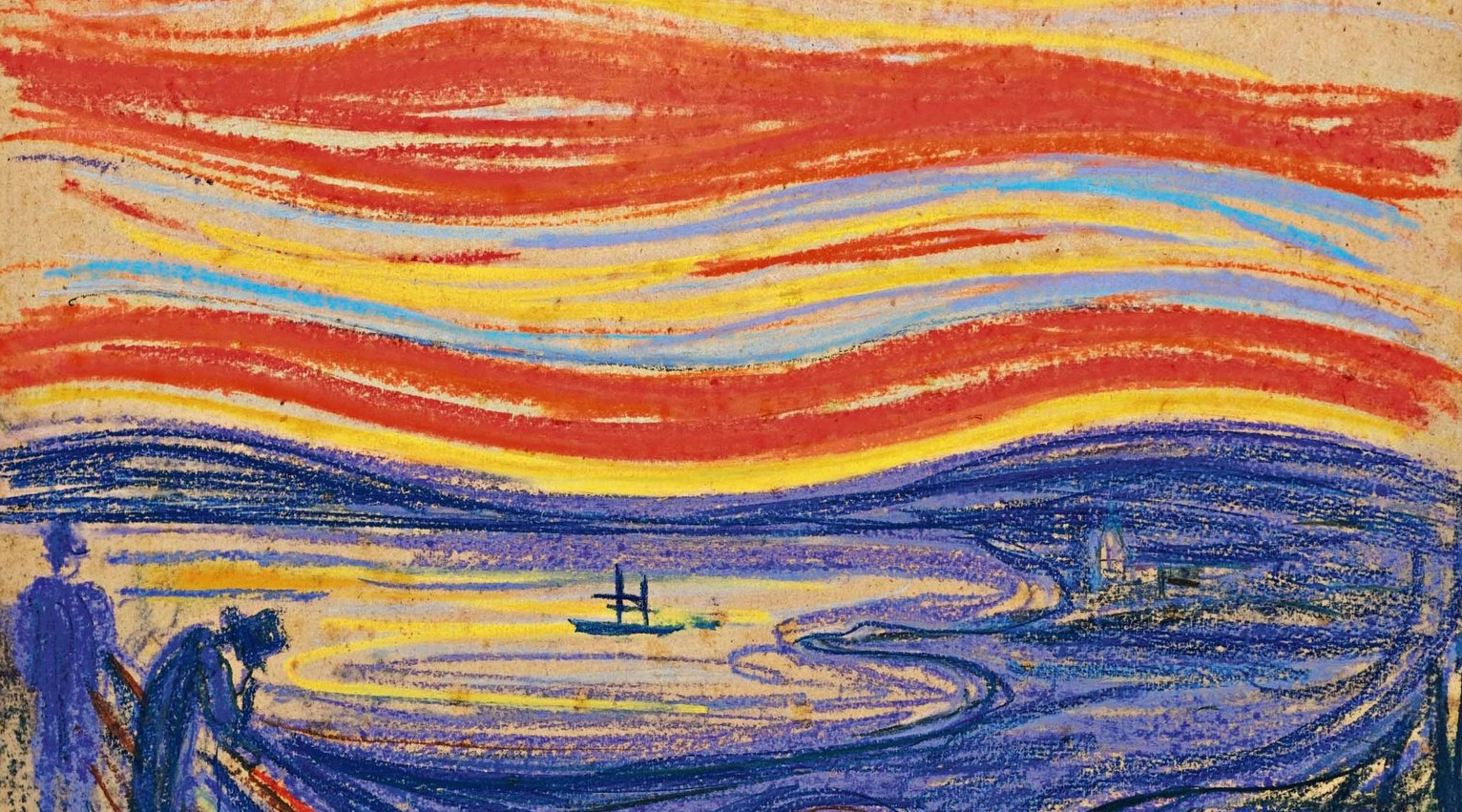
Dov Seidman, the business philosopher and founder of the HOW Institute for Society, says, “Interdependence is no longer our choice. It is our condition. We will either build healthy interdependencies and rise together or suffer through unhealthy interdependencies and fall together.” This interconnectedness wreaks further havoc for hope. Rising and falling like ocean waves or a rollercoaster or, as Seidman more pejoratively puts it, suffering, leaves us in a precarious/perilous place.
As it goes geopolitically, so it goes for us. Or does it have to? Compounding the chaos of our interconnectedness is the deception of individualism. We tell ourselves that we are our own truth north, but at the same time our joy is multi-tethered to an array of circumstances, relationships, and outside events, not to mention the aspects of ourselves that are well out of our own control. So we slap-dash internally construct our well-being, identity, and hopefulness to be all tied together in our multi-tethered joy or lack thereof. Pull one string and we aren’t so tightly bound. If we’re Christians, then we’re living with a lack of structural integrity. Even if it were possible to exile ourselves from the outside world, there’d still be the inherent danger of rising and falling on ourselves.
It’s easy to think that our societies have never been more individualistic. Well, even 402 years ago, while he was dean of St. Paul’s Cathedral not far from me in London, John Donne was ruminating on this theme. Clearly it needed to be said back then as it does now. While convalescing from either typhus of persistent fever and having lost his wife and several children, he wrote “No man is an island / entire of itself … For I am involved in mankind.”
The bells in our world may be tolling, but if you listen closely enough, there’s another sound. It’s a voice that can stop our strivings, strain, and stress. A voice described by another poet, the Quaker John Greenleaf, in his famous hymn “Dear Lord and Father of Mankind.” One that paradoxically exceeds and cuts through the noise and clamor by its smallness:
Breathe through the heats of our desire
Thy coolness and Thy balm;
let sense be dumb, let flesh retire;
speak through the earthquake, wind and fire,
O still small voice of calm!
When we give into God’s lordship of our lives, and he not an overlord but a father who wants the best for us, our strivings can cease. There’s no need to climb ladders anymore. And if we slide, we fall into grace.
We make honest mistakes, and we outright self-sabotage by doing the things we know we ought not to do. Leaders let us down. Political euphoria never lasts, and history zigzags. Our sense of peace, well-being, hope, and self-worth is too precious to leave to ourselves and the outside world alike. If we must have interconnectedness, then a Lord who is also our Father is the healthy connection we need.