



It started with a crown. The dental kind. One minute I was enjoying a sandwich, the next I was suddenly aware that there was a loose, tooth-shaped thing clinking around in my mouth, which I promise you is not a normal feeling. There’s no elegant way to investigate it, either. You just sit there with your tongue doing laps like a TSA agent trying to locate a hidden threat. I ducked into the bathroom, made a face in the mirror, and saw it: a sad little stump where a whole tooth used to be. Meanwhile, I was also mashing the chewed-up sandwich now resting in my hand, sifting through it like a paleontologist hoping to recover something valuable from the rubble.
I’m not proud of this, but anything dental sends me into immediate crisis mode. There’s something about the combination of vulnerability, expense, and the sound of grinding instruments in my mouth that taps straight into my lizard brain. So naturally, I spiraled. I fumbled for my phone and Googled emergency dentists with the urgency of someone trying to deactivate a bomb.
I just wanted it fixed.
That was the phrase that kept circling in my brain. I wasn’t in pain. But I was so darn unsettled. Unfinished. Like something important had come apart, and I couldn’t rest until it was whole again.
Hopefully you’re not quite as neurotic as I am. But I’m sure you’ve been in some version of that moment. Not with a dental crisis necessarily, but with that sudden desperation for something to just be … resolved. We come across it often. The job search dragging on. The cold war in a friendship. The unknown diagnosis. The life that keeps stalling in the in-between.
I just want it to be over. I just want it to be fixed. I just want some kind of closure. And it’s not just about teeth or timing or inconvenience. There’s something deeper beneath it.
While working on a book about grief and ordinary life, I kept circling a particular word: resolution. It wasn’t a conscious choice at first. It just kept showing up, threading its way into paragraphs about grief and prayer and ordinary days that hurt a little more than expected. It’s a good word, resolution. Clean, symmetrical. The ending chord that ties up the tension. The satisfying final scene. The closure we crave. But the more I used the word, the more I realized it was more than situational resolution. Not just something being sorted or solved, it was revealing something older and deeper. A longing that hums in our bones.
Wholeness. Completion. The world made right again.
We feel it when we sit across from a friend we can’t quite reach anymore. When the MRI is inconclusive again. When we open our inbox to silence. When we can’t explain why we feel off, only that we do. It’s the ache beneath the ache.
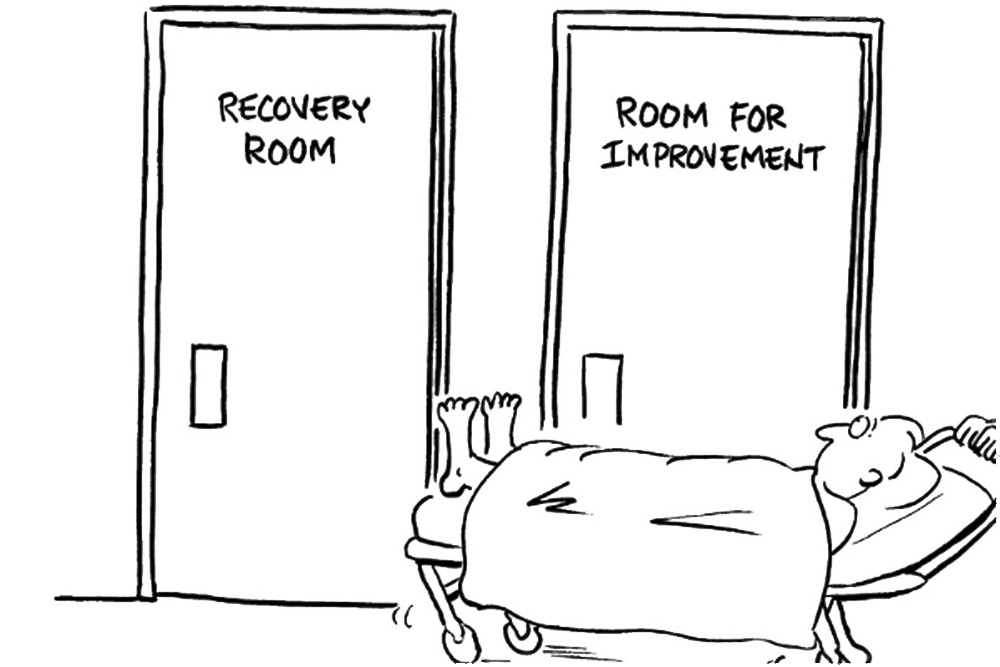
Here’s what I suspect is going on: We’re longing for something we’ve never fully had. We ache for peace in a world that’s never truly known it. We reach for resolution in a story that seems, at times, allergic to neat endings. We live in a fractured place, one that keeps handing us broken pieces and expecting us to solve the puzzle.
So why do we long for wholeness at all? Why do we crave a kind of peace this world can’t quite give? C. S. Lewis famously wrote, “If I find in myself desires which nothing in this world can satisfy, the only logical explanation is that I was made for another world.” That feels true in my body (creaking more every day). In my prayers. In my molar. Scripture seems to suggest the same: “We know that the whole creation has been groaning as in the pains of childbirth” (Rom 8:22). Ecclesiastes 3:11 says that God has “set eternity in the human heart.” Hebrews 11 speaks of people of faith who “longed for a better country.”
Something in us remembers a garden. Even if we’ve never seen it, something in us aches for Eden.
But here’s where it gets complicated, especially for people of faith. We can start to believe that unresolved things are signs of spiritual failure. That if we were trusting God enough, we wouldn’t feel so anxious. That if we prayed harder, we wouldn’t feel so torn. That longing means we’re doing something wrong.
But what if it doesn’t? What if the nagging pain is not a flaw in our faith, but the very thing that keeps it alive? Maybe the things that feel most incomplete are what tether us most directly to God. Not the answers, but the ache.
Longing is, I think, a form of prayer. A cry for home. A quiet way of saying, “I remember the garden too.”
I’m learning (slowly, stubbornly) that resolution isn’t the enemy of faith. But it’s not the proof of it either. In the kingdom of God, wholeness is coming. But longing for it till then is holy.
My tooth got fixed, of course. It wasn’t even that big a deal. A little cement. A little buffing. A sigh of relief. But the experience stayed with me. It stirred something.
That visceral craving to make something whole. To have the unfinished part resolved. To feel normal again. And maybe that’s what matters most. Not whether we get resolution, but that we long for it. Because that ache might be pointing us somewhere. Or to Someone.
Maybe you’re carrying something unresolved today. A tension that won’t ease. A prayer that stays unanswered. A story that hasn’t ended. Maybe you just want it to be fixed. I won’t tell you to be grateful for it. Or to wrap it in perspective. Or to “wait well.” I’ll just say: You’re not wrong to want resolution. You were made for it. The hum of that longing might just be a compass. A reminder that the garden was real. That wholeness was once the norm. That someday, somehow, it will be again.
Phil Allen spent thirty years as a pastor and now serves as a hospice chaplain, where he walks with
people in some of life’s most tender and difficult moments. He writes regularly about faith,
doubt, and the quiet presence of God in ordinary life at his Substack, Wick & Whisper.





Great piece, Phil, thank you. I’m intimately acquainted with this sort of feeling…longing for something I can’t quite name, wishing for resolution. I wonder if you see this happening in retrospect, too. I look back at idyllic stretches of my life and long to be returned to them. This means my memory has definitely forgotten all the aspects of those times that were mundane, or boring, or frustrating, and instead selectively edited it down to a highlight reel. I guess I’m grateful for that, on balance. Perhaps this means that my memory is trying to grasp or imitate the peace of the garden, as you put it.