




Jeremy Ridenour is a psychologist and psychoanalyst who works at the Austen Riggs Center. You can find his academic writings here. He also attends The First Congregational Church, United Church of Christ in Stockbridge, where he serves on the board of Christian Education.
Over the past eight years, I’ve had the privilege of leading a bi-weekly Bible study for women with intellectual and developmental disabilities who live in a residential facility. I began co-leading the group with an older woman from my UCC church back in 2016. The four women in the group were elderly, and I stuck out like a sore thumb as a young man. In other ways, it made perfect sense for me to volunteer — I’ve had a lifelong love of the Bible, and, in my professional life, I work as a psychologist in a psychiatric hospital. I have spent my career trying to reach people who are often considered unreachable, those who are buried behind trauma, suicidal despair, and psychosis. I did not know what to expect when I began teaching these women, and to be honest, it was awkward at first.
This was my first experience working with people with disabilities, and I was trying to find a way of engaging that was both respectful of their capacities and sensitive to their limitations. People with intellectual disabilities are often stigmatized, simply viewed as happy and vulnerable children who need to be protected from the painful aspects of life. I was hyperaware of my language, trying to speak in a way that was down-to-earth but not condescending. I’m not sure how well I did. Regardless, over time, we gradually became more comfortable and closer with one another — I even invited them to my wedding. I learned about their lives and shared about my own.
In the fall of 2018, my co-leader suddenly died. It was hard to know how to talk with them about her death since I have always felt this tension about how much to shield them from reality. At times, the staff at the residential facility have explicitly discouraged us from talking about death. For instance, later that fall, there was a mass shooting at the Tree of Life Synagogue in Pittsburgh. When we took prayer requests, one of the women spoke about her fear of gun violence. Following the study, a staff member took me aside and advised that we not speak with the women about such “upsetting” matters. I agreed to monitor our conversations, but privately, I wondered about the need to protect these women. Many of them were getting up there in age; death was on their minds. Hell, it’s coming for us all.
This experience reminded me of a recent interview I listened to in the podcast On Being. In the interview, the children’s author, Kate DiCamillo, said this about E. B. White, the author of Charlotte’s Web:
I have tried for a long time to figure out how E. B. White did what he did, how he told the truth and made it bearable… E. B. White loved the world, and in the loving the world, he told the truth about it — its sorrow, its heartbreak, its devastating beauty. He trusted his readers enough to tell them the truth. And with that truth came comfort and a feeling that we are not alone.
Wasn’t it my job to trust these women enough to tell them the truth of the gospel, including the “upsetting” matter of Christ’s grisly crucifixion and death, of our fallen human condition, of this world in all its sorrow, heartbreak, and beauty?
One of the things I have learned is that people with disabilities are no different from the rest of us in all the ways that matter. They are beautiful and made in the image of God; at the same time, they are fallen and in need of God’s mercy. I notice that it took about a year for them to begin showing the less saintly sides of their nature. Initially, I remember being scandalized because it violated my prejudiced expectation that people with disabilities would be innocent and pure. One of the women would sometimes mumble the Lord’s name in vain. Another would make suggestive comments about me when she thought I was out of earshot. None of these examples are particularly shocking, but it challenged me to see these women as no more holy than the rest of us. They were not innocent by virtue of their disability.
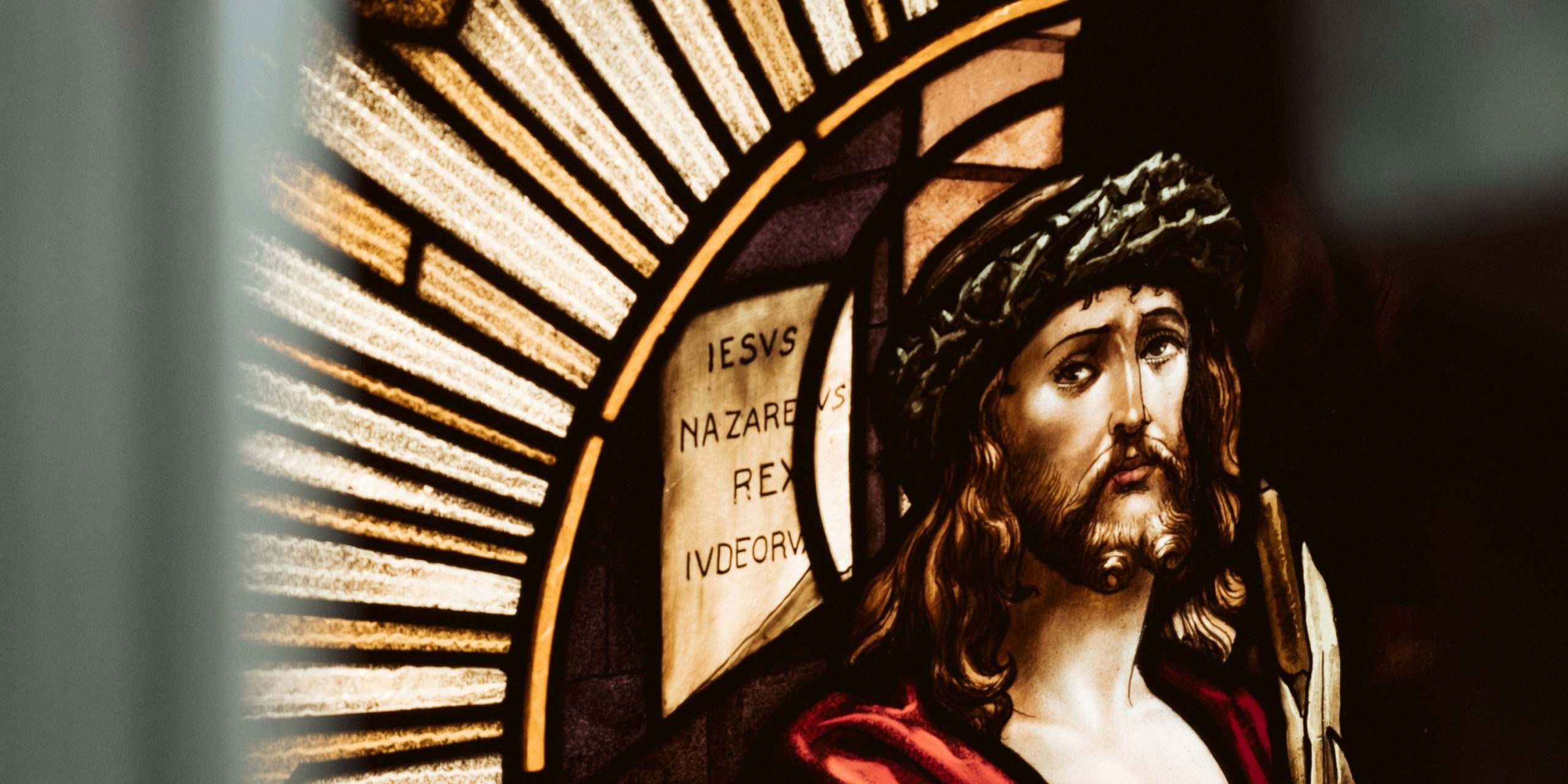
I remember one study when I was teaching about the crucifixion. “Sally, what does the cross mean to you?” She responded, “It means God loves me even when I’m bad.” I had never heard such a pithy explanation of the gospel. As St. Paul reminds us, “Christ died for the ungodly” (Rom 5:6). By the ungodly, he meant every single one of us. And when we have the courage to tell the truth about our limitations, we find a sense of solidarity with others, uniting us in our need for God’s mercy.
In 2020, the pandemic hit, and we were forced to move online. That same month, my wife and I had our first child, and I remember showing them my infant son over Zoom. They were so excited. It felt like a bright spot in an otherwise dreary and uncertain time. Over the next three years, we tried to do a Bible study via Zoom, and it was challenging to sustain their attention because of poor internet connection and the difficulty of maintaining a cohesive conversation with eight members (the group has expanded over time). It can sometimes be difficult to understand what some of the women are saying because they struggle to articulate and communicate their thoughts clearly, and that difficulty was amplified over Zoom. In 2021, one of the younger women, whom I will call Rachel, lost her sister suddenly to death. She often cried during prayer time as we discussed her grief and loss. It was heartbreaking, and it felt impossible to reach her over the computer. Thankfully, in the past year, we have resumed meeting in person, which has revitalized our connections and sense of community.

During the past season of Lent, I talked with them about the alienation Jesus experienced on the cross: rejection from his friends, condemnation from the religious and political authorities, and abandonment from the Father. Two weeks later, we returned to talk about the resurrection. Before getting to the lesson, we took prayer requests, many of which were related to death. Rachel began crying as she recalled that this was the three-year anniversary of her sister’s death. My co-leader lifted up prayers for a family member who was dying of cancer, and I offered a prayer request for my brother who was recently diagnosed with cancer. There was a heavy sense of grief and fear of death that hung over the group. After my co-leader read the book chapter on the resurrection, I began by saying, “Death is the great sadness of our lives. We all feel the pain of losing those we love, and we know that we will die. But one thing we know is that the resurrection means that the sad thing is never the last thing.” I took this last idea from one of my favorite theologians, Frederick Buechner, who wrote this in The Final Beast:
The worst isn’t the last thing about the world. It’s the next to the last thing. The last thing is the best. It’s the power from on high that comes down into the world and wells up from the rock-bottom worst of the world like a hidden spring. Can you believe it? The last, best thing is the laughing deep in the hearts of the saints, sometimes our hearts even. Yes. You are terribly loved and forgiven. Yes. You are healed. All is well.
The resurrection is our only hope. We see death, sin, and evil all around us. These forces of destruction are both within and without, dwelling in the heart of every person. Christ subjected himself to death so that death would be subjected to him. Christ bore the sin of the world so that sin would no longer have dominion over us. Christ faced the evils of the world, nailed them to the cross, and conquered them through the power of the resurrection. And all people, regardless of their abilities, need to hear the saving and honest grace of God that both tells us the truth about who we are while rescuing us from our limitations and deepest fears.








What a beautiful piece. Thank you. As a mother of young son with disabilities (autism and epilepsy) , I appreciated your view of the disabled’s humanness. Can he be beautiful and innocent while also capable of hurting and taking his sister’s toys? “One of the things I have learned is that people with disabilities are no different from the rest of us in all the ways that matter. They are beautiful and made in the image of God; at the same time, they are fallen and in need of God’s mercy.” You captured it. I adore Kate DiCamillo-that interview was remarkable.
Years ago I heard a radio host say “Special needs children are souls who float around heaven until God finds just the right family for them”. I’ve never looked at my special needs daughter the same since. How much God must love me to have allowed me to be her mom!
As the mother of an adult son with autism, I heartily agree with all of thoughts that have been shared.
Think these folks are “special”, as they have special places in their families and in society.
I do have to add that my son brings me great joy.
God bless you all.