




1. One thing trending this week is what New York Mag describes as “falling out of love with therapy.” In a series called Overanalyzed, launched just this week, The Cut has compiled entries on how to break up with your therapist, the suspicious rise of TikTok therapy, the questionable effectiveness of couples therapy, and more. At The New Atlantis Leah Libresco Sargeant also took up the theme, specifically about children in therapy, evaluating whether adults might be “too eager to discover problems that they think they can solve for children, and, in doing so, to take on the role of heroes.” Some of this aligns with what Cali mentioned a few weeks ago, about “Rental Person gigs,” and the quandary of hiring a non-judgmental listener. Author Melissa Dahl writes:
Sometime in the past decade or so, my friends started talking about going to therapy like going to the gym: as a nonnegotiable healthy habit you’re supposed to keep forever. But lately, I’ve suspected there are an increasing number of therapy quitters like me — people who have been helped by talk therapy but are in the mood for a less examined life. “It’s just déjà vu,” said Rebecca, a 46-year-old in Medford, Oregon, who recently quit therapy after four years. “I just keep saying the same shit, and they keep telling me the same thing.” I, for one, am tired of talking about myself this much. …
In my lifetime — even just in my adulthood — therapy went from something shameful to admit to doing to something shameful to admit to not doing.
Regarding her experience with couples therapy, the writer Scaachi Koul says this:
… instead of helping us see each other more clearly, therapy gave us new words to use to criticize each other. Every constructive lesson became a knife. I learned about trauma responses, and so everything he did elicited a trauma response in me. He was my father! I was his mother! When he learned about gaslighting, everything I did became gaslighting. When we argued about a time he called me stupid, therapy gave him a new explanation for why he said it (repeatedly): “We talked about this. I lashed out because I felt disconnected from you. We need more date nights.” …
Yet one is hard-pressed to imagine the popularization of therapy is bad. I know (we all know) someone for whom the stigma against therapy has led to disastrous, or tragic, consequences. And it’s a stigma that still very much lingers in certain circles. Much writing and speaking here at Mockingbird has espoused the importance of getting help, any help — the stunning graces of a compassionate ear. BUT something about the way American culture has approached therapy feels weirdly conditional: If you go to therapy, you will live a good life. Underlying this is a heightened sense of what people can expect to attain: that if you do x, you will feel y; following which, the disappointment can be devastating. In Dahl’s words:
… we may be expecting too much from therapy and from therapists themselves. Mahony, the therapist from Philadelphia, recently said as much on TikTok. Too many people “are going into therapy and are like, ‘I’m putting it all on this person to change my life,’” she told me. “That’s a lot of pressure to put on a therapist!” In some cases, people may be depending on their therapists so they don’t have to risk depending on themselves — or their friends.
Perhaps one of the more insidious concepts to come out of the rise of therapy language is “trauma dumping,” which has in some circles morphed into the idea that it’s inappropriate to share your problems with your friends. “I think I’ve regretted opening up to certain people in the past. That’s definitely something I’ve internalized — ‘save it for therapy,’” said Elaine, who’s 26 and lives in North Carolina. “But I don’t want people to see me as a sealed box.”
Last fall, Elaine stopped seeing her therapist; soon after, her dad was diagnosed with ALS. For a while, she didn’t talk about it with anyone. But recently, she confided in a co-worker almost 20 years her senior, whose dad had died when she was in her 20s … “I shared something really vulnerable with her; she shared something really vulnerable with me. We were trading information about our lives,” Elaine said. “And therapists don’t tell you about their lives — or when they do, it’s, like, kind of weird.”
Ha! I admit, that last line made me laugh out loud. The point seems to be: if what is needed is a listening ear, perhaaaaaaps this can be offered by, and given to, someone in a less psychologized context. Whether that be a friend, family member, or … priest.
2. Which calls to mind something Dwight Lindley wrote this week, for Plough: “the desire is constantly there to come out and meet the world. To draw others out, to meet them, to be invited in — is not this somehow the point?” In an essay on the interior worlds we try to keep hidden, Lindley writes:
There is a delightful short story of Virginia Woolf, “An Unwritten Novel,” in which her protagonist rides in a railway carriage, watching her fellow passengers: “five faces opposite — five mature faces — and the knowledge in each face. Strange, though, how people want to conceal it! Marks of reticence are on all those faces: lips shut, eyes shaded, each one of the five doing something to hide or stultify his knowledge.” Except for the fifth, the woman just opposite the narrator: “The terrible thing about the fifth is that she does nothing at all. She looks at life. Ah, but my poor, unfortunate woman, do play the game — do, for all our sakes, conceal it!” What Woolf understands is the implicit contract we keep with one another: you stay shut in, and so will I. We all have our internal rooms with their unmentionable contents, boxed in by what Sir Thomas Browne called “these walls of flesh.”
And so, we stand or walk or ride the railways of the world, mysteries to one another. As Browne put it, “I am in the dark to all the world, and my nearest friends behold me but in a cloud.” We’re all, most of the time … walled off from one another, playing the game of concealment in real earnest.
But it seems life has a way of knocking these walls down, and revealing the things we want to keep hidden, for worse and eventually for better: “When the disarray of inner habits breaks through the front wall of life, we have no choice but to admit how fragile we are.”
3. This next link seems related to the above, maybe? Kind of? On the theme of concealment? From Reductress: “REPORT: There Is No Such Thing as a Cute Pair of Sandals”:
Researchers at Cornell University’s Department of Human Centered Design have concluded that there is actually no such thing as a pair of sandals that look “aesthetically-pleasing” or even “cute.”
“Since your feet will always be showing in them, sandals will never look ‘cute’ or ‘put-together,’” Head of Research, Dr. Miriam Walters, told reporters.
Cornell researchers looked at sport sandals, slides, huaraches, jellies, flip flops, T-straps, gladiators, platforms, and those godforsaken woven wedges before finally determining that they are all fugly as hell. None of the styles looked good, or even “normal,” on any participant …
However, researchers were able to compile some tips to make the pair of sandals you inevitably choose look somewhat okay on you, as long as your expectations are not too high.
So maybe that is the theme of this week-end column: “as long as your expectations are not too high …”
“In order to find a sandal that looks the best, you must first determine which parts of your foot you want to show the world,” Dr. Walters said.
Also clever: “Woman Unsure if She’s Being Told Secret Because She’s a Trusted Friend or Too Insignificant to Matter.”
4. For the artists out there (profesh or otherwise), you know this mandate: your creation must be purely you, but also unique, and new! Thus you yourself must be unique and new, otherwise why even try? The theologian Margarita Mooney Clayton identifies this as a “Romantic notion”: “unfettered by universal principles, rules, or traditions … This ethos of art as self-expression makes the viewer of art also look to find his (or her) self, not to truths beyond oneself.” Aside from seriously inhibiting the artist in question, this ethos also locates the meaning of art in the human — the horizontal plane — short-circuiting gestures to the transcendent.
For the Romantics, creativity was positioned as a raw, untamed force erupting from the depths of the individual psyche, disconnected from any externally imposed guidelines or structures. Feeling and emotion reigned supreme, with the artist’s ethos being one of pure, unrestrained self-expression. Any imposition of tradition or adherence to established forms was seen as a hindrance to the authentic creative impulse.
The Romantic perspective fundamentally neglects the crucial roles that discipline, virtue, and tradition play in cultivating genius and fostering substantive creative works of art with lasting value. The Christian intellectual tradition about art, grounded in metaphysics, contrasts with Romanticism, as it sees creativity not as an act of pure self-expression detached from objective reality but rather as a way for the human person to participate in the ongoing creative work of God.
… The Fathers of the Church, such as Augustine, knew that material things and pleasures, even the most beautiful things in the world, don’t satisfy us for long. Our desires point to a wound within us, an incompleteness that only God can satisfy.
There is a lot of heat in this piece — say, relating the Romantic impulses to totalitarian ones(!) — but of particular note is what Clayton calls “mindful copying.” This does not mean “superficial mimicry or thoughtless regurgitation,” but “to recognize that creativity of any depth springs forth from a debate between respectful reception of tradition and daring innovation that builds on that foundation in an organic, life-giving way.”
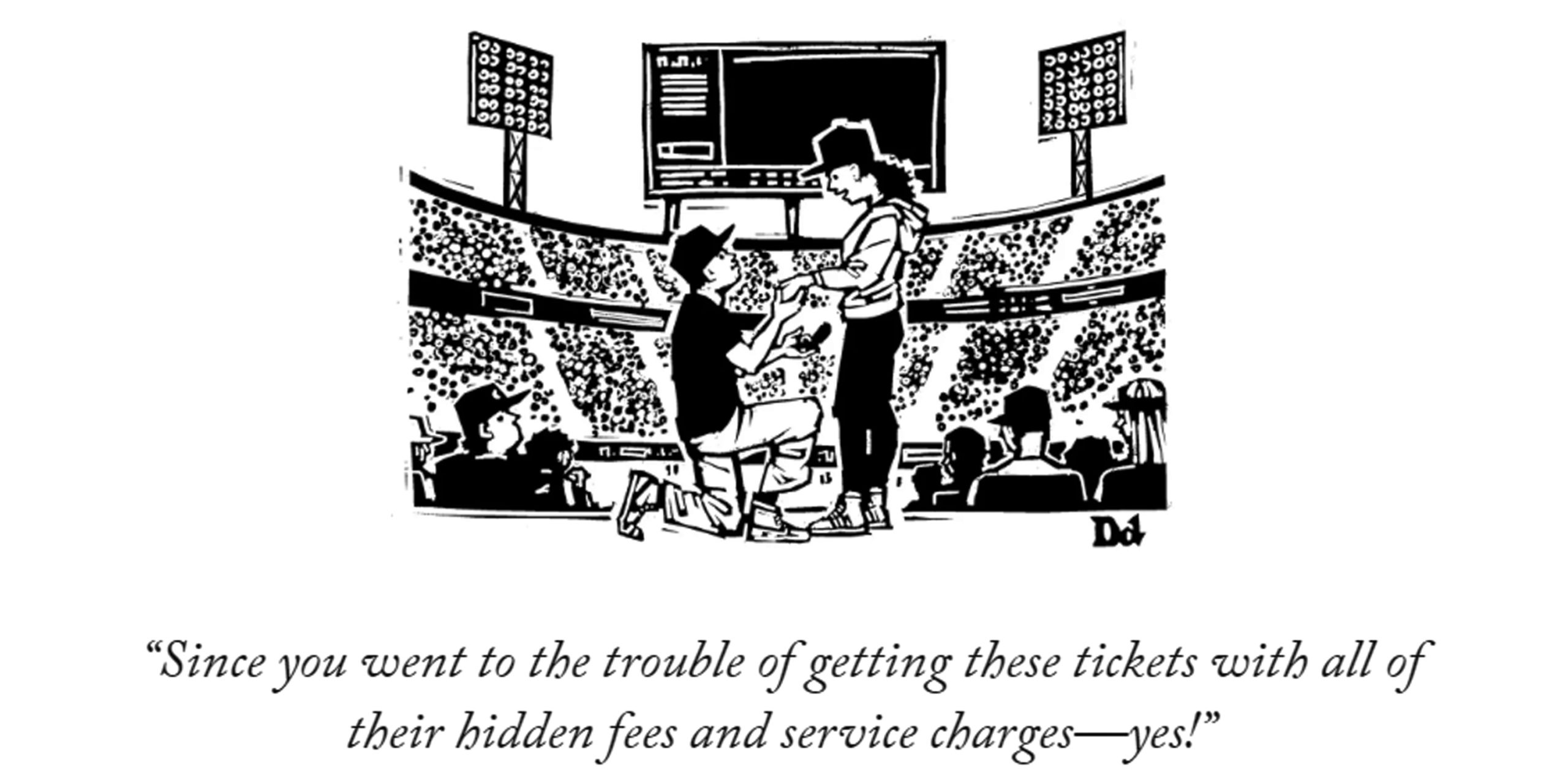
5. Ah well, it’s mid-May, and that means it’s officially wedding season: a time for fine dress, dancing, free food, and … petty judgments? Might be nice to think of weddings as celebrations of lurve, professions of fidelity between spouses and God — but when, in the US, the average invitee costs $304, we know more is going on than all that, and it has something to do with a little l-word. No, not love — law! See if you can untangle yourself from this bind, described by Francesca Carington at The Guardian:
It’s fun to play armchair critic when it comes to a public spectacle, and find out if your idea of what’s cool diverges wildly from someone else’s … [But] What is considered “good taste” varies — for some, a staggeringly expensive “classic” wedding in a petticoat-white Connecticut church might be the standard; for others, only a louche “anti-wedding” (2024’s hottest wedding trend, in which couples shirk tradition in favour of a party that’s more authentically them) at their favourite Brooklyn restaurant will do. Either way, when we call a wedding tasteful, it’s an appraisal of a couple’s financial, cultural and social capital – and an expression of our own. This is where the cheap shots about ugly bridesmaids’ dresses come in.
… As Xochitl Gonzalez writes in an Atlantic piece about wedding planners: “It costs a lot to make something look nice; it costs even more to make it feel nice – to make sure all your guests are comfortable, and well fed, and entertained … Unlike bags or jewelry, you can’t really knock off a nice wedding.”
But perhaps the worst thing you can say about a wedding is that it wasn’t fun.
The mandate that everyone have fun is, famously, one of the great ways to kill the fun. But while all the planning can help make a wedding fun, it’s no guarantee: what usually does the trick will be the people themselves. Quoting historian Stephanie Coontz, Carington concludes the best weddings are about “bringing two different sets of communities or friendship networks together.” To wit:
The loveliest wedding I ever went to was precisely that … it was an old Irish tradition of warming the rings that has really stuck with me. The guests passed the rings around, then back to the couple; this journey made them not just a symbol of the couple’s love for each other, but also of our love for them. That’s what connected this glorious mix of people from different countries who might never have even crossed on the street; we came together, we bonded, and we had a bloody good time.
If you’re attending a wedding this weekend, or a party, may you have a bloody good time, too. God BLESS!
Strays:
- David Zahl, featured guest on Christianity Today’s The Bulletin Podcast, talks with Mike Cosper & Russell Moore about A.I. clergy(!) and the polarization of the American church.
- Also from Christianity Today: a sad but moving reflection on the miracle of breath.
- If you find the repeated invocations of the distant past as explanations for the present or near future, you might like this New Yorker article: “What the Origins of Humanity Can and Can’t Tell Us.”
- For my money, one of the great essays of the week belongs to Bryan Jarrell’s on the Great De-Churching. “Relational incompetence” is a term that will stay with me.
- Pumped for Only Murders — and also Selena + Restaurant! Prime comfort TV.





This is great, as per usual, but mainly i’m just excited to see CJ’s byline.