




The following excerpt comes from Churchy: The Real Life Adventures of a Wife, Mom, and Priest:
In 2013 the Harvard Business Review published a study called “If Your Boss Thinks You’re Awesome, You Will Become More Awesome.” Their research proved what every low (wo)man on the totem pole already knew: If your boss treats you like a great employee, it will make you less likely to be a bad one. Results showed the quality of peoples’ leadership within a company being vastly better if their boss believed that they were, in fact, awesome. Conversely, the harder your bosses are on you, the less effective your work and leadership were in the eyes of your peers. In other words, if your boss speaks a word of worthiness over you, you begin to believe you are worthy.
Most of us have work experience that speaks to this dichotomy. In my first grown-up job, I had a boss who would stand at the door every day and tell me if I was late. Most mornings I was not. And so she would begrudgingly grumble out a “Good morning, Sarah.” However, when I was running behind she would bark out, “TWO MINUTES LATE!” to me at the door followed by a “You’re lucky we are so forgiving!”
Forgiving indeed.
The thing about that job was that I enjoyed most of it. I was basically the doorman of the institution. I got to meet all kinds of people. I answered the phone. There was free coffee. What was not to love?
Well, regularly being told that I was inadequate wore on me. Eventually, certain spreadsheets went undone. I would occasionally just ignore a phone call. Towards the end, when I knew I was leaving, I would show up late just to spite my supervisor. She seemed to think I was a steaming pile of crap so I figured I might as well fulfill her expectations.
When I got the phone call to interview for my first job as a parish priest, I remember thinking that the guy who wanted to hire me was insane. I was thirty-seven weeks pregnant, and I had exactly one pair of pants that still fit me. When I told him that I would not officially start working until four months after the baby was born he replied, “Sounds good! Everyone is excited!” When I told him that I only wanted to come in one day a week to start he said, “Great! We will be happy to have you.” As you might imagine, this only made him seem crazier.
What I did not realize was that his open-hearted encouragement was a sign of the kind of employment I was entering. It is a graceful place, full of forgiveness. Consequently, I have never worked harder at a job, nor have I loved a job more. No one has ever chastised me for my timeliness or belittled me over anything. I stay later than is required. I take on basically every project that gets offered to me. I always pick up the phone.
None of this is because I am a better person than I was at my first job. It is because righteousness was imputed to me. I was told I was beloved and worthy and so I began to believe it and act accordingly.
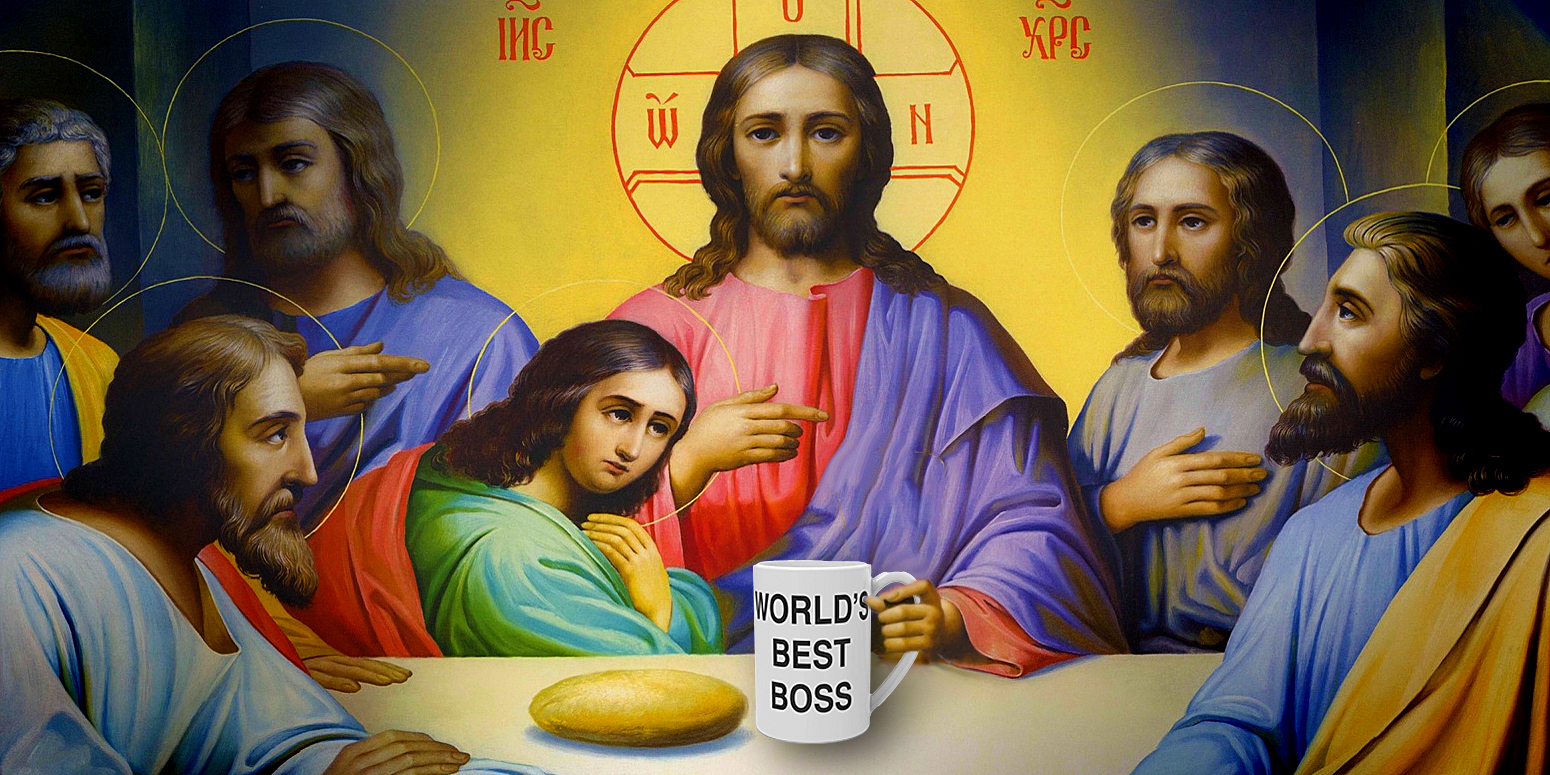
The imputed righteousness of Christ sounds like one of those theological terms that you should have an advanced degree to make sense of. Do not let that dissuade you from engaging with it. Imputation is a concept you have born witness to over and over again. In its plainest terms, we are made righteous through the righteousness of Christ. In Harvard Business Review terms, our boss thinks we are awesome.
You have seen imputation at work with your spouse, your family, and perhaps especially, with your children. Whether we realize it or not, we are always speaking a word of worthiness or unworthiness, forgiveness or guilt, good or bad, over our kids. They look to us all the time to tell them that they are beloved.
Our son has a request he makes most nights of the week when I kiss him goodnight. He asks me to tell him “Stories from When I Was a Walking Baby in Du Nork,” which translates to “stories he remembers from being a toddler in New York.” They are little glimpses into his early years. He wants to hear about when he first learned to walk or about how he liked to “pet the brie” at fancy parties we would throw at the rectory. Mostly, I feel like he wants to hear about the time in his life when a word of grace and love were spoken over him. He wants the song of his imputed worthiness to be the last thing he hears before going to sleep.
To be honest, as his mother, I need to be reminded of it, too. Even small children have people watching for them to step out of line. In fact, they are perhaps worse off than the rest of us. Behavior charts and rules galore are a fixture in their daily lives. Realistically, there are expectations they cannot meet and rules they will refuse to follow.
As a parent, it becomes easy to impute “badly behaved” onto them. Our anxiety about raising law-abiding citizens can cause us to say terrible things to our children and to act as though their sin defines who they are. Of course, this never helps.
They simply need to have love spoken over their hearts despite the lack of stickers in their “I Had a Good Day” school report. As a mother, I must remember that my love for them was there long before they could earn or do anything right. When the doctor placed our newborn son in my arms, I believed he was beauty incarnate. Remembering that, speaking that truth over him, imputes a kind of worthiness that no amount of “You can do it, kiddo!” could ever do. When we look at our children and only see the anxiety of a bad note from school or their failure to keep up in soccer practice, we treat them like they have fallen from grace. When, through Jesus Christ, nothing could be further from the truth.
Marriage can feel like ground zero for the power of imputation. When we look at our spouses and see someone who fails to meet our standards, we treat them like trash. We complain and subtly let them know that they are not measuring up.
Marriage advice articles are always asserting that we should retell the stories of how we first met and fell in love. Where were we when that happened? How did we feel before the arguments about money and unloading the dishwasher began? How light did our hearts feel when all was forgiven so easily? I have noticed that after particularly difficult weeks when my husband and I feel compelled to order in sushi (sans salmon) and share a bottle of wine, we will whisper to one another, “Remember how you proposed in the kitchen? Remember how we cried?” We long to remind ourselves of the imputed love we saw in one another.
Often in one of those stressful, late evening arguments, we can access a long list of things we allegedly loathe about one other. The shift that happens in these fights always alarms me. If my husband tells me I seem impatient or edgy I will think to myself, “CHALLENGE ACCEPTED.” Thankfully, over the years he has developed the habit of saying, “Hey Sweet Lady” before he says anything else. He is not denying me of anger or telling me we cannot fight, he is simply saying, “You are kind. Can we speak love over one another?”

The imputation of Christ goes far beyond anything we can give. Jesus gave us his righteousness. Full stop. No questions asked. We hear in 2 Corinthians 6:21, “God made him who had no sin to be sin for us, so that in him we might become the righteousness of God.” Which is to say, Jesus came to save us from our sin, to take the weight of our sin on himself, so that we would be made righteous in the sight of our Maker.
It is worth noting that the Devil will impute horrible things to those we love and to us. In moments of deep pain and sin, he will lean in and whisper, “Not good enough. Will never measure up. Needs more work.” This line of thought will get into your bones and impute only desperate loneliness. The imputation of Jesus Christ speaks a word over us that says, “righteous, beloved, and forgiven.” We are made holy through his holiness, and we cannot let evil tell us otherwise. I cannot pray these words from Martin Luther enough:
So when the devil throws your sins in your face and declares that you deserve death and hell, tell him this: “I admit that I deserve death and hell, what of it? For I know One who suffered and made satisfaction on my behalf. His name is Jesus Christ, Son of God, and where He is there I shall be also!”
Most of us do not want to admit that we are constantly searching for a word of some sort to be spoken over our lives. We want to know whether or not we have done a “good job.” We tirelessly strive to impress the rest of humanity. Sometimes we luck out in this life and are surrounded by people who encourage us and offer us grace. Other times, though, we can feel no firm ground beneath us. Our boss may be one of the most inspiring people we have had the opportunity to work for. Or, we can feel as though we have been employed by a Disney villain.
The incredible part of imputation is that our worthiness does not have to rely on the whims of our fellow human beings. In fact, it does not even fall into the category of our personal responsibility. Jesus has imputed his righteousness to us. And this changes everything.
There is no “magic switch” in Christianity which somehow makes us better people. Yet, the imputation of Jesus makes us see the world in a powerfully different way. We were irredeemable and yet have been redeemed. We were always late, and yet, are always on time. We once were lost but have been found.
When Jesus Christ died for our sins, he became the Word of righteousness in our stead.
We long for a God who will not count our sin against us. It is no wonder that employees, employers, wives, husbands, and sweet little kindergarteners are all longing for a word of righteousness to be spoken over their lives. Our souls are searching for a savior who can call us by name and tell us we are worthy and beloved.
In Jesus Christ that is exactly what we have found.
Or, I should say, has found us.





Awesome. Thank you, as always, Sarah!
Thank you for feeding my soul.
“Bingo,”, Sarah!