




Everyone I know is using AI. I have friends who go to ChatGPT for relationship advice, students who use Gemini to write their papers (boo, hiss), and colleagues who use Copilot to make memes of our boss. Call me a curmudgeon, but I can’t get into it. Maybe it’s because I’m a literature person and have read 1984 and Brave New World too many times, but when a technology shows up in our lives and promises so much in exchange for our agency, I start to get a little itchy — my dystopia radar begins beeping. I once read somewhere that “alcohol is a wonderful servant but a terrible master.” I think something similar could be said about a lot of our technology today, AI included. And when I gird up my loins to peek at the news, I don’t see much to change my mind.
For instance, on Sunday, September 14, according to Houston news source Chron, several churches across the country played an AI-generated recording “by Charlie Kirk,” in which “he” responds to his death from beyond the grave. Despite the halfhearted preface from one Texas pastor that the speech was fabricated by AI, the Sunday morning congregation erupted into applause and a standing ovation, as if the words had actually been spoken by Kirk himself. In a way, they had — we know that AI only parrots back to us what it trawls from the internet’s depths: it is a mirror that reflects us back to ourselves. And, draped in captured tones of the late Charlie Kirk, it might as well have been his voice from beyond the veil that morning.
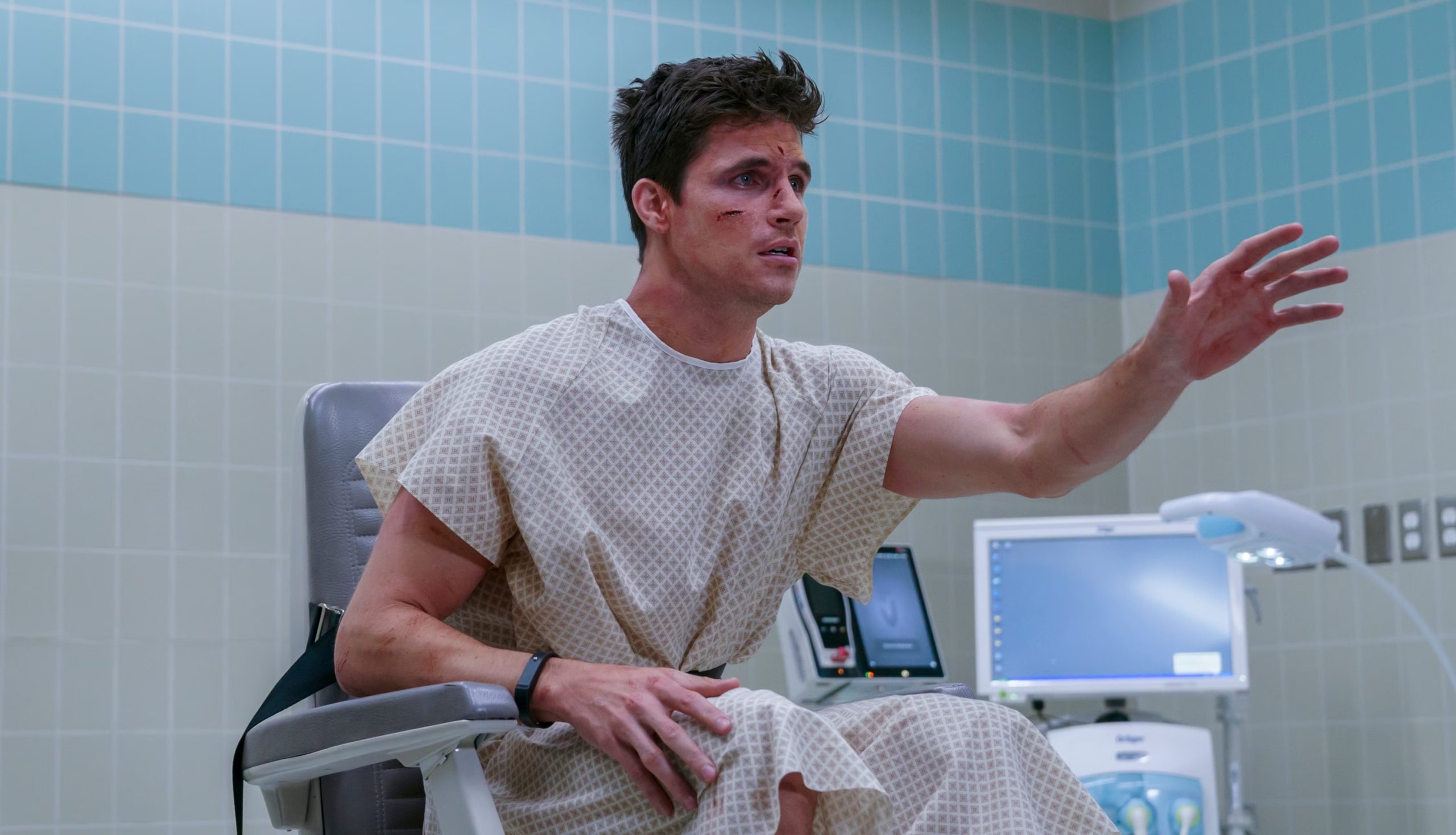
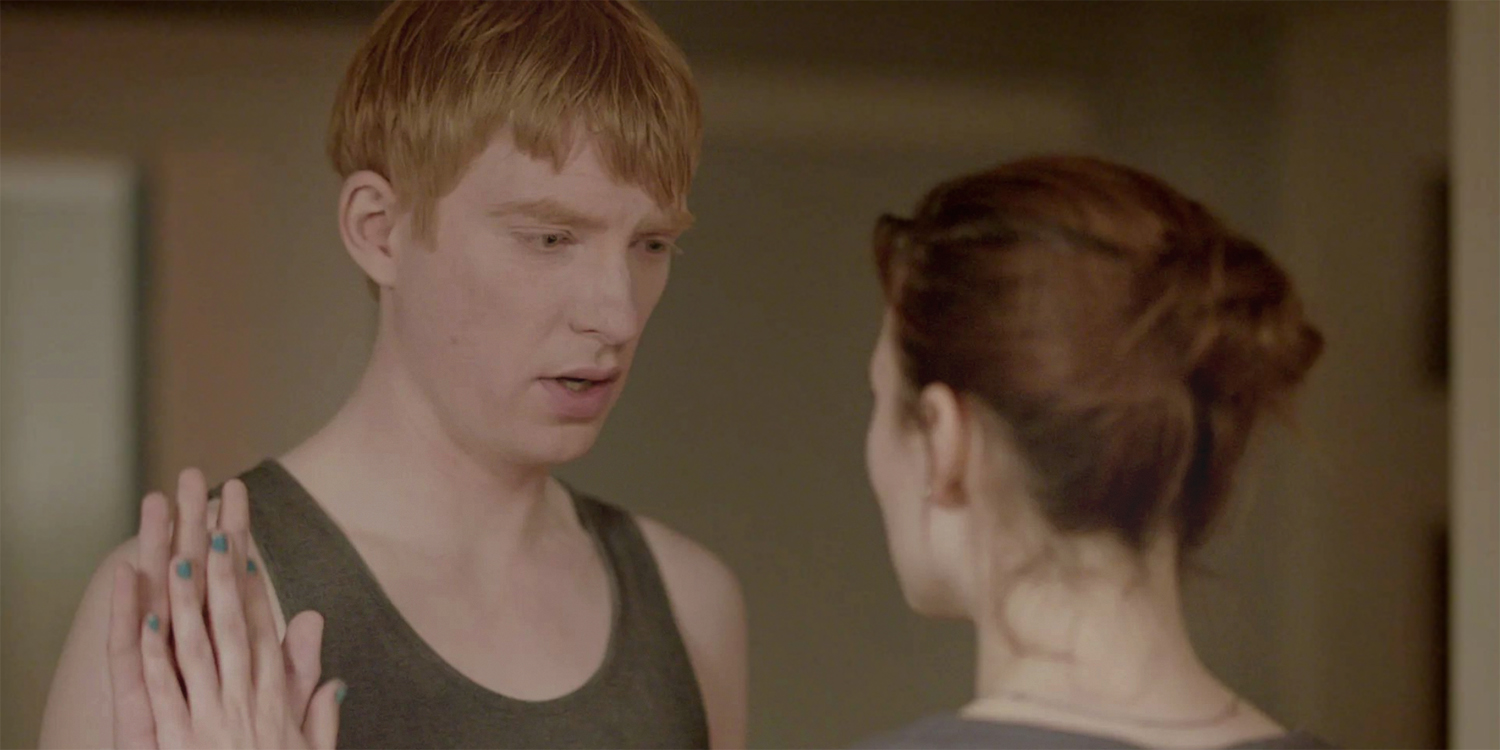
Now, one has to watch only a little bit of recent television to feel uncomfortable at this news. Television shows often toy with the possibility of people being able to upload their consciousnesses to the cloud upon death, or even before. While Amazon Prime’s show Upload takes a lighthearted sitcom approach to what is, in fact, a chilling possibility of digital life after death, Netflix’s hit show Black Mirror takes a decidedly pessimistic angle. In Upload, the main character Nathan wakes up after dying in a self-driving car crash to discover he now and forevermore “lives” in a heavenly hard drive, styled after a luxury resort where his grieving girlfriend maintains his afterlife subscription (and because — surprise, surprise — big corporations have discovered how to make money off of death and grief). Black Mirror, on the other hand, experiments with digital consciousness clones being held and tortured, simulated afterlives for the elderly or deceased, and robot dolls that hold the minds of comatose patients. But regardless of the rhetorical window dressing, both series carry at their heart our culture’s fear of death, fear of the unknown, and fear of loss.
These fears feel heightened to a fever pitch these days, as democratic breakdown, wars and rumors of wars, and societal fractures crowd our algorithms. (It’s almost as if these things were designed to stoke our darkest fears! I work at a university, and students, regardless of their views on Kirk, have been experiencing secondhand PTSD from watching Kirk’s assassination through their phones. What ever happened to the Christchurch Call Agreement, by the way??) But these fears are nothing new. We have always feared death, uncertainty, and loss, and our methods for assuaging those fears, at least temporarily, have not changed either; they have simply evolved alongside our technology.
I was speaking about this recently with an Episcopal clergy friend of mine, and he recalled to me a Bible story that I was familiar with, but one that I admittedly don’t think about on a regular basis, as it’s not exactly Noah’s Ark material. In 1 Samuel 28 of the Hebrew scriptures, Saul, the king of Israel, learns that his powerful neighbor-nation, the Philistines, have gathered against him for war. Prior to this, Saul had had an advisor, the prophet Samuel, to guide him and to mediate between him and the divine. Samuel could be annoying to Saul at times, but Saul nonetheless saw his uses, and when Samuel finally died, the king of Israel started to feel the foundation of his reign crack beneath him (something Samuel had prophesied would come to pass). When Saul sees the Philistine army far off, his fear gets the better of him. He knows death is imminent, and the inevitability of his own death, the unknown of what comes after, and the loss of his earthly power is too much for him. He goes and seeks out a witch to conjure up Samuel’s spirit so that he might consult with his former advisor and, ideally, change the course of destiny.
Samuel does indeed appear, summoned by the witch of Endor, and he responds grumpily to Saul’s demand for guidance:
Why then do you ask me, since the Lord has turned from you and become your enemy? The Lord has done to you just as he spoke by me, for the Lord has torn the kingdom out of your hand and given it to your neighbor, David. Because you did not obey the voice of the Lord and did not carry out his fierce wrath against Amalek, therefore the Lord has done this thing to you today. Moreover, the Lord will give Israel along with you into the hands of the Philistines, and tomorrow you and your sons shall be with me; the Lord will also give the army of Israel into the hands of the Philistines (verses 16–19).[1]
Not what Saul wanted to hear, to say the least.
It is not unusual to consult mediums after the death of a loved one. I recall an aunt and uncle visiting a spirit guide after the death of my spouse’s grandmother, the family matriarch, even though, if they had thought for two seconds about grandma’s character as a devout Lutheran, they would have known she would have been very upset to have her children do such a thing. But we don’t consult the dead for them — we consult them for us. We want to know where they are because we don’t know. We want to know what is beyond the grave because we don’t know. We want their advice because we don’t know. We want their presence because we cannot bear their loss. I deeply sympathize with this longing, this attempt at coping with grief. My final semester of college, I lost three grandparents in eight weeks. I was stunned, angry, and hollow. We were not made for so much death.
But unlike Saul, who did not hear what he wanted to hear from Samuel’s ghostly mouth, in an AI age, we can remake the dead in our image. Saul had to hear his former friend proclaim the imminence of Saul’s death and the end of his earthly reign. It floored him, quite literally: “Immediately Saul fell full length on the ground filled with fear because of the words of Samuel” (v. 20). Saul was in the presence of an actual spirit, and Samuel’s ghost spoke a doom on him Saul would not have conjured for himself. On September 14 in Prestonwood Baptist Church in North Texas, however, the words from AI Charlie Kirk brought a congregation to its feet with applause. The deepfake clip told them what they wanted to hear:
First: I want you to know I’m fine. Not because my body is fine, but because my soul is secure in Christ. Death is not the end. It’s a promotion. Don’t waste one second mourning me. I knew the risks of speaking up in this cultural moment, and I’d do it all over again. Second: do not let this violence divide us further. The enemy wants chaos, fear, and retaliation. Don’t give it to them. Instead, double down on truth; double down on courage, double down on your faith and your families. That is how you honor me. Third: remember this: America is worth it. Free speech is worth it. Fighting for the unborn, for families, for sanity in a culture gone mad, it is all worth it. So, dry your tears, pick up your cross, and get back in the fight. Do it with joy, do it with strength, and never, ever let evil think it won.
Unlike Samuel’s message to Saul, there is no challenging word here for the living. No unexpected doom they would not choose for themselves. While I will grant the AI clip the small concession of cautioning against violence and retaliation (something it does not always do, as seen in the recent news about AI chatbots goading teens into suicide), aside from that, the AI voice of Kirk provides total confirmation for everything the listeners stand for, telling them to double down on all of their beliefs, rather than to step back, be circumspect, or repent. This is not the voice of a prophet but of an enabler.
I have long held that if there is a divine being out there, it would have to hold some views that challenged my own, it being infinite and me being, well, not infinite. I assume that if and when I encounter the divine, here or in the next life, I will probably discover that some of my ideas about how the world worked will be wrong, not having the whole picture and all that, just like Saul learns the extent of his own ignorance from his encounter with Samuel’s spirit. Our human inventions, even our best, offer no such transcendence. Nineteenth-century author Mary Shelley wrote in her 1831 introduction to Frankenstein that
Invention, it must be humbly admitted, does not consist in creating out of void, but out of chaos; the materials must, in the first place, be afforded: it can give form to dark, shapeless substances, but cannot bring into being the substance itself.
Shelley, the expert on where human desire for certainty, power, and divine creative prowess leads, indicates here that human technologies, even something as powerful as AI, cannot replicate the mysteries of the soul or the wisdom of divine knowing.
AI Charlie Kirk cannot offer his followers such profundities, but it will not stop them from trying. In the weeks following his death, AI-generated images and videos have multiplied like rabbits, commemorating him in weighty (and arguably blasphemous, depending on your religious persuasions) spiritual rhetorics that link him to Jesus’ death or the martyrdom of saints. While I could easily go down the rabbit hole of the hokeyness of many of these videos and images, it’s important to stay with the function they serve for those consuming them (I am distinguishing this from those who are making and/or disseminating these images, as I think those motives are different and perhaps more nefarious).
For the average consumer on Facebook or Instagram, I think these images and videos serve as a security blanket to those, like Saul, who feel the foundation of their regime’s reign cracking. But unlike Saul, who actually consulted something mysterious and powerfully beyond his finitude for answers, these fearful consumers are consulting echo chambers. They are looking into the mirror for answers, but just as a mirror can only reflect back the limitations of its reality, so too can AI only reflect back the reality of our cultural moment: that we are all doubling down on our own perceived righteousness.
AI is not a mirror like the one in Snow White that speaks truth to the wicked queen’s power that she is not, in fact, the fairest of them all. Instead, it is a mirror that reflects back to us just how profane we are that we would rather debase the dead by reanimating them with our own selfish souls than allow them the peace and sacredness of the grave. We are like Dr. Frankenstein, dismembering our own humanity and igniting it with the demonic spark of our hubris to create a monster that will become our own ruin. While an AI séance may not have the enigmatic power of a medium’s negotiations with the dead, the encounter nonetheless changes us. Our digital echo chambers will become our digital coffins, burying us alive in our own need to self-justify. Necromancy, even in the digital age, opens us up to forces beyond our control, and those powers can and will speak our doom. We would do well to heed Shelley’s words in the mouth of her monster to his creator: “Have a care: I will work at your destruction, nor finish until I desolate your heart, so that you curse the hour of your birth.”
Pastors and other community leaders have an opportunity in moments like these to offer both pause and vision to their people. When society is so rabid, comfort and cure are needed in equal measures; we need the absolution of a priest and the vicious grace of a prophet. When Paul wrote to the Roman church facing persecution, he offered them reassuring words like “I am convinced that neither death, nor life, nor angels, nor rulers, nor things present, nor things to come, nor powers, nor height, nor depth, nor anything else in all creation will be able to separate us from the love of God in Christ Jesus our Lord” (Rom 8:38–39). People need comfort. They did in Paul’s day in the face of great evil, and they do today in the face of great evil.
But God’s people are also called to be prophets, and that means confronting reality, without and within. And our reality is that we are insufficient to ourselves. In the same letter, Paul tells his flock that “the Spirit helps us in our weakness, for we do not know how to pray as we ought, but that very Spirit intercedes with groanings too deep for words” (Rom 8:26). Human wisdom is not enough to fix our problems, let alone human inventions. Paul’s words go even further, claiming that prayer, our only means of asking for divine help, is insufficient to fix our problems — even in prayer, God steps in to fill the gap. In these apocalyptic times, when reality is being revealed for what it is, we need a word from the living God, not a facsimile of the dead. AI Charlie Kirk cannot save us from ourselves — he couldn’t even save himself. We need a Christ who chose not to confirm our definitions of power but became a stumbling block for us to trip over, right into God’s gracious arms.
[1] All scripture references taken from NRSVue








“We are all doubling down on our own perceived righteousness.” Ain’t that the honest truth, for me and everyone else living through this bizarre era. Extremely good piece, thanks for this.
Thank you for being a voice of reason and bringing the questions and grief struggle into today’s space of AI and the profiting, exploitation and control of the politics of today. As mortals we have struggled with the finite conclusion of death. Always attempting to create the infinite legacy of influence thru whatever means. Letting go and resting in the mystery of Gods plan is such a struggle, for us all.
[…] boundary that Scripture has clearly drawn. God forbids every form of communication with the dead—what Scripture calls necromancy (Deuteronomy 18:10–12; Isaiah 8:19). Though these new methods replace séance tables with silicon […]