




My first exposure to the idea of eternal life didn’t come from any religious authority: it came from Daffy Duck.
The Looney Tunes may not be a household franchise anymore, but on the Nickelodeon TV network during the early ’90s, reruns of these classic shorts ran during the after-dinner hour that I was allowed to watch TV. As a kid, I never considered the cartoons to be especially violent, but looking back, those guys really enjoyed playing around with guns, dynamite, and large, crushing boulders. If a character did die in a Looney Tunes short (instead of becoming cartoonishly burnt, maimed, or crushed), they would don a white robe, grow wings and a halo, float upward, sit on a cloud, and play a small lyre or harp. And as a child, that was pretty much the entirety of my vision of heaven. It didn’t seem to be an especially blessed or exciting way to spend eternity, but it was much better than the cartoon devils and cartoon hell that occasionally made an appearance in the shorts too.
It’s been some time since the Looney Tunes were culturally relevant, and frankly, the Christian promise of eternal life seems to have fallen out of favor too.
Easter is the great holiday, and it’s worth celebrating all those great biblical promises that are fulfilled at Jesus’s resurrection: the forgiveness of sins, the defeat of the devil, the gift of new (temporal, earthly) life. But it seems that recent cultural shifts have made the key Christian promise — the resurrection of the body and life everlasting — some mix of passe, embarrassing, and outdated. Both inside and outside the church, the idea that we will live forever seems to have lost much of its luster, despite it being a cornerstone promise among Jesus’s teachings.
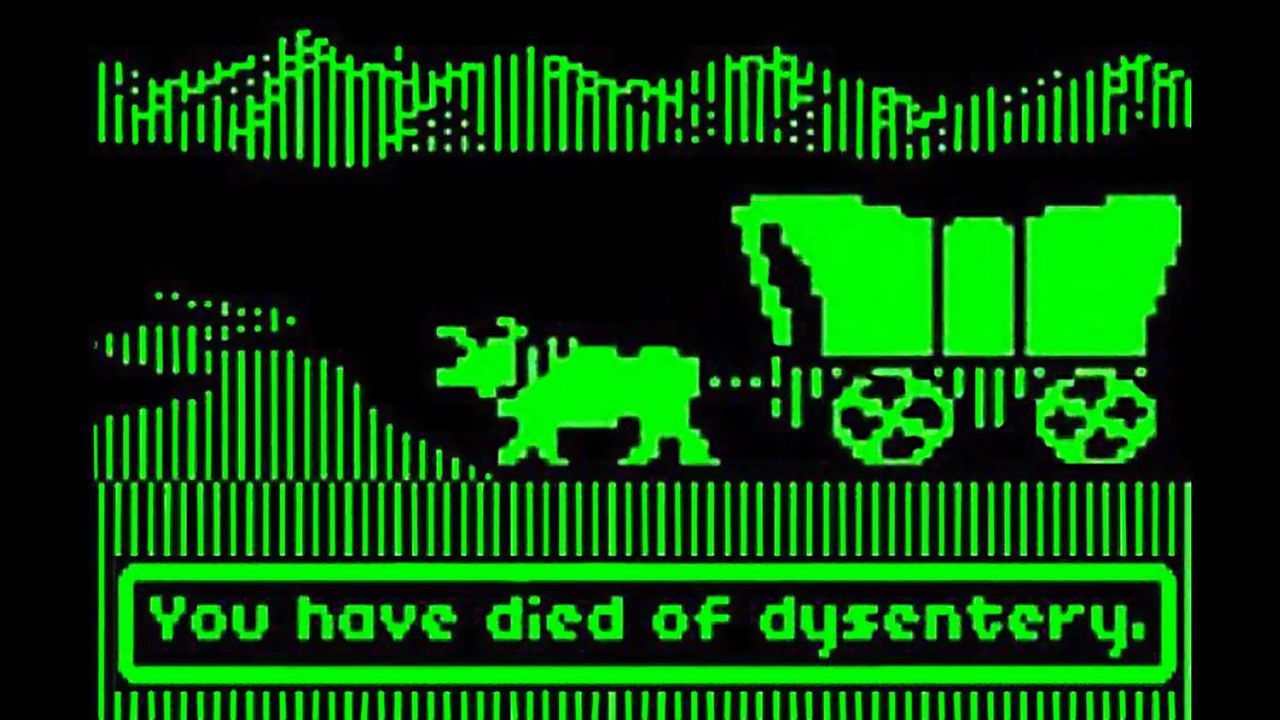
Part of that distance, I imagine, comes from the fact that most people in this wider secular culture don’t think about death that much. Two centuries ago, in our mostly agrarian society, things like snake bites, broken bones, bad fevers, and food poisoning could lead to an unfortunate and untimely death that might cripple or impoverish an entire family. “You have died of dysentery,” as the 8-bit game Oregon Trail declared without mercy. In 1825, a whopping 45% of all kids died before reaching the age of five years old, an astonishing statistic given that the number is now significantly below 1%. When death is a present and terrifying reality, eternal life seems much more appealing. When death is relegated to nursing homes and hospitals and cartoons and video games, it’s not nearly as top-of-mind.
Moreover, in this secular age, fear of death and dying is seen as a psychological weakness. Think of the work of psychologist Ernest Becker, whose 1973 book The Denial of Death relativized all human activity as some sort of superstitious way of avoiding our inevitable demise. Even though death is not an immediate reality, argues Becker, the fear of our demise manifests itself in fitness culture, make-up and beauty culture, the distractions of fandom, scientific research into longevity and the glories of athletic achievement. Those who were able to face death head-on were declared by Becker to be heroic. These heroic individuals, he explained, lived their lives in the service of some greater ideal or value. Those who embrace their finitude achieve meaning, purpose, and a functional “immortality” by contributing to a good that outlasted their lifespan. This heroism can mean raising a family or taking on a helping profession. It can also mean contributing to charities, building businesses, or serving a higher ideology.
In light of Becker’s thoughts, the secular world has two “heroic” responses to this YOLO reality: have as much fun as possible before the lights go out, or participate in a legacy building endeavor that will last beyond the grave. Don’t become enmeshed with loved ones — they too are going to die one day, and you don’t want to grieve too hard at their passing. Don’t throw your lot in with transcendence — it’s a rejection of the material breakdown of the body. Serve your politics, since they’ll create policies that last for generations. As a precocious teenager shared with the Washington Post in 1982, “Life’s a bitch, then you die,” and the secular world’s best strategy for managing that reality is to make a plan and execute it before the last day arrives.
(Those who haven’t read Becker may be tempted to think that religion and its view of the afterlife is the ultimate example of denying death. This couldn’t be further from the truth in Becker’s esteem: in the final chapters of his book, he praises religious devotees as heroic individuals, and expresses doubts that secular persons will be able to find anything remotely close to the purpose and meaning that religion offers.)
Jesus was not one to deny his own death. The gospels record that he was totally resolute in his intent to die, “turning his face towards Jerusalem,” where he knew his execution awaited. And yet, his intent to die was paired with a certainty that death was not the end. Death was the bridge to a greater reality, like a seed being buried in the ground sprouts a new life. The author of Hebrews explains it like this: “For the joy that was set before him endured the cross, despising the shame, and is seated at the right hand of the throne of God.” Eternal life, for Jesus, was a future joy that made his gauntlet of excruciating Holy Week pain an endurable trial instead of a tragic end.
Jesus’ hyperfocus on his own death didn’t just get him through Good Friday, but it also relativized the values of the world around him.
Jesus cared very little for the death-denying projects of his own day. The politics of Rome, the power plays of the Pharisees and Sadducees, the scribes bickering over minute details in the Law of Moses, the crowd’s hopes and dreams for geopolitical freedom, the one-upmanship of his disciples … none of these things seemed to have any real pull for the itinerant rabbi. He dismissed them in favor of other values and concerns that were much less popular. He tells his disciples, “The last shall be first, and the first shall be last.” He models servanthood for them by washing their feet at the Last Supper. He invites comparison between the world as it is and the world to come: “For what will it profit a man if he gains the whole world and forfeits his soul?” The ethical teachings of Jesus all presuppose that his followers first believe in an eternal life so beautiful and beneficent that they can ditch the trappings of this one and go “all in” for the next one.
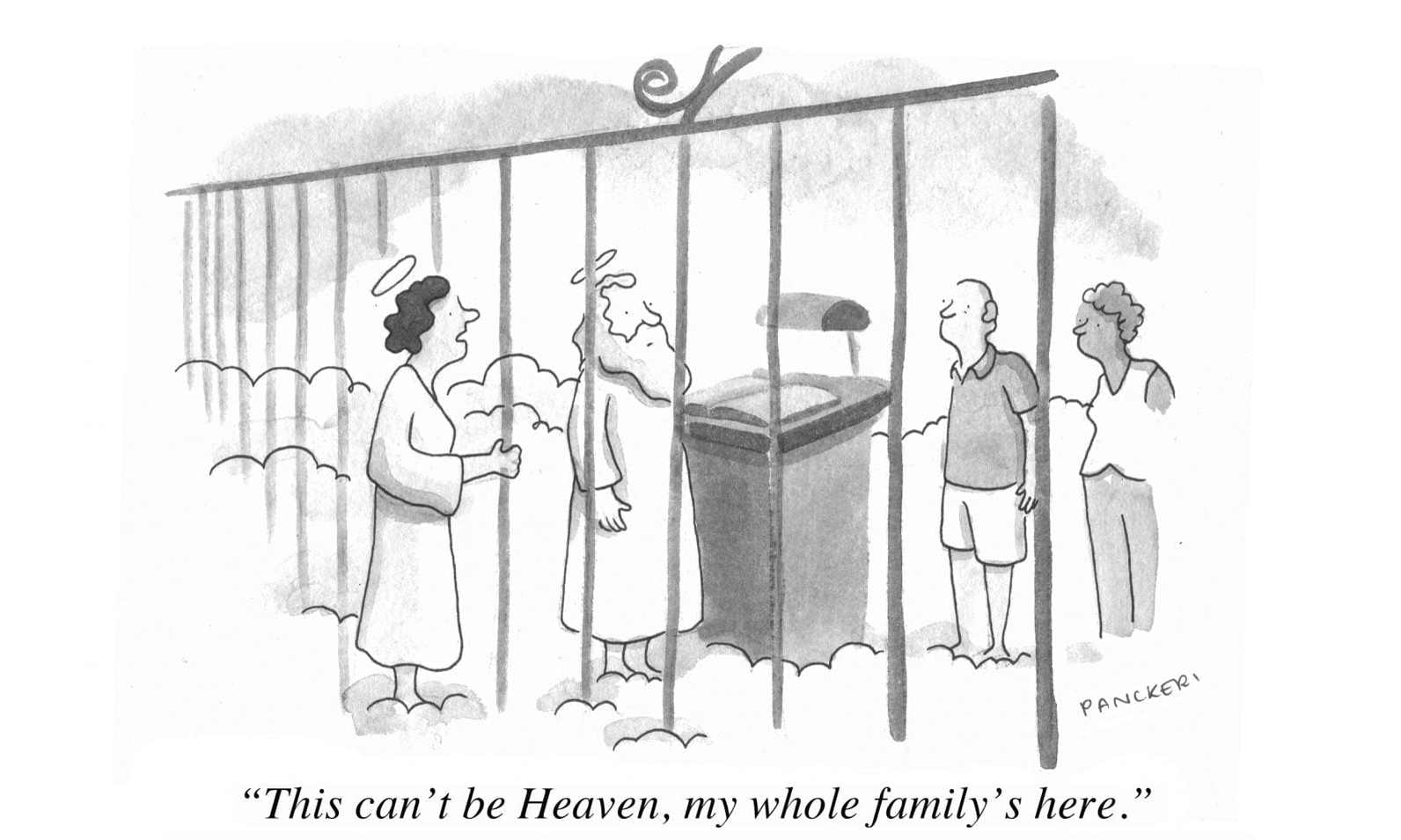
It’s been popular in some Christian circles over the past few decades to cut back on talk about eternal life. It’s not considered a winning message for the reasons outlined above. Instead, most of the Easter church chatter I hear focuses on building the kingdom here on earth through our politics or our social work, or instead, exploring ways that Easter could make us better people. I am not convinced that these stratagems will work. It is precisely Jesus’ belief in eternal life that allows us to consider giving this one up. We cannot hope that people will follow the ethical vision of Jesus if they do not first share in his heavenly vision. The gift of eternal life must be internalized before the Christian can expect to let go of the false-glory projects of this age. It’s much easier and logical to take a pass on the values of this world if we’re eagerly expecting eternal life in the next one.
I’m not embarrassed to say that I will live forever in the kingdom of God that has no suffering, tears, hunger, sickness, or shame. In fact, I am quite joyful for that fact this Easter. It’s an inoculation against the influencers and power players of the day, whose offers of false transcendence won’t bring any of the meaning and purpose that Becker suggests are necessary for psychological health. It’s an occasion to laugh at my own faults and foibles and sins and offenses, which will not transfer over into the new heavens and new earth. There is no FOMO to pair with this YOLO, because the world to come is so much better and brighter than anything this world has to offer. It lets me be generous with money and people and develop deep relationships with them, because I know those relationships are as eternal as the life I will one day live.
It was the American poet Oliver Wendell Holmes who is said to have written that “some people are so heavenly minded that they are of no earthly good.” I disagree: if someone is of no earthly good, the problem is very likely that they are not heavenly minded enough. The gift of eternal life isn’t merely a sentimental balm for those who miss their dead parents, or a palliative for people with anxiety about non-existence. It’s not a carrot dangling from a rope that controlling institutions use to get people to behave, or a stick wielded by the divine to instill fear into the weak-minded. There’s no Daffy Duck, and no harps and halos either. Instead, the gift of eternal life is the only reasonable way someone can truly consider putting oneself after God and neighbor. Without a belief in the life and the world to come, there’s little reason to embrace this world in self-giving love.








Love this!
Thank you for this. I’ve been veering over in the (albeit Christian) YOLO-lane for some time now, only to find it disastrously lacking when faced with actual sickness and death.
This piece strengthened me in “my” decision (to the extent that there is such a thing) to once again set my sights on the New Jerusalem.
God bless!
Thanks for thoughtful piece. My youngest brother just died and I have been awash in grief, which also stirs up many other feelings and questions about my own purposes in life, wondering if he ( Catholic) is really in heaven.Was his “ mustard seed of faith “ enough or am I not wanting to acknowledge the possibility of hell ? How do I let that settle into trusting that God is completely fair ? I have a lack of capacity for certain behaviors I used to absorb which I cannot yet tell if it’s a good shucking off of social and emotional over responsibility or a self centered irritation and lack of appropriate self sacrifice. Either way, I know paying attention and engaging with these emotions and bringing them wisely to God and others is good. All painful and confusing. But thank you for the reminder of the need for eternal perspective to make wise earthly choices.
Thank you for sharing this, KS.